Arkansas Group Ride Planning
A group ride can go sideways before the first trail marker: someone arrives late, a machine is too wide for a gate, or the route leaves a newer rider behind. Planning ahead helps everyone enjoy Arkansas’s trails without turning the day into a scramble. This guide covers choosing a suitable area, coordinating riders and machines, preparing for trail conditions, and keeping the group together.
Choose a trail area that fits the whole group
Match the route to the riders and machines
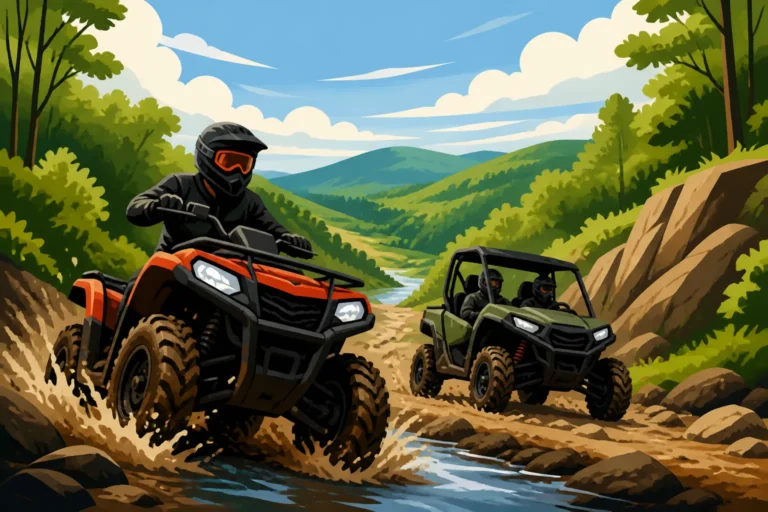
Start with the people and machines you actually have, not the route that looks most exciting on a map. A group with first-time riders, children, or machines with different capabilities may need a gentler route and an easy way to turn around. More experienced riders can still enjoy a slower outing when the plan includes overlooks, breaks, or a scenic loop instead of a race from one trail marker to the next.
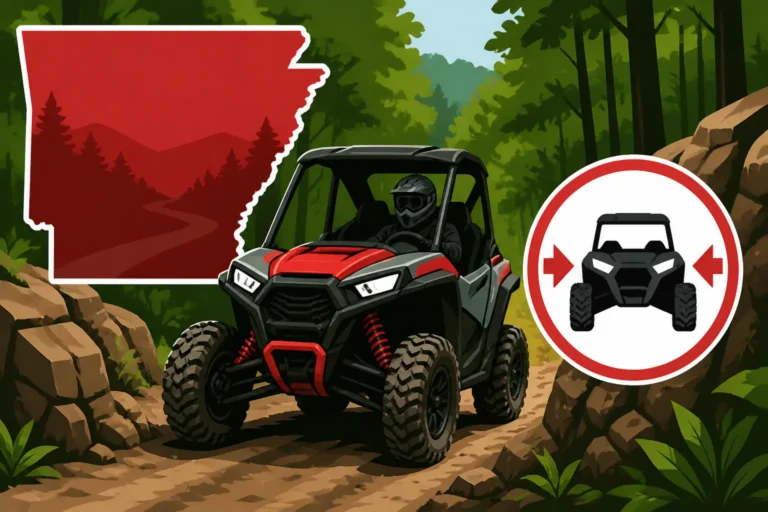
Check the trail system’s restrictions before you commit. Some Arkansas trails have width limits, and a side-by-side that is comfortable on broad forest roads may not fit through a narrow gate. Confirm that each machine is permitted on the trails you plan to use, and make sure the route’s difficulty suits the least experienced rider in the group. [Arkansas ATV Trails That Allow Side-by-Sides] can help you focus your research when your group includes UTVs.
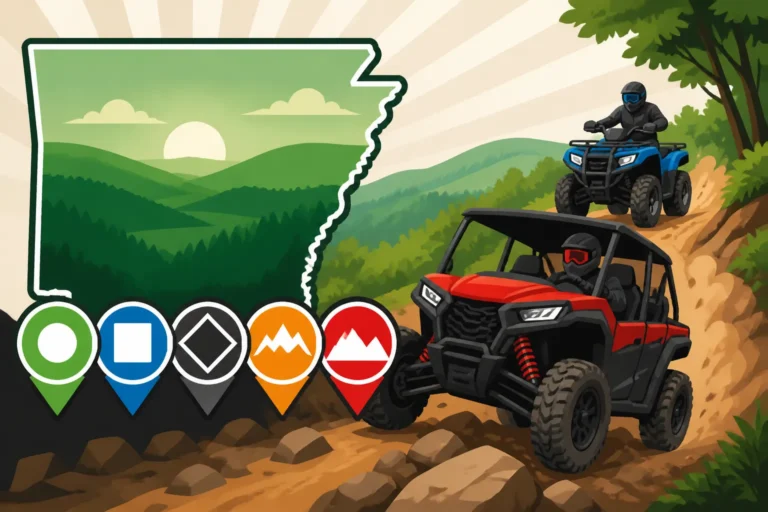
Trail ratings are useful, but they are not a guarantee that every rider will find a route comfortable. A rocky climb can feel very different to a new rider than to someone who has spent years riding the Ouachitas. Read [Arkansas Trail Ratings and What They Mean] together, then talk through the likely terrain with your group. If someone is uncertain, choose a more forgiving plan; it is much easier to add a harder section later than to get a large group safely out of a route that is beyond someone’s comfort level.
Compare areas, permits, and staging
Arkansas has several kinds of riding areas, and the logistics can differ from one place to another. Start with [Arkansas ATV Trails: Where to Ride] to compare possible destinations, then check the official information for the specific trail system you choose. Forest riding may require a pass or permit, and a pass for one forest does not automatically cover another. Look into rules, access, fees, and any seasonal closures before leaving home. [Arkansas OHV Permits: Two Forests, Two Prices] is a useful starting point for understanding why it matters to check which land you will ride on.
Consider the trip to the trailhead as part of your plan. A group arriving in several trucks and trailers needs room to park, unload, and maneuver without blocking other visitors. Look into [Arkansas Trailheads With Trailer Parking] and agree on a meeting point before anyone sets out. If your preferred trailhead is small or likely to be busy, decide in advance where everyone can safely wait rather than having vehicles circle or park along a road.
Build a backup into the destination choice. Rain, maintenance, a full staging area, or a closure can change the day’s plan. Identify a second option that fits the group’s machines and experience, and check [Arkansas Trail Conditions Before You Tow] before making the drive. A quick check before departure can prevent the particular frustration of towing several hours only to discover the original plan is not workable.
Coordinate people, machines, and the day’s plan
Set expectations before the ride
Send a clear plan to everyone well before ride day. Include the meeting location, departure time, trail system, expected ride length, what permits or passes riders need, and what to bring. Ask each person to confirm their machine type and whether it meets the area’s requirements. A brief message that says “meet at the trailhead around nine” can leave a lot unanswered; it is more helpful to specify the exact staging area and a firm time for unloading.
Talk openly about pace and experience. People often hesitate to say they are nervous, especially when the group includes close friends who are eager to ride. Make it clear that no one is expected to keep up with a machine or route that feels unsafe. Agree on a comfortable speed and a no-pressure approach to breaks. That small conversation can prevent a newer rider from pushing beyond their ability just to avoid slowing everyone down.
A simple itinerary helps the group stay on the same page without making the ride feel overly rigid. Choose a planned route, identify likely rest stops, and agree on a turnaround time. Let everyone know what the group will do if someone has a mechanical issue or needs to stop. If you use onX Offroad to review routes, mark the planned route and key meeting points in advance, and make sure riders know how to access the information even if cell service drops.
Organize the group into a safe riding order
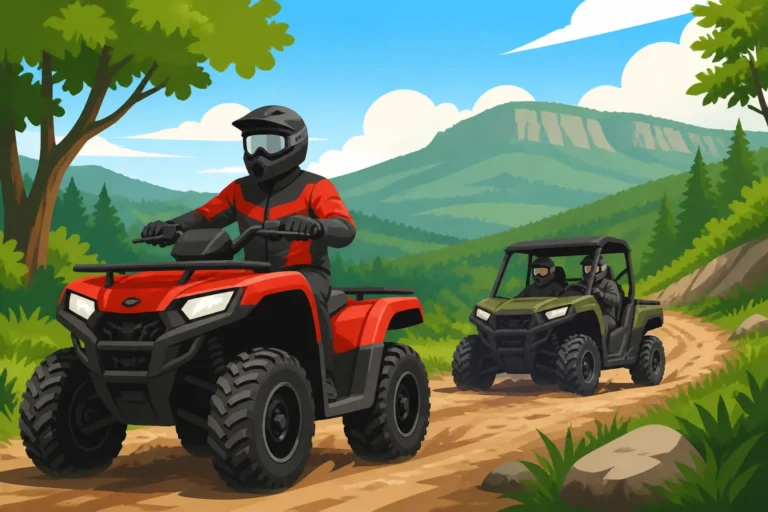
Before setting off, choose a lead rider and a sweep rider. The lead should know the route and be willing to keep a pace that works for the group. The sweep stays behind the last rider and helps make sure nobody is left alone if they need to stop. For a larger group, consider splitting into smaller riding groups with their own lead and sweep rather than stretching one line across a long trail.
Agree on how the group will respond at junctions. One practical approach is for riders to wait at turns until the person behind them arrives, then continue only when the group is accounted for. Avoid assuming that everyone knows which fork to take, even if the route looked simple during planning. Trail intersections can be confusing, and a rider who misses a turn may not be able to catch up quickly.
Keep the plan flexible. A group may need an extra break, decide a technical section is too challenging, or turn around because the conditions have changed. Make it normal for anyone to speak up. On a long ride, that can be the difference between a manageable adjustment and a stressful situation. Be courteous to other riders and leave room at intersections, narrow sections, and staging areas; [Arkansas Trail Etiquette Locals Expect] offers useful reminders for sharing the trail.
| Planning detail | Decide before leaving | Why it helps |
|---|---|---|
| Route and difficulty | A main route and a simpler alternative | Gives the group a safe option if the planned trail feels too demanding |
| Machine fit | Width, permitted machine types, and any trail restrictions | Reduces the risk of arriving with a machine that cannot use the intended route |
| Meeting plan | Exact staging location and arrival time | Keeps late arrivals and scattered vehicles from disrupting departure |
| Group roles | Lead rider, sweep rider, and who carries the route details | Helps the group stay together and respond when someone stops |
| Permits and access | Which pass or permit applies to the chosen area | Avoids confusion at the trailhead or during a check |
| Communication | How riders will signal a stop or route change | Makes it easier to handle separation or a mechanical issue |
Prepare for trail conditions and communication gaps
Check conditions and make a realistic route
A trail that looked manageable when you planned the ride may feel different after heavy rain, wind, or maintenance work. Check for closures and current conditions shortly before you travel, not just when you first choose the destination. [Arkansas Trail Closures After a Storm] is worth keeping in mind when rain has recently moved through the area. Mud, water, fallen limbs, or erosion can change the character of a route, so be ready to shorten the ride or choose your backup.
Leave enough time for the route to take longer than expected. A group moves at the pace of its least experienced rider, and stops for water, directions, or a minor adjustment add up. Set a return time that leaves some margin rather than planning to ride until the last possible moment. If the group starts late, shorten the route instead of trying to make up time by rushing.
Use mapping tools as planning aids, not substitutes for checking trail access and restrictions. onX Offroad can help with reviewing route options and marking points such as a trailhead or planned regrouping spot. Before the trip, make sure the map information you intend to use is available offline if the area has weak service. A phone battery can run down, a device can be damaged, and a map view does not replace following posted signs or respecting a closed trail.
Plan for poor cell service and small problems
Do not assume that every rider will have reliable phone service throughout the ride. Some remote areas, including parts of the Ouachitas, can have dead zones. Decide what the group will do if riders become separated, and choose recognizable regrouping points along the route. [Arkansas Cell Dead Zones in the Ouachitas] can help prompt a realistic conversation about communication before you go.
Make sure riders know how to stop safely and signal the group. A simple plan might be to pull well off the trail where possible, alert the lead or sweep, and wait at an agreed location rather than trying to find the rest of the group alone. If you rely on phones or radios, test them before leaving the staging area. Share the route and the day’s plan with someone who is not riding, including when the group expects to return.
Pack for small setbacks, not just the ride you hope to have. Bring water, basic first aid supplies, and tools or recovery gear that match the machines and terrain. Someone should know where the first aid kit is, and at least one rider should be prepared to deal with a minor issue without leaving an injured or stranded person behind. For longer routes, [First Aid Worth Carrying on a Long Loop] can help you think through what the group may need.
Keep the ride enjoyable from staging area to return
Give the group a calm start
Arrive with enough time to unload, check permits, and go over the plan before anyone starts riding. Use the staging area to confirm that each machine is ready, riders have the essentials, and everyone knows who is leading and sweeping. A rushed departure is when small but important details—such as a loose strap, an uncharged phone, or a rider who misunderstood the route—are easiest to miss.
Before moving out, make sure everyone can repeat the basics: the route, the regrouping plan, and what to do if they become separated. New riders may benefit from a short practice on a safe, open section before the group reaches more challenging terrain. Explain hand signals or other communication methods the group plans to use, and make sure they are easy to understand while wearing helmets and riding gear.
Keep the first part of the ride conservative. It gives the group a chance to settle into a shared pace and shows whether the planned route matches the riders’ actual comfort levels. If someone is struggling, adjust early. A shorter loop can still be a successful day, especially if everyone finishes safely and wants to ride together again.
Finish with a simple check and useful notes
At the end of the ride, account for everyone before anyone leaves the staging area. Check that all machines and gear are loaded safely, and ask whether anyone needs help with a minor repair or cleanup. If the group is traveling in separate vehicles, agree on who is heading out first and whether everyone has a clear route back.
Make a few notes while the experience is fresh. Record which routes suited the group, where you stopped, whether the trailhead worked for trailers, and what you would pack differently next time. If a route was more difficult than expected or a crossing was blocked, share that information through appropriate channels and respect any posted restrictions. These notes make the next trip easier to plan, particularly if you bring together riders with different machines or experience levels.
A well-planned Arkansas group ride is not about squeezing in the longest route. It is about choosing an area that fits, communicating clearly, and leaving room to adapt. When everyone understands the plan and feels comfortable speaking up, the ride is more likely to stay fun from the first unload to the drive home.
Disclaimer
This article is for general informational purposes only and does not constitute professional advice. Laws, prices and regulations vary by location and change over time. Consult a qualified professional for guidance on your specific situation.