Arkansas Six-Wheeled ATVs and the Statute
Navigating the world of off-highway vehicles in Arkansas can feel like a maze, especially when your machine doesn't quite fit the typical mold. Many riders scratch their heads trying to figure out how their unique six-wheeled ATV fits into the state's registration statutes. This guide will unravel the specifics of Arkansas law, helping you understand how your six-wheeled machine is defined, what that means for registration, and how to ensure you're riding legally.
Understanding Arkansas's OHV Definition for Six-Wheeled Machines
The Arkansas legislature has a specific way of defining off-highway vehicles, and understanding these definitions is crucial when you own something a bit outside the common four-wheeled ATV. It's not always as simple as counting the wheels; factors like seating, steering, and intended use also play a significant role. For those with a six-wheeled machine, it's particularly important to delve into the nuances of what Arkansas law considers an "all-terrain vehicle."
What Arkansas Statute 27-21-102 Says
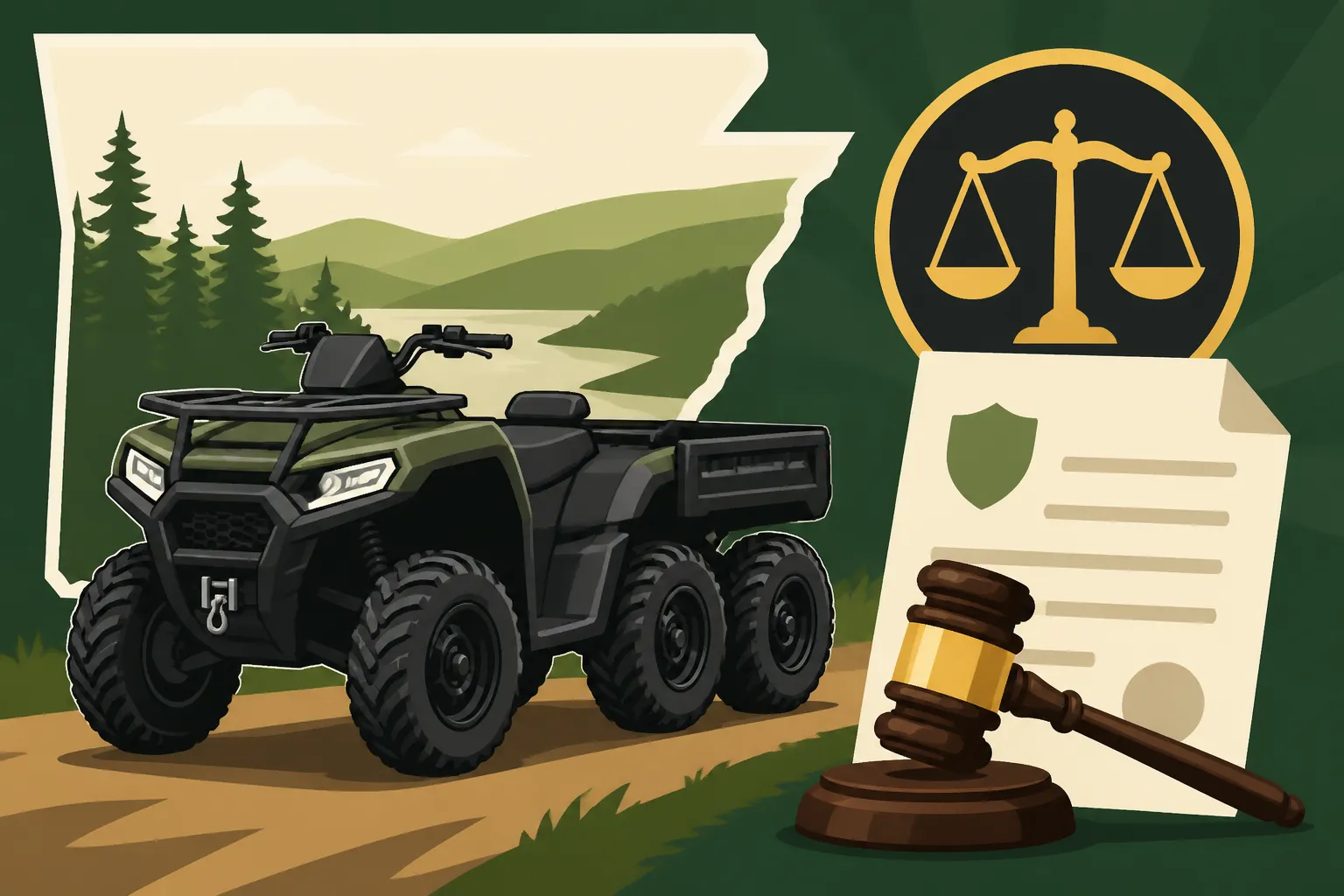
Arkansas Code Ann. § 27-21-102 is the cornerstone for defining off-highway vehicles in the state. This statute lays out the legal parameters that determine whether your machine falls under the "all-terrain vehicle" (ATV) umbrella. For many, an ATV immediately conjures an image of a four-wheeled quad, but the statute is designed to be a bit more encompassing, or at least to set clear boundaries. It specifically mentions three, four, or six wheels. This inclusion of "six wheels" is a relief for owners of machines like some Polaris Big Boss models or other specialized utility ATVs that have that extra set of drive wheels. The key here is that if your six-wheeled machine meets the other criteria—designed for off-highway use, has a seat designed to be straddled by the operator, and handlebars for steering—then it very much falls under the ATV definition. Without this explicit mention of six wheels, owners would face significant ambiguity and likely be classified outside the ATV category, leading to entirely different registration hurdles.
The statute's language helps clarify that not all multi-wheeled off-road vehicles are created equal. It aims to differentiate between true ATVs, which often have a more aggressive, open design for tackling diverse terrain, and other vehicles that might have more wheels but operate differently. This clear statutory inclusion provides a framework, but it doesn't automatically mean your six-wheeled wonder will breeze through every step. There are still other requirements to meet, which we'll discuss. For now, know that the state does acknowledge your six-wheeled machine as a potential ATV. You can read more about [Three, Four or Six Wheels] in the official definitions.
Distinguishing from Other OHVs
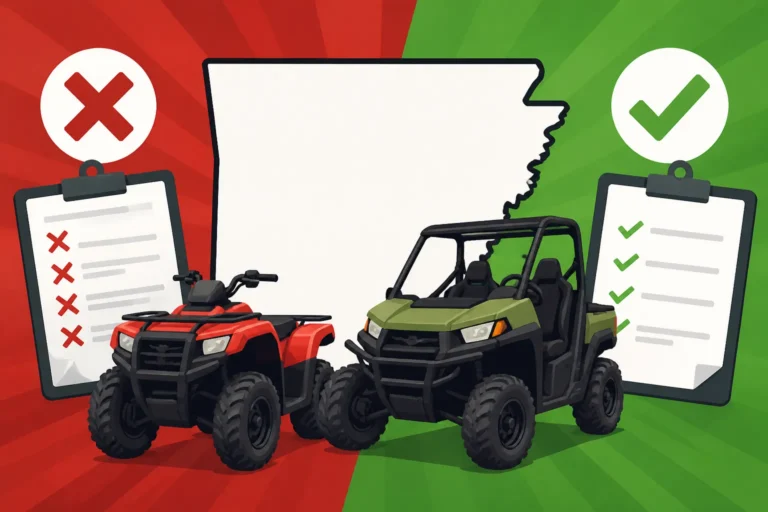
While the statute specifically mentions six-wheeled vehicles under the ATV definition, it's equally important to understand what it doesn't include or what might be classified differently. The primary distinction often comes down to the operator's seating and steering mechanism. A true ATV, as defined, has a straddle seat and handlebars. This immediately differentiates it from a side-by-side (UTV) or a golf cart, which typically feature bucket seats, a steering wheel, and often a roll cage. Even if a UTV happens to have six wheels (a less common configuration), if it has a steering wheel and side-by-side seating, it will likely be treated as a UTV under Arkansas law, with potentially different registration requirements.
This distinction is not just semantic; it has real-world implications for registration, insurance, and even where you can legally ride. For instance, the registration process for a side-by-side, while similar, might have slightly different nuances at the Revenue Office. If your six-wheeled machine has a steering wheel and multiple passengers sitting side-by-side, you'll want to review the [Arkansas UTV Registration Requirements] as well. The state is trying to categorize vehicles based on their design and safety features, and a six-wheeled ATV, with its straddle seat and handlebars, fits a particular risk profile and operational style that is distinct from a UTV.
The Core ATV Definition Recap
Let's quickly reiterate the core components that define an ATV in Arkansas, especially for our six-wheeled friends. Beyond the wheel count (three, four, or six), an ATV must be primarily designed for off-highway use. This means it's not street-legal by default and is built to handle rugged terrain. It also requires a seat that is designed to be straddled by the operator, much like a motorcycle. Finally, steering is accomplished with handlebars, not a steering wheel. These are the fundamental characteristics that Revenue Office clerks will look for when you present your six-wheeled machine for registration.
It's important to keep these criteria in mind because if your machine deviates significantly from any of these points—for example, if it has a bench seat or a steering wheel, even with six wheels—it might be pushed into another category, or worse, deemed unregistrable as an ATV. This understanding is the foundation for successfully registering your unique machine and ensures that you're prepared for any questions that may arise during the process. The definition also has limits; it's generally aimed at single-rider (or very limited passenger) vehicles, not larger, more complex utility vehicles.
Why Six Wheels Matter for Registration
When you head to an Arkansas Revenue Office with your shiny (or wonderfully muddy) six-wheeled ATV, the fact that it has more than the "standard" four wheels can sometimes raise an eyebrow, or at least warrant a closer look at the paperwork. While the statute explicitly includes six-wheeled machines, the practical application of this at the counter might require a bit more clarity and preparedness on your part. It's not a barrier, but it is a point of distinction that you should understand.
Beyond the Four-Wheel Standard
Most of the time, when someone mentions an ATV, the image of a four-wheeled quad pops into mind. This is the "standard" that many people, including some clerks who might not deal with OHV registrations every single day, are accustomed to. Your six-wheeled machine, while perfectly legal under the Arkansas definition, simply stands out. This isn't a problem, but it means you might need to be a little more patient and ready to point out the specific legal language that supports your registration. It's not about arguing, but simply ensuring that everyone is working from the same understanding of the law.
The inclusion of six-wheeled machines in the ATV definition is a thoughtful legislative touch, acknowledging the diversity of off-road vehicles. It means that utility-focused machines, often used for hunting, farming, or heavy-duty chores, are not left in a legal gray area. This provision specifically allows these machines to be registered under the same framework as their four-wheeled counterparts, which simplifies things considerably compared to states without such clear language. Understanding this distinction empowers you to confidently present your machine for registration.
Potential Roadblocks at the Revenue Office
While the statute is clear, individual experience at a Revenue Office can sometimes vary. A clerk might initially be unfamiliar with the "six-wheel" aspect of the ATV definition. This isn't due to malice or incompetence, but simply a result of the sheer volume and variety of vehicles they process daily. Common roadblocks you might encounter include:
- Initial Misclassification: A clerk might accidentally try to classify your six-wheeler as a UTV or even an unlicensed farm vehicle due to its unusual appearance.
- Request for Additional Documentation: They might ask for manufacturer specifications or additional proof that your vehicle indeed fits the straddle-seat, handlebar-steered ATV definition.
- Unfamiliarity with the Specific Statute: While they have access to the legal code, they might not immediately recall the "three, four, or six wheels" clause.
The best way to navigate these potential situations is to be prepared. Have your documentation in order, and if possible, have a copy of the relevant statute (Arkansas Code Ann. § 27-21-102) handy, or at least be ready to refer to it. Remember, you're not trying to educate them, but rather assist them in quickly processing your registration according to the correct legal framework. Being calm, polite, and informed makes the process smoother for everyone involved. For a broader view, you can refer to [What Arkansas's ATV Statute Covers].
Ensuring Your Machine Meets the Criteria
To avoid any bumps in the road during registration, double-check that your six-wheeled ATV unequivocally meets all the other criteria set forth by the statute. Beyond the wheel count, ask yourself:
- Is it truly designed for off-highway use? Most six-wheeled ATVs are, but it's important that its primary design and components reflect this.
- Does it have a straddle seat? This is a non-negotiable. If it has a bench seat or bucket seats, it's not an ATV by definition, regardless of wheel count.
- Does it use handlebars for steering? Again, a critical identifier. If it has a steering wheel, it's likely a UTV.
- Is its width within the legal limits for ATVs? This is where many six-wheeled machines can run into issues, which we'll discuss next.
Ensuring these points are clear before you visit the Revenue Office can save you a lot of time and potential frustration. Gather all your manufacturer's information, title (if applicable), bill of sale (perhaps a template from LawDepot if you bought privately), and any other ownership documents. Having everything buttoned up, like a detailed [Arkansas ATV Bill of Sale Requirements], makes your case clear and helps the clerk process your request efficiently.
The Impact of Width and Engine Size
Even if your six-wheeled machine perfectly fits the "three, four, or six wheels" definition, there are other statutory limitations that can affect its classification and registration. The 50-inch width constraint and the 1,000cc engine ceiling are particularly relevant and often overlooked, especially when dealing with larger, more robust six-wheeled utility ATVs. These dimensions aren't just arbitrary numbers; they reflect a legislative intent to categorize machines for trail access, safety, and road use considerations.
The 50-Inch Width Constraint
This is arguably the most common hurdle for many multi-wheeled ATVs, including some six-wheeled models. Arkansas statute defines an ATV as having a width of 50 inches or less, measured from outside tire to outside tire. While many traditional four-wheelers fit comfortably within this, some heavy-duty six-wheeled utility ATVs are designed to be wider for stability, cargo capacity, and a more robust stance. If your six-wheeled machine exceeds this 50-inch limit, it will not be classified as an ATV under Arkansas law, even if it has a straddle seat and handlebars.
This distinction is critical. A machine wider than 50 inches falls outside the legal definition of an ATV and therefore cannot be registered as one. This doesn't necessarily mean it's illegal to own or ride, but it means you won't be getting the standard Arkansas ATV decal, and it won't be recognized under the specific ATV statutes for public land use or limited road crossing. It's a point of frequent confusion and frustration for owners of larger machines. Always measure your vehicle before you attempt to register it. You can learn more about this specific limit under [Arkansas's 50-Inch, 1,000cc ATV Definition].
Engine Size and Weight Considerations
Beyond width, Arkansas law also sets an engine size limit of 1,000 cubic centimeters (cc) for an ATV. While many six-wheeled ATVs are well within this range, some high-performance or specialized utility models might push or exceed this limit. Just like the width constraint, if your six-wheeled machine has an engine displacement greater than 1,000cc, it will not qualify as an ATV under the state's legal definition.
Weight is another factor, though less explicitly codified than width or engine size. Larger, six-wheeled machines, especially those built for heavy hauling or with extensive utility features, naturally weigh more. While there isn't a hard weight limit for ATV classification in Arkansas, excessive weight can sometimes factor into how a vehicle is perceived or treated in terms of public land access regulations or specific trail rules. Always check the specific rules of any trail system you plan to visit, as they might have their own weight or size restrictions, regardless of state registration.
When Your Machine Exceeds Standard Limits
So, what happens if your beloved six-wheeled ATV is wider than 50 inches or has an engine over 1,000cc? Simply put, it cannot be registered as an "all-terrain vehicle" in Arkansas. This can be a disheartening discovery for owners who assumed their six-wheeler would fall neatly into the ATV category. This doesn't mean your machine is illegal, but it does mean its use might be more restricted.
Machines that exceed these limits are often categorized as "other off-highway vehicles" or, if they have a steering wheel and side-by-side seating, as UTVs. For these machines, public trail access might be limited, and road use (even permitted crossings) would typically be prohibited under the ATV statutes. Your riding might be confined to private land, or specific private off-road parks that have different classifications and rules. It's vital to understand these limitations upfront to avoid fines or legal trouble. The section on [Machines That Fall Outside Arkansas's ATV Definition] provides more detail on this often-misunderstood area of the law.
Navigating Registration for Your Six-Wheeled Machine
Assuming your six-wheeled ATV meets all the statutory requirements—straddle seat, handlebars, off-highway design, and within the 50-inch/1,000cc limits—the registration process itself follows a similar path to a four-wheeled ATV. However, due to its unique nature, it's wise to be extra prepared. Knowing exactly what documents to bring and what to expect can make your visit to the Arkansas Revenue Office much smoother.
Required Documentation for Unique Machines
The foundation of any successful vehicle registration is accurate and complete documentation. For a six-wheeled ATV, this is even more critical, as you might need to prove its specifications. Here's a checklist of what you'll typically need:
- Proof of Ownership: This is paramount. It could be a manufacturer's statement of origin (MSO) for a new machine, or a bill of sale for a used one. If you've purchased your six-wheeler privately, a professionally drafted bill of sale, perhaps using a template from a service like LawDepot, can provide a clear record of the transaction. For an older machine with no existing title, you might need a notarized affidavit of ownership.
- Arkansas DFA Form 10-381: This is the primary application form for ATV registration. Make sure all sections are filled out accurately and completely.
- Proof of Arkansas Residency: A valid Arkansas driver's license or state ID card is usually sufficient.
- Sales Tax Payment: You'll owe sales tax on the purchase price if you haven't already paid it (e.g., if buying from a private seller). Be prepared for [Arkansas Sales Tax on an ATV Purchase].
- Vehicle Information: Have the make, model, year, and most importantly, the Vehicle Identification Number (VIN) readily available. Having the manufacturer's specification sheet or owner's manual can be incredibly helpful if questions arise about width, engine size, or wheel count.
Having all these documents organized and potentially a quick note referring to the six-wheel inclusion in the statute can significantly expedite your registration. For a comprehensive list, consult the [Arkansas ATV Registration Paperwork Checklist].
Working with the Arkansas Revenue Office
Once your documents are in order, you'll visit one of the various [Arkansas Revenue Offices That Handle ATVs]. Here's a general outline of what to expect:
- Present Your Documents: Hand over your completed Form 10-381, proof of ownership, and identification.
- Verification: The clerk will review your paperwork, verify the VIN, and ensure all details align. This is where questions about the six wheels, width, or engine size might arise. Politely explain that Arkansas statute 27-21-102 specifically includes three-, four-, and six-wheeled vehicles, and provide any supporting manufacturer's documentation if asked.
- Sales Tax and Fees: You will pay the required registration fee, which is a one-time fee in Arkansas, and any applicable sales tax. The registration fee is relatively low, but the sales tax can be substantial. [What Arkansas Charges to Register an ATV] outlines these costs.
- Decal Issuance: Once everything is processed and paid, you'll receive your unique Arkansas ATV decal. This decal must be affixed to the left front of your machine. This decal confirms your machine is registered and legal for appropriate use.
The process is generally straightforward, but preparedness is your best friend when dealing with a machine that isn't the most common sight at the counter.
What to Do If You Face Challenges
Despite your best efforts, sometimes you might encounter an issue. If a clerk insists your six-wheeled ATV cannot be registered due to its wheel count, width, or engine size, and you are certain it meets the legal definition, here are your options:
- Politely Reiterate the Statute: Calmly refer to Arkansas Code Ann. § 27-21-102 and its explicit mention of "three, four, or six wheels." Offer the manufacturer's specifications to prove width and engine size are within limits.
- Ask for a Supervisor: If the issue persists, politely request to speak with a supervisor. They often have more experience with unusual cases or a deeper understanding of the statutes.
- Visit a Different Revenue Office: Different offices may have clerks with varying levels of experience. If one office is unyielding, trying another in a nearby town might yield a different result.
- Seek Clarification from the DFA: If all else fails, you can try contacting the Arkansas Department of Finance and Administration (DFA) directly for official clarification on your specific vehicle type.
Remember to remain courteous and patient. Most issues can be resolved with clear communication and a little persistence. Gathering forms, like those available through LawDepot, can help ensure your documentation is robust and leaves less room for doubt.
Common Misconceptions and Clarifications
The world of ATVs and OHVs is rife with misunderstandings, and six-wheeled machines often bear the brunt of these confusions. Many people, including some riders and even law enforcement, might not be fully aware of how these unique vehicles are legally classified and regulated in Arkansas. Clearing up these common misconceptions is essential for responsible and legal riding.
Is a Six-Wheeler a UTV or an ATV?
This is perhaps the most significant point of confusion. Many larger, multi-wheeled off-road vehicles are colloquially lumped together, but legally, the distinction is crucial. As we've discussed, Arkansas law defines an ATV primarily by its straddle seat and handlebars, regardless of whether it has three, four, or six wheels. A six-wheeled ATV (e.g., a Polaris Big Boss 6×6) with a straddle seat and handlebars is, legally, an ATV.
However, a vehicle with six wheels that features a steering wheel and side-by-side seating is a UTV (Utility Task Vehicle), often referred to as a side-by-side. The presence of six wheels doesn't automatically make it an ATV. The core definitional difference lies in the operator's interface (straddle seat/handlebars vs. bench/bucket seats/steering wheel) and the intended passenger capacity. You cannot register a six-wheeled UTV as an ATV, and vice-versa, because they are fundamentally different categories in the eyes of Arkansas law. Understanding this distinction is key to choosing the correct registration path.
Farm Use and Exemptions
Arkansas offers some limited exemptions or considerations for vehicles used exclusively in agricultural operations. While the general rule is that all ATVs (including six-wheeled ones) need to be registered, there can be specific circumstances where registration might not be required if the machine never leaves private property or is exclusively used for specific farm tasks. However, these exemptions are often narrowly defined and come with strict caveats.
For instance, if your six-wheeled ATV is only used within the confines of your private farm property and never crosses public roads or trails, then the need for state registration might be mitigated. However, the moment it touches a county road, even to get from one field to another, or ventures onto a public trail system, state registration is required. It's a common misconception that "farm use" automatically exempts you from all registration. Always err on the side of caution and register your machine if there's any chance it will be used outside purely private, farm-specific operations. For more information, see [Arkansas Farm Exemptions Worth Asking About].
Road Riding and Your Six-Wheeler
The default rule in Arkansas is that ATVs, including six-wheeled ones, are not street legal. This means you generally cannot ride your registered six-wheeled ATV on public roads, streets, or highways. There are, however, specific statutory exceptions that allow for very limited road use, primarily for crossing purposes or for certain agricultural and hunting operations.
These exceptions are precise:
- Direct Crossings: You can cross a public highway at approximately a ninety-degree angle after coming to a complete stop, only if the crossing is necessary to get from one off-highway area to another.
- Farming/Hunting Operations: If you are operating a farm or hunting operation, you might be allowed to ride on a public road for a limited distance to access fields or hunting grounds. This requires adherence to specific rules, often related to visibility, speed, and the direct conduct of the operation. [Arkansas Farming Operation Road Use] covers this in detail.
- Emergency/Utility: Law enforcement, EMS, and utility workers have exemptions for their official duties.
Crucially, these are exceptions to a general ban, not broad permissions. Local municipalities might have ordinances allowing UTVs (but typically not ATVs) on certain city streets under specific conditions, but this rarely extends to ATVs, especially six-wheeled ones. Do not assume your registered six-wheeled ATV can be ridden on public roads without thoroughly understanding these narrow exceptions and verifying local ordinances. Ignoring these rules can lead to citations and fines.
| Feature | Typical Four-Wheeled ATV | Six-Wheeled ATV (as defined) | Six-Wheeled UTV (not an ATV) |
|---|---|---|---|
| Wheel Count | 4 | 6 | 6 (or 4, sometimes) |
| Steering | Handlebars | Handlebars | Steering Wheel |
| Seating | Straddle Seat (single or tandem) | Straddle Seat (single or tandem) | Bench or Bucket Seats (side-by-side) |
| Max Width (AR Law) | 50 inches | 50 inches | Can exceed 50 inches |
| Max Engine (AR Law) | 1,000 cc | 1,000 cc | Can exceed 1,000 cc |
| Registration as ATV | Yes, if other criteria met | Yes, if other criteria met | No |
| Primary Use | Recreation, light utility | Heavy utility, specialized use | Recreation, heavy utility, passenger |
Disclaimer
This article is for general informational purposes only and does not constitute professional advice. Laws, prices and regulations vary by location and change over time. Consult a qualified professional for guidance on your specific situation.