Carrying Proof on the Trail
It’s easy to get caught up in the thrill of hitting the trails, whether it’s the roaring engine, the challenge of the terrain, or the sheer joy of escaping into nature. But many riders overlook a crucial step: knowing what documents to carry and how to protect them. This guide is all about making sure you’re prepared, covering what paperwork you absolutely should have on hand when you're riding your ATV or UTV in Arkansas, why it's so important, and practical ways to keep it safe and accessible.
The Essential Documents for Your Arkansas Trail Ride
Alright, let's get down to brass tacks. You're out in the beautiful Arkansas wilderness, maybe tearing up some dirt at Wolf Pen Gap or navigating the winding paths of the Mill Creek OHV Trail System. The last thing you want is a stop by a game warden or deputy turning into a major headache because you don't have your paperwork in order. While Arkansas law is pretty specific about what needs to be on the machine, it's also smart to have proof of ownership and operator identification readily available.
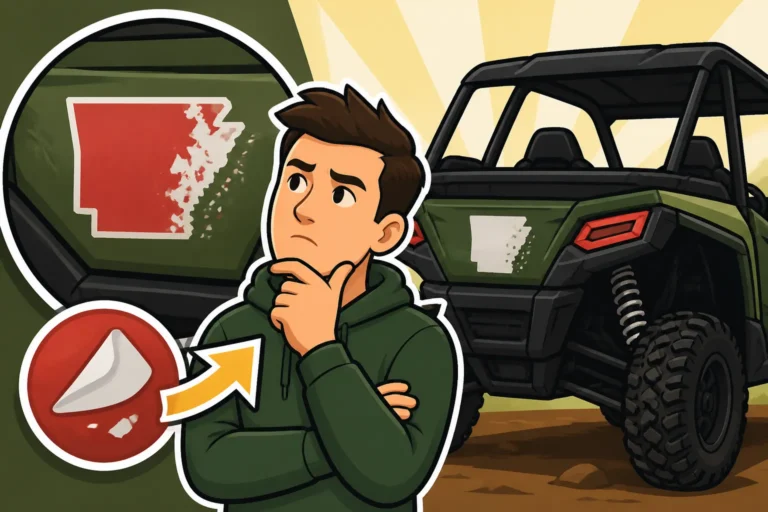
First and foremost, your ATV or UTV itself needs to display the official decal. This isn't just a suggestion; it's a legal requirement for most machines operated on public lands or designated trails. The state's unique system means you register your machine once, and that decal is good for the life of the machine in your ownership. There’s no annual renewal to worry about, which is a huge relief compared to vehicle tags! Make sure you understand the [Arkansas ATV Decal Rules and Where It Goes] to ensure your machine is properly marked. Typically, this means the decal affixed to the left front of your ATV or UTV, visible and not obscured by mud or accessories.
Beyond the decal, which is physically on your machine, you need to carry proof that you are the rightful owner or are authorized to operate it. This usually boils down to two key things: proof of ownership and your personal identification.
Proof of Ownership: Beyond the Decal
While the decal shows the machine is registered, it doesn't necessarily prove you own it. Imagine you borrowed a friend's ATV for the weekend. The decal might be there, but if something happens, proving that you have permission or that your friend is the owner can get tricky without documentation. This is where your personal copy of the registration certificate or, even better, the bill of sale comes into play.
When you register your ATV or UTV in Arkansas, the Department of Finance and Administration (DFA) issues a registration certificate that includes your name and the machine's details. While you don't have to carry this on the machine at all times, having it on you, or a clear copy, is highly advisable. It serves as undeniable proof that the machine is registered to you.
Even more robust is your original bill of sale. This document definitively proves you purchased the machine and are its legal owner. For machines bought privately, a detailed bill of sale is crucial. If you're buying or selling a machine, consider using a template from a service like LawDepot to ensure all the necessary details are included, providing a solid record for both parties. A well-prepared [Arkansas ATV Bill of Sale Requirements] will include buyer and seller information, machine details, purchase price, and signatures. It’s your ultimate proof of who the machine belongs to.
What if your original bill of sale is long gone? Sometimes, especially with older machines or those passed down through family, the original paperwork gets lost. In these cases, clerks at the revenue office often accept affidavits of ownership. These are sworn statements declaring you are the rightful owner. Again, online legal document services like LawDepot can assist in generating an appropriate affidavit if you find yourself in this situation.
Your Personal Identification
This one seems obvious, but it's often overlooked when people are thinking about "ATV paperwork." Just like driving a car, if you're operating an ATV or UTV, you need to be able to identify yourself. A valid driver's license or state-issued identification card is standard. This isn't just for law enforcement; it's also important in case of an accident or emergency. Medical personnel or first responders will need to identify you.
For non-residents visiting Arkansas to ride, this means carrying your out-of-state driver's license or ID. While your machine might not need an Arkansas decal if you're just visiting (always check local rules!), your personal identification is a must. Knowing [What a Deputy Can Ask to See] often includes this fundamental piece of identification.
Other Potentially Necessary Documents
Depending on where you're riding, you might need additional permits or proof of certain things.
- WMA or Forest Permits: If you're riding on public lands managed by the Arkansas Game and Fish Commission (AGFC) or the U.S. Forest Service (like the Ouachita National Forest or Ozark-St. Francis National Forest), you'll likely need a special permit. For example, the Ouachita National Forest requires an OHV permit for trail use. These permits can often be purchased online via Recreation.gov or at designated vendors. Having a printed copy or a digital copy on your phone (if service is reliable) is critical. Remember, [Arkansas OHV Permits: Two Forests, Two Prices], so make sure you have the correct one for where you plan to ride.
- Insurance Card: While Arkansas does not mandate liability insurance for ATVs or UTVs used exclusively off-road, if you ride a street-legal UTV in an ordinance-approved town, you will need proof of insurance. Even if not legally required for your specific riding scenario, it's smart to carry your insurance card if you have a policy. It can significantly simplify things in case of an accident or damage. You might wonder, [Is Insurance Part of Arkansas ATV Registration?], and for most off-road scenarios, the answer is no. But carrying it is good practice.
Here's a quick reference table of essential documents:
| Document Type | Why You Need It | Recommended Storage Method |
|---|---|---|
| ATV/UTV Decal | Proof of legal registration | Affixed to the machine (left front) |
| Registration Certificate | Confirms machine is registered to you | Waterproof pouch, secure pocket, digital photo |
| Proof of Ownership | (Bill of Sale/Title/Affidavit) Confirms you own it | Waterproof pouch, secure compartment, digital photo |
| Personal ID | (Driver's License/State ID) Identifies the operator | Wallet, secure pocket on person |
| WMA/Forest Permit | Access to specific public lands (if applicable) | Waterproof pouch, accessible pocket, digital photo |
| Insurance Card | Proof of coverage (if you have it) | Waterproof pouch, secure pocket, digital photo |
Why Carrying Your ATV/UTV Paperwork is Non-Negotiable
You might be thinking, "Do I really need all this stuff? I'm just going out for a fun ride!" And while the goal is always fun, being prepared with your documents is about much more than just avoiding a hassle. It’s about legal compliance, protecting your investment, and ensuring smooth sailing if an unexpected situation arises.
Avoiding Legal Penalties and Fines
This is probably the most immediate and tangible reason. Arkansas law dictates that ATVs and UTVs operated on public lands or designated trails must be registered and display a decal. If a law enforcement officer, game warden, or forest ranger stops you and your machine isn't registered, or you can't provide basic identification or proof of ownership, you could face penalties.
These penalties aren't just a slap on the wrist. [Arkansas Penalties for Riding Unregistered] can range from fines to having your machine impounded. Imagine having your prized ATV towed away because you forgot a piece of paper – that’s a real headache and an expense no one wants. Being able to quickly produce the required documents can save you time, money, and a whole lot of stress.
Furthermore, if you're riding in an area requiring a special permit (like a WMA or National Forest), not having that permit can lead to additional fines and could even result in being banned from those riding areas. It's simply not worth the risk.
Establishing Ownership in Case of Theft or Dispute
Let's talk about the worst-case scenario: your ATV or UTV gets stolen. It’s a terrible thought, but it happens. If your machine is recovered, how do you prove it's yours? While the serial number is vital, having your registration certificate and original bill of sale provides indisputable evidence. Without these, reclaiming your property can become a protracted legal battle.
Even in less dramatic scenarios, like a minor fender bender with another rider, having proof of ownership can clarify responsibilities and simplify insurance claims (if you have insurance). Services like LawDepot provide templates for bills of sale precisely for this reason – to create clear, legally sound records of ownership transitions. This not only protects the buyer but also gives the seller peace of mind.
Streamlining Accident Reporting and Insurance Claims
No one plans for an accident, but they can happen. If you're involved in a collision or your machine is damaged on the trail, having your personal ID, registration, and insurance information (if applicable) readily available will make the reporting process much smoother.
When law enforcement responds, they'll need to identify you and the machine. If you have insurance, your insurance company will require details about the machine and the policy. Fumbling around trying to remember policy numbers or proving ownership when you’re shaken up after an incident is the last thing you want. Being organized can significantly speed up the entire process, from getting a police report to filing a claim.
Compliance for Special Use Cases
Consider specific scenarios, such as riding on private land you don't own, perhaps a deer lease or a friend's property. While you might not need a state decal for purely private land use (though it's still good practice to have it registered), having a signed permission slip from the landowner, along with your ID, can prevent trespass issues. If you're riding on leased land, your lease agreement could serve as your permission document.
For machines used in farming operations, Arkansas law does allow some exceptions for road crossings. But even in these cases, being able to clearly identify the machine and yourself as part of a farming operation with relevant documentation can prevent misunderstandings with law enforcement.
Smart Ways to Protect Your Important Documents While Riding
Okay, so you understand why you need to carry these documents. Now, let’s talk about the how. The trails are dusty, muddy, wet, and unforgiving to paper. Shoving your bill of sale into a plastic grocery bag and hoping for the best isn't a strategy. You need robust, practical solutions to keep your important papers safe and legible.
Waterproofing is Your Best Friend
This is non-negotiable. Whether it's a sudden downpour, a splash through a creek, or just relentless trail dust, paper documents are vulnerable.
- Heavy-duty Ziploc bags: These are a cheap and effective first line of defense. Double-bagging for extra security is never a bad idea.
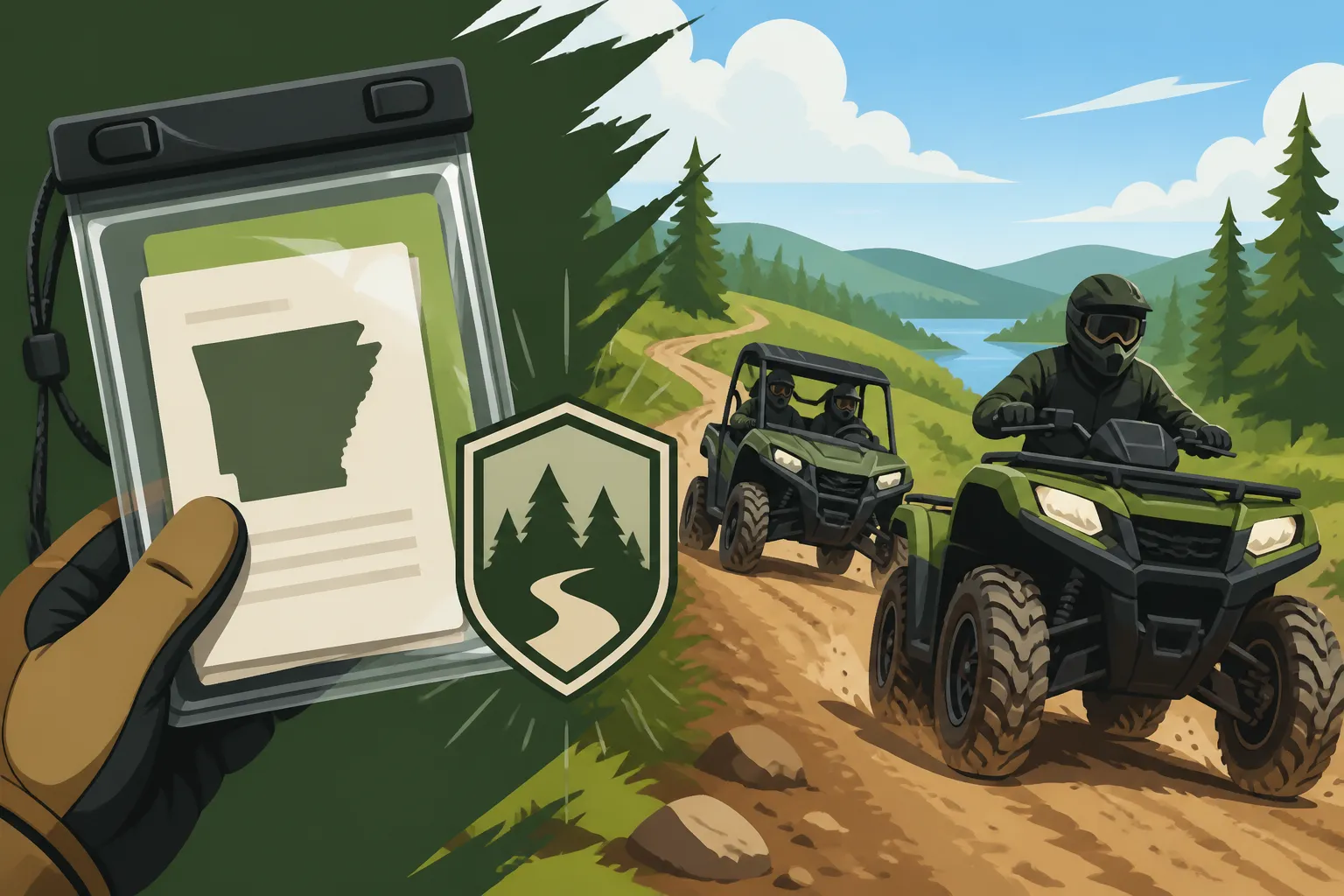
- Dry bags or waterproof pouches: Designed for outdoor use, these are far more durable than a Ziploc. Many outdoor retailers sell small, clear waterproof pouches perfect for documents. Some even have lanyards so you can wear them around your neck or secure them to your gear.
- Hard-shell waterproof cases: For the ultimate protection, consider a small, rugged Pelican-style case. These are airtight and crushproof, perfect for storing multiple documents, a phone, or even a small first-aid kit.
When you're packing, remember that paper can get crumpled and torn even inside a bag. Place your documents flat inside a sturdy folder or a rigid plastic sheet before sealing them in your chosen waterproof container.
Strategic Storage Locations on Your Machine
Where you store your documents matters. You want them accessible but also secure.
- Glove box or under-seat storage: Many UTVs have a glove box or a small storage compartment under the seat. These are good spots, but remember to still use a waterproof container inside these compartments, as they aren't always fully sealed from dust and moisture.
- Cargo box or saddlebags: If you have a cargo box on your ATV rack or saddlebags, these are excellent places. Again, prioritize waterproofing within the storage.
- Personal pockets: For your ID and maybe a digital copy of your registration, your own secure, zippered pockets are a good bet. Just ensure they're not prone to falling out during a bumpy ride.
- Fender bags: Some ATVs can accommodate small fender bags, which can be a convenient spot for frequently accessed items, including a small waterproof pouch.
Avoid putting essential documents in places where they could easily fall out, get crushed by other gear, or be submerged if you have an unplanned dip in a water crossing.
Digital Backups: A Modern Solution
In today's digital age, carrying physical copies isn't your only option. Take clear photos of your registration certificate, bill of sale, and any permits. Store these images on your smartphone. Even better, upload them to a cloud service (like Google Drive, Dropbox, or Apple iCloud) so you can access them from any device, even if your phone gets lost or damaged.
While a digital copy might not always be accepted as primary proof (a physical copy is always preferred for official purposes), it can be a lifesaver if your physical documents are ruined or lost. You might be able to show a digital copy to an officer who can then verify the information through their system. Just be aware of potential [Cell Dead Zones in the Ouachitas] or other remote areas where you might not have service to access cloud-stored documents. Always have a physical copy as your primary backup.
Regular Document Checks
Before every major ride or once a season, take a moment to check your documents. Are they still legible? Is anything expired (like your driver's license)? Has your decal started to peel off? If your [Arkansas Decal Replacement If It Peels Off] is necessary, take care of it before you head out. A quick check can prevent a lot of headaches down the line.
Ensuring your paperwork is always up-to-date and protected means you can focus on what really matters: enjoying the ride and the stunning natural beauty Arkansas has to offer.
Disclaimer
This article is for general informational purposes only and does not constitute professional advice. Laws, prices and regulations vary by location and change over time. Consult a qualified professional for guidance on your specific situation.