Why the Left Front Was Chosen
Ever wonder why that little registration decal for your ATV in Arkansas has to go on the left front? It might seem like a minor detail, but for new quad owners and seasoned riders alike, understanding the 'why' behind this specific placement can save a lot of headaches and ensure you're riding legally. This guide will dive deep into the practical, legal, and safety reasons behind Arkansas's clear rule for ATV decal placement, helping you avoid common mistakes and enjoy your ride worry-free.
The Clear Mandate for Decal Visibility
When you register your ATV in Arkansas, you're issued a small, uniquely numbered decal, not a traditional license plate. This decal is your official proof that your machine is registered with the state, and its placement isn't left to personal preference. The law is quite specific, and for good reason. It’s all about creating an unambiguous system that benefits both riders and those tasked with enforcing the rules.
Arkansas ATV Decal Rules and Where It Goes
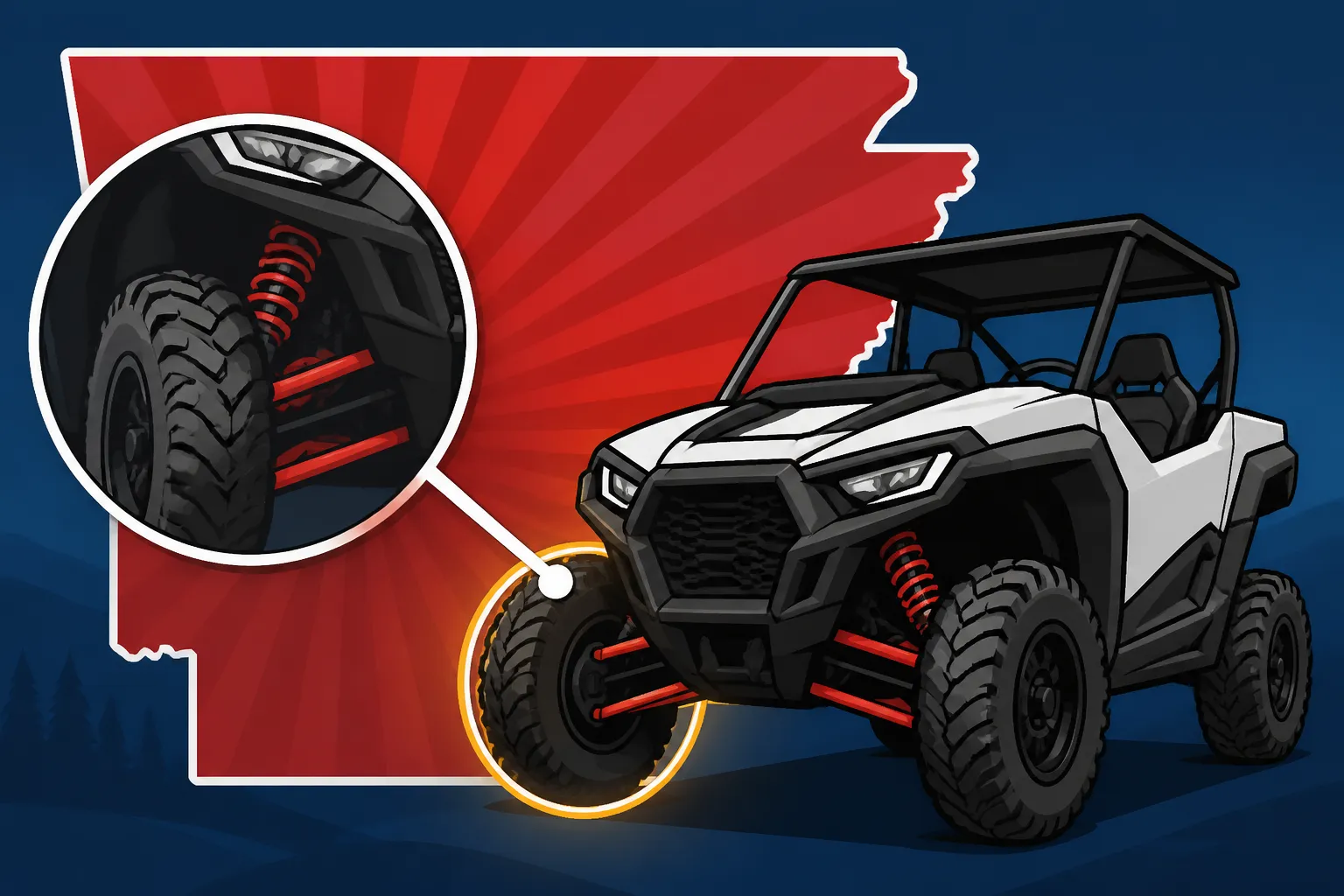
The Arkansas statute specifies that the registration decal must be affixed to the "left front" of the ATV. This isn't just a suggestion; it's a requirement. For most ATVs, this means the left side of the front fender, in a spot that is clearly visible. It needs to be unobstructed by mud, accessories, or anything else that might obscure it. Think of it as the machine's badge of legality. Riders often try to find a spot that looks aesthetically pleasing or feels "right" to them, but straying from the left front can lead to unnecessary conversations with law enforcement. It’s better to follow the rule exactly, even if you feel another spot might be more convenient. [Arkansas ATV Decal Rules and Where It Goes] lays out the specifics of this requirement.
This precise placement is crucial for consistency. Imagine if everyone put their decal wherever they wanted – some on the back, some on the side, some even tucked away. It would create a chaotic system that would be nearly impossible to manage or enforce effectively. The state chooses a single, uniform location to ensure that every registered ATV is marked in the same way, simplifying the job for anyone who needs to quickly verify a machine's status. It's a small detail that contributes to a much larger, more organized system for ATV ownership in Arkansas.
Why a Decal Is Not a Plate
It’s important to understand that this decal serves a different purpose than a vehicle license plate, and [Arkansas Has No ATV License Plate]. Passenger vehicles have plates for several reasons: they often travel on public roads, need to be easily identifiable from a distance, and can be tracked for various traffic violations. ATVs, on the other hand, are primarily off-road machines. While they might briefly cross a public road under specific exceptions, they aren't generally intended for street use like cars or trucks.
The decal provides sufficient identification for off-road environments or when a deputy performs a quick check at a trailhead or during a stop. It's designed for close-up verification, allowing an officer to read the registration number and cross-reference it quickly. A license plate, with its larger size and reflective properties, would be overkill for an ATV, potentially get damaged more easily in rugged terrain, and simply isn't necessary given how ATVs are legally allowed to be used in Arkansas. The decal is a minimalist, effective solution for the machine's intended use.
Practicality and Uniformity for Enforcement
The choice of the left front isn't arbitrary; it's rooted in practical considerations for law enforcement and the overall management of off-highway vehicles. When you're dealing with hundreds, if not thousands, of registered ATVs across the state, having a standardized approach for identification makes everyone's job easier, from the forest ranger to the county deputy.
Ease of Enforcement
For a deputy or park ranger, being able to quickly spot and read a registration decal is paramount. Imagine a trail system where machines are moving, sometimes quickly. If the decal could be anywhere, an officer would have to stop every rider and search for the proof of registration. By mandating the left front, an officer can often verify a machine's registration with a quick glance as a rider approaches or passes by, or during a routine check. This efficiency saves time for both the officer and the rider.
This standardized placement also reduces subjective judgment calls. There's no debate about "where the decal should be" because the law clearly states it. This minimizes potential arguments or misunderstandings during a stop and helps ensure consistent application of the law across different jurisdictions within Arkansas. Knowing where to look means less hassle for everyone involved, reinforcing why following the rule precisely is in your best interest.
Industry Standards and Consistency
While Arkansas has its own unique rules for ATV registration, many states and federal agencies that manage public lands often have similar requirements for visible identification markers. The "left front" placement aligns with a common-sense approach to making off-road vehicles identifiable without requiring extensive modifications or obscuring the rider's view. This isn't a completely isolated rule; it fits into a broader understanding of how these types of machines are typically operated and inspected.
Think about how other stickers or markings are often placed on vehicles – in a clear, accessible spot. This consistency means that whether you're dealing with a local deputy or a park ranger from the USDA Forest Service on federal land, the expectation for where to find a key identifying marker is generally the same. When you're preparing your registration paperwork, perhaps with the help of a legal forms provider like LawDepot, understanding these small but important details helps you get everything right the first time. It ensures your machine is ready for legal riding, whether you’re on private land or an authorized trail system.
Rider Safety and Decal Integrity
Beyond enforcement, the left front placement also considers aspects of rider safety and the longevity of the decal itself. An ATV is a dynamic machine, and its parts are exposed to various forces and elements during operation. Where a decal is placed can affect how well it stays affixed and whether it creates any issues for the rider.
Visibility for Others
While the primary purpose of the decal's visibility is for law enforcement, it also plays a subtle role in general trail awareness. When riding in groups or encountering other riders, having a clearly visible decal on the front of your machine can offer a quick visual cue to others about its registered status. This isn't its main function, but it contributes to an environment where everyone understands the rules of the trail.
More importantly, placing the decal in a consistently visible spot means it's less likely to be obscured by the rider's gear, their body, or accessories they might add to the rear rack or handlebars. The front fender tends to be a relatively open and stable area, ensuring the decal remains easy to see from various angles as someone approaches the front of your machine. This helps streamline any interaction, whether with a park official or another rider curious about trail etiquette.
Avoiding Obstructions
The left front fender is usually a relatively "clean" area on an ATV. Unlike the handlebars, which might have controls, mirrors, or GPS units, or the rear fender, which often holds luggage racks, coolers, or trail bags, the front fender generally has fewer items attached to it that could block the decal. Placing it here ensures it won't interfere with the rider's view of the trail, nor will it snag on brush or get scraped off by shifting cargo.
Consider the alternative: if the decal were on a part of the engine, it could be exposed to heat and oil, causing it to degrade quickly. If it were on the seat, it would be subjected to constant wear and tear. The left front fender provides a balance of visibility and protection from the harshest elements and mechanical interference. It's a sweet spot that helps the decal last through countless rides, which is important since [Arkansas ATV Registration Has No Annual Renewal], meaning this one decal needs to hold up for the life of your ownership. If your decal does start to peel or fade, remember that [Arkansas Decal Replacement If It Peels Off] is an option, but proper initial placement helps prevent that need.
Navigating the Registration Process and Decal Care
Understanding why the decal goes on the left front is just one piece of the puzzle. The entire registration process can feel like a maze, especially for new ATV owners. Knowing what to expect, how to prepare, and how to maintain your registration once you have it will make your life much easier.
What the Decal Communicates
Beyond simply proving you've paid your dues, the decal communicates several important things. It signifies that your ATV has gone through the official channels, confirming its identity and ownership. This is particularly important when you consider instances like theft or recovery, where the unique registration number on the decal can be crucial for identification. When you complete your [Arkansas Registration Paperwork Checklist], you're ensuring that all these details are correctly linked to your machine.
The decal also indicates that you’ve likely paid [What Arkansas Charges to Register an ATV] and any applicable sales tax, which is a one-time fee in Arkansas for ATVs. While you might use resources like LawDepot for other legal needs, the registration process itself typically goes through the Arkansas Revenue Office. The presence of that decal is a quick visual confirmation that you've fulfilled your legal obligation as an ATV owner, regardless of whether you’re riding on a deer lease, farmland, or an official trail system. [Arkansas Registration Even for Backyard Riding] applies, so even if you never leave your property, registration is often a requirement.
What Happens to the Decal When You Sell
Since the Arkansas ATV registration is a one-time deal that never expires, the decal stays with the machine when it's sold. This is different from many other vehicle registrations. When you transfer ownership, the new owner simply updates the registration records with their information. There's no need for a new decal unless the old one is damaged or lost. Understanding [Arkansas Registration Transfer After a Sale] is key for both buyers and sellers to ensure a smooth transition. The decal isn't tied to your ownership, but to the machine itself, making it a permanent identifier for that specific ATV.
| Aspect | Consideration for Decal Placement | Impact of Left Front Placement |
|---|---|---|
| Law Enforcement Visibility | Needs to be easily seen | Quick verification, reduced need for lengthy stops |
| Durability & Longevity | Protected from wear and tear | Less exposure to engine heat, rider contact, or cargo abrasion |
| Rider Obstruction | Cannot block view or controls | Minimal interference with operational parts or line of sight |
| Uniformity | Standardized location | Consistent application of law, easy for all to understand |
| Theft Recovery | Unique identifier | Aids in quick identification and tracing of registered machines |
What a Deputy Can Ask to See
When a deputy or park ranger stops you on a trail or at a trailhead, they're typically looking to ensure you're riding legally and safely. They'll definitely be looking for that decal on the [Arkansas ATV Decal on the Left Front]. Beyond that, they may also ask for proof of ownership, like a bill of sale (which, as mentioned, you can easily draft using templates from providers like LawDepot if you're engaging in a private sale). They'll want to verify that the person operating the ATV is authorized to do so. They might also ask about any specific permits required for the riding area you're in, such as forest passes, although these are separate from state registration.
It's always a good idea to carry copies of your registration paperwork or at least know your registration number. While the decal is the primary visual, having your documentation handy can resolve any questions quickly. Failure to produce the decal or proof of registration can lead to citations, and [Riding Unregistered and Getting Caught] can result in penalties. Always be prepared, be polite, and remember that compliance with these small rules helps ensure everyone can enjoy Arkansas's fantastic riding opportunities safely and legally. If you have questions about the mail-in process for registration, you can look into [Arkansas Mail-In ATV Registration] for more details on how to get your decal initially.
Disclaimer
This article is for general informational purposes only and does not constitute professional advice. Laws, prices and regulations vary by location and change over time. Consult a qualified professional for guidance on your specific situation.