Why a Decal Is Not a Plate
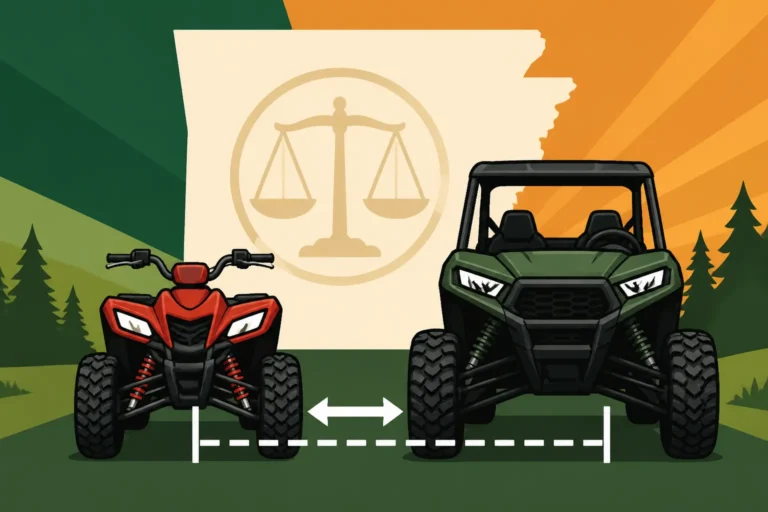
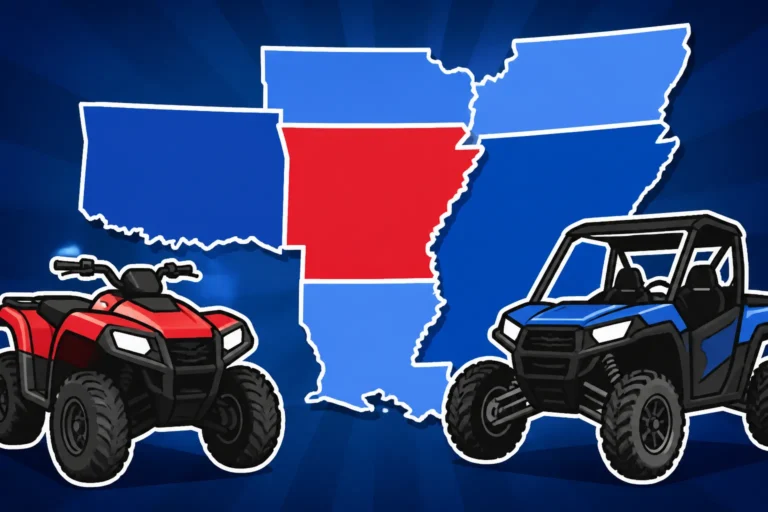
There’s a common mix-up in the world of off-highway vehicles, especially here in Arkansas: the idea that the little sticker you get for your ATV is somehow the same as a license plate for your car or truck. It’s an understandable confusion, given that both are official identifiers, but they serve entirely different purposes and carry vastly different implications for how and where you can ride. This guide is here to clear up that persistent misunderstanding, helping you grasp the fundamental distinctions between an ATV decal and a traditional license plate in the Natural State.
Unpacking the Arkansas ATV Decal: What It Really Is
When you go through the process of registering your all-terrain vehicle in Arkansas, you’re issued an official decal by the state. This little sticker is super important for proving your machine is legitimately registered, but it’s crucial to understand it’s not granting you the same privileges as a license plate would for a street-legal vehicle. It’s designed specifically for off-highway use, a nod to the fact that ATVs are built for tearing up trails, not cruising down Highway 67.
The Decal's Purpose and Appearance
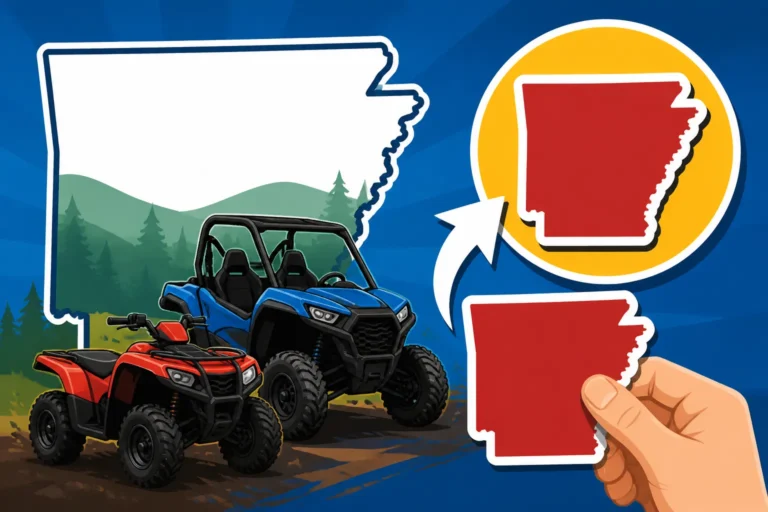
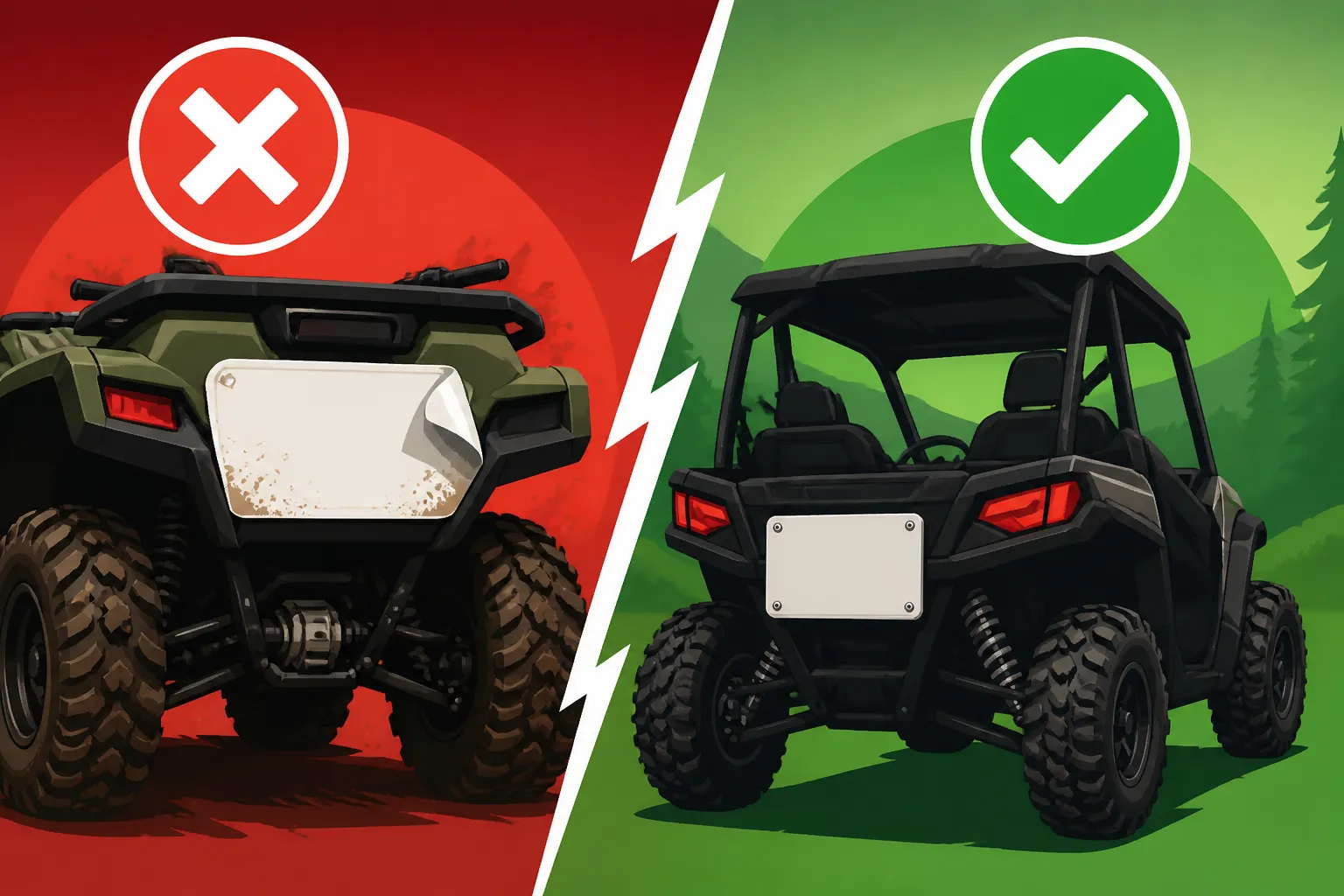
Think of your Arkansas ATV decal as a badge of official compliance for off-highway use. Its primary purpose is to identify your machine as registered within the state's system, confirming that you've paid your dues and your ownership is recorded. It typically features a unique alphanumeric identifier, often with "ARKANSAS" clearly visible, along with a design that signifies its official status. Unlike a vehicle license plate, which is usually a rigid piece of metal mounted prominently on the exterior, the ATV decal is a self-adhesive sticker, designed to be affixed directly to a specific part of your ATV. This small, durable sticker tells any park ranger, deputy, or other official that your machine is in the system and you've met the state's basic requirements for off-road operation.
It’s important to note that while it signifies registration, it doesn't convey anything about roadworthiness or legal permission to operate on public roads. It's a key piece of identification for legitimate off-roaders, showing you've taken the necessary steps to operate your machine legally on designated trails and private property. Without it, you could face fines or other penalties if caught riding on public lands or trails where registration is enforced. It’s your proof that your machine isn't just a rogue vehicle, but one accounted for by the state.
Decal vs. Traditional Vehicle Tags
The distinction between an ATV decal and a traditional vehicle license plate really boils down to what each represents and the kind of vehicle it identifies. A license plate, like the one on your pickup truck, signifies that the vehicle is designed, equipped, and legally permitted for operation on public roads and highways. It's tied to vehicle inspections (where applicable), insurance requirements for road use, and often an annual renewal process. It's a statement of road legality, enabling you to travel freely on the state's network of public thoroughfares.
In contrast, the Arkansas ATV decal is exclusively for off-highway vehicles. These machines are engineered for rugged terrain, not asphalt. They typically lack many of the safety features required for street legal operation, like turn signals, rearview mirrors, and DOT-approved tires (though some UTVs might have some of these for specific ordinances). The decal recognizes this fundamental difference in design and intended use. It's a streamlined system that acknowledges the ATV's specialized role and the unique regulatory framework that governs off-road recreation, without imposing the full weight of street-vehicle requirements. It confirms that your machine has been officially acknowledged by the state, but strictly within the realm of off-road activity.
Why Arkansas Uses a Decal System for Off-Highway Vehicles
Arkansas's choice to use a decal system for ATVs, rather than traditional license plates, stems from the very nature of these vehicles and how they're legally defined. The state statute, [What Arkansas's ATV Statute Covers], specifically classifies ATVs as "off-highway vehicles," meaning their primary and intended use is away from paved roads. The regulations are tailored to this specific use case, focusing on ownership verification and a one-time registration process, rather than the ongoing oversight associated with road-going vehicles. A physical, metal license plate typically implies regular inspection and renewal, neither of which are mandated for ATVs in Arkansas.
Moreover, the aesthetic and practical considerations play a role. ATVs are exposed to harsh conditions—mud, dust, water, and rough trails. A sticker is often more resilient and less prone to damage or loss in such environments than a rigid plate, which could bend, break, or get torn off. Furthermore, the absence of an annual renewal process for Arkansas ATV registration makes the decal a more fitting identifier. Since you register your ATV once and never have to renew it, [Arkansas ATV Registration Has No Annual Renewal], a decal serves as a permanent, albeit small, marker of that initial registration. It’s a simple, effective, and less burdensome system that aligns with the recreational and utility purposes of ATVs within the state.
The Function and Legalities of a Standard License Plate
To truly understand why an ATV decal isn't a license plate, it helps to examine what a license plate does signify and why it's so critical for on-road vehicles. A license plate isn't just a number; it's a legal declaration of a vehicle's right to operate on public roads, backed by specific laws and often stringent requirements. Without it, your car or truck simply isn't allowed to travel on streets, highways, or interstates.
Roadway Identification and Enforcement
A standard license plate for a car, truck, or motorcycle serves as the primary means of identification for that vehicle when it’s operating on public roads. Each plate has a unique combination of letters and numbers, allowing law enforcement, toll systems, and even other citizens to identify the vehicle and its registered owner. This system is fundamental to road safety, traffic law enforcement, and accountability. If there's an accident, a hit-and-run, or a traffic violation, the license plate provides the immediate data needed to track down the responsible party. It’s a critical tool for maintaining order and legality on our shared roadways.
The design and placement of license plates are also standardized for visibility. They must be clearly legible, usually mounted on the front and rear of the vehicle (though some states only require a rear plate), and often illuminated at night. This ensures that no matter the conditions, a vehicle can be identified. Without a license plate, a vehicle is essentially anonymous on the road, making it impossible to enforce traffic laws, collect taxes, or ensure that drivers are properly licensed and insured. This level of identification and regulation is simply not required, nor practical, for machines primarily intended for off-road use, which is why your ATV gets a decal instead. [Arkansas Has No ATV License Plate] for this very reason.
The Renewal Imperative: Annual vs. One-Time
One of the most significant differences between a traditional license plate and an Arkansas ATV decal lies in their renewal cycles. For virtually all road-legal vehicles, license plates come with an annual renewal requirement. This isn't just a bureaucratic formality; it's a mechanism through which states ensure ongoing compliance with various laws. When you renew your car's registration, the state verifies that you have current insurance, have paid any outstanding taxes or fees, and in some cases, that your vehicle has passed required safety or emissions inspections. This annual check-in is vital for public safety and revenue collection, ensuring that only compliant vehicles are sharing our roads.
In stark contrast, the Arkansas ATV registration is a one-time deal. Once you register your ATV and receive your decal, you generally don't have to renew it, ever. [Arkansas ATV Registration Has No Annual Renewal] is a game-changer for ATV owners, removing the recurring hassle and cost associated with annual renewals. This reflects the state's understanding that ATVs, being off-road vehicles, don't impose the same public infrastructure costs or require the same level of ongoing regulatory oversight as vehicles driven daily on public highways. The decal serves as proof of that initial, permanent registration, rather than a temporary permit for a specific year.
What Arkansas Law Says About ATVs and Roads
Perhaps the most critical legal distinction that underpins the decal-vs.-plate discussion is Arkansas law regarding ATVs on public roads. By default, operating an ATV on public roads, streets, and highways is generally prohibited. This isn't just a suggestion; it's a fundamental legal restriction designed to protect both ATV riders and other motorists. ATVs lack many safety features of street-legal vehicles, like appropriate lighting, mirrors, and tires suitable for high-speed asphalt travel. Their handling characteristics are also vastly different, making them unsafe for typical road environments.
While there are some limited exceptions, such as crossing a highway at a ninety-degree angle after coming to a complete stop, or specific allowances for farming or hunting operations, [Arkansas ATV Road Rules: What 27-21-106 Says] outlines these exceptions very clearly and narrowly. These exceptions do not mean your ATV decal grants you general road-riding privileges. It means that under very specific, controlled circumstances, you might be allowed to briefly interact with a public road. A license plate, conversely, is explicit permission for regular road use. This fundamental legal difference in what each identifier permits is why the state issues a decal for off-road machines and a plate for on-road ones; they signify entirely different legal statuses and operating environments.
Practical Differences on the Trail and Beyond
The theoretical distinctions between a decal and a plate really hit home when you consider the practical implications. Where do you put it? What does it let you do? What happens if you don't have one? These questions highlight how the two forms of identification dictate very different experiences for vehicle owners.
Where the Decal Goes and What It Signifies
When you get your Arkansas ATV decal, the instructions are pretty specific about its placement. It needs to be affixed to the left front of the machine, in a highly visible location. [Arkansas ATV Decal on the Left Front] ensures that whether you’re riding on a trail, staging at a trailhead, or pulling into a private park, law enforcement or park officials can quickly and easily verify your registration status. This placement is strategic, making it simple for someone to see if your ATV is properly registered without needing to search for it.
The decal itself signifies that your machine is officially recognized by the state for off-highway use. It means you’ve gone through the proper channels, paid the necessary fees (a one-time registration fee, plus any applicable sales tax), and your ownership is recorded with the Department of Finance and Administration (DFA). It acts as your official permission slip to ride on public ATV trails and any private land where the landowner requires it. It doesn't, however, tell anyone that your machine is insured for road use, or that it has passed any kind of emissions or safety check required of cars. Its message is singular: "This ATV is registered for off-road operation in Arkansas." [Why the Left Front Was Chosen] also highlights the visibility aspect, making it easy to spot even when the machine might be dirty or partially obscured.
Enforcement and Consequences: Riding Without Proper Identification
Riding an ATV without a current and properly displayed Arkansas decal can lead to some inconvenient, and potentially costly, consequences. Just because it’s a sticker doesn't mean it's not serious. When you're out on public trails, in state parks, or even on private land where authorities might be present (e.g., if there's a complaint or incident), officials like game wardens, forest rangers, or county deputies have the authority to ask for proof of registration. [What a Deputy Can Ask to See] might include seeing your decal and, in some cases, proof of ownership or registration paperwork.
If you're caught riding an unregistered ATV, or one with a missing or obscured decal, you could face fines. The exact penalty can vary, but it's always better to avoid the situation entirely by ensuring your decal is correctly affixed and visible. Think of it as a basic requirement for enjoying the trails legally. Unlike the immediate impoundment or severe penalties often associated with driving an unregistered or unplated vehicle on public roads, the consequences for an unregistered ATV are typically focused on compliance and fines. However, repeated offenses or riding in restricted areas could escalate the situation. Having your [Carrying Proof on the Trail] with you, such as your registration card, can also save you a lot of hassle.
Proving Ownership: More Than Just the Decal
While the decal proves your ATV is registered, it's not the ultimate proof of ownership. That role falls to your title, bill of sale, or other purchase documents. For most ATVs in Arkansas, you won't receive a traditional vehicle title in the same way you would for a car. Instead, proof of ownership often relies on the original Manufacturer's Statement of Origin (MSO) or a comprehensive bill of sale. When you register your ATV, the DFA will record your ownership based on these documents.
It's critical to keep these original ownership documents safe. If you ever sell your ATV, transfer ownership, or need to prove it belongs to you for insurance purposes, these documents are paramount. The decal merely shows it's registered; your bill of sale and MSO show who owns it. For private sales, ensuring you have a solid bill of sale is crucial for both buyer and seller. Services like LawDepot can provide templates for a legally sound bill of sale, ensuring all necessary information is included to prevent future disputes. This is especially important when you consider that [Arkansas Sales Tax on an ATV Purchase] also hinges on accurate documentation of the sale price. Even after registration, keeping a copy of your [Arkansas Registration Paperwork Checklist] and your proof of ownership handy can prevent headaches down the line.
Common Misconceptions and Crucial Clarifications
Despite the clear distinctions, the line between a decal and a plate often gets blurred in the minds of riders. Let's tackle some of the most persistent misunderstandings head-on, because clarity here can save you from a ticket or worse.
The Decal as a "Permission Slip" Misconception
One widespread misconception is that simply having an Arkansas ATV decal acts as a general "permission slip" to ride your machine anywhere, including on public roads or city streets. This couldn't be further from the truth. The decal's permission is strictly for off-highway operation on designated trails, private property (with permission), and other areas legally open to OHV use. It does not magically transform your ATV into a street-legal vehicle. This misunderstanding often leads riders into situations where they are unknowingly breaking the law, exposing themselves to fines and even potential accidents with road-going traffic.
The state's goal with the decal system is to track ownership and ensure that ATVs operating in designated areas are accounted for, not to grant broad permissions for road use. It's about regulating the off-road environment efficiently. Thinking of your decal as a pass for anything beyond off-pavement adventures is a risky gamble. Always refer back to [Arkansas ATV Road Rules: What 27-21-106 Says] and your local ordinances before venturing anywhere near a public road with your ATV. Unless a very specific local ordinance allows for limited UTV use on certain city streets (and these are few and far between for ATVs), you should assume public roads are off-limits.
Why Your Decal Doesn't Allow Road Use
The primary reason your Arkansas ATV decal doesn't allow road use comes down to the fundamental design and legal classification of ATVs. As mentioned earlier, ATVs are built for off-road performance—tough suspension, knobby tires for traction on loose surfaces, and often limited lighting or signaling capabilities. These characteristics, while excellent for trails, make them inherently unsuitable and unsafe for paved roads, where higher speeds, smooth tires, and comprehensive safety features are standard. The law recognizes this difference by prohibiting ATVs from most public roads.
Consider the implications: an ATV is less stable at road speeds, its tires wear out quickly and offer poor grip on asphalt, and without proper turn signals or brake lights, it can be a hazard to other drivers. The state isn't trying to be difficult by restricting road access; it's protecting both you and other motorists. The decal acknowledges the ATV's legal status as an off-highway vehicle, and that status inherently comes with road restrictions. It is not an oversight; it is by design. Your decal is for the dirt, the gravel, and the mud, not the asphalt. Even if your side-by-side has some features that look like road-going equipment, the decal is still an off-highway identifier. [Arkansas UTV Registration Requirements] also clarifies that even for UTVs, the general rule is no road use without specific local ordinances and modifications.
The Future of Arkansas ATV Identification
As the popularity of ATVs and UTVs continues to grow, and with an increasing number of people seeking to enjoy Arkansas's beautiful natural landscapes, discussions around ATV identification and regulation might evolve. While the current system for decals is one-time and permanent, legislative bodies occasionally revisit laws to adapt to new technologies, safety concerns, or shifting recreational trends. However, any significant change would likely involve extensive public input and legislative debate.
For now, the decal system remains efficient and effective for its intended purpose: identifying registered off-highway vehicles. Riders should always stay informed about any potential changes to ATV laws by checking official Arkansas government websites or local Department of Finance and Administration resources. The core principle of "off-highway means off-highway" is likely to remain, cementing the decal's role as a clear distinction from a road-legal license plate. The state wants to ensure that [What Arkansas Requires of an ATV Owner] is clear and easy to follow, and the current decal system largely achieves that for off-road purposes.
| Feature | Arkansas ATV Decal | Standard Vehicle License Plate |
|---|---|---|
| Vehicle Type | All-Terrain Vehicles (ATVs), UTVs | Cars, Trucks, Motorcycles (Road Vehicles) |
| Purpose | Off-highway registration, ownership record | On-road identification, legal operation |
| Physical Form | Adhesive sticker | Rigid metal plate |
| Placement | Left front of the machine | Rear (often front and rear) |
| Renewal | One-time registration, never renews | Annual renewal required |
| Road Legality | Generally prohibited on public roads | Required for legal public road use |
| Inspections | Not required | Often required (safety, emissions) |
| Primary Use | Trails, private land, off-road areas | Public roads, streets, highways |
The distinction between an ATV decal and a traditional license plate is more than just semantics; it's about understanding the legal framework that governs your ride. By grasping the specific purpose of your Arkansas ATV decal, you can confidently and responsibly enjoy the incredible off-road opportunities our state offers, all while staying on the right side of the law.
Disclaimer
This article is for general informational purposes only and does not constitute professional advice. Laws, prices and regulations vary by location and change over time. Consult a qualified professional for guidance on your specific situation.