Why Highway 63 Stays Off Limits in Bono
It can be incredibly frustrating to hear that your town has finally passed an ordinance allowing UTVs on city streets, only to find out that a major artery, like Highway 63 in Bono, is still strictly off-limits. You see other side-by-sides cruising around town, and it leaves you scratching your head, wondering why this particular road remains a no-go zone. This guide is here to unravel that mystery, explaining the layers of state law and local ordinances that dictate where your ATV or UTV can and cannot legally roam in Arkansas, particularly why certain highways, despite local efforts, stay closed.
The Default Position: Arkansas Makes Road Riding Unlawful by Default
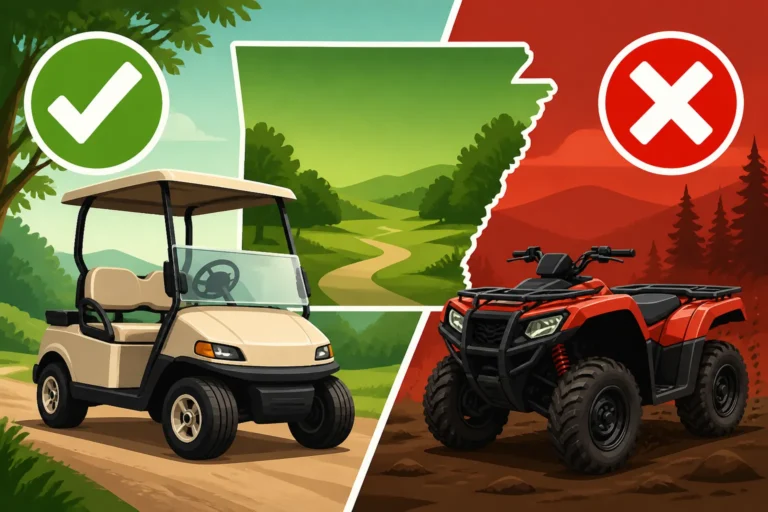
Let's start with the big picture, because it's the foundation for everything else. In Arkansas, the general rule of thumb is that ATVs and UTVs are not street legal. This isn't just some local regulation; it's a statewide statute that explicitly keeps these machines off most public roads. Think of it as the baseline. Unless there's a specific exception carved out by law, your off-road machine belongs, well, off-road.
This default stance is rooted in safety and the fundamental design of these vehicles. ATVs and UTVs are built for rugged terrain, tight turns, and low-speed maneuverability, not the demands of paved roads with higher speeds, traffic, and different braking requirements. The tires, suspension, and overall construction are optimized for dirt, mud, and rocks, making them less predictable and potentially more dangerous on asphalt. The state's position, initially, was to keep everyone safe by separating these machines from highway traffic. For a deeper dive into this, check out [Arkansas Makes Road Riding Unlawful by Default].
So, when we talk about towns like Bono opening their streets, we're not talking about a blanket reversal of this state law. Instead, we're talking about specific, limited exceptions that require careful interpretation and adherence. It’s a bit like a federal law having a general rule, but allowing states to make their own, more specific laws, as long as they don’t contradict the federal one. Here, the state law is the overarching rule, and local ordinances are the specific, carve-out exceptions.
Act 922 and the Power of Local Ordinances for UTVs
For years, the idea of legally riding a UTV on city streets in Arkansas seemed like a pipe dream for many enthusiasts. But that started to change with the passage of Act 922. This crucial piece of legislation didn't make UTVs street legal statewide; rather, it empowered individual towns and cities to create their own ordinances to allow certain UTVs on their streets. This was a game-changer for many communities, giving them the flexibility to decide what worked best for their local residents and economy.
Act 922, which went into effect on [August 5, 2025 and What Changed], essentially gave local governments the green light to open their roadways to UTVs, provided they meet certain criteria. It was a recognition that side-by-sides, with their wider stances and often more robust safety features compared to traditional ATVs, could potentially operate safely on certain low-speed municipal roads. This is why you started seeing articles about towns like Bono, Bono being one of the pioneers, passing ordinances to permit UTV use. For more on the legislative journey, read [How a Bill Became Arkansas Act 922]. This local control meant that while the state still generally restricted off-road vehicles, cities could opt-in for UTVs, crafting rules that fit their unique environments.
This is where the nuance comes in. While cities gained this power, it wasn't a blank check. The state law still imposed some overarching limitations, and the cities themselves, in their ordinances, added further restrictions to ensure safety and manage traffic. It wasn't about making every road fair game; it was about opening specific, controlled avenues for UTV travel. [Arkansas Towns Can Open Their Streets to UTVs] explains how this local option works in practice.
Specific Restrictions Within Local Ordinances
Even with the ability to pass UTV ordinances, Arkansas cities like Bono didn't just throw open all their roads to side-by-sides. These local rules come with specific restrictions designed to manage safety, traffic flow, and compatibility with the existing infrastructure. Understanding these limitations is key to knowing why a road like Highway 63 remains inaccessible.
Speed Limits and Road Types
One of the most common and critical restrictions you'll find in city ordinances is a speed limit for UTVs and specific road types they can use. Most ordinances, including Bono's, limit UTV operation to streets with posted speed limits under a certain threshold, often 35 mph or 45 mph. The faster a road, the higher the risk of a UTV interacting with traditional vehicle traffic at speeds for which it wasn't designed. This is a primary reason why major thoroughfares are often excluded, even within city limits. You can find more detail on this in [Arkansas Streets Under 55 mph for UTVs].
Furthermore, many ordinances will explicitly ban UTVs from state and federal highways that pass through city limits. Even if a section of Highway 63 inside Bono has a lower speed limit, its classification as a state highway often places it outside the jurisdiction of the local ordinance for UTV use. The city has control over its own municipal roads, but state highways fall under the purview of the Arkansas Department of Transportation (ARDOT).
Four-Lane Street Exclusions
Another common exclusion that directly impacts roads like Highway 63 is the ban on four-lane streets. Many local ordinances, and often the spirit of Act 922, prohibit UTVs from traveling on four-lane roads, regardless of their speed limit. This is a major safety consideration. Four-lane roads typically carry higher volumes of traffic, often include turning lanes, and present more complex driving scenarios for UTVs, which might not accelerate or brake as quickly as a passenger car.
This restriction is a practical response to the differences in vehicle dynamics. Imagine a UTV, even a powerful one with SuperATV modifications for performance, trying to merge onto a busy four-lane road or navigate heavy traffic. The size, visibility, and speed differential can create significant hazards. For clarity on this, see [Arkansas Four-Lane Streets Stay Closed]. This exclusion ensures that UTVs stick to less congested, lower-speed, residential-style streets where they can operate with less risk.
Bono's Specific Ordinance and Highway 63
Bono's ordinance, like others, sets out precise boundaries for UTV use. While it opened many city streets to UTVs, it specifically carved out exceptions for state and federal highways. This is not a slight against UTV owners, but a legal and safety necessity. A city cannot unilaterally override state law or state highway regulations.
For riders in Bono, understanding [Bono's Street Rules for UTVs in Arkansas] is critical. It will outline which specific streets are permitted, what equipment is required (lights, mirrors, etc., which you can often find from aftermarket providers like SuperATV), and any annual permit fees. It's a local agreement that your UTV can be on some local streets, but it stops short of letting you cruise on state property like Highway 63. This means that while you might be able to ride your UTV to the corner store, getting to a destination across town that requires even a short stretch on the highway is still off-limits.
Here's a simplified look at the jurisdictional breakdown that plays into these rules:
| Road Type | Typical Jurisdiction | UTV Access (within city limits) | Why Highway 63 is Off-Limits |
|---|---|---|---|
| Local City Streets | City Council | Permitted by ordinance | Falls under city's UTV ordinance provisions. |
| State/Federal Highway | ARDOT (State) | Generally Prohibited | Beyond city's power to regulate for UTV use; state law overrides. |
| Private Roads | Landowner | Permitted with permission | Not public, so city/state laws don't apply, only owner's rules. |
This table clearly illustrates why Highway 63, as a state highway, falls under a different authority than the city streets that Bono has chosen to open up.
Why State Highways Are Different
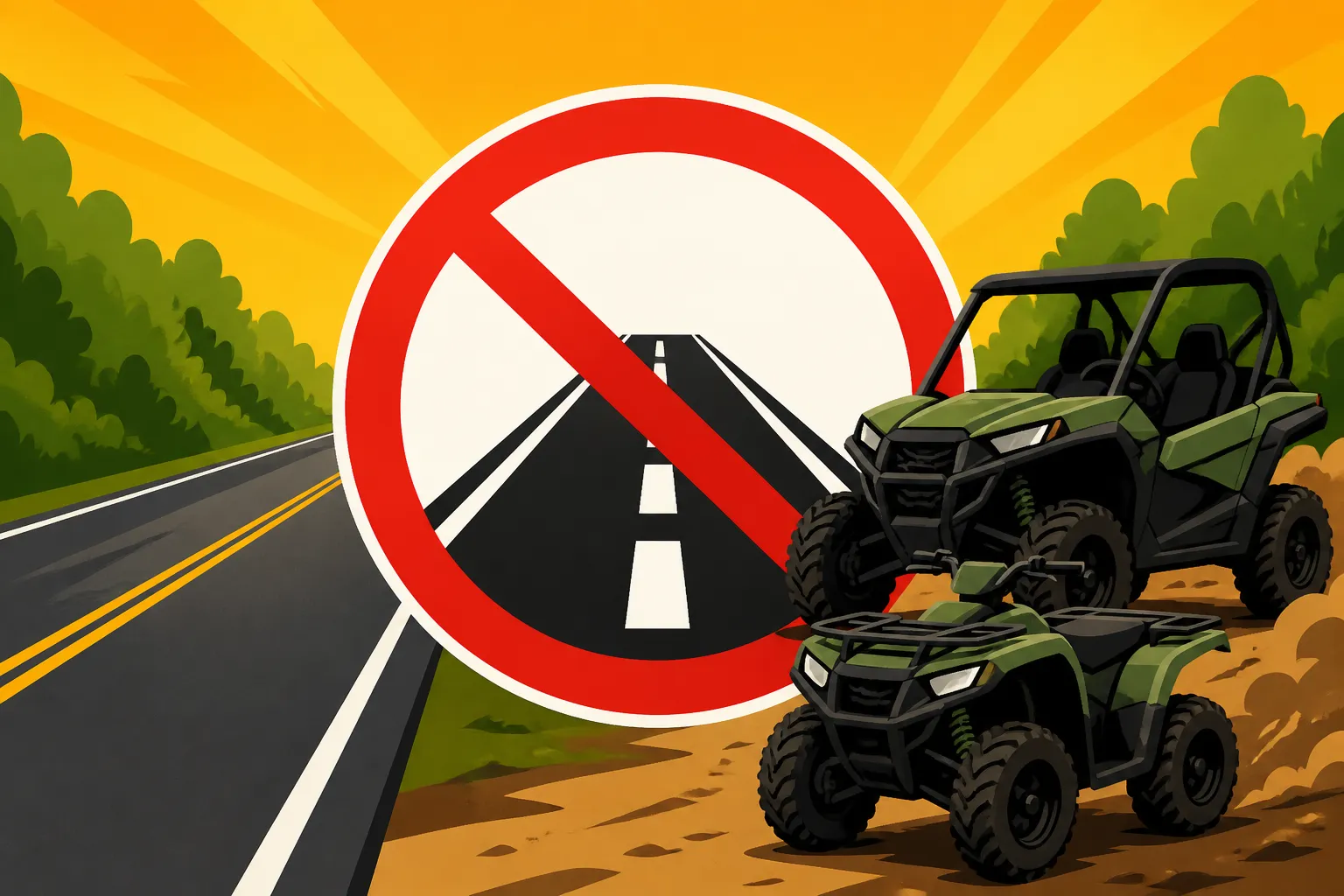
The fundamental reason why Highway 63, and indeed most state and federal highways in Arkansas, remains off-limits to ATVs and UTVs, even if a city allows them on other roads, boils down to jurisdiction and classification. These aren't just "big roads"; they are designated state or federal routes with specific regulations that supersede local ordinances.
State Jurisdiction vs. Local Control
State highways fall under the direct control and regulatory authority of the Arkansas Department of Transportation (ARDOT). This means that decisions regarding traffic laws, vehicle types permitted, speed limits, and safety standards for these roads are made at the state level, not by individual city councils. While a city might maintain sections of a state highway within its limits, the core regulatory power over what vehicles can use it rests with the state.
When Bono passed its ordinance, it was operating within the powers granted by Act 922, which specifically allows cities to regulate UTVs on their streets. However, Act 922 did not grant cities the power to override state law regarding state or federal highways. So, while Bono can say "yes" to UTVs on Elm Street, it cannot say "yes" to UTVs on Highway 63 without explicit state approval, which currently does not exist for general UTV use.
Safety and Design Standards
State highways are designed for high-speed, high-volume traffic. Vehicles operating on these roads are expected to meet stringent safety standards, including crashworthiness, lighting, braking, and tire specifications, that most ATVs and UTVs simply do not meet. While many modern UTVs are incredibly robust and accessories from brands like SuperATV can enhance their safety features, they are still fundamentally different from a street-legal car or truck.
The risk of a UTV operating alongside vehicles traveling at 60+ mph on a state highway is significantly higher than on a residential street with a 25 mph speed limit. This distinction is critical for public safety and is a primary driver behind the state's continued restriction on these roads. The state has a responsibility to maintain a consistent safety standard across its highway network, and that includes limiting vehicles that don't meet those standards.
Limited Exceptions for State Highways
It's worth noting that there are some very specific exceptions where ATVs or UTVs might be allowed to briefly interact with state highways, but these are typically extremely limited and don't apply to general travel. For instance, [Arkansas Farming and Hunting Road Exceptions] allows for crossing a highway at a ninety-degree angle after coming to a complete stop, or for very specific agricultural or hunting-related purposes over short distances, and often with signage or permits.
These exceptions are narrowly defined and are not meant to enable leisurely drives down a state highway. They exist to facilitate necessary activities, not recreational riding. So, while you might see a farmer briefly cross Highway 63 on their UTV in a very specific scenario, it's not the same as being able to travel on it as a regular mode of transport.
Navigating Bono's UTV Rules and the Highway 63 Conundrum
So, what does all this mean for you, the UTV owner in or around Bono, Arkansas? It means you need to be acutely aware of your local ordinance's boundaries and respect the state's jurisdiction over its highways.
Know Your Local Ordinance Inside and Out
First and foremost, get a copy of Bono's specific UTV ordinance. Don't rely on hearsay or what a friend "thinks" is allowed. This document will be your bible for legal riding within city limits. It will detail:
- Permitted Streets: Which specific roads are open to UTVs.
- Excluded Streets: Explicitly named highways or types of roads (like four-lane streets) that are off-limits.
- Operating Hours: Any restrictions on when you can ride (e.g., no night riding).
- Required Equipment: Lights, turn signals, mirrors, horn, seatbelts, etc. Many of these items can be added with quality aftermarket parts from companies like SuperATV to bring your machine up to spec.
- Permit Requirements: Whether you need an annual permit or decal, and how to obtain it. [Arkansas UTV Street Permits and Annual Fees] would cover this.
- Driver Requirements: Age, license, and insurance stipulations.
When in doubt, contact the Bono city clerk's office or the local police department for clarification. It's always better to ask than to receive a citation. A quick read of [Reading Your Town's Ordinance Before You Ride] is highly recommended.
Planning Your Route
Since Highway 63 is off-limits, you'll need to plan your routes carefully if you're using your UTV for transportation around Bono. This might mean longer, less direct routes to avoid the highway, or simply accepting that some destinations might require a car or truck. It’s a bit of a puzzle, but with a map and a clear understanding of the rules, you can still enjoy your UTV for local errands and recreation.
Consider using mapping apps that allow you to customize routes and avoid specific road types. While not all will have a "no state highway for UTVs" option, you can manually guide your route around them. This is where patience comes in – sometimes the shortest distance isn't the legal one.
Enforcement and Penalties
Deputies and local law enforcement are well aware of the rules. If you're caught operating your UTV on Highway 63, even for a short distance, you could face penalties. These can include fines, court costs, and potentially having your machine impounded. [Arkansas Penalties for Illegal Road Riding] details the potential consequences.
It's a tough pill to swallow when you're just trying to get from Point A to Point B, but the law is the law. Officers are simply enforcing what the state and city have put in place for safety and regulatory reasons. The fact that a town has an ordinance at all is a step forward for UTV enthusiasts, and respecting the boundaries helps maintain that privilege. [What Arkansas Deputies Check at a Stop] will give you an idea of what officers are looking for during a stop.
Safety and Enforcement Considerations
The restrictions on roads like Highway 63 aren't arbitrary; they are deeply rooted in safety concerns and the practicalities of law enforcement. When we talk about off-road vehicles on public roads, several factors come into play that lead to these cautious approaches.
Speed Differentials and Accident Risk
One of the most significant safety concerns on state highways is the dramatic speed differential between UTVs and conventional traffic. While a UTV can certainly reach highway speeds, its acceleration, braking distance, and handling characteristics are designed for off-road conditions, not the quick reactions needed on a busy highway. A driver in a passenger car traveling at 65 mph might not anticipate a UTV's slower acceleration from a stop sign, or its potentially longer braking distance if an unexpected event occurs. This creates a high risk for rear-end collisions or other serious accidents.
Lawmakers and traffic safety experts analyze these risks. The purpose of restricting UTVs from high-speed highways like Highway 63 is to prevent scenarios where the unique characteristics of an off-road vehicle could lead to a catastrophic incident involving faster-moving, heavier highway traffic. Even with excellent visibility and an aggressive tire setup, like some of the options SuperATV provides for different terrains, the fundamental design difference remains.
Visibility and Crash Protection
While UTVs have improved significantly in terms of safety over the years, including features like roll cages and seatbelts, they still offer less crash protection than a fully enclosed passenger vehicle. On a state highway, where impacts can occur at high speeds, the consequences for occupants of a UTV can be far more severe.
Furthermore, despite efforts by riders to add reflective tape and bright lighting, UTVs can sometimes be less visible than cars or trucks, particularly in certain lighting conditions or in the blind spots of larger vehicles. This reduced visibility, combined with the lack of robust crumple zones and airbags, makes their presence on high-speed roadways a significant safety concern for both UTV occupants and other motorists.
Consistency in Law Enforcement
Having clear, consistent rules for state highways also simplifies law enforcement. If every city could decide which sections of state highway were open or closed to UTVs, it would create a patchwork of regulations that would be incredibly difficult for drivers and law enforcement to track and enforce. Imagine driving through several towns on Highway 63, with some sections open and others closed – it would be a recipe for confusion and unintended violations.
By maintaining state control over these major arteries, the rules remain uniform across the state. This helps ensure that when a law enforcement officer sees a UTV on Highway 63, regardless of which city it's passing through, they know the state's default rule applies, and it's generally not permitted for general travel.
Conclusion
Understanding why Highway 63 remains off-limits for ATVs and UTVs in Bono comes down to a clear division of powers between state and local authorities, coupled with significant safety considerations. While Act 922 has bravely empowered Arkansas cities like Bono to open up their municipal streets to UTVs, state highways like Highway 63 fall under the jurisdiction of ARDOT, where the default state law still prohibits general off-road vehicle use.
It might feel like a double standard, especially when you see UTVs on other streets in town, but these regulations are in place to manage complex traffic flows, maintain consistent safety standards, and protect everyone on the road. For riders in Bono, the key is to know your local ordinance, respect the boundaries of state highways, and enjoy your UTV safely and legally on the many city streets that are now open to you. It's all about navigating the legal landscape wisely, ensuring you're part of the solution, not contributing to potential problems on our roads.
Disclaimer
This article is for general informational purposes only and does not constitute professional advice. Laws, prices and regulations vary by location and change over time. Consult a qualified professional for guidance on your specific situation.