Who Arkansas’s Off-Road Vehicle Law Covers
It can be incredibly confusing trying to figure out if your beloved quad or side-by-side actually falls under Arkansas's off-road vehicle laws. Many riders simply assume their machine is an ATV, only to find out the state distinguishes between various types, or has specific limitations based on size, engine, or even tire type. This guide will meticulously break down exactly which machines and scenarios are covered by Arkansas's off-road vehicle (ORV) statutes, helping you understand where you stand before you hit the trails or even cross a public road.
Understanding Arkansas's Legal Definition of an Off-Road Vehicle
When we talk about "the law" here in Arkansas concerning off-road vehicles, it's crucial to understand that lawmakers often craft very specific definitions. These aren't just general terms you use around the campfire; they have real implications for how you register your machine, where you can ride it, and what rules you need to follow. Many riders get tripped up right at this first hurdle, assuming that if it has four wheels and goes off-road, it's all treated the same. That's just not the case, and misunderstanding these definitions can lead to citations or even more serious issues.
Key Elements of the Legal Definition
Arkansas's statute for all-terrain vehicles, often the foundation for broader off-road vehicle discussions, hinges on several key characteristics. It really starts with the basics: what kind of wheels does it have, how wide is it, and how big is its engine? These physical attributes are often the first things an officer or state employee will look at when determining if your machine fits the legal mold. It’s not just about what you call your machine, but what it is in the eyes of the law.
Specifically, the law generally defines an all-terrain vehicle (ATV) as a three-, four-, or six-wheeled vehicle designed for off-highway use. Crucially, it must be 50 inches or less in width, have an unladen dry weight of 1,000 pounds or less, and be intended by the manufacturer primarily for use by a single operator. The engine size is also specified, generally being 1,000 cubic centimeters or less. These specific measurements mean that many modern, larger side-by-sides, for example, immediately fall outside the strict definition of an "ATV" even though they are clearly "off-road vehicles." This distinction matters because while they are both ORVs, their treatment under different parts of the law can vary. You can learn more about [Arkansas's 50-Inch, 1,000cc ATV Definition].
Distinguishing ATVs from UTVs Under the Law
Here's where a lot of the confusion comes in for riders. While we often use "ATV" as a catch-all for anything off-road, Arkansas law often uses the term "all-terrain vehicle" (ATV) very specifically. This strict definition often applies primarily to the smaller, single-operator machines. Side-by-sides, or utility terrain vehicles (UTVs), typically have multiple seats, a steering wheel, and are often much wider and heavier than the ATV definition allows. While they are undoubtedly off-road vehicles, they often fall into a broader category or may be addressed separately in specific statutes, particularly when it comes to things like street-legal ordinances.
For instance, many towns and cities that have passed ordinances allowing off-road vehicles on public streets have specifically focused on UTVs, often with width restrictions closer to 80 inches, acknowledging that they are distinct from the narrower ATVs. This distinction highlights that while your UTV needs to be registered as an off-road vehicle, the specific rules for its operation, especially on roads, might be found in different sections of the code than those strictly defining "ATVs." This is why it’s so important to dig into the exact wording of the law, rather than relying on common parlance, when determining [Who Arkansas's Off-Road Vehicle Law Covers].
Specific Vehicle Types Covered and Not Covered
Arkansas's off-road vehicle laws don't just lump every machine that rides on dirt into one category. The type of machine you own significantly impacts whether and how it's covered. It's not uncommon for riders to buy a new machine, assuming it's an "ATV" or "UTV," only to find out that its specifications put it in a different legal class, or even outside what the statutes intended to regulate as an off-road vehicle. This can be a real headache, especially if you're trying to figure out registration or where you can legally ride.
Standard ATVs and Quads
The classic four-wheeled all-terrain vehicle, or quad, is usually what comes to mind for the state's primary ATV definition. These are the machines typically designed for a single rider, with handlebars, and fitting within those specific width, weight, and engine size parameters mentioned earlier. If your machine is 50 inches or less in width, weighs under 1,000 pounds dry, has an engine 1,000cc or smaller, and has three, four, or six wheels, it’s highly likely it falls squarely under Arkansas's specific ATV registration and operational rules. This also applies to youth quads, though they come with their own set of age restrictions for operators.
For these standard ATVs, the law is pretty straightforward: you'll generally need to register it for off-highway use, and you'll get a decal for it. This registration process is a one-time affair, thankfully, and doesn't require annual renewal. These machines are built for the trails and fields, and the law primarily governs their registration and their use on public lands and across roads. If you're wondering about specifics, checking [Arkansas's 50-Inch, 1,000cc ATV Definition] can clarify if your quad meets the criteria.
Side-by-Sides (UTVs) and Their Nuances
Side-by-sides, also known as UTVs, are where things get a bit more nuanced. Because many UTVs exceed the 50-inch width and 1,000-pound weight limits of the traditional ATV definition, they don't technically fit into the "all-terrain vehicle" category as narrowly defined in some statutes. However, they are still absolutely considered "off-road vehicles" and are subject to regulation, particularly regarding registration and road use. Many local ordinances explicitly address UTVs for street-legal purposes, recognizing their distinct design and capacity for multiple passengers.
The confusion here often stems from the fact that while a UTV might not be an "ATV" by the state's narrow definition, it still requires registration like an ATV. You'll still get a decal, and it's essential for ensuring you're operating legally on public lands. When it comes to street use, UTVs are often the focus of local "street legal" ordinances. These ordinances set out specific requirements like turn signals, mirrors, and sometimes even insurance. So, while your big, powerful side-by-side from a brand like SuperATV might be wider and heavier than a traditional quad, it’s definitely covered by other parts of Arkansas's off-road vehicle law, especially regarding [Arkansas UTV Registration Requirements].
Machines That Fall Outside the Definition
Not every vehicle that can go off-road is considered an "off-road vehicle" under Arkansas law. This is another area that causes significant confusion, especially for new riders or those transitioning from other states. For instance, dirt bikes, while designed for off-road riding, are typically classified as motorcycles. This means they often follow different rules for registration, titling, and operation, even if you’re only riding them on trails. They have their own set of laws that govern them, distinct from ATVs and UTVs.
Similarly, golf carts are generally not considered off-road vehicles in the same vein as ATVs or UTVs. While they might be driven on private property or even specific public roads in communities with special ordinances, their legal framework is separate. Electric machines, depending on their design and purpose, also might not fit the specific definitions for ATVs or UTVs, though some small electric recreational vehicles could be interpreted to fall under the broad "off-road vehicle" umbrella for some purposes. Understanding these distinctions is crucial, because trying to register a dirt bike as an ATV, for example, simply won't work at the revenue office. For more on what doesn't qualify, see [Machines That Fall Outside Arkansas's ATV Definition].
| Vehicle Type | Arkansas ATV Statute Coverage | Key Characteristics | Common Misconceptions |
|---|---|---|---|
| Traditional ATV/Quad | Yes, typically fully covered. | 3, 4, or 6 wheels; max 50" width; max 1,000 lbs dry weight; max 1,000cc engine; designed for single operator. | "All off-road vehicles are ATVs." |
| Side-by-Side (UTV) | Yes, as an "off-road vehicle" but often outside strict "ATV" definition. | Often wider (>50"); heavier (>1,000 lbs); multiple seats; steering wheel. Covered under general ORV regs for registration. | "My UTV is an ATV, so all ATV rules apply." "My UTV is too big for the law." |
| Dirt Bike | No, classified as motorcycles. | Two wheels; motorcycle-specific registration and titling rules apply, even for off-road use. | "It's an off-road machine, so it's an ATV." |
| Golf Cart | No, separate statutes apply. | Low-speed; designed for golf courses/short distances. Specific local ordinances may permit limited road use. | "It's slow and off-road capable, so it's an ORV like an ATV." |
| Electric Machine | Depends on specific design/intent. | Some may fit ORV definitions if designed for similar use and dimensions. Many small electric vehicles are excluded. | "Electric means it's unregulated." |
Age and Rider Restrictions
Arkansas's off-road vehicle law isn't just about the machine; it's also very much about who is riding it. The state takes the safety of its younger riders seriously, and for good reason. Operating an ATV or UTV requires skill, judgment, and physical capability, and these can vary wildly depending on age and experience. It's a common frustration for parents who just want their kids to enjoy the outdoors, but the rules are there for a reason, and understanding them is crucial to avoiding accidents or legal trouble.
Minimum Age Requirements for Operation
Generally speaking, there isn't a strict, universal minimum age to simply be on an ATV or UTV on private land in Arkansas. However, when it comes to operating these machines, especially on public lands or crossing public roadways, age restrictions become very important. The law often looks to the operator's age to ensure they possess the maturity and capability to handle the vehicle responsibly. For instance, when a UTV is permitted on city streets, there is usually a requirement that the driver be at least 16 years old and possess a valid driver's license, just like with a regular car.
While specific statutes for operating on private land are less rigid, common sense and liability issues heavily dictate parental decisions. For operation on state-managed trails or public access points, the general guideline often aligns with safety course recommendations. It's always best to err on the side of caution and ensure a rider is both physically capable and mature enough for the specific machine they are operating, regardless of the terrain.
Supervision Rules for Young Riders
Arkansas law places significant emphasis on adult supervision for young riders. For any rider under the age of 12 operating an off-road vehicle, direct supervision by an adult who is at least 18 years old is generally required. This isn't just a suggestion; it's a legal expectation designed to protect children from accidents and to ensure they are learning safe riding practices. Direct supervision means the adult needs to be present and able to intervene if necessary, not just somewhere on the property.
This rule means that a child under 12 can't simply be given the keys and sent off to ride alone, even on private family land. The supervising adult is responsible for their safety and compliance with any applicable rules. For machines like youth quads, while they are smaller and designed for younger riders, they still require this critical oversight. Many families find this challenging, especially when dealing with multiple children or large properties, but the intent is clear: safety first. For a deeper dive into these rules, check out [Arkansas ATV Age Rules for Young Riders] and [Adult Supervision Rules for Arkansas Riders Under 12].
Land Use and Operation Scope
Where you can actually ride your off-road vehicle in Arkansas is a major component of the state's ORV law. It's not a free-for-all; there are specific rules governing public lands, private properties, and especially public roads. Many riders feel frustrated by the patchwork of regulations, especially when they just want to get from one part of their land to another, or access a trail. Understanding these boundaries is essential for legal and responsible riding.
Public vs. Private Land Riding
The most significant distinction in off-road vehicle law often lies between private property and public lands. On private land that you own or have explicit permission to use, the rules are generally much more relaxed regarding operation, as long as you're not disturbing neighbors or violating local nuisance laws. This is where many families teach their kids to ride, or where hunters use their machines for practical purposes. However, even on private land, age and supervision rules still apply, especially if the land is leased or if there are specific agreements in place. A good practice is always to get [Written Permission From an Arkansas Landowner] if you're not the owner.
When you transition to public lands, such as national forests, state parks (where permitted), or designated OHV trails, the rules become much more stringent. These areas often require an OHV permit in addition to your state registration, and they have specific regulations regarding trail access, width restrictions, speed limits, and even spark arrestors. It’s crucial to check with the managing authority (e.g., USDA Forest Service, Arkansas Game and Fish Commission for WMAs) before riding on any public land, as rules can vary by location and even seasonally. You can find more information about [Arkansas National Forest Riding Explained] to prepare for these areas.
Crossing Highways and Roads
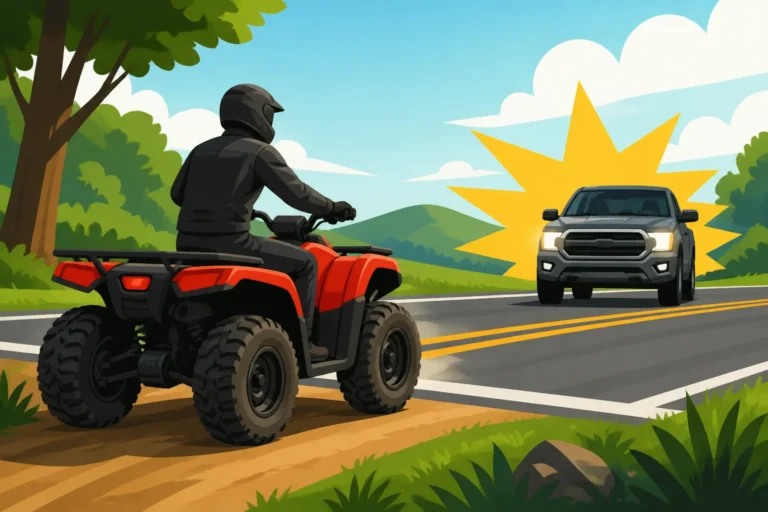
Arkansas's default stance is that off-road vehicles are not permitted on public highways or roads. This is a big point of contention and confusion for many riders. However, the law does provide specific, limited exceptions for crossing public roads. These exceptions are very narrow and must be followed precisely to avoid legal trouble. Generally, if you are crossing a highway, you must do so at approximately a ninety-degree angle to the road, and you must come to a complete stop before entering the roadway. This means no riding along the shoulder or for extended distances on any part of the road.
Furthermore, these crossings are typically allowed only if there's no reasonable alternative way to access another section of trail or private property. Some cities and towns have also passed ordinances that allow UTVs on certain designated local streets, but this is a local-option rule and not state-wide. If your town has such an ordinance, there will be specific requirements for your machine, like lights and turn signals, and a city-issued permit. Always verify local rules, as [Arkansas Towns Can Open Their Streets to UTVs], but it's not universal. Using quality accessories from a vendor like SuperATV for proper lighting and mirrors can help meet these local requirements for safety and compliance.
Exemptions and Special Cases
While the general rules for off-road vehicles in Arkansas are pretty clear, the law also carves out specific exemptions and special cases for certain uses and users. These exceptions are crucial because they acknowledge the practical applications of ATVs and UTVs beyond recreational trail riding. However, it's vital to remember that an exemption doesn't mean a free pass; it usually means that a different set of rules or conditions apply. Many people get into trouble assuming an exemption covers them for all activities, when it actually only applies to a very specific scenario.
Agricultural and Hunting Operations
One of the most significant categories of exemptions involves machines used for legitimate agricultural or hunting operations. Arkansas recognizes that ATVs and UTVs are indispensable tools for farmers, ranchers, and hunters. For example, the law allows for off-road vehicles to be operated on public roads and highways when directly related to farming or hunting activities. This could mean riding your side-by-side a short distance down a county road to get from one field to another, or to access a hunting blind. However, this exception is not a license for recreational riding on public roads under the guise of "hunting."
To qualify for these exemptions, your use of the machine must be genuinely for agricultural purposes or in support of a hunting operation. This typically means transporting equipment, livestock, crops, or harvested game. It doesn't mean going for a joyride with your hunting rifle on the rack. The intent is to facilitate necessary work, not casual recreation. For a closer look at these specific allowances, refer to [Arkansas Farming and Hunting Road Exceptions].
Law Enforcement and Utility Workers
Another important set of exemptions covers individuals performing official duties. Law enforcement personnel, emergency medical services, and utility company employees are often granted exceptions to operate ATVs and UTVs on public roads or other restricted areas when they are actively engaged in their work. This makes perfect sense; these vehicles are often the most practical, or sometimes the only, way to access remote locations for emergencies, maintenance, or patrols.
For example, a sheriff's deputy might use an ATV to patrol a remote section of a county or pursue a suspect off-road, or a utility worker might use a UTV to inspect power lines in difficult terrain. These exemptions are tied directly to their professional responsibilities and do not extend to personal use. Similarly, employees of Arkansas State Parks may use ATVs and UTVs within park boundaries as needed for maintenance, patrols, or specific operational tasks. These specific exemptions ensure critical services can be performed efficiently and safely, leveraging the unique capabilities of off-road vehicles.
The "Why" Behind Arkansas's ORV Law
Understanding the intricacies of Arkansas's off-road vehicle laws can sometimes feel like navigating a dense forest without a map. But these laws aren't just arbitrary rules; they're in place for very important reasons. Recognizing the underlying intent behind the statutes can help riders appreciate their purpose and encourage better compliance, which ultimately benefits everyone who enjoys the outdoors.
Safety Concerns and Public Welfare
At the heart of many off-road vehicle laws is public safety. ATVs and UTVs are powerful machines, and while incredibly fun and useful, they can also be dangerous if operated improperly or without due regard for others. The rules regarding age, supervision, and permissible riding areas are primarily designed to reduce accidents, injuries, and fatalities. For instance, prohibiting general road use for off-road vehicles protects both the ORV operator and drivers of traditional vehicles, as ATVs and UTVs are not designed for the speed or traffic conditions of paved roads.
Furthermore, regulations often address issues like noise, reckless operation, and even environmental impact to ensure that the enjoyment of a few doesn't negatively impact the quality of life or safety of the broader community. These laws aim to create a framework where off-road enthusiasts can enjoy their sport responsibly, minimizing risks to themselves and others, and promoting a harmonious coexistence with non-riders. Equipping your machine with safety enhancements from SuperATV, such as reinforced roll cages or advanced braking systems, can further enhance safety for both operator and passengers.
Environmental Protection and Trail Management
Beyond safety, a significant portion of off-road vehicle law, particularly concerning public lands, is dedicated to environmental protection and sustainable trail management. Uncontrolled off-road riding can lead to severe erosion, damage sensitive habitats, disrupt wildlife, and degrade water quality. The rules for designated trails, seasonal closures, and permitted riding areas are all designed to mitigate these impacts.
For instance, certain trails may be closed during wet seasons to prevent excessive rutting and erosion, or specific areas might be off-limits to protect nesting birds or endangered plant species. The fees collected through OHV permits often go directly back into maintaining and improving these trail systems, funding efforts to repair damage, build sustainable trails, and manage access points. These regulations ensure that the natural beauty and ecological health of Arkansas are preserved for future generations, while still providing opportunities for responsible off-road recreation. It's a delicate balance, and these laws are the state's attempt to strike it.
Disclaimer
This article is for general informational purposes only and does not constitute professional advice. Laws, prices and regulations vary by location and change over time. Consult a qualified professional for guidance on your specific situation.