Crossing a Highway on an ATV in Arkansas
It’s a scenario every ATV or UTV owner in Arkansas has faced: you're out enjoying a ride, maybe heading to a hunting spot or just exploring some back roads, and suddenly, a state highway stands between you and your destination. That moment of hesitation, the internal debate of "Can I legally cross this?" or "Will I get a ticket?" is real and frustrating. Navigating Arkansas’s rules for crossing highways with your off-highway vehicle (OHV) can feel like trying to solve a puzzle with missing pieces. This guide aims to clear up that confusion, diving deep into what the law says, what deputies look for, and how you can safely and legally get your machine from one side to the other when the rules allow.
Understanding Arkansas's Default Position on OHVs and Roads
Let's get this out of the way upfront: Arkansas law generally says "no" to riding your ATV or UTV on public roads and highways. It's a blanket ban, and that's the starting point for all other rules. This isn't meant to spoil your fun, but it's the core legal framework. The state views ATVs and UTVs as off-highway vehicles, built for trails, fields, and private property, not for mixing with cars and trucks on paved public thoroughfares. This distinction is crucial because it informs every other regulation you'll encounter.
The Blanket Ban: Why it exists and what it means for riders
The rationale behind the blanket ban often comes down to safety and vehicle design. ATVs and UTVs simply aren't engineered with the same safety features, signaling, and braking capabilities as street-legal vehicles. They often lack turn signals, proper headlights and taillights for road use, and their tires are designed for traction in dirt, mud, and rocks, not for asphalt. Imagine trying to stop a heavy UTV with knobby tires on wet pavement – it’s a very different experience than a car. This fundamental difference is why the state legislature, in Arkansas Code Ann. § 27-21-106, makes it unlawful to operate an all-terrain vehicle on any public street or highway.
For riders, this means you can’t just hop on the highway and ride to the next county. It means your route planning needs to be strategic, often requiring trailering your machine to the riding area. It's a common frustration, especially if you live in a rural area where a short hop down a highway would connect you to miles of trails or land you have permission to ride on. You might feel like you're being treated unfairly, but the law is broad to cover all scenarios where an OHV might pose a safety risk to itself or other vehicles on a public road.
The "Non-Highway Vehicle" Definition: What classifies an ATV/UTV
Arkansas law defines an "all-terrain vehicle" quite specifically. It's typically a motor-driven, off-highway vehicle no wider than 50 inches, weighing 1,000 pounds or less, traveling on three or more non-highway tires, and having a seat designed to be straddled by the operator. It also includes "side-by-side vehicles" that meet certain criteria. The key phrase here is "non-highway tires" – those aggressive, knobby treads that give you grip in the mud are a dead giveaway that your machine isn't designed for the interstate. The [Arkansas's 50-Inch, 1,000cc ATV Definition] clarifies these specifics.
This definition directly impacts why these machines are generally prohibited on public roads. If your vehicle meets these parameters, it's considered an off-highway vehicle, and thus, falls under the general road ban. It’s not just about the appearance; it’s about the engineering and intended use. This distinction is often a point of contention for riders who feel their larger, more stable UTVs are perfectly capable of road travel. However, the law provides a clear, objective standard to categorize these machines for regulatory purposes, putting them squarely outside the realm of typical street-legal vehicles.
Frustration of Limited Access: The feeling of being boxed in
The blanket ban and strict definitions often leave riders feeling boxed in, especially in parts of Arkansas where public lands, private property, and trails are abundant but fragmented by highways. You might have access to fantastic riding land on one side of a highway, and even more on the other, but getting your machine across legally feels like an insurmountable barrier. This can lead to riders taking risks, hoping to sneak across unnoticed, which, of course, can lead to tickets or, worse, accidents.
Many riders simply wish for more common-sense flexibility, especially in rural communities where traffic is sparse and speeds are lower. The feeling is that the law doesn't always account for the reality on the ground in a state where outdoor recreation is so vital. It forces riders to choose between breaking the law, undertaking costly and inconvenient trailering operations for short distances, or simply giving up on connecting riding areas. It’s a challenge that many in the Arkansas ATV and UTV community actively discuss, yearning for more practical solutions.
The Six Statutory Exceptions: When a Crossing is Allowed
While the general rule is "no," Arkansas law does provide specific, limited exceptions where an ATV or UTV can be operated on a public street or highway. These exceptions are critical for understanding when you can legally cross, and they often relate to the practical necessities of rural life and emergency situations. It’s important to remember these are exceptions to the rule, not an open invitation to ride on roads. The [Arkansas ATV Road Rules: What 27-21-106 Says] outlines these provisions.
Farming and Hunting Operations: How these crucial activities get a pass
One of the most widely used and understood exceptions is for vehicles being used for farming or hunting operations. Arkansas is a deeply agricultural and outdoors-focused state, and the legislature recognized the need for farmers and hunters to move their equipment and access land efficiently. If you’re using your ATV or UTV "in connection with the conduct of a farming operation" or a "hunting operation," you may operate it on a public street or highway. This typically means traveling directly to and from fields, deer stands, or hunting leases.
For example, a farmer might use their UTV to haul tools or feed from one part of their property to another, which requires crossing a county road. Similarly, a hunter might use their quad to access a deer lease, driving it directly from their truck parked on a road shoulder into the woods. The key is "in connection with" – it's not a free pass for joyriding on the highway after your chores are done. This exception is designed for a specific purpose, and you should be prepared to explain that purpose if stopped. You can learn more about [Arkansas Farming and Hunting Road Exceptions] for detailed scenarios.
Emergency and Utility Work: When first responders and linemen can cross
Another crucial exception applies to emergency personnel, law enforcement, and utility workers. These individuals often rely on ATVs and UTVs to access difficult terrain during critical situations. For instance, a game warden might use an ATV to patrol a remote area, or a search and rescue team might deploy UTVs to reach an injured hiker. Utility company employees frequently use these machines to access power lines or infrastructure in off-road locations, which may require crossing a highway to get there.
This exception is rooted in public safety and infrastructure maintenance. When lives are at stake or essential services are disrupted, the ability for trained professionals to quickly traverse challenging landscapes with the right equipment is paramount. It’s not an exception for the general public, but it acknowledges the unique and vital roles these machines play in ensuring public welfare and maintaining services across the state.
Disability and Direct Crossing: Understanding specific conditions
Arkansas law also provides an exception for individuals with a physical disability that impairs their ability to walk. This allows them to operate an ATV or UTV on a public street or highway if necessary to travel to a specific destination. This is a compassionate provision, recognizing that for some, an ATV or UTV can be an essential mobility aid in certain rural contexts. This exception isn’t about recreational riding, but rather facilitating necessary travel for individuals facing particular challenges.
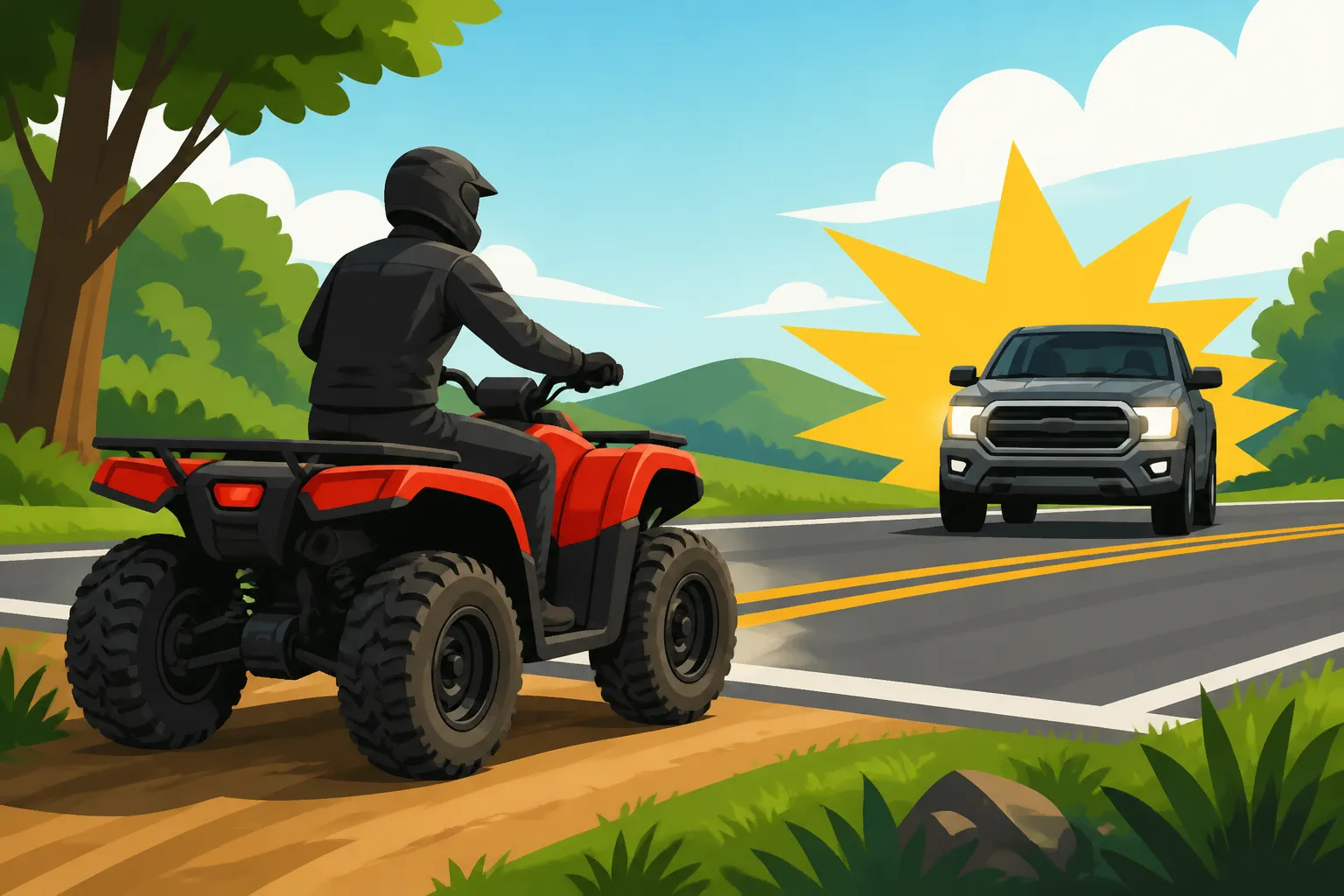
Finally, and most relevant to many casual riders, is the exception for a "direct crossing." This is the often-misunderstood rule that allows you to cross a public street or highway "at roughly ninety degrees." This means you can go straight across a road to get from one side of a trail or property to another. It's not about riding along the road, but over it. This specific provision is key for many riders who find their preferred routes or lands bisected by public roads. It's a quick, perpendicular movement designed to minimize exposure to traffic.
The "Direct Crossing at Ninety Degrees" Rule Explained
This "direct crossing" exception is the one that causes the most questions and often leads to misinterpretations. It's a narrow window of legality, and understanding its precise requirements is absolutely essential to avoid issues. Remember, it's not permission to ride on the shoulder or travel any distance down the road. It's about getting from point A to point B across the pavement in the safest, most direct manner possible.
What "Ninety Degrees" Really Means: Straight across, not along
When the law states "at roughly ninety degrees," it means exactly what it sounds like: you must cross the highway at a perpendicular angle. Think of it like drawing a straight line directly across the road. You cannot turn and drive parallel to the highway for any distance, even if it's just a few feet to line up with a driveway or trail opening. The intent is to minimize the time your vehicle spends on the actual road surface and to make your intentions clear to other drivers.
This can be tricky if, for example, the trail on the other side doesn't perfectly align with where you're approaching the highway. You might need to adjust your approach off the road to ensure your crossing is as close to ninety degrees as possible. If a deputy observes you driving down the shoulder to find a better crossing point, that’s considered illegal operation on the highway, not a direct crossing. It's a fine line, but one you must respect.
Coming to a Complete Stop First: The safety imperative
Before you even think about crossing, Arkansas law requires you to bring your ATV or UTV to a complete stop. This isn’t just a suggestion; it’s a non-negotiable safety measure. Just as you would stop at a stop sign before entering an intersection, you must stop your off-highway vehicle before entering the flow of traffic on a highway. This allows you to fully assess oncoming traffic from both directions and ensure you have ample time and space to cross safely. The [Arkansas Stop Before You Cross] rule is simple but critical.
Failing to stop could not only lead to a citation but, more importantly, a severe accident. Highways carry faster-moving traffic, and drivers may not anticipate an OHV suddenly entering the roadway. A complete stop gives you precious moments to look, listen, and make a confident decision about when it's safe to proceed. Treat every highway crossing with the utmost respect and caution, as if you were pulling a heavy load onto a busy street.
Visibility and Safety Precautions: Practical tips for a safe crossing
While the law outlines the bare minimum, taking extra safety precautions during a highway crossing is just plain smart. Think about how visible your machine is. Is it brightly colored? Do you have an orange safety flag attached, particularly if your machine is small or if there are dips in the road that obscure visibility? Even if not legally required for a brief crossing, running your headlights and taillights can significantly increase your visibility to oncoming traffic, especially during dusk, dawn, or in adverse weather.
Consider your personal safety gear too. While [Arkansas Has No ATV Helmet Law] for adults on private land, wearing a helmet during a highway crossing dramatically reduces the risk of serious injury in case of an accident. Brightly colored clothing, like a high-visibility vest, can also make a difference. The moments you spend crossing a highway are arguably the most dangerous part of any ride, so err on the side of extreme caution and maximum visibility.
Identifying "Highways" vs. "Roads" in Arkansas Law
The terms "highway" and "road" might seem interchangeable in everyday conversation, but in Arkansas law, they carry very distinct meanings that are vital for ATV and UTV riders. Misunderstanding this difference can lead to unintended legal trouble. It's not just about how busy a road is, but its legal classification and who maintains it.
State Highways vs. County Roads: Key legal distinctions
In Arkansas, the distinction between state highways and county roads is fundamental. State highways (like those marked AR-7, AR-10, or US-65) are part of the state highway system, maintained by the Arkansas Department of Transportation (ARDOT), and generally carry higher speed limits and more traffic. These are the roads the state's blanket ban and limited exceptions primarily apply to.
County roads, on the other hand, are maintained by individual county road departments. These are often the gravel roads, dirt paths, and paved but less-traveled routes that crisscross rural Arkansas. While the general state law prohibits ATVs on "public streets and highways," many counties and cities have different rules for their roads. Some county roads might be open to OHVs under specific local ordinances or by default due to their nature. It's a patchwork of regulations, making it crucial to know exactly what type of road you're on. Always consult local county ordinances, as they can sometimes be less restrictive for county roads than state law is for state highways.
Interstate Highway Prohibition: Why these are always off-limits
Let’s be absolutely clear on this: Interstate highways (like I-30, I-40, I-55) are strictly, unequivocally, and always off-limits to ATVs and UTVs in Arkansas. There are no exceptions, no special crossings, and no local ordinances that can change this. These are high-speed, multi-lane highways designed for vehicle traffic traveling at 70 mph or more. An ATV or UTV, regardless of its size or capability, poses an extreme hazard on an interstate.
Attempting to operate an ATV or UTV on an interstate highway would not only be a severe violation of the law but an incredibly dangerous act that puts your life and the lives of countless others at risk. Law enforcement takes this prohibition very seriously, and the consequences of being caught on an interstate with an OHV will be severe. This is not a gray area; it's a hard and fast rule for the safety of everyone.
Local Ordinances and Their Limits: How city rules don't override state highway law for crossings
It's true that [Arkansas Towns Can Open Their Streets to UTVs] through local ordinances. Many cities across Arkansas have passed laws allowing UTVs (and sometimes ATVs) to be driven on certain city streets, usually those with speed limits under 55 mph and not designated as state highways. However, it's absolutely critical to understand that these local ordinances do not grant you permission to cross a state highway illegally.
A city might allow you to drive your UTV on its municipal streets, but if that street dead-ends into a state highway, you cannot simply cross that state highway unless one of the six statutory exceptions applies. The state highway is still under state jurisdiction, and local ordinances cannot override state law regarding state highways. This is a common point of confusion for riders, who might assume that if their UTV is street legal in one sense, it's street legal in all senses. Always differentiate between local street rules and state highway crossing rules. [Arkansas UTV Street Legal Rules by Town] can vary widely, but none will permit illegal state highway crossings.
The Practicalities of Crossing: What a Deputy Looks For
So, you're faced with a state highway, and you believe you meet one of the legal exceptions for crossing. What should you expect? What will law enforcement be looking for if they observe you? Understanding the deputy's perspective can help you conduct your crossing safely and within the bounds of the law, minimizing any potential for a citation.
Proof of Legitimate Exception: What you might need to show
If you are stopped by a deputy or state trooper after crossing a highway, especially if you're utilizing the farming or hunting exception, be prepared to explain your purpose. This isn't about interrogation; it's about verifying compliance with the law. While you might not carry a "hunting permit" with you, having your hunting license, proof of property access (like a lease agreement or written permission from a landowner), or even just being dressed for hunting and having your gear visible, can all serve as evidence of your legitimate activity. For farmers, simply being on or near your land, or carrying tools, can be sufficient.
The key is credibility. If you're decked out in full hunting gear, have a rifle in your gun rack (properly secured, of course), and are clearly heading towards a known hunting area, a deputy is much more likely to accept your explanation. If you're cruising in shorts and a t-shirt with no gear in sight, claiming you're "hunting" might raise a few eyebrows. Be honest, be prepared, and be polite.
Observing All Traffic Laws: Even during a legal crossing
Even when you're legally performing a direct crossing, you are still operating a vehicle on a public roadway, albeit for a very brief period. This means you are subject to all applicable traffic laws. This includes obeying speed limits (even if your crossing takes mere seconds, don't accelerate recklessly), yielding to oncoming traffic, and not impeding the normal flow of vehicles. Just because you have a legal right to cross doesn't mean you have the right to do so unsafely or without regard for other drivers.
Think of it this way: if a car ran a stop sign and caused an accident, they'd be at fault. The same applies to you. If you don't stop, don't yield, or create a dangerous situation, you'll be held responsible. The exception allows the presence of your OHV, but not the reckless operation of it. So, while your machine may not be designed for the road, your driving behavior must be.
Potential Penalties for Illegal Crossing: The risks involved
Crossing a highway illegally in Arkansas can lead to significant consequences. First and foremost, you risk a citation for unlawful operation of an all-terrain vehicle on a public street or highway. While I can't give specific current costs, these tickets often come with fines and court costs that can quickly add up. Beyond the financial penalty, you might have your machine impounded in more egregious cases, or face escalating penalties for repeat offenses. For more details on the potential costs, you might look into [Arkansas Ticket Cost for Road Riding].
| Scenario | Legal Status | Key Requirements | Potential Consequences of Violation |
|---|---|---|---|
| Direct Crossing (90 degrees) | Conditional | Must stop completely, yield to traffic, cross at ~90 degrees, act safely. | If unsafe/improper: Citation, fines, potential impoundment. |
| Hunting/Farm Operation | Conditional | Must be actively engaged in operation, traveling to/from land. | If not legitimate: Citation, fines, potential impoundment. |
| Emergency/Utility | Permitted | Must be authorized personnel, active duty. | N/A (assuming legitimate use). |
| Disability | Conditional | Must have documented disability, necessary travel, direct route. | If not legitimate: Citation, fines, potential impoundment. |
| Riding along a State Highway | Illegal | N/A (no exception for this). | Citation, fines, impoundment, increased accident risk. |
| Riding on an Interstate | Highly Illegal | N/A (absolutely no exception). | Severe citations, high fines, impoundment, immediate safety hazard. |
Beyond the legal ramifications, the greatest risk is personal injury or property damage. Highways are dangerous places for ATVs and UTVs. The speed differential between your machine and an automobile, coupled with the lack of crash protection, makes any collision potentially catastrophic. It's simply not worth the risk to save a few minutes or avoid trailering. Always prioritize safety over convenience.
Safety Gear and Machine Considerations for Highway Crossings
While Arkansas law doesn't explicitly mandate extensive safety modifications for a brief highway crossing, being proactive with safety gear and certain machine enhancements can make a world of difference. Even if a specific item isn't a legal requirement for your quick dash across the asphalt, it can drastically improve your visibility and control, protecting you and others.
Visibility Enhancements: Lights, flags, and reflective gear
When you’re sharing even a brief patch of road with high-speed vehicles, visibility is your number one asset. Think about ways to make your machine as conspicuous as possible. Running your headlights and taillights, even in broad daylight, is a no-brainer. Many riders also add an orange safety flag, mounted high on the machine, which can be seen over terrain and vehicles, giving drivers an earlier warning of your presence. This is especially useful in areas with hills or curves that limit sightlines.
Reflective tape is another simple, inexpensive, and effective enhancement. Apply it to the front, rear, and sides of your ATV or UTV. A SuperATV light bar or upgraded LED lights can also dramatically improve your machine's visibility, especially if you find yourself needing to cross near dusk or dawn. These kinds of enhancements are not just for night riding; they make your machine stand out in any light condition, providing a crucial safety buffer.
Tires and Pavement: Why non-highway tires are tricky on asphalt
As mentioned earlier, ATVs and UTVs are designed with non-highway tires – those aggressive, deep-lugged treads built for digging into dirt and gripping rocks. While fantastic off-road, these tires behave very differently on pavement. They have a smaller contact patch with the road, can create a lot of noise, and, most critically, reduce braking and handling performance on hard surfaces, especially when wet. Trying to stop quickly or make a sharp turn on a highway with knobby tires can be a white-knuckle experience.
This isn't to say you can't cross a highway with these tires, but it's a significant consideration for safety. You need to be extra mindful of your speed, braking distance, and control. Avoid any sudden maneuvers. Treat the pavement with extreme caution, understanding that your machine's usual responsiveness will be compromised. If you find yourself frequently needing to traverse short paved sections, some riders consider hybrid tires that offer a better compromise between off-road traction and pavement manners, though pure street-legal tires are not typically an option for machines classified as OHVs.
Machine Modifications for Enhanced Safety (e.g., SuperATV accessories)
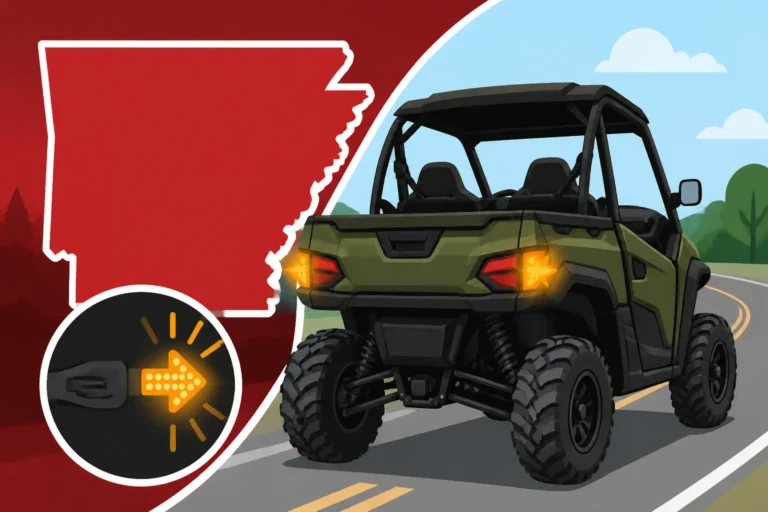
While not required for a direct crossing, equipping your ATV or UTV with certain accessories designed for road use can significantly enhance safety. Think about things like mirrors, turn signals, and a horn. While [Arkansas Has No ATV License Plate] requirement, these are features that other drivers expect to see on the road. For instance, SuperATV offers various kits and accessories, such as universal turn signal kits or side mirrors, which might not make your machine street legal for general road use but provide essential communication tools during that brief, critical highway crossing.
- Turn Signals: Even for a straight crossing, a quick flash of a turn signal as you prepare to cross can signal your intentions to traffic, even if you’re just going straight.
- Mirrors: Having side mirrors allows you to monitor oncoming traffic without turning your head completely, which can be critical for maintaining control and awareness during your stop and crossing.
- Horn: A loud horn can be a lifesaver for grabbing the attention of distracted drivers.
Investing in these kinds of safety features, even for limited road interaction, is a proactive step that can pay dividends in peace of mind and accident prevention. It’s about taking every measure possible to be seen and understood by other drivers in a potentially hazardous situation.
Navigating Local Ordinances and Their Impact on Crossing
As we've touched on, local governments in Arkansas have the power to create their own rules regarding OHV use on city and county roads. This local control, granted by Act 922 of 2025, has led to a patchwork of regulations across the state. While great for getting around town, it's vital to understand how these local rules interact, or don't interact, with the state's highway crossing laws.
UTV Street Legal Ordinances: How some towns open streets, but not highways
Since August 5, 2025, many Arkansas towns have begun passing ordinances to allow UTVs on certain municipal streets. These ordinances typically specify speed limits, require safety equipment (like turn signals, mirrors, and seat belts), and often involve an annual permit fee. This is a fantastic development for many UTV owners, allowing them to legally drive their machines to local stores, restaurants, or to connect to nearby trails without trailering. [Arkansas UTV Street Permits and Annual Fees] outlines what you might expect.
However, the crucial distinction here is that these ordinances apply to city streets and county roads – not state highways. A town cannot, through its own ordinance, grant you permission to travel along a state highway or to ignore the state's specific crossing rules for highways. Your locally-permitted street-legal UTV is still subject to the state law when it encounters a state highway. This is where much of the confusion arises for riders.
The Disconnect Between Town and State Law: Common confusion
Imagine you're in a town like Bono, which has an ordinance allowing UTVs on its streets. You've got your permit, your UTV is equipped with all the required safety gear, and you're legally driving down a town street. Then, you reach Highway 63, which runs right through Bono. Even though you're "street legal" within the town, you cannot simply drive onto Highway 63 and travel down it. Why? Because Highway 63 is a state highway, and state law still applies there. [Why Highway 63 Stays Off Limits in Bono] is a perfect example of this.
This disconnect is a significant source of frustration and misunderstanding. Riders often feel that if they've jumped through all the hoops to make their UTV street legal in their town, they should have broader privileges. However, the state maintains jurisdiction over its highways for uniformity and safety. So, while your town permit is valuable for local travel, it doesn’t serve as a golden ticket across or along state highways beyond the specific, limited state exceptions we've discussed.
Planning Your Route: Avoiding unnecessary highway crossings
Given the complexities, the best strategy for an ATV or UTV rider in Arkansas is to proactively plan your route to minimize or completely avoid highway crossings. Utilize mapping apps that show trail systems, county roads, and private land access points. If you know a state highway bisects your intended riding area, look for alternative routes that might involve less-traveled county roads or underpasses, if available.
Sometimes, the most practical (though less convenient) option is to trailer your machine to the other side of the highway. It adds a step, but it completely removes the legal and safety risks associated with crossing. If a crossing is absolutely unavoidable, ensure you're doing so under one of the six statutory exceptions, and adhere strictly to the "complete stop, ninety degrees, yield to traffic" rule. A little planning goes a long way in ensuring your ride is both enjoyable and legal.
Disclaimer
This article is for general informational purposes only and does not constitute professional advice. Laws, prices and regulations vary by location and change over time. Consult a qualified professional for guidance on your specific situation.