Arkansas Rules for Crossing a State Highway
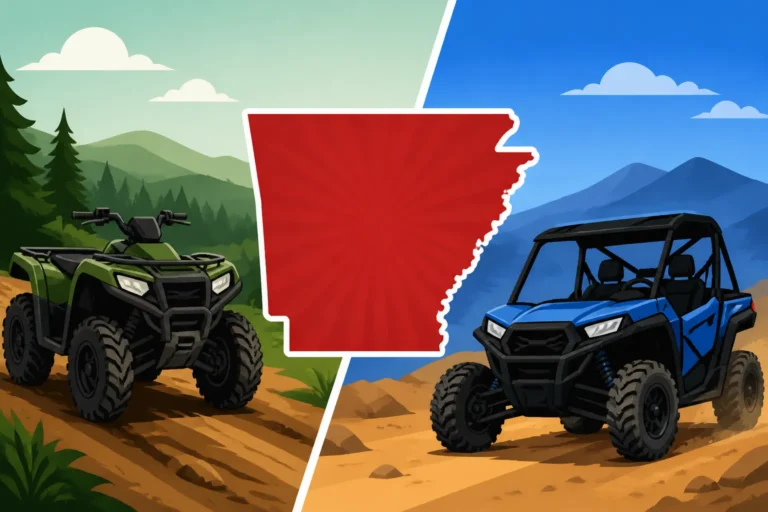
It’s a common scenario in Arkansas: you’re out enjoying your ATV or UTV, cruising along a dirt trail or a county road, and suddenly, a state highway looms ahead. Your destination, be it another section of trail, a friend's property, or even just a gas station, is on the other side. That moment of hesitation and confusion is real. This guide is here to clarify the specific rules and exceptions for crossing a state highway in Arkansas on your off-highway vehicle, helping you understand what's allowed and what's definitely not.
The Core Rule: Why Crossing a State Highway Feels So Confusing
Navigating Arkansas laws regarding ATVs and UTVs on public roads can feel like trying to solve a riddle wrapped in an enigma. Many riders, especially those new to the state or new to the sport, find themselves scratching their heads when confronted with the reality of having to cross a paved state highway. You've invested in your machine, you love exploring the natural beauty of Arkansas, but the thought of getting ticketed for a simple crossing can cast a shadow over your outdoor adventures.
The General Prohibition: What Arkansas Law Says
Let's cut right to the chase: as a general rule, operating an ATV or UTV on any public street or highway in Arkansas is unlawful. This isn't just a suggestion; it's explicitly stated in Arkansas law. The legislature made a clear distinction between off-highway vehicles and vehicles designed for street use. This foundational rule is important to grasp because all the exceptions and specific scenarios stem from it. The state wants to keep these powerful, often less visible, and sometimes slower-moving machines off the main arteries of traffic for safety reasons. It's a blanket prohibition that aims to reduce accidents and maintain traffic flow, but it often leaves riders feeling trapped or limited in their riding options.
It’s frustrating when your preferred riding area or private property is bisected by a public road, forcing you to find creative, and sometimes illegal, ways to get from one side to the other. Many riders mistakenly believe that if they are just "hopping across," it won't matter, or that the rules apply differently to dirt roads versus paved roads. However, the statute is quite clear on public roads in general. This means a quick dash across a two-lane state highway is, by default, against the law unless a very specific exception applies. It's not about how far you ride on the pavement, but about being on it at all. For more detailed insights into the overarching regulations, you can read [Arkansas ATV Road Rules: What 27-21-106 Says].
Understanding "State Highway" vs. "County Road"
A significant source of confusion for ATV and UTV riders in Arkansas is distinguishing between a "state highway" and a "county road." They both have asphalt, they both have lines, and they both have traffic, right? Well, yes, but legally, they are managed by different entities and have different implications for OHV use. A "state highway" is typically maintained by the Arkansas Department of Transportation (ARDOT) and is part of the state's primary network of roads. These are often numbered routes, like Highway 7 or Highway 27, and carry significant traffic volumes and higher speed limits.
County roads, on the other hand, are maintained by individual county road departments. They can be paved or gravel, and often serve more rural areas. While the general prohibition against ATV/UTV use applies to all public roads, the specific exceptions for crossing tend to be more strictly interpreted on state highways due to the increased traffic and higher speeds. There’s also the critical nuance that, as of recently, some Arkansas towns and cities have been granted the authority to pass local ordinances allowing UTVs (and sometimes ATVs) on their municipal streets, typically those with speed limits under 55 mph. However, these local ordinances almost universally do not apply to state highways that pass through or near these towns. Those remain under state jurisdiction, and the state's default rules still apply. It’s a patchwork of regulations that can make it incredibly difficult to know where you stand, especially when traveling through different jurisdictions.
The Frustration of Mixed Messages and Local Ordinances
The landscape of ATV and UTV regulations in Arkansas can feel like a game of telephone, with information getting muddled and distorted along the way. You might hear from one friend that it's okay to ride on certain roads, while another warns you against it, citing a recent ticket someone they know received. This isn't entirely surprising given the evolving nature of the laws and the varying interpretations at a local level. For instance, the ability for cities to pass ordinances allowing UTVs on some local streets has added another layer of complexity. While this is great news for UTV owners in those specific communities, it doesn't change the fundamental rules for state highways.
Riders can mistakenly assume that because their town allows street-legal UTVs on city streets, they can then also use the state highway that runs through town. This is a dangerous assumption and can lead to citations. Arkansas law makes it clear that generally, [Arkansas Makes Road Riding Unlawful by Default]. The frustration deepens when you see others seemingly ignoring the rules without consequence, or when you encounter local law enforcement officers who may interpret the nuances differently. It's a classic case of wanting to do the right thing but struggling to get a clear, consistent answer. This is why it’s so crucial to understand the state-level prohibitions and the very narrow exceptions that exist, especially when dealing with high-traffic state highways.
Navigating the Exceptions: When You Can Cross a State Highway
While the general rule is "no ATVs or UTVs on public roads," Arkansas law does recognize certain situations where a brief crossing of a state highway is permissible. These are not loopholes; they are specifically carved-out exceptions designed to allow for practical use in particular circumstances, often tied to property access or essential activities. Understanding these exceptions is key to staying on the right side of the law and ensuring your safety.
The "Ninety-Degree Rule" for Direct Crossings
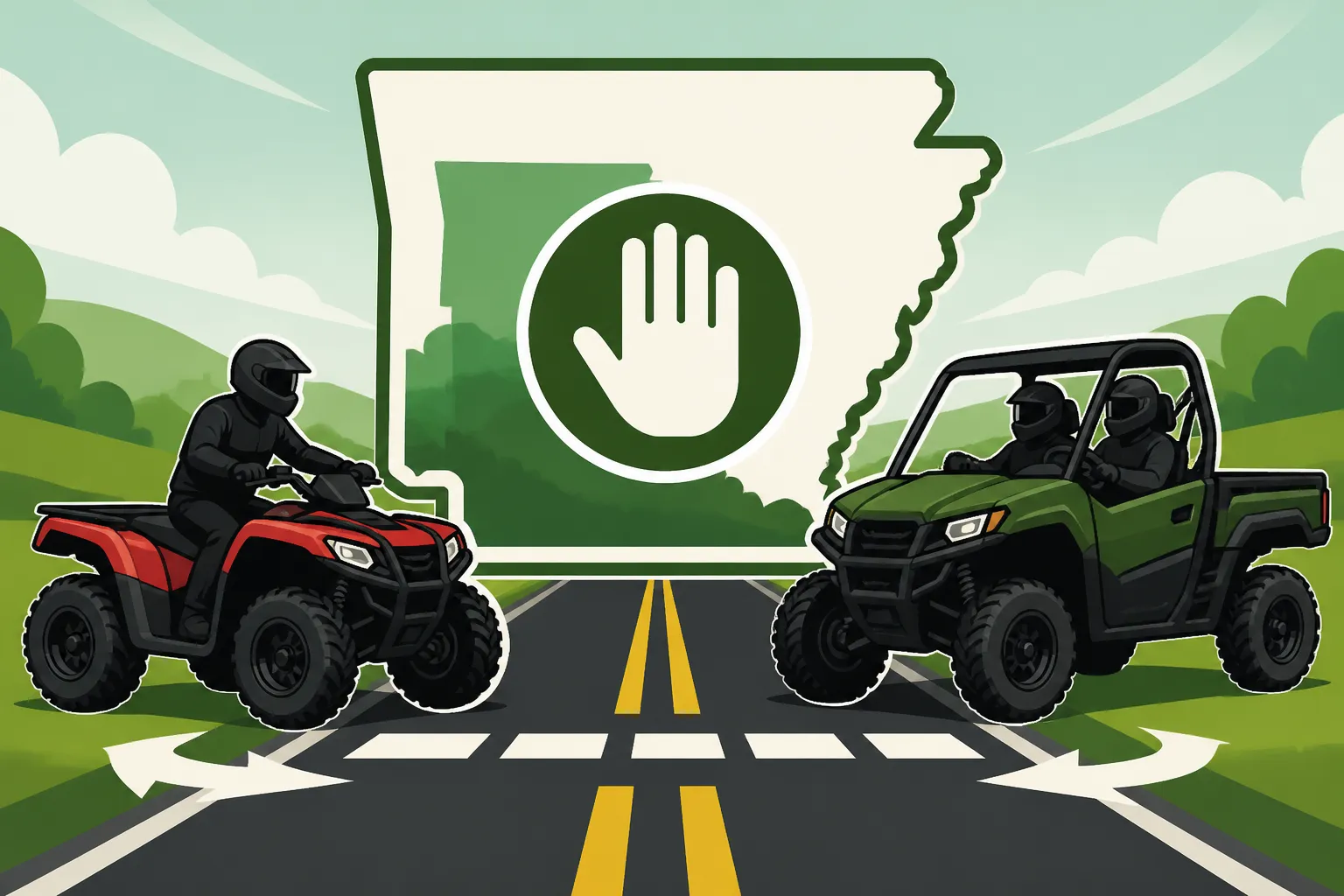
One of the most talked-about exceptions for ATV and UTV riders in Arkansas is the "ninety-degree rule" for direct crossings. This provision allows an off-highway vehicle to cross a public street or highway at a right angle, meaning as close to 90 degrees as practically possible. The purpose of this rule is to minimize the time your machine spends on the paved surface, reducing the risk of a collision with other vehicles. It's not an invitation to drive down the highway for a short distance before turning; it's strictly for traversing the road from one side to the other when you need to access property, trails, or fields. Think of it as a straight line from one dirt shoulder to the other.
This exception is critical for many rural landowners and trail riders whose land or preferred riding areas are divided by state highways. Without it, property access would be severely limited, and linking trail systems would be impossible. However, the "right angle" part is crucial. You shouldn't be angling down the road, nor should you be veering off at a wide curve. The intent is to get across the pavement as directly and quickly as possible. This rule is a lifeline for many, but it comes with strict stipulations that must be followed to avoid a citation. For more specifics on this particular rule, look for information on [Arkansas Direct Crossing at Ninety Degrees].
Stopping Completely Before You Cross
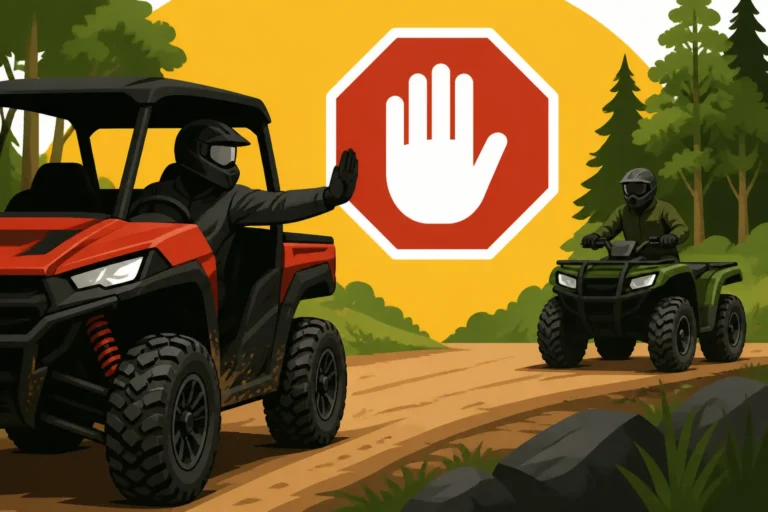
Beyond the ninety-degree requirement, there’s another non-negotiable step before initiating your crossing: you must come to a complete stop. This isn't just common sense for safety; it's a specific requirement under Arkansas law. Just as you would stop at a stop sign before entering an intersection, you need to bring your ATV or UTV to a full, controlled stop at the edge of the pavement before proceeding across a state highway. This allows you to thoroughly check for oncoming traffic in both directions, assess the road conditions, and prepare for a swift and safe crossing.
Failing to stop completely before entering the roadway can not only be incredibly dangerous but also immediately invalidates the legal protection offered by the crossing exception. A rolling stop, no matter how slow, is not a complete stop. Law enforcement officers are trained to look for this, and a ticket could easily result from not adhering to this simple but vital rule. It's about exercising extreme caution and respecting the flow of highway traffic. Your machine may not accelerate as quickly as a car, so having a clear line of sight and adequate time is paramount. Always remember, the safer you are, the more likely you are to avoid trouble, both with the law and with other drivers. The detailed requirements can often be found under [Arkansas Stop Before You Cross].
Special Exemptions for Farming, Hunting, and Utility Work
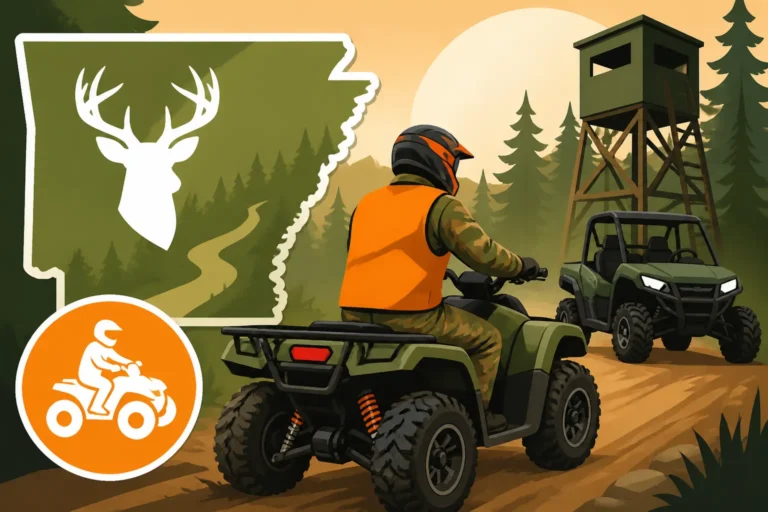
Beyond the general crossing rule, Arkansas law carves out specific exemptions for certain types of operations that frequently require ATV or UTV use, even on or across public roads. These include bona fide farming operations, hunting operations, and utility company work. These exceptions are typically broader than the simple ninety-degree crossing rule and allow for more extensive use, though still with limitations and safety considerations. For example, individuals engaged in legitimate farming or hunting activities may be allowed to operate their machines on certain public roads (not usually state highways, but potentially county roads) for direct access between fields, hunting grounds, or to transport equipment.
- Farming Operations: If you're using your ATV or UTV as part of an active farming operation, such as moving between fields to check crops, feed livestock, or haul small equipment, the law often provides an allowance for necessary road use. This is strictly tied to the purpose of the trip. Driving your farm quad to the store for snacks probably won't count. You can learn more about this by researching [Arkansas Farming Operation Road Use].
- Hunting Operations: Similarly, during hunting seasons, riders often need to use ATVs or UTVs to access hunting leases, retrieve game, or move between different stands. The law acknowledges this practical necessity, offering exceptions for [Arkansas Hunting Operation Road Use]. Again, this is not an excuse for recreational joyriding on public roads but is limited to activities directly related to hunting.
- Utility & Emergency Work: Workers for utility companies or emergency services often rely on ATVs and UTVs to access remote areas for repairs, inspections, or during emergencies. These professionals have specific exemptions that permit them to use public roads when their work necessitates it. For further reading, check out [Arkansas Utility Company Crews on ATVs].
It's absolutely crucial to remember that these are specific exemptions for particular purposes. They do not grant a general right to ride your ATV or UTV on state highways. Misrepresenting your activity or using these exemptions as a pretext for recreational riding can lead to serious legal consequences. Always ensure your use falls squarely within the defined legal parameters for these exceptions.
Practical Considerations and Safety Tips for Crossings
Even when legally permitted to cross a state highway, doing so safely requires a heightened level of awareness and preparation. These are not routine maneuvers for an ATV or UTV, and the risk of an accident is significantly higher than for a standard passenger vehicle. Taking extra precautions isn't just about avoiding a ticket; it's about protecting yourself, your passengers, and others on the road.
Visibility, Signals, and Being Seen
One of the biggest challenges when crossing a state highway on an ATV or UTV is your machine's visibility. ATVs are generally much smaller and lower to the ground than cars or trucks, making them harder for oncoming traffic to spot, especially at a distance or around curves. UTVs are larger but can still blend into rural backgrounds. This is where you, as the rider, need to take proactive steps to make yourself as visible as possible. Brightly colored riding gear, helmets, and even a high-visibility flag can make a significant difference.
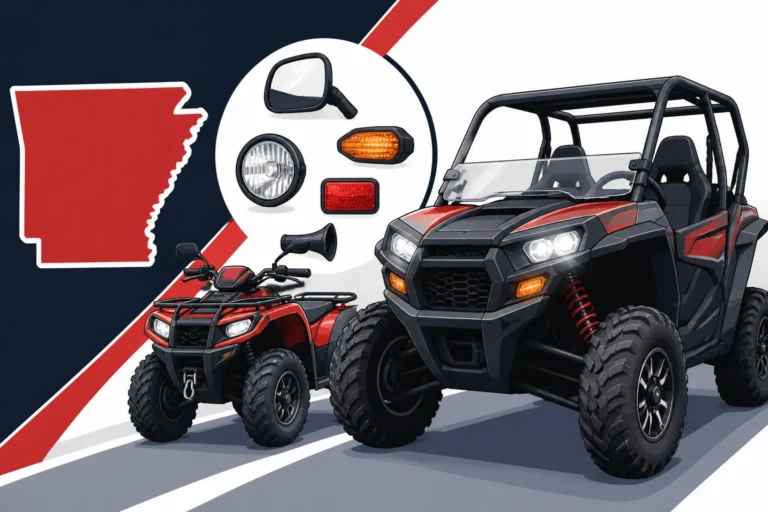
Consider adding aftermarket lighting, like bright LED accessory lights from brands like SuperATV, to your machine, especially if you anticipate riding near dawn, dusk, or in less-than-ideal weather conditions. While Arkansas has [Arkansas Has No ATV License Plate] requirement, ensuring your taillights and headlights are fully functional is a must. If your UTV has turn signals, use them decisively to indicate your intent. If not, clear hand signals can communicate your intentions to other drivers. Never assume other drivers see you. Always make eye contact if possible, and wait until you are absolutely sure the way is clear before proceeding. The less time you spend exposed on a state highway, the better.
The Importance of a Quick, Decisive Crossing
When the path is clear and you've determined it's safe to cross, you need to execute the maneuver quickly and decisively. Hesitation on a state highway can be just as dangerous as rushing. Your ATV or UTV likely accelerates slower than a typical car, and you'll want to minimize the amount of time you are in the traffic lane. This means being in the right gear, having a clear line of sight, and not being distracted.
Before you even approach the highway, plan your crossing point. Is there a clear, stable shoulder on both sides? Are there any hidden driveways or dips that could cause you to lose control? A quick, decisive crossing means you've already scouted your exit point, and you know exactly where you're going to land on the other side. Don't be timid, but don't be reckless. Find that balance between confidence and caution. This strategy is part of why the "ninety-degree rule" is so important – it forces you to spend the absolute minimum amount of time in the path of highway traffic.
Preparing Your Machine for Brief Road Use (Even Just Crossing)
While your ATV or UTV is designed for off-road adventures, even brief moments on pavement, like a state highway crossing, can be demanding. Ensuring your machine is in good working order for these moments is essential. Check your tires: are they properly inflated? Are they suitable for briefly touching pavement? Off-road tires can be slick and unpredictable on hard surfaces, especially if worn or wet. Also, make sure your brakes are responsive and your steering is tight. You'll need precise control.
Furthermore, consider any accessories you have installed. If you have a windshield, ensure it's clean and doesn't obstruct your view. If you have a horn, ensure it works. While not typically required for off-road use, a functional horn can be a crucial safety device for alerting inattentive drivers. Think about what a standard vehicle needs for road safety and try to replicate those features as much as possible for your brief highway exposure. Aftermarket accessories from companies like SuperATV can enhance safety features like mirrors or lighting, which are invaluable for these brief road interactions. Remember, a state highway is not the place for equipment failure or a lapse in maintenance.
What Happens If You Don't Follow the Rules
Disregarding Arkansas's ATV and UTV laws, particularly concerning public roads and state highways, isn't just theoretical. There are real and significant consequences for illegal road use, ranging from financial penalties to severe safety risks. It's not worth the risk, especially when the rules for crossing are clearly defined and relatively straightforward if you pay attention.
Potential Penalties for Illegal Road Use
Getting caught riding an ATV or UTV unlawfully on an Arkansas state highway can lead to a range of penalties. The most immediate and common consequence is a traffic citation. The specific [Arkansas Ticket Cost for Road Riding] can vary, but it often includes a fine, and potentially court costs. Unlike a parking ticket, this is typically a moving violation, and it will be up to the discretion of the issuing officer and the local court how it is handled. This can mean a mandatory court appearance, which eats up your time and can be an inconvenience.
Beyond the direct financial hit, repeated offenses or more egregious violations could lead to other issues. While ATVs and UTVs don't generally require a driver's license for off-road use, operating one unlawfully on a public road could potentially impact your driving record, especially if other traffic laws are violated during the incident. Moreover, your machine could be impounded, resulting in additional towing and storage fees that quickly add up. These penalties are designed to deter unsafe road use and reinforce the state's intent to keep off-highway vehicles in their designated environments. It's a reminder that law enforcement takes these rules seriously, particularly on high-traffic roads.
The Risks Beyond a Ticket
While a ticket and fines are certainly unpleasant, the risks of illegally riding an ATV or UTV on a state highway extend far beyond monetary penalties. The primary concern is safety – for yourself, your passengers, and other motorists. ATVs and UTVs are not designed for the speeds, traffic patterns, and surfaces of state highways. Their suspension, braking, and tire characteristics are optimized for off-road conditions, making them less stable and predictable on paved roads, especially at higher speeds.
An accident involving an ATV or UTV and a passenger vehicle on a state highway can have devastating consequences. The smaller size and lack of typical safety features (like airbags and crumple zones) on an OHV mean riders are significantly more vulnerable. You could face serious injury or even death. Furthermore, you could be held liable for damages to other vehicles and for injuries sustained by others, leading to massive civil lawsuits that could financially ruin you. Your insurance policy, if you have one for your ATV/UTV, may not cover incidents that occur during illegal road use, leaving you personally responsible for all costs. This is why [What Arkansas Law Forbids on a Public Road] is so important to understand and respect – it's about life and limb, not just paperwork.
Why Understanding the Law Protects You
Ultimately, taking the time to understand Arkansas's ATV and UTV laws, particularly those governing road use and highway crossings, is one of the best ways to protect yourself. Knowing when and how you can legally cross a state highway, as well as the limited nature of [Arkansas's Six Statutory Road Exceptions], empowers you to make informed decisions. It allows you to plan your routes to minimize road interactions, or to execute legal crossings with confidence and safety.
By adhering to rules like [Crossing at a Complete Stop] and maintaining a ninety-degree angle, you not only avoid potential citations but also drastically reduce your risk of an accident. Informed riders are safe riders. If you're unsure, it's always better to err on the side of caution. Find an alternate route, trailer your machine across the highway, or simply stay off the pavement. The peace of mind that comes from knowing you are operating within the bounds of the law, and prioritizing safety above all else, is truly invaluable.
| Action | Legality on Arkansas State Highway for ATVs/UTVs | Notes |
|---|---|---|
| Driving on the highway | Generally unlawful | Applies to all public roads by default, unless local UTV ordinance allows. |
| Crossing at 90 degrees | Permitted with conditions | Must be at a right angle, from one side to the other. |
| Stopping before crossing | Required | Mandatory complete stop at the edge of the pavement. |
| Farming/Hunting operations | Specific exemptions apply for necessary use | Limited to direct activities, not recreational riding. |
| Utility/Emergency work | Specific exemptions apply | For official duties only. |
| Riding along the shoulder | Generally unlawful | Not considered a legal alternative to highway driving. |
| Riding after dark without lights | Unlawful and extremely dangerous | Even for crossings, visibility is critical. |
Disclaimer
This article is for general informational purposes only and does not constitute professional advice. Laws, prices and regulations vary by location and change over time. Consult a qualified professional for guidance on your specific situation.