How Cotter’s Ordinance Differs
It's incredibly frustrating when you hear that some towns in Arkansas are opening their streets to UTVs, only to find out that the rules aren't universal. Many riders assume a "street legal" UTV in one town means it's good to go everywhere, but that's a fast track to confusion and potential fines. This guide will walk you through the specifics of Cotter's ordinance and how it distinctively handles ATVs and UTVs, helping you avoid common pitfalls and ride confidently.
The General Landscape of Arkansas Street Legal UTVs
Before we dive into what makes Cotter unique, it's really important to understand the broader context of off-highway vehicle (OHV) laws in Arkansas. The state's approach has often felt like a patchwork quilt, with general prohibitions mixed with specific allowances. For years, the default answer for riding your ATV or UTV on public roads was a resounding "no," and that can be a real bummer for folks who just want to get from their campsite to the trail without trailering or run a quick errand.
Arkansas's Blanket Ban on Road Riding
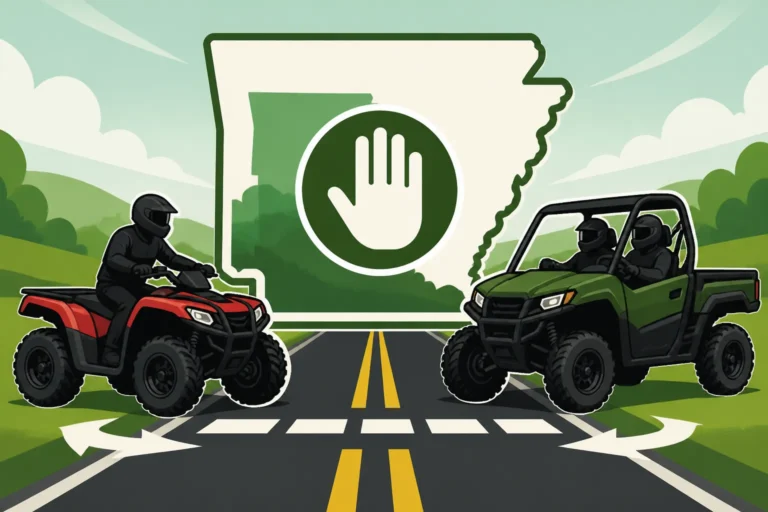
By default, Arkansas law, specifically [Arkansas ATV Road Rules: What 27-21-106 Says], generally makes it unlawful to operate an all-terrain vehicle or utility terrain vehicle on public streets and highways. This statewide ban is what causes so much head-scratching for riders. You've got this capable machine, perfect for getting around, but you can't even cross a street without potentially breaking the law. It’s a classic Catch-22 for many off-road enthusiasts. However, the law does carve out a few, very specific exceptions for things like farming operations, hunting operations, or direct ninety-degree crossings. These exceptions are critical, but they don't give you free rein to cruise down Main Street.
For most casual riders, those exceptions are too narrow. They don't cover a trip to the local store or a scenic drive on a county road. This is why many riders are keenly interested in what their local municipality decides to do, because local rules can often expand these possibilities. It's a prime example of how state law provides a foundation, but local ordinances then build (or don't build) upon it, sometimes creating a lot of nuanced differences.
How Cities Gained Local Control Over UTVs
Recognizing the growing popularity of UTVs and the desire of many communities to allow them on certain roads, the Arkansas state legislature passed Act 922. This act, which became effective on August 5, 2025, essentially empowered cities and towns across the state to pass their own ordinances to allow UTVs (but generally not traditional ATVs) on their municipal streets. This was a significant shift, giving towns like Bono, which was among the first, the ability to tailor rules to their specific community needs. You can learn more about this broader movement in [Arkansas Towns Can Open Their Streets to UTVs].
This change was met with mixed reactions. For many UTV owners, it was a welcome step toward greater freedom and convenience. For others, it raised concerns about safety and noise. But regardless of your perspective, it created a new landscape where cities could, if they chose, carve out specific zones and rules for UTV operation. This decentralization means that if you're riding from one town to another, you absolutely need to know the rules for each jurisdiction, as they can differ dramatically. [Arkansas UTV Street Legal Rules by Town] is a testament to this varied approach.
Cotter's Distinctive Stance: Banning ATVs Outright
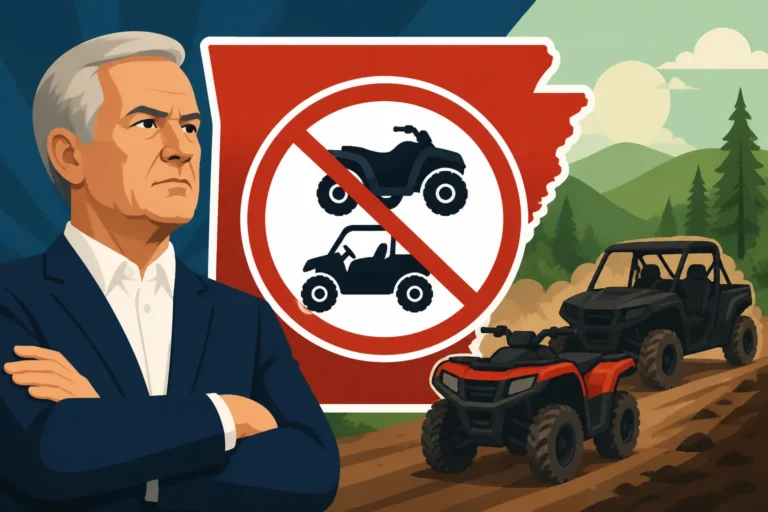
Now, let's talk about Cotter, Arkansas, because this charming town nestled along the White River has taken a noticeably different approach compared to many other communities. While some towns have embraced the spirit of Act 922 by allowing both ATVs and UTVs with specific parameters, or at least focusing on UTVs with few restrictions on ATVs, Cotter stands out for its clear and definitive ban on traditional ATVs on its municipal streets. This is a critical distinction that riders need to be aware of.
What the Cotter Ordinance Specifically Says About ATVs
The Cotter city ordinance, unlike those in some other Arkansas towns, specifically prohibits the operation of all-terrain vehicles (ATVs) on its city streets. This means if you're riding a typical four-wheeler – a machine where you straddle the seat like a motorcycle – you cannot legally operate it on public roads within Cotter city limits, even if you’ve equipped it with turn signals and mirrors. This is a direct contrast to towns that might allow certain types of ATVs or group them under the same umbrella as UTVs for street riding purposes.
This ban applies regardless of the ATV's engine size, width, or any modifications you might have made to enhance its road-worthiness. So, even if you’ve invested in street tires and a full lighting kit, your ATV is still off-limits on Cotter’s streets. It’s a very clear-cut rule that leaves little room for interpretation, which can be a relief in some ways, but also a disappointment for ATV riders who were hoping for broader street access in the area.
Why the Distinction Between ATVs and UTVs Matters to Cotter
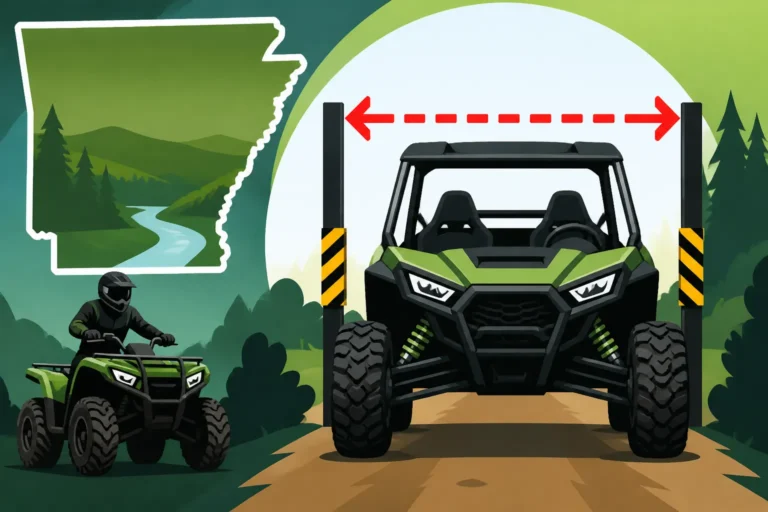
The reason for Cotter's strict differentiation between ATVs and UTVs often comes down to perceived safety, design, and public perception. Utility Terrain Vehicles (UTVs), also known as side-by-sides, typically feature roll cages, seat belts, and steering wheels, making them appear more like small cars and, arguably, safer for street operation in the eyes of many lawmakers and city planners. Many [Arkansas Machines Wider Than 50 Inches], which commonly include UTVs, tend to have a wider stance and a lower center of gravity, which can contribute to greater stability on paved surfaces compared to the more agile, narrower ATVs.
ATVs, on the other hand, require a different riding technique, relying on body English for control, which some municipal leaders might view as less compatible with street traffic. This fundamental design difference is often at the heart of such ordinances. For example, a company like SuperATV offers a plethora of accessories for both ATVs and UTVs, but the baseline vehicle design differences dictate how cities classify them for street use. Cotter's ordinance reflects a common municipal approach to prioritize what they see as the safer, more stable UTV platform for road integration.
Cotter's Rules for Street-Legal UTVs
While ATVs are a no-go, Cotter does permit Utility Terrain Vehicles (UTVs) on its streets, but this permission comes with a very specific set of requirements and restrictions. It’s not a free-for-all; you can't just drive any UTV onto a Cotter street without ensuring it meets the city's criteria. This is where many riders need to pay close attention, because overlooking a single detail can turn a pleasant ride into a frustrating encounter with law enforcement. Understanding these rules is crucial for anyone planning to enjoy the White River area from the seat of their side-by-side.
Equipment Requirements for UTVs in Cotter
For your UTV to be considered street-legal in Cotter, it absolutely must be equipped with certain safety features, mirroring many of the requirements seen in other Arkansas towns that allow UTVs. Think of it as needing to meet a minimum standard to safely share the road with traditional vehicles. These typically include:
- Headlights and Taillights: Essential for visibility, especially during dawn, dusk, or inclement weather.
- Brake Lights: So drivers behind you know when you're slowing down or stopping.
- Turn Signals: Crucial for indicating your intentions to other motorists. Many riders add [Arkansas Turn Signals and Mirrors on a UTV] as part of their street-legal conversion kit, with companies like SuperATV offering comprehensive wiring harnesses and signal kits.
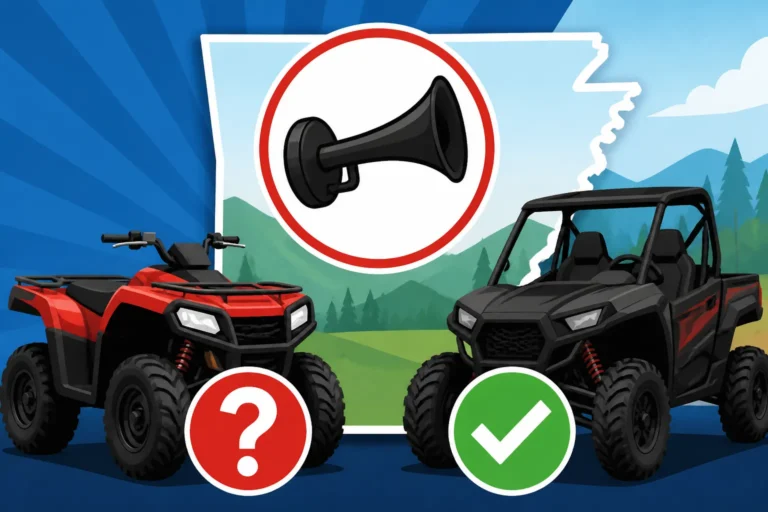
- Horn: To alert pedestrians or other drivers to your presence.
- Rearview Mirrors: Typically one on the driver's side and either a passenger side mirror or a center rearview mirror to give you a clear view of traffic behind you.
- Seat Belts: For all occupants, and they must be worn. This aligns with the UTV's inherent design that usually includes factory-installed restraints.
- Tires: Must be suitable for highway use, not just knobby off-road tires that could be unsafe on pavement.
It's not just about having these items; they must be fully functional and properly maintained. A burned-out bulb or a missing mirror can be grounds for a stop. Always do a quick pre-ride check before hitting the streets in Cotter.
Permit and Driver Requirements for Riding UTVs in Cotter
Beyond the vehicle's equipment, Cotter also has requirements for the operator and the UTV itself. This is standard practice for any city allowing off-highway vehicles on public roads.
Firstly, your UTV needs a city permit. This isn't just about having your state registration (if applicable); it's a specific permit issued by the City of Cotter that signifies your machine meets their local standards and you've paid any associated local fees. These permits are typically annual and must be displayed prominently on your UTV, often on the windshield or dashboard. [Arkansas UTV Street Permits and Annual Fees] highlights how these local permits work in general across the state.
Secondly, the driver must be at least 16 years old and possess a valid driver's license. This isn't a "learner's permit" situation; it's a full, unencumbered driver's license. [Arkansas Driver's License at 16 for Street UTVs] explains this age requirement and how it’s tied to the responsibility of operating a vehicle on public roads. Passengers also need to adhere to safety guidelines, including wearing seat belts.
Furthermore, Cotter likely imposes speed limits on UTVs on its streets, often aligning with a lower maximum speed than the posted limits for cars, or restricting UTVs to streets under a certain speed limit (e.g., 35 mph). Always be aware of the posted speed limits and any specific UTV speed restrictions within the ordinance. It's also important to note that just like any other vehicle, UTV operators are subject to all traffic laws, including those regarding DUI, reckless driving, and right-of-way. [Arkansas Penalties for Illegal Road Riding] can apply even if you have a permit if you're not following the rules.
Comparing Cotter to Other Arkansas City Ordinances
The local option for UTVs in Arkansas has led to a fascinating mosaic of rules across the state. What's perfectly legal in one town might get you a citation in another. Cotter's ordinance particularly stands out because of its absolute exclusion of ATVs, making it a valuable case study in how diverse these local regulations can be. Understanding these differences isn't just about avoiding trouble; it’s about appreciating the unique character and priorities of each community.
Key Differences in Machine Types Allowed
The most glaring difference in Cotter's ordinance, as we've discussed, is its outright ban on ATVs. Many other towns, while perhaps stricter on ATVs than UTVs, might still allow them under certain conditions. Take for instance, [Bono and the First Arkansas UTV Ordinance]. While Bono was a trailblazer for UTVs, its ordinance details specific requirements that could potentially be met by some larger, modified ATVs, or at least it doesn't contain the explicit ban found in Cotter.
This distinction in Cotter underscores a preference for the multi-passenger, cage-equipped design of the UTV, often seen as a safer and more predictable vehicle for sharing public roads. Other towns might simply state "off-highway vehicles" and then define equipment requirements, which some ATVs might be able to meet. Cotter's approach is more definitive: if it's an ATV, it's not allowed on the street. This means if you own both an ATV and a UTV, and you're planning a trip through different towns, you'll need to know which machine is welcome where.
| Feature / Rule | General Arkansas State Law (Default) | Common City UTV Ordinance (e.g., Bono) | Cotter City Ordinance |
|---|---|---|---|
| ATVs on City Streets | Generally Prohibited | Potentially Allowed (with permit/equip.) | Explicitly Prohibited |
| UTVs on City Streets | Generally Prohibited | Allowed (with permit/equipment) | Allowed (with permit/equipment) |
| Minimum Driver Age | N/A (Prohibited) | 16 with valid driver's license | 16 with valid driver's license |
| Required Equipment | N/A | Headlights, taillights, signals, horn, mirrors, seatbelts | Headlights, taillights, signals, horn, mirrors, seatbelts |
| Permit Required | N/A | Yes, local annual permit | Yes, local annual permit |
| Road Speed Restrictions | N/A | Often limited to roads 35 mph or below | Often limited to roads 35 mph or below |
Variations in Width Restrictions and Speed Limits
Beyond the type of machine, other city ordinances can vary significantly in their technical specifications and operational rules. For example, some towns might impose a maximum width restriction for street-legal UTVs, perhaps an [Arkansas Machines Wider Than 50 Inches] rule for UTVs, to ensure they fit safely in traffic lanes or on shoulders. While many UTVs are well over 50 inches wide, an overly restrictive ordinance could still limit your options. Cotter's ordinance focuses more on the type of machine rather than specific width, but it's always good practice to check the exact wording of any local rule.
Speed limits for UTVs are another common point of variation. While many ordinances, including Cotter's, will restrict UTVs to streets with a posted speed limit of 35 mph or less, some might have slight deviations or additional caveats. Some towns might also limit which specific streets are open to UTVs, perhaps excluding state highways that run through their limits, even if the speed limit is under 55 mph. [How an Arkansas City Council Opens Streets to UTVs] and [Reading Your Town's Ordinance Before You Ride] are excellent resources for understanding the nuances you need to watch out for.
The key takeaway is this: every city's ordinance is a standalone document. Just because your friend rode their UTV on the streets in Eureka Springs doesn't mean you can do the same in Cotter, especially if you're on an ATV. Always do your homework, check the local city clerk's office, or look up the specific ordinance online before you load up your rig and head out for a ride.
Disclaimer
This article is for general informational purposes only and does not constitute professional advice. Laws, prices and regulations vary by location and change over time. Consult a qualified professional for guidance on your specific situation.