Fence Gaps and Gate Etiquette
There’s nothing quite like the freedom of exploring Arkansas’s diverse landscapes on your ATV or UTV, but that freedom comes with a significant responsibility, especially when you encounter fences and gates. It's a common frustration for riders to be cruising along what feels like an open path, only to be met with a closed gate or a tempting gap in a fence, leaving you wondering what to do. This guide will help you understand the unspoken rules and legal obligations surrounding private property boundaries, ensuring your rides are respectful, safe, and free from unwanted confrontations or legal trouble.
Why Gates and Fences Matter: Landowner Rights and Rider Responsibilities
When you're out riding your ATV or UTV in Arkansas, it's easy to get lost in the moment, enjoying the thrill of the trail and the beauty of nature. However, it's crucial to remember that much of the land we ride on, or ride adjacent to, is private property. Those fences and gates aren't just decorative; they are clear indicators of someone else's land, hard work, and livelihood. Understanding the profound significance of these barriers to landowners is the first step in being a responsible and considerate rider.
Understanding Private Property Boundaries
In Arkansas, land ownership is a serious matter, and landowners have specific rights to control who accesses their property. A fence, whether it’s barbed wire, woven wire, or a simple strand of electric fence, unequivocally marks a boundary. Similarly, a gate, even if it looks old or appears to be in the middle of nowhere, serves as a controlled entry point to that private land. Ignoring these markers, even if you don't think anyone is around, is a direct infringement on those rights. It’s not just about avoiding confrontation; it’s about respecting the fundamental principle of private ownership that underpins our society. Many a rider has found themselves in a difficult situation because they assumed a path was public when it was actually a private access road.
The Impact of Unsecured Gates on Landowners
Imagine investing years of effort and significant money into raising livestock, only to have them wander off because a rider left a gate open. This isn't a hypothetical scenario; it's a very real and costly problem for farmers and ranchers across Arkansas. Cattle, horses, and other animals can quickly escape, leading to dangerous situations on public roads, expensive recovery efforts, or even loss of animals. Beyond livestock, an open gate can also expose private property to theft, vandalism, or simply unwanted disturbance. When you encounter a gate, whether it's closed or you open it to pass through (with permission, of course!), leaving it unsecured is a direct act of disrespect that can have severe financial and emotional consequences for the landowner. It's a small act for a rider, but a potentially huge problem for the property owner.
Why "Just Riding Through" Is Never Okay
The temptation can be strong when you see a shortcut or a new path beckoning behind a gate or through a fence gap. You might think, "I'll just ride through quickly; no one will ever know." But this mindset is precisely what leads to so many conflicts between riders and landowners. Unless you have explicit permission – ideally [Written Permission From an Arkansas Landowner] – "just riding through" is considered trespassing. Even if there are no signs saying "No Trespassing," a fence or a gate is generally sufficient notice that the land is private. Taking shortcuts across private property can also inadvertently lead you into dangerous situations, like active farming operations, hidden ditches, or even hunting zones. It’s always better to err on the side of caution and respect the boundaries set by property owners, even if it means taking a longer route. Your responsibility as a rider includes knowing [Arkansas Trespass Law for Riders].
Navigating Closed Gates: The Golden Rules of Respectful Riding
Encountering a closed gate while riding your ATV or UTV can be a moment of decision. Do you turn around? Do you try to open it? The answer often depends on whether you have explicit permission to be on that land. The overarching principle, however, is respect for the landowner and their property. Mishandling gates can lead to anything from a stern warning to legal action, so understanding and following proper etiquette is paramount.
Always Leave a Gate as You Found It
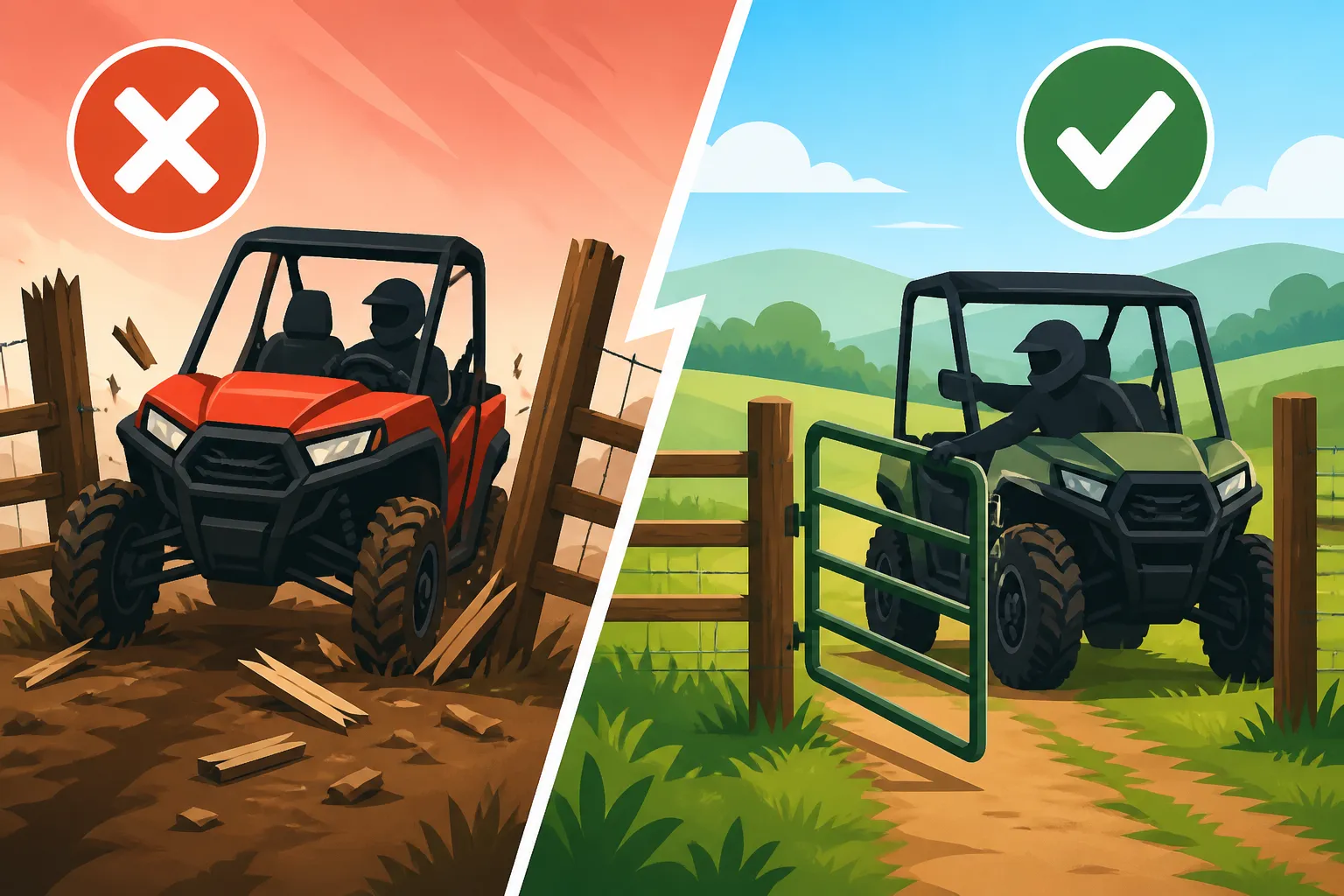
This is arguably the most fundamental rule of gate etiquette: always leave a gate exactly as you found it. If the gate was closed and latched, and you have permission to pass, you must close and latch it securely behind you. If it was chained, re-chain it. This applies whether you're riding through a field for [Arkansas Farming Operation Road Use] or navigating a private trail with explicit consent. The reason is simple: landowners manage their property with specific purposes, whether it's containing livestock, securing equipment, or simply maintaining privacy. Altering the state of a gate disrupts their management and can lead to serious issues, as discussed before. Even a moment of carelessness can have lasting repercussions, so take the extra minute to ensure the gate is properly secured.
Methods for Opening and Closing Gates Safely
Opening and closing gates, especially those on active farmland, requires a little thought and care. Here’s a quick rundown:
- Approach with caution: Slow down as you approach. If riding with others, designate one person to handle the gate.
- Secure your machine: Park your ATV or UTV safely, often off to the side, and ensure it won't roll or block the path. Turn off the engine if you’ll be dismounting for a moment.
- Inspect the latch/chain: Understand how the gate is secured before you attempt to open it. Some are simple latches, others involve chains, wires, or even multiple securing points. If it's a wire gate with a loop, unhook it carefully.
- Open the gate fully: Swing the gate wide enough for your machine and any accompanying riders to pass through comfortably, minimizing the chance of hitting the gate with your vehicle or gear, like a wide SuperATV fender flare.
- Pass through one at a time: Once the gate is open, have one machine pass through. The person who opened the gate can then wait for the next machine or close it immediately. This minimizes the time the gate is open.
- Close and secure: Carefully swing the gate back into place and re-secure it exactly as you found it. Double-check the latch or chain to ensure it’s firmly in place. Don’t just let it swing shut; actively ensure it’s secured.
- Be aware of livestock: If there are animals in the area, be extra vigilant. Open and close the gate quickly to prevent them from wandering out.
When a Gate Is Locked or Clearly Marked Private
A locked gate is the clearest possible signal: "Do Not Enter." There's absolutely no ambiguity here. Attempting to bypass a locked gate, whether by cutting chains, climbing over, or finding a way around, is a blatant act of trespassing and can lead to severe penalties under Arkansas law. The same goes for gates or property marked with "No Trespassing" signs or the distinctive [Posted Land and Purple Paint] markers that signify private property in Arkansas. These signs are legally binding. If you encounter a locked gate or clearly marked private property, your only option is to turn around. There are no exceptions for "just looking" or "getting a quick picture." Respecting these boundaries is not just a matter of etiquette; it's a legal obligation that can help you avoid a citation or worse. Remember, [Riding on Land You Do Not Own] without permission is a serious offense.
| Situation | Appropriate Rider Action | Inappropriate Rider Action |
|---|---|---|
| Closed, Unlocked Gate (Permission Given) | Open, pass through, close, and secure exactly as found. | Leave open, close loosely, or modify the locking mechanism. |
| Closed, Unlocked Gate (No Permission) | Turn around and find an alternative legal route. | Open and ride through, assuming it's okay. |
| Locked Gate (No Permission) | Turn around immediately; do not attempt to bypass or damage. | Cut chain, climb over, or try to force it open. |
| Fence Gap (No Permission) | Turn around or find an alternative legal route. | Ride through the gap, creating a new "path." |
| Open Gate (No Permission) | Treat as private property; do not enter. If on legal road, proceed. | Assume it's an invitation to explore the property. |
Addressing Open Gates and Fence Gaps: Preventing Problems
It's tempting to think an open gate or a clear fence gap might be an invitation, especially if you're not entirely sure where you are. However, this is where many riders get into trouble. Just because a gate is open doesn't mean the land beyond it is public or that you're welcome. Similarly, a gap in a fence, while seemingly innocuous, can be a sign of damage that a landowner might not even be aware of, and passing through it can exacerbate the problem or lead to accusations of trespass.
The Temptation of an Open Path
An open gate can feel like a green light to explore, especially if it leads into a seemingly wild and undeveloped area. Your natural curiosity and desire for new trails might kick in. But an open gate often has a specific, temporary purpose for the landowner—perhaps they are moving livestock, conducting maintenance, or expecting a delivery. It's not a general invitation for public access. Always assume that if there isn’t clear signage indicating public access or if you haven't secured prior permission, an open gate still denotes private property. Riding through could put you in the path of heavy machinery, livestock, or simply where you are not wanted, potentially causing an angry encounter. It’s always safer to stick to designated public trails or areas where you have explicit [Arkansas Rules With a Landowner's Permission].
Repairing Minor Damage or Reporting Major Issues
What if you encounter a fence that's clearly damaged, or a gate that's barely hanging on? As a responsible rider, you have an opportunity to be a good steward of the land, even if it’s not yours. For minor issues, like a loose wire that can be easily re-attached or a gate that’s come unlatched, it can be a goodwill gesture to make a quick, temporary fix if you can do so safely and without entering private land unnecessarily. Carrying some basic tools or zip ties in your SuperATV cargo box for such emergencies can be helpful.
However, for major damage—a downed fence line, a completely broken gate, or widespread property damage—do not attempt to fix it yourself, especially if you don't have permission to be on the property. Instead, make a note of the location, take a discrete photograph if possible (from public land, of course), and report it to local authorities or a nearby landowner if you can identify them. This shows respect for the land and helps prevent further problems for the owner, distinguishing responsible riders from those who disregard property rights.
When to Turn Around and Find Another Route
Sometimes, the most responsible action is simply to turn around. This is especially true when you’re unsure of the property status, encounter a locked gate, see "No Trespassing" signs, or come across a fence gap that looks like it's there to keep people out, not let them in. The temptation to "just see what's on the other side" is strong, but the potential consequences—fines, confiscation of your machine, or even a run-in with an agitated landowner—are not worth it. Arkansas has many fantastic places to ride, including designated OHV trails in national forests. If your current path is blocked by private property, consult a map or your GPS for an alternative public route. There’s no shame in turning back; in fact, it shows good judgment and respect for private property rights, ensuring you can continue to enjoy your passion without legal headaches.
The Legal Side of Land Access and Trespass in Arkansas
Understanding the legal framework around private property and trespass in Arkansas is not just about avoiding fines; it’s about upholding the rights of landowners and ensuring the continued enjoyment of riding opportunities for everyone. The laws are generally straightforward, but misconceptions abound, especially concerning what constitutes "private" versus "public" land. As an ATV or UTV owner, knowing these laws protects you and promotes harmonious relations within the community.
Arkansas's Trespass Laws and Penalties
Arkansas law is quite clear regarding trespassing. Generally, a person commits criminal trespass if they purposely enter or remain unlawfully on property or in a vehicle. "Unlawfully" means without the express or implied consent of the owner. This applies even if there isn't a "No Trespassing" sign, as long as the property is fenced, posted, or otherwise clearly private. Penalties for trespassing can range from a misdemeanor charge, resulting in fines, to more severe felony charges if damage occurs or if the trespass is repeated. Furthermore, landowners have the right to civil action against trespassers for any damages caused to their property, crops, or livestock. It’s critical to remember that [What a Landowner Can Do About Riders] who trespass can include having their vehicle towed, or even, in extreme cases, the use of force to protect property, though this is heavily regulated. Ignorance of the law is never an excuse, and deputies are authorized to issue citations.
The Role of Written Permission for Land Access
The best way to ensure you are legally riding on private land is to obtain explicit, [Written Permission From an Arkansas Landowner]. Verbal permission can be hard to prove and is open to misinterpretation. A written agreement, even a simple signed note, can outline the specific areas you're allowed to ride, the dates and times, and any conditions (like keeping gates closed). This document is your shield against trespass accusations. If you're approached by a landowner or law enforcement, this written permission provides clear evidence of your right to be there. Without it, even if you truly believe you have permission, you could face difficulties. Many landowners are happy to grant access to responsible riders, especially for activities like hunting or land maintenance, but they need that documented trust. Carry this document with you on your person or in a waterproof pouch on your machine, perhaps in a secure compartment accessible even with SuperATV storage accessories.
Specific Landowner Rights Regarding Posted Land and Purple Paint
Arkansas law specifically addresses how landowners can visually mark their property to signify it is private and off-limits. Beyond traditional "No Trespassing" signs, Arkansas recognizes the use of purple paint on trees or posts as a legal way to mark property boundaries. This is especially prevalent in rural and wooded areas where traditional fencing might be impractical. The presence of [Posted Land and Purple Paint] carries the same legal weight as a "No Trespassing" sign. If you see purple paint stripes on trees or fence posts, you are legally on private land and must not enter without explicit permission. These markers are designed to be visible and unambiguous, leaving no room for doubt about the private nature of the land. Disregarding these universal symbols will quickly put you on the wrong side of the law and create unnecessary problems for both you and the landowner.
Disclaimer
This article is for general informational purposes only and does not constitute professional advice. Laws, prices and regulations vary by location and change over time. Consult a qualified professional for guidance on your specific situation.