Shady Lake and Its Caretaker’s Cabin
Shady Lake can look like an easy base for an Arkansas ATV or UTV weekend: a quiet forest setting, water nearby, and a cabin that sounds like it could simplify the trip. The catch is that lodging access, trail access, and machine rules are separate questions. This guide explains how to plan around the caretaker’s cabin without assuming it is a public rental or that trails begin at the lake.
What to Know About Shady Lake and the Caretaker’s Cabin
Where Shady Lake Fits Into an Ouachita Riding Trip
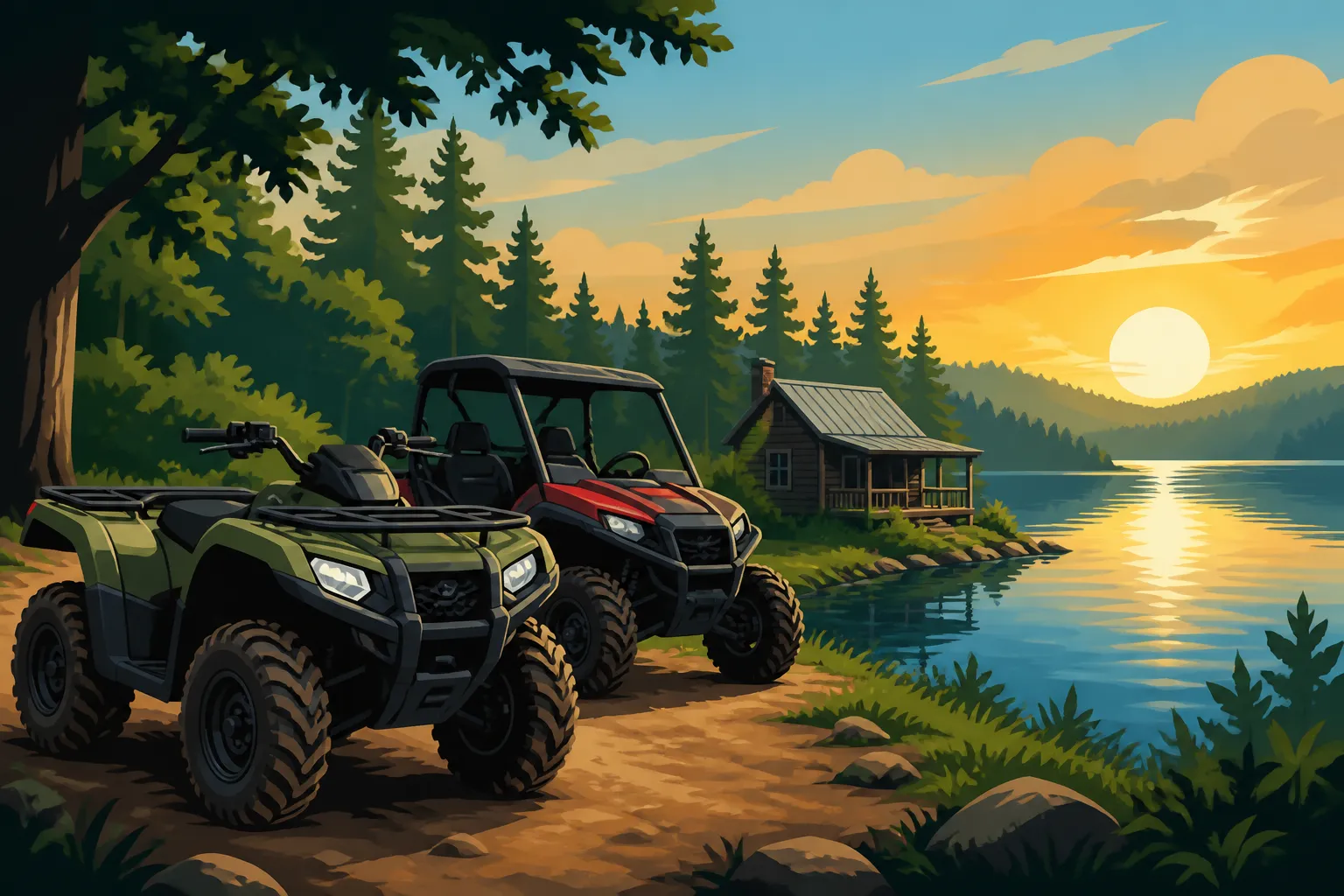
Shady Lake is a recreation area in the Ouachita National Forest, in the forested country of southwest Arkansas. It offers a different feel from a trailhead: instead of arriving, unloading, and immediately riding a marked OHV loop, you are planning a stay around a lake and a forest recreation site. That distinction matters if your main goal is to maximize riding time.
Riders often look at a map, see forest roads and recreation areas close together, and assume that a machine can travel between them. Do not make that assumption. A road’s appearance on a map does not establish that it is open to ATVs or UTVs, and a route that is legal for a highway vehicle may not be part of an authorized OHV trail system. Before you build an itinerary, separate your lodging location from the approved riding area. [Arkansas ATV Trails: Where to Ride] is a useful starting point for comparing the kinds of riding destinations available around the state.
Shady Lake can still work well as part of an Ouachita trip, especially if your group wants downtime between rides. Think of it as a potential place to stay and relax, not automatically as an ATV trailhead. If a particular trail system is your priority, check its access points and driving route before booking lodging. The broader regional differences described in [Arkansas Ozark and Ouachita Riding Compared] can also help you decide whether the Ouachita area matches your group’s riding style.
Is the Caretaker’s Cabin Open to the Public
The phrase “caretaker’s cabin” can cause understandable confusion. A cabin associated with a recreation area might be a public rental, a staff or host residence, a privately managed property, or a building that is not available for overnight stays. A cabin’s presence on a map—or a mention in an old trip report—does not confirm that visitors can reserve it.
Before making it the foundation of your trip, confirm the cabin’s exact name, location, public-access status, reservation process, and permitted use through the responsible land manager or the official listing for the property. Ask whether the listing refers to the caretaker’s cabin itself or to another nearby cabin. Also confirm what is included: sleeping arrangements, cooking facilities, potable water, restroom access, electricity, parking, and whether you may bring a trailer or off-road machine onto the property.
That small verification step can prevent a frustrating arrival. Imagine towing a side-by-side through the Ouachitas with a group expecting a private cabin, only to learn that the structure is reserved for a campground host or is not a rentable lodging unit. Keep a backup lodging option until you have clear confirmation. If you are comparing the cabin with other places to stay, [Arkansas ATV Camping With Trail Access] offers a helpful framework for evaluating whether a campground or cabin actually suits a riding-focused weekend.
| Planning question | Why it matters | What to confirm |
|---|---|---|
| Is the caretaker’s cabin public lodging? | The name alone does not establish rental availability. | Official listing, reservation status, and who manages it |
| Can you ride from the property? | Lodging near forest land is not necessarily connected to an open OHV route. | Legal trail access and whether machines may be operated on site |
| Is there room for a trailer? | A cabin driveway or parking area may not fit a truck and trailer. | Parking dimensions, turnaround space, and unloading rules |
| Are water and power available? | Amenities may differ from a conventional vacation rental. | Potable water, electricity, restroom, and cooking arrangements |
| What happens after storms or closures? | Forest roads and recreation facilities can be affected by conditions. | Current access information from the managing office |
Planning ATV and UTV Riding Near Shady Lake
Treat the Lake and the Trail System as Separate Stops
A strong Shady Lake itinerary starts by identifying the trail system you actually plan to ride, then checking how it relates to your lodging. A cabin may make a comfortable base, but it does not automatically provide a legal route to an OHV trail. You may need to trailer your machine to an authorized trailhead rather than ride out from the property.
This is especially important on national forest land, where access can change from one road or trail to the next. Some routes may be open to regular vehicle traffic but closed to off-highway vehicles; others may have seasonal restrictions, width limits, or posted closures. Use current official information for access decisions, and read signs at the site. A navigation app can help you understand the general layout, but it should not be treated as permission to ride a route.
For a trip built around Wolf Pen Gap, for example, check the trail system’s designated entrances and planned riding loops separately from your Shady Lake lodging arrangements. [Wolf Pen Gap's Looped Trail Design] can help you think about how a day of riding is organized, while [How to Check Wolf Pen Gap Trail Status] is relevant when you need to verify whether access or trail conditions have changed. Do not assume that the shortest-looking map route is open to machines.
Choose Between Riding From Camp and Trailering
Some riders want to park once and have a trail start just beyond their campsite. Others are comfortable towing a machine to a trailhead each morning. Neither approach is automatically better, but the choice affects the kind of accommodation that will feel convenient. If the caretaker’s cabin is not directly connected to an approved trail, the second approach may be the practical one.
Before booking, consider the full towing routine. Is there enough space to park the tow vehicle and trailer? Can you unload safely without blocking other visitors? Are there road surfaces or tight turns that might make a long trailer difficult? If your group plans to leave machines on a trailer overnight, ask about parking rules and security expectations rather than assuming a recreation-area lot is suitable for overnight storage.
A trailhead campground or camping area with confirmed machine access may be a better fit for riders who want to minimize daily shuttling. On the other hand, a quieter cabin can suit a mixed group where some people want to ride and others prefer fishing, relaxing, or exploring the lake area. The key is matching the lodging to your group’s priorities rather than choosing a place based on the word “cabin” or “trail” in a description. [Arkansas Trails With Camping] can help you compare that style of stay with a cabin-based plan.
Booking and Preparing for a Cabin Stay
Confirm the Details Before You Reserve
Once you locate an official cabin listing, read the practical details closely. Pay attention to check-in instructions, access roads, occupancy limits, sleeping arrangements, and what you need to bring. A rustic forest cabin may not provide the same conveniences as a hotel or fully equipped vacation rental. Ask specifically about bedding, cookware, drinking water, refrigeration, restroom facilities, and heating or cooling rather than relying on assumptions.
Clarify what the reservation does and does not include. A cabin booking may not cover access to nearby riding areas, forest permits, or vehicle parking. It may also have rules about pets, quiet hours, fires, generators, or storing fuel. If you are travelling with children or a large group, check whether the sleeping arrangement and safety setup are appropriate for everyone. These questions are easier to resolve before you have packed the truck.
It is also worth confirming the route to the property. Forest roads can be narrow, winding, or rougher than visitors expect, and a route suitable for a car may feel different while towing. Ask the managing office about the recommended approach and whether the access road is maintained for the type of vehicle you plan to bring. For broader travel preparation, [Trailering Over Mountain Roads] covers the kinds of practical issues that can make a forest-area drive more stressful than expected.
Pack for Limited Amenities and Changing Conditions
Plan your packing around the amenities you have confirmed, not the amenities you hope will be there. If potable water is not clearly provided, bring drinking water for the group and enough for cooking and cleanup. If the cabin does not have a full kitchen, pack simple meals that do not depend on refrigeration or extensive cooking. A cooler, headlamps, basic first-aid supplies, and a way to charge phones can make a basic stay much more comfortable.
For a riding trip, separate cabin supplies from trail gear. Keep riding equipment together so the morning departure does not turn into a search through every bag: helmets, eye protection, gloves, sturdy footwear, weather layers, and any machine-specific tools or recovery equipment. Keep food, fuel, and oily equipment stored appropriately, and follow any property rules about where machines or fuel containers may be kept.
Weather can change the character of a forest trip quickly. Rain may affect access roads or trail conditions, while hot weather makes water and shade more important. Check conditions shortly before leaving and again before setting out to ride. onX Offroad can help you review mapped routes and orient yourself to nearby roads, but confirm closures and legal access with the responsible land manager. Treat the app as a planning aid, not a replacement for posted signs or official updates.
Riding Responsibly in the Ouachita National Forest
Verify Open Routes, Permits, and Machine Restrictions
A Shady Lake stay does not by itself authorize riding on nearby public land. Check the rules for the specific riding area you plan to visit, including any required permit, vehicle eligibility, route restrictions, and seasonal closures. Rules can differ between areas in the same forest, so do not assume that a pass or permission for one place covers another.
Machine width is particularly important for UTV owners. Forest gates and trail specifications may exclude wider side-by-sides, even when a trail is open to smaller ATVs. Measure the machine as it is actually set up, including accessories that affect width, and compare that measurement with the current rules for the intended route. A machine that fits at home may be too wide once you add wheel spacers, oversized tires, or other equipment.
Before departure, check whether the route is open and whether recent weather has affected access. A trail shown on a map may be temporarily closed, damaged, or subject to a seasonal restriction. onX Offroad may be useful for organizing a route and seeing mapped trail connections, but verify the legal status through official forest or trail-system information. For trip-day preparation, [Arkansas Trail Conditions Before You Tow] is a useful reminder to check the route before loading up and driving to the trailhead.
Respect Recreation Areas and Other Forest Users
Shady Lake is a recreation setting, so keep the needs of other visitors in mind even if your main reason for travelling is off-road riding. Follow posted rules, keep machines within authorized areas, and avoid using a campground or lake access road as an informal riding route. A quiet recreation area can include people walking, fishing, camping, or bringing children to the water. Slow, considerate movement around shared spaces helps prevent conflicts and protects the experience that draws people there.
Stay on designated routes and avoid creating new tracks around wet spots or barriers. Riding around a closed gate can damage the land and may turn a temporary closure into a longer-term access problem. Pack out trash, secure food, and keep noise reasonable near campsites and cabins. If you encounter a closure sign, do not assume it is outdated simply because a map still displays the route.
Plan for limited cell coverage in forested areas. Save important directions and reservation details before leaving reliable service, and tell someone where you expect to ride. onX Offroad can be helpful for offline route planning when you prepare ahead, but a downloaded map is not a substitute for carrying the right permit, following current closures, or being able to navigate safely if your plan changes. Leave room in the schedule for a slower drive, an unexpected detour, or a decision to turn around.
Building a Practical Shady Lake Weekend
Sample a Balanced Two-Day Itinerary
For a two-day trip, keep the first day flexible. Arrive with enough daylight to find the cabin, confirm the parking setup, unload essentials, and inspect the area before you commit to a long ride. If your arrival is late or the access road takes longer than expected, it is better to settle in and ride the following morning than rush through unfamiliar forest roads in fading light.
On the main riding day, travel to the authorized trailhead you selected in advance. Carry the required permits and identification, review the trail map, and agree on a turnaround time with your group. Riders with different experience levels should discuss expectations before leaving the staging area. A beginner may need more breaks and an easier route, while a more experienced rider may be tempted to press on. Staying together is safer and makes the day more enjoyable for everyone.
Use the final part of the day to return the machine and trailer to the appropriate parking area, then leave time for cleanup and dinner. If Shady Lake is part of the trip for its peaceful setting, do not fill every hour with riding and driving. A relaxed evening at the cabin or recreation area can be the difference between a tiring logistics exercise and a genuinely restorative weekend.
Have a Backup Plan for Access or Lodging Changes
Build a backup into the trip in case the cabin is unavailable, the access road is affected, or the riding area closes. That does not mean expecting a problem; it means avoiding a single-point failure. Keep another lodging option in the region, know where you can refuel, and identify an alternate activity if riding is not possible. For a group that has travelled a long way, a lake-side rest day or a different nearby destination may be preferable to forcing a ride under poor conditions.
Before leaving home, save the cabin contact details, reservation instructions, trailhead directions, and a map that works without service. Keep the tow vehicle fuelled and make sure the trailer, tie-downs, and machine are ready before you reach the forest. A last-minute equipment issue is harder to solve when you are far from town and phone reception is weak.
If the caretaker’s cabin turns out not to be public lodging, rework the plan rather than relying on informal access. Choose a confirmed campground, cabin, or other legal stay and keep Shady Lake as a recreation stop only if the area’s access rules allow it. This is the same practical approach that makes any forest riding weekend smoother: confirm the place you can sleep, confirm the place you can ride, then connect the two with a legal, manageable route.
Disclaimer
This article is for general informational purposes only and does not constitute professional advice. Laws, prices and regulations vary by location and change over time. Consult a qualified professional for guidance on your specific situation.