Arkansas Registration for a Six-Wheel Machine
It can be incredibly confusing when you’ve got a unique off-road machine, like a six-wheeler, and you're trying to figure out how to register it in Arkansas. Many folks assume all off-road vehicles are treated the same, but the truth is, the exact legal definition of an "All-Terrain Vehicle" can make a huge difference in the registration process. This guide will walk you through exactly what Arkansas law says about six-wheel machines, what you'll need to do if yours qualifies for ATV registration, and what your options are if it doesn't quite fit the mold.
Understanding Arkansas's Definition of an ATV for Six-Wheelers
One of the biggest hurdles many six-wheel machine owners face in Arkansas is simply figuring out if their pride and joy even counts as an ATV in the eyes of the law. It’s not as straightforward as just having "off-road tires" and an engine. The state has specific statutory language that defines what an ATV is, and your six-wheeler needs to fit within those parameters to be eligible for the standard ATV registration process. If it falls outside those lines, the rules change entirely, and you could be left scratching your head.
The Statutory Language for Off-Highway Vehicles
Arkansas Code § 27-21-102 lays out the definition of an All-Terrain Vehicle (ATV), and it's this specific language that dictates whether your six-wheel machine qualifies. Generally, an ATV is defined as a motorized vehicle, three, four, or six-wheeled, 50 inches or less in width, with an unladen dry weight of 1,000 pounds or less, designed for travel on unpaved surfaces, and having a seat designed to be straddled by the operator. It also specifies that ATVs use "nonhighway tires." Now, that's a mouthful, and it immediately brings up a few critical points for six-wheelers.
For instance, the inclusion of "six-wheeled" in the definition is a good start, but the width and weight restrictions are where many larger six-wheel utility vehicles (UTVs) might run into trouble. Imagine you’ve got a Polaris Ranger 6×6, a fantastic machine for hauling gear across a deer lease or working on a large property. While it's definitely six-wheeled and off-road capable, its width often exceeds 50 inches, and its dry weight can easily push past the 1,000-pound limit. These are the kinds of details that can quickly shift your machine out of the "ATV" category for registration purposes. It's a common frustration for owners who just want to do the right thing but find their perfectly capable machine doesn't quite fit the state's narrow definition. You might want to review [Arkansas Six-Wheeled ATVs and the Statute] for further clarification on the legislative intent.
How Six-Wheelers Measure Up to the Definition
So, how does your specific six-wheel machine stack up against these criteria? This is where you really need to get out the tape measure and check your owner's manual. A traditional Honda Foreman 6×6, for example, often falls within the 50-inch width and 1,000-pound weight limits, meaning it would likely qualify as an ATV under Arkansas law. On the other hand, many modern, larger six-wheel utility vehicles (often marketed as "6×6 UTVs") are intentionally designed for more cargo, more passengers, and a wider, more stable stance. These machines frequently exceed both the width and weight restrictions.
If your six-wheeler is wider than 50 inches or heavier than 1,000 pounds unladen dry weight, it technically doesn't meet the "ATV" definition. This doesn't mean it's illegal to own or ride off-road, but it does mean it won't be registered as an ATV. Instead, it might fall into a broader category of "off-road vehicles" that the state doesn't have a specific registration program for, or it might be treated more like a utility vehicle (UTV) if it has features like side-by-side seating and a steering wheel. It's important to remember that the state's definition is very particular, and even if your six-wheeler looks like an ATV to you, it might not be one to the Department of Finance and Administration (DFA). For those curious about the specifics of wider machines, check out [Arkansas Machines Wider Than 50 Inches].
The Registration Process for Qualifying Six-Wheel Machines
If your six-wheel machine does indeed fit Arkansas's specific definition of an ATV – meaning it has three, four, or six wheels, is 50 inches or less wide, weighs 1,000 pounds or less dry, and has a straddle seat – then you'll follow the same registration process as any other ATV. This is great news because it means there's a clear path forward, even if it involves a bit of paperwork and a trip to your local revenue office. The key is to be prepared and have all your ducks in a row before you go.
Gathering Your Essential Paperwork
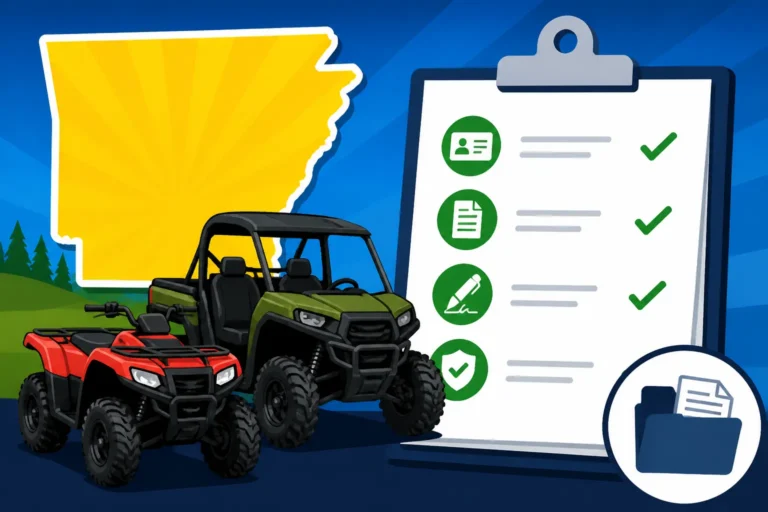
To register your qualifying six-wheel ATV, you'll need several key documents. Think of it like assembling a legal puzzle, where each piece is crucial. First and foremost, you'll need proof of ownership. This usually means the Manufacturer's Statement of Origin (MSO) if the machine is new, or a bill of sale if you bought it used. If you purchased it from a private seller, a detailed, signed bill of sale is absolutely critical. You can find reliable templates online through services like LawDepot to ensure your bill of sale includes all the necessary information, such as the buyer and seller names, addresses, purchase price, date, and the machine's Vehicle Identification Number (VIN) or serial number. Without clear proof of ownership, the revenue office simply cannot process your registration.
Beyond proof of ownership, you'll also need a valid form of identification, like a driver's license. If you're paying sales tax (which most people are), you'll need to know the purchase price and be ready to pay those taxes. Remember that in Arkansas, ATV registration is a one-time process, so while it might feel like a lot of upfront work, you won't have to deal with annual renewals. For a full checklist, consult [Arkansas Registration Paperwork Checklist] to ensure you don't miss anything crucial.
Completing the Arkansas Form 10-381
Once you have all your supporting documents, the next step is to complete Arkansas Department of Finance and Administration Form 10-381, also known as the "Application for Original Off-Highway Vehicle Registration." This form is the heart of your registration application. It asks for details about you, the owner, and specifics about your six-wheel ATV. You'll need to accurately fill in information like the year, make, model, VIN/serial number, engine size (in cubic centimeters, or cc), and the purchase date. This is where those measurements and specifications from your owner's manual come in handy.
Take your time filling out Form 10-381. Any errors or omissions can cause delays in processing your registration, meaning you might have to make a second trip to the revenue office, which nobody wants. If you're unsure about a section, it's always better to leave it blank and ask the clerk at the revenue office for clarification rather than guessing. They are there to help, and they've seen every kind of situation imaginable. Once the form is complete and you have all your attachments, you'll submit it along with payment for any sales tax and the one-time registration fee. For a line-by-line guide, refer to [Filling Out Arkansas Form 10-381 Line by Line].
Navigating Sales Tax and Fees for Your Six-Wheeler
Let's be honest: nobody enjoys paying taxes and fees, but it's an unavoidable part of registering any vehicle, including your six-wheel ATV, in Arkansas. Understanding what you owe and why can alleviate some of the sticker shock and help you budget appropriately. The good news is that Arkansas ATV registration is a one-time affair, so once these costs are covered, you won't have to worry about renewal fees down the road.
State and Local Sales Tax Considerations
When you purchase your six-wheel ATV, whether new from a dealer or used from a private seller, you're generally subject to Arkansas sales tax. This isn't just a state tax; it also includes local sales taxes, which can vary significantly depending on the city and county where you reside. These local rates are stacked on top of the state sales tax, so the final percentage can be higher than you might initially expect. For example, if you live in a county with a 1.5% local tax and a city with a 2% local tax, those percentages are added to the state's rate. This is different from how some other large purchases might be taxed, as [Arkansas Sales Tax With No Vehicle Tax Cap] applies to ATVs.
If you bought your machine from a licensed dealer, they typically collect the sales tax at the time of purchase and remit it to the state for you. However, if you bought it from a private seller, you'll be responsible for calculating and paying the sales tax directly to the DFA when you register the machine. It's crucial to have the accurate purchase price documented, ideally on a formal bill of sale. A service like LawDepot can provide a template for a comprehensive bill of sale that helps ensure you have the necessary documentation for tax purposes. Keep that sales receipt or bill of sale handy!
Understanding the One-Time Registration Fee
Beyond sales tax, Arkansas charges a one-time fee to register your ATV. This is one of the most appealing aspects of Arkansas's ATV registration system: it's not an annual burden. Once you pay this fee and receive your decal, that registration is valid for the lifetime of your ownership of that specific machine. There's no annual renewal notice, no yearly sticker to buy. This truly simplifies things for long-term owners.
The exact amount of the registration fee can change, so it's always wise to check the current figures on the Arkansas DFA website or by calling your local revenue office before you go. Generally, it's a relatively small, flat fee compared to the sales tax you'll pay on the purchase price. When you combine this fee with the sales tax, proof of ownership, and your completed Form 10-381, you're all set to get that all-important decal. Remember, this fee covers the administrative costs of assigning a unique identification number to your six-wheel ATV and issuing the decal, which signifies its legal registration. You can learn more about the cost in [What Arkansas Charges to Register an ATV].
What Happens If Your Six-Wheeler Doesn't Meet the ATV Criteria
It's a common scenario: you have a powerful, multi-purpose six-wheel vehicle, but after carefully reviewing Arkansas's ATV definition, you realize it’s too wide, too heavy, or doesn't have a straddle seat. This is where many owners get frustrated because they want to comply with the law, but the path forward isn't always clear. The key takeaway here is that if your six-wheeler doesn't fit the ATV definition, it simply means it won't be registered as an ATV. It doesn't necessarily mean it's illegal to own or ride; it just means it operates under different (and sometimes less clear) rules.
Beyond the ATV Definition: Other Vehicle Types
If your six-wheel machine exceeds the 50-inch width or 1,000-pound weight limit, or if it has side-by-side seating and a steering wheel, it's likely considered a Utility Terrain Vehicle (UTV) or simply a general "Off-Road Vehicle" rather than an ATV. Arkansas does not have a statewide mandatory registration program specifically for UTVs or other broad categories of off-road vehicles that fall outside the ATV definition. This can be both a blessing and a curse. On one hand, you might not have to deal with a registration process at all, which means no fees or forms. On the other hand, without official registration, your machine lacks a state-issued identification for legal ownership and enforcement purposes, which can be an issue if your machine is stolen or involved in an accident.
It also means that any restrictions on riding on public roads or public lands will apply differently. For UTVs, some cities and counties in Arkansas have passed local ordinances allowing them on certain public roads, but this is entirely up to the local municipality, and it requires a separate local permit, not a state ATV registration. For more on this, you can look into [Arkansas UTV Registration Requirements]. For machines that are truly specialized, like amphibious vehicles or heavy-duty industrial six-wheelers, they might fall into completely different classifications, or simply not be covered by recreational vehicle statutes at all.
Consequences of Not Registering a Non-Qualifying Machine
For six-wheel machines that do not meet the Arkansas ATV definition, there are no specific penalties for "not registering" them because there isn't a state registration program for them in the first place. This means you won't be ticketed for failing to display an ATV decal if your machine isn't an ATV. However, this doesn't give you free rein to ride anywhere. All the general rules about off-road vehicle use still apply. You'll still need to ensure you have permission to ride on private land, and you cannot generally ride on public roads or highways unless explicitly permitted by local ordinance (for UTVs) or one of Arkansas's narrow statutory exceptions, such as for farming or hunting operations.
The main consequence of having a non-registered six-wheel machine is the lack of official state documentation. If your machine is stolen, recovering it can be much harder without a state-assigned registration number or a title. While you should always keep your MSO, bill of sale (perhaps a detailed one from LawDepot), and proof of purchase, a state registration adds another layer of verifiable ownership. If your six-wheeler is involved in an accident, proof of ownership is still vital, but the absence of a registration might lead to more questions from law enforcement. Always carry proof of ownership, such as a bill of sale, when operating any off-road machine, regardless of its registration status.
Disclaimer
This article is for general informational purposes only and does not constitute professional advice. Laws, prices and regulations vary by location and change over time. Consult a qualified professional for guidance on your specific situation.