Arkansas Riding Areas With Wash Stations
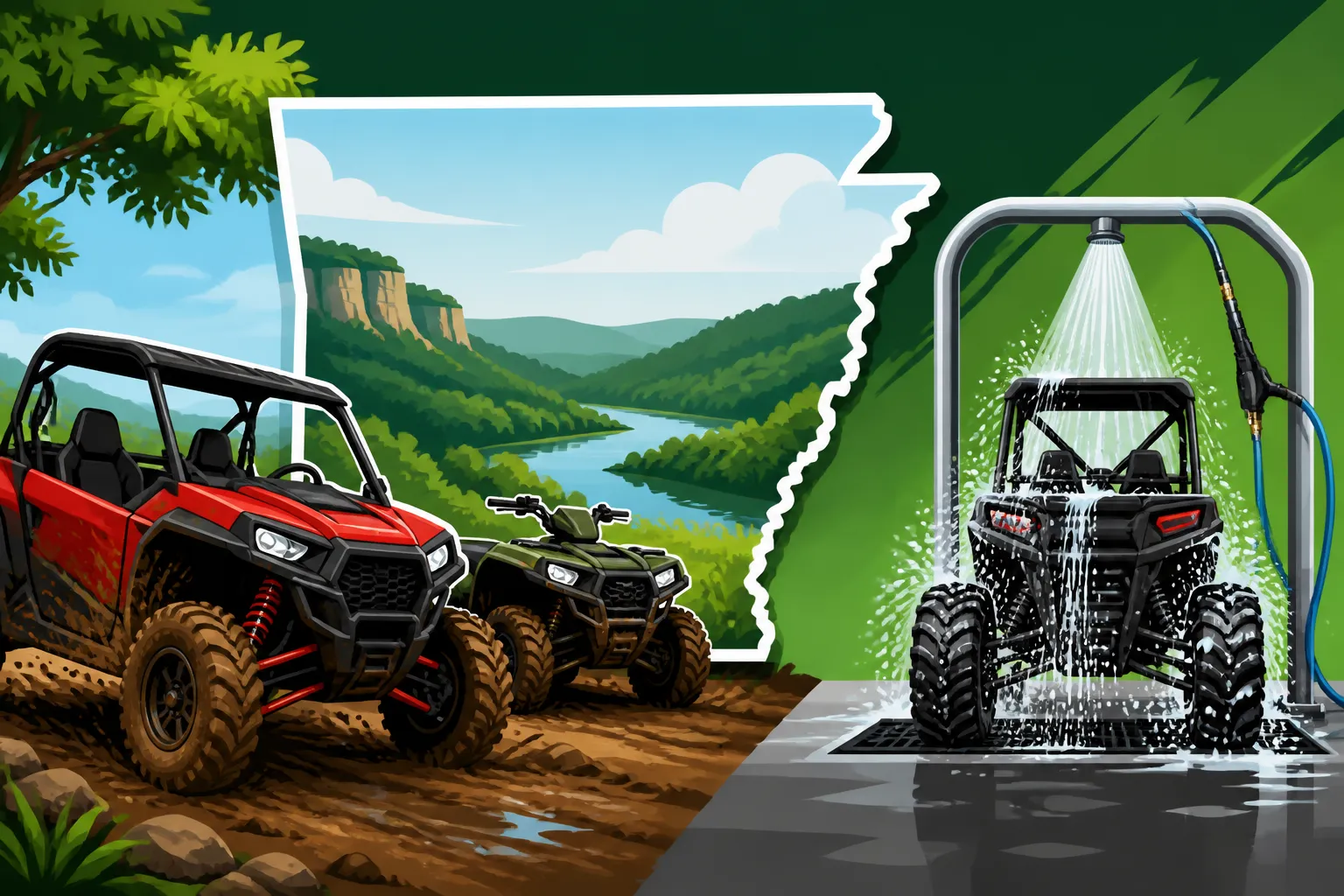
A muddy ride can turn into a frustrating drive home when grit is packed around your ATV’s suspension, radiator, and trailer. In Arkansas, wash-station access depends on where you ride: some private parks advertise on-site washing, while many forest trailheads are basic staging areas. This guide explains what to expect, how to confirm facilities, and how to plan a practical post-ride cleanup.
Where to Find ATV and UTV Wash Stations in Arkansas
A wash station is most useful when it is close to the trail exit, easy to reach with a trailer, and equipped for more than a quick rinse. But “wash station” can mean anything from a hose and spray area to a full wash bay. Before you build your trip around one, confirm what the facility actually offers and whether it is available to day riders.
Hot Springs Off-Road Park
Hot Springs Off-Road Park is a clear place to start if having a rinse option matters. The park lists a spray hose wash station, which can help remove mud and loose grit before you load up. It is especially useful after a wet ride, when clay and trail debris can cling to tires, footwells, skid plates, and suspension components. Read more about [Hot Springs Off-Road Park's Spray Hose Wash Station] and the park’s [Hot Springs Off-Road Park's Trail Network].
A spray hose is a practical cleanup tool, not necessarily a full-service wash bay. Ask whether the station is open during your visit, whether you need to bring your own supplies, and where runoff is directed. It is also worth checking whether the hose is suitable for rinsing a machine or intended only for a quick exterior wash. Avoid aiming high-pressure water directly at electrical connections, seals, bearings, or radiator fins.
The park’s location near Hot Springs can make it a convenient option for riders pairing trail time with an overnight stay in town. Still, don’t assume a wash station is operating just because it is listed as an amenity. Weather, maintenance, operating hours, and park rules can affect access. Confirm details when you plan your visit, especially if a clean machine is important before a long highway tow.
Private parks and forest trailheads are different
Private off-road parks may offer amenities such as rinse areas, rentals, camping, or other services, but those offerings vary from place to place. A park with a wash station is not automatically representative of every Arkansas riding area. Use [Arkansas Off-Road Parks With Wash Stations] as a starting point, then contact the facility directly to confirm what is available for your specific visit.
Public-land trailheads are often more basic. At a forest staging area, you may find parking and trail access without a water supply or wash equipment. Mill Creek near Ozark is one example where riders should plan around limited trailhead amenities; the trailhead is described as having no water. See [Arkansas Trailheads With No Water] before assuming you can rinse a machine at the end of the day.
This difference affects trip planning. If you ride at a private park with a confirmed wash facility, you may be able to clean up before loading. If you ride a forest trail system such as Wolf Pen Gap near Mena or Mill Creek near Ozark, plan to bring a contained cleanup option or wait until you reach a suitable location. For a broader overview of facility considerations, see [Arkansas Riding Areas With Wash Stations].
| Riding area type | What to expect | Best next step |
|---|---|---|
| Private off-road park | Amenities may include a rinse area, but access and equipment vary | Ask whether the wash station is open to your type of visitor |
| National forest trailhead | Often a simple staging area, not a vehicle wash facility | Pack cleanup supplies and confirm water availability |
| Campground or lodging near trails | Facilities depend on the property and its rules | Ask whether ATV and UTV washing is permitted |
| Home or designated wash location | More control over water, drainage, and equipment | Clean the machine without letting muddy runoff enter storm drains |
How to Confirm a Wash Station Before You Tow
A vague amenity listing can create an avoidable headache. A “wash area” might be a hose with limited access, a designated rinse pad, or a service intended for rental machines only. A short call or message before you leave can clarify whether riders can use it, what equipment is supplied, and what rules apply.
Ask specific questions, not just whether there is a hose
When contacting a park, ask whether the wash station is available to day riders, overnight guests, or only customers using particular services. Find out whether it is self-service, whether you need to bring a hose or nozzle, and whether water is available during your planned hours. If you are riding with a group, ask whether several machines can be rinsed without creating a bottleneck at closing time.
It also helps to describe what you need to clean. A light rinse after a dusty day is different from removing thick mud from tires, wheel wells, and underbody panels. Ask whether the facility permits washing trailers, too. Some places may allow a quick machine rinse but not a full trailer wash, particularly when water use or runoff is a concern.
Keep a simple checklist with your trip notes:
- Is the wash station open on the day of our visit?
- Is it available to our visitor type?
- Is a hose or nozzle provided?
- Are there limits on washing trailers or heavily muddy machines?
- Are there rules about soaps, detergents, or runoff?
- Is the station near the exit and accessible with a trailer?
These questions can save you from discovering after a muddy ride that the hose is unavailable or the washing area is reserved. They are especially useful when travelling to a less familiar area or arriving outside the busiest part of the day.
Check trail and facility conditions together
Wash access is only one part of the plan. Rain can change trail conditions, increase the amount of mud on a machine, and affect whether roads to a trailhead are easy to tow on. Check [Arkansas Trail Conditions Before You Tow] as part of your preparation, and confirm park or forest access details directly before departure.
Mapping tools can help you understand the route, nearby communities, and where you may be able to stop after riding. For example, onX Offroad can help you review riding-area context and plan a route, but a map should not be treated as confirmation that a wash station is open or available. Check the facility itself for current amenity and access details.
If you use onX Offroad to plan a route to a riding area, save a backup plan for cleanup as well. That might mean bringing a rinse container, identifying a nearby campground that allows washing, or scheduling a stop at a location where you can clean the machine responsibly. Don’t assume that a public trailhead, roadside pull-off, or gas station will let you wash an ATV or UTV.
Cleaning Your Machine When No Wash Station Is Available
You can still reduce the mess and protect your machine without a dedicated wash bay. The key is to remove the most damaging dirt first, use water carefully, and avoid leaving clumps of mud behind for the drive home. A small amount of preparation is easier than trying to scrape dried clay out of every crevice later.
Pack a simple trailhead cleanup kit
For a basic cleanup, bring a water container, a soft brush, a plastic scraper, a few microfiber or shop towels, and disposable gloves. A low-pressure pump sprayer can be useful for knocking loose dirt from exposed areas without spraying water everywhere. Keep used towels and muddy debris in a sealed bin or bag so they do not end up scattered in your truck or trailer.
Start with the areas that matter most: tires, fenders, footwells, skid plates, and accessible suspension parts. Remove heavy clumps with a scraper or brush before using a small amount of water. Keep water away from sensitive electrical components, air intakes, seals, and hot exhaust parts. If you do use a hose at a permitted location, follow the facility’s directions and avoid blasting dirt into bearings or radiator fins.
A quick rinse at the trailhead is not a substitute for a thorough maintenance wash. After the ride, inspect the radiator area for leaves and debris, check for mud packed around moving parts, and clean the machine more carefully at home or another approved wash location. For a detailed post-ride routine, see [Washing Grit Off After a Ride].
Keep runoff and trailhead rules in mind
Don’t wash a machine wherever it happens to be parked. Muddy runoff can carry oil, grease, fuel residue, and other contaminants into storm drains, creeks, or sensitive areas. A forest trailhead is not automatically a wash area, even if you brought your own water. Follow posted rules and ask the land manager or property operator if washing is not clearly permitted.
If there is no suitable place to clean up, remove only loose mud that could fall onto the road, secure the machine, and finish washing later in a location designed to handle runoff. This is particularly helpful after riding near waterways or on heavily muddy trails. It also prevents a pile of trail debris from dropping onto the highway during the drive home.
Think ahead about the route from the trail to your cleanup location. A machine covered in wet mud may shed dirt on the road or trailer, and a heavily loaded trailer can be harder to manage on narrow or winding roads. If you are exploring the Ouachita Mountains near Mena, for instance, plan your stops and driving route rather than assuming the closest pull-off will work. [Trailering Over Mountain Roads] offers related planning considerations.
A Practical Plan for a Cleaner Ride Home
The easiest cleanup is the one you have planned before your tires hit the trail. Match your expectations to the riding area: a private park may have a confirmed rinse station, while a forest trailhead may have no water at all. Build the rest of your trip around that distinction, especially if you are travelling with several machines or towing a long distance.
Build a backup plan around your riding area
Before leaving home, note your riding area, nearest town, and intended cleanup option. If you plan to ride at Hot Springs Off-Road Park, confirm its spray hose station and ask about access rules. If your destination is Wolf Pen Gap, Mill Creek, or another public-land area, check the trailhead facilities and bring a portable cleanup kit rather than counting on a hose.
A route-planning app can help you organize the drive, but it won’t answer every facility question. onX Offroad may be useful for reviewing routes and riding-area context; verify amenities with the park, campground, or land manager. Save the facility’s contact details before you lose cell service, and keep a paper or offline note with your backup plan.
If you’re comparing destinations based partly on wash access, also consider trail length, trailer parking, camping, and the amount of driving between the trail and your overnight stop. A wash station is convenient, but it should not be the only factor in choosing where to ride. A well-planned trip can still end smoothly when there is no station on site, as long as you know where and how you’ll clean up.
Use a quick pre-trip and post-ride routine
Before you leave, confirm the wash station’s availability, pack cleanup supplies, and check the trail’s condition. If the forecast suggests wet weather, prepare for heavier mud and allow extra time to secure the machine. Bring only the water you need for a controlled rinse, and keep your gear organized so dirty items do not mix with clean clothing or food.
After the ride, take a few minutes to remove loose mud, check the machine for debris, and secure it for transport. At your next approved wash location, clean the underbody and hard-to-reach areas more thoroughly. Don’t forget the trailer: mud and gravel can collect around its ramps, fenders, and tie-down points.
A little planning keeps the end of the ride from becoming the worst part of the day. Confirm what your destination actually offers, treat trailhead water as uncertain unless verified, and have a backup cleanup method ready. That approach works whether you’re spending the day at a private park near Hot Springs or exploring forest trails around Mena and Ozark.
Disclaimer
This article is for general informational purposes only and does not constitute professional advice. Laws, prices and regulations vary by location and change over time. Consult a qualified professional for guidance on your specific situation.