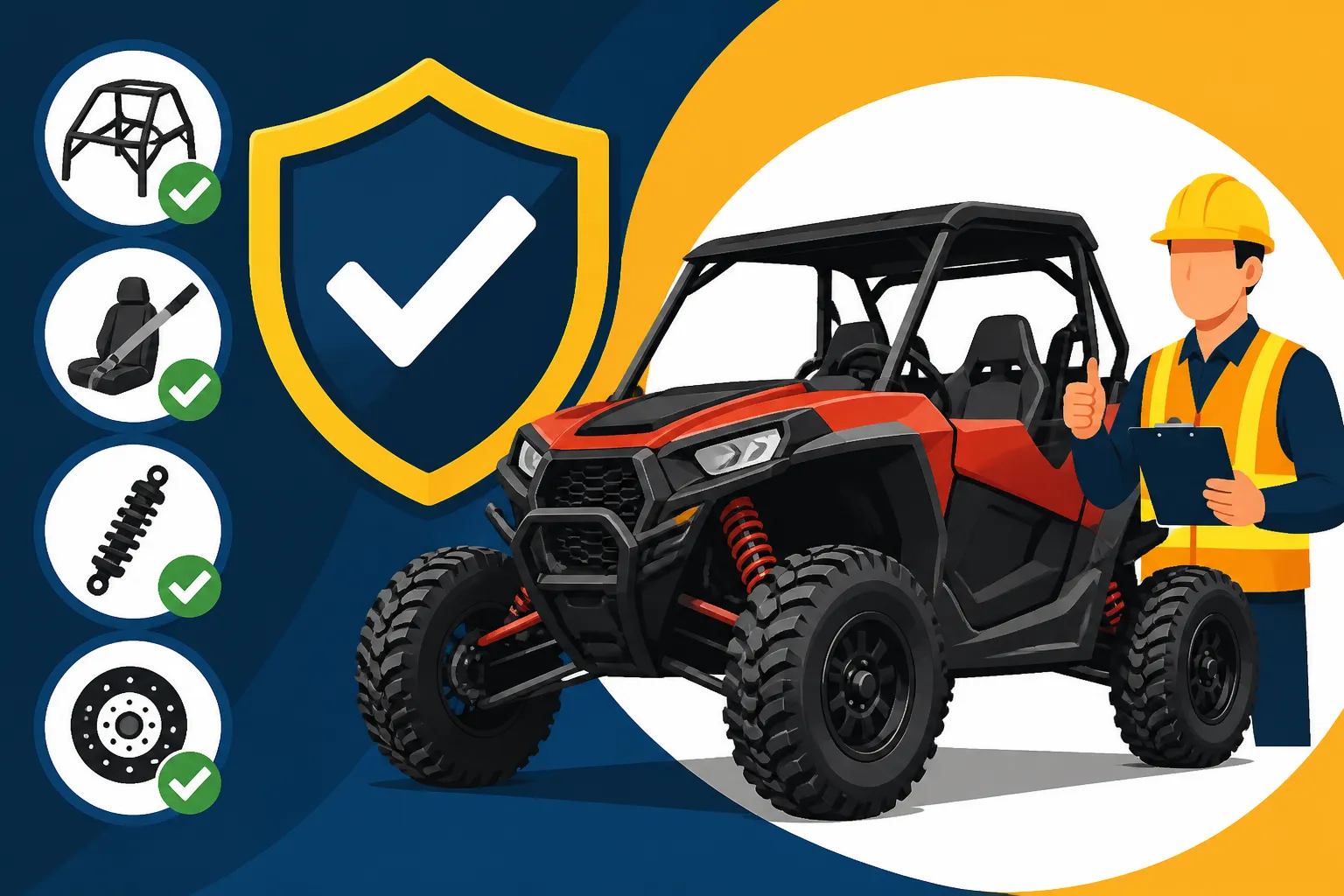
Factory Safety Standards a Machine Must Meet
It's incredibly frustrating when you hear that some towns in Arkansas allow UTVs on their streets, and you immediately picture yourself cruising down the road, only to realize the rules are far more complex than just bolting on a rearview mirror. Many riders assume that if they add a few common accessories, their beloved off-road machine is automatically eligible for a street permit. But here's the kicker: the foundational "factory safety standards" your machine must already meet are often the biggest hurdle, and this guide will break down exactly what that means for riders hoping to hit the asphalt in eligible Arkansas cities.
The Core Challenge: Why "Street Legal" Isn't Just About Accessories
When Arkansas passed Act 922, it opened the door for cities and towns to create their own ordinances allowing UTVs on public streets. This was a huge win for many riders! Suddenly, the dream of taking your side-by-side to the local diner or just a short hop to the gas station seemed within reach. But the excitement often leads to a common misconception: that "street legal" is simply a matter of adding a turn signal kit, a horn, and some mirrors.
The reality is far more nuanced. The state statute itself, and subsequent local ordinances, often refer to "factory safety standards" or mandate that the vehicle must be "manufactured for utility and recreational purposes and comply with all applicable federal safety standards." This isn't just bureaucratic jargon; it's a critical distinction. It means that the original design and construction of your machine play a huge role. If your UTV, right off the showroom floor, wasn't built with certain inherent safety features or dimensions in mind, no amount of aftermarket add-ons will magically transform it into a street-legal vehicle in the eyes of a city ordinance. You might install a fantastic [Arkansas Turn Signal Requirements for Street UTVs] kit, but if the machine itself is too wide or lacks fundamental brake system certifications, it won't pass muster.
Think of it like this: you can put racing tires on a sedan, but it doesn't make it a race car that meets all the safety standards of a vehicle built for the track. Similarly, while companies like SuperATV offer incredible accessories to enhance your machine, these upgrades are usually after the core machine already meets the necessary factory standards. The frustration comes from realizing your well-loved, heavily customized off-road beast might never qualify, simply because of how it was originally manufactured. It's a bitter pill to swallow for many, especially if they've invested heavily in their machine over the years.
Understanding Arkansas's "Off-Road Vehicle" Definition
Before diving into city-specific street-legal requirements, it's crucial to understand how Arkansas defines an "off-road vehicle" (ORV) in its broader statutes, as this sets the baseline for what cities are even considering. The state defines an ORV as a motor-driven off-road vehicle capable of cross-country travel without benefit of a road or trail, on land, snow, ice, or water, and may include ATVs, UTVs, and dirt bikes. The statute specifically mentions that a four-wheel, off-highway vehicle must be 50 inches or less in width, 1,000 pounds or less in weight, and 1,000 cubic centimeters or less in engine displacement. This definition is primarily for registration purposes and identifying what is not a regular street vehicle, rather than what can be street legal.
However, when cities create ordinances for UTVs on streets, they often carve out their own specifics that may override or add to these general definitions. For instance, many city ordinances specifically refer to "side-by-sides" or "UTVs" and often have different width restrictions, like an 80-inch cap, which goes beyond the state's 50-inch ATV rule. This is where it gets confusing. The state law defines what an "ATV" is for general purposes, but city ordinances often operate under the broader "off-road vehicle" umbrella while imposing their own specific requirements for street use. You might have a machine that fits the [Arkansas's 50-Inch, 1,000cc ATV Definition], but if the city says "UTVs up to 80 inches," it's that local ordinance you need to heed for street use.
The Role of Act 922 in Local Permitting
Act 922 was a game-changer because it delegated the authority to local governments. This means there isn't a single, statewide "street legal" standard for UTVs. Instead, you have to look at [Arkansas UTV Street Legal Rules by Town] and whatever specific ordinance your town has enacted. This is why you'll see places like Bono with an ordinance that opens streets, while a neighboring town like Cotter might have explicitly banned them.
Crucially, these local ordinances often stipulate that the UTV must meet "applicable federal safety standards" or be "manufactured to generally accepted motor vehicle safety standards." This is where the term "factory safety standards" truly comes into play. It implies that the vehicle must have been designed and built with a certain level of inherent safety features, not just modified after the fact. A municipality isn't going to spend time certifying individual machines; they expect the manufacturer to have done that, and they'll look for evidence of that original compliance. This could include certifications related to braking systems, lighting, chassis integrity, and even basic engine emissions.
Decoding Factory Safety Standards for Arkansas Street UTVs
When cities require UTVs to meet "factory safety standards" for street use, they're generally looking for an underlying level of engineering and construction that makes the vehicle reasonably safe for low-speed public road travel. This isn't about making your UTV a highway-legal car, but rather ensuring it won't spontaneously fall apart or be completely invisible on a city street.
These standards typically encompass several key areas, most of which are inherent to the vehicle's original design, not merely add-on accessories. Understanding these can save you a lot of headache before you even think about buying a permit.
Lights, Reflectors, and Visibility
While you can add aftermarket lights and turn signals, the quality and placement of factory-installed lighting are often implicitly part of "safety standards." A machine intended for limited street use would typically have:
- Headlights: Sufficiently bright, properly aimed headlights (low and high beam) that meet federal standards for motor vehicles. These aren't just work lights; they're designed for illuminating the road ahead without blinding oncoming traffic.
- Taillights and Brake Lights: Clear, bright red taillights that are visible from a specified distance, along with brake lights that activate when the brakes are applied. Many off-road machines have basic taillights, but the intensity and coverage for street use are often more stringent.
- Reflectors: Factory-installed reflectors (red to the rear, amber to the sides) to enhance visibility, especially at night.
Even if you install a great lighting kit from SuperATV, the ordinance might still require the original lighting system to meet specific criteria, or that the aftermarket additions complement, rather than replace, an already compliant system.
Braking Systems and Wheels
This is a huge one. Factory safety standards demand robust and reliable braking systems. For street-permitted UTVs, this usually means:
- Hydraulic Brakes: A fully functional hydraulic braking system on all wheels.
- Parking Brake: An independent, effective parking brake that can hold the vehicle stationary on an incline.
- Tires and Wheels: While you might swap out aggressive mud tires for street-friendly ones, the original wheels and tires must be designed to safely handle the vehicle's weight and intended speeds. City ordinances may specify that tires must be "nonhighway" or "DOT-approved" or simply say the machine cannot have [Nonhighway Tires in the Legal Definition]. This is an area where specific local ordinances can vary greatly, so always check your town's rules.
If your machine has a highly modified braking system or non-standard wheels that don't meet basic safety load ratings, it could be a disqualifier, regardless of whether it stops adequately off-road.
Width, Weight, and General Dimensions
Local ordinances often impose specific width caps, typically around 80 inches. This directly relates to the machine's factory dimensions. If your side-by-side, in its original configuration, is wider than 80 inches, it won't be eligible for a street permit, no matter what you do. This is a hard limit based on the physical dimensions of the vehicle. Similarly, while less common, some ordinances might have weight restrictions or specify that [Arkansas Machines Wider Than 50 Inches] fall into a different category.
The concept here is that the vehicle needs to fit safely within a traffic lane and not pose an undue obstruction or hazard to other vehicles. This isn't about modifying; it's about the fundamental size of the machine as it came from the manufacturer. You can't make a wide machine narrower without major, often illegal, structural modifications.
Steering and Suspension Integrity
While not explicitly called out in every ordinance, implicit in "factory safety standards" is the expectation of a safe and reliable steering and suspension system. This means:
- No Excessive Play: Steering should be tight and responsive, with no excessive play or looseness.
- Sound Suspension: Suspension components should be in good repair, without excessive wear or damage, ensuring stable handling on paved surfaces.
- Undercarriage Integrity: The frame and structural components must be sound, free from cracks, severe rust, or dangerous modifications that could compromise the vehicle's integrity during road use.
These are elements that are almost impossible to "add" after the fact if the base machine is deficient. They speak to the inherent quality and safety of the vehicle's original engineering.
Other Implicit Safety Features
Depending on the specific city ordinance, "factory safety standards" could also implicitly cover:
- Seat Belts/Restraints: Factory-installed seat belts or occupant restraint systems for all seating positions.
- Roll-Over Protection System (ROPS): An integrated roll cage or ROPS designed to protect occupants in a rollover event. This is standard on most UTVs today but might be a point of verification for older models.
- Exhaust System: A properly functioning exhaust system that limits noise and prevents excessive emissions. While [Arkansas Sound Limits on Forest Land] are for trails, cities may have their own implicit expectations for street-legal machines.
Here's a quick comparison of what "factory safety standards" often implies versus typical aftermarket accessories:
| Feature | Often Covered by Factory Safety Standards (Core Machine) | Typically Aftermarket (Add-On) |
|---|---|---|
| Vehicle Width | Original design width of the machine, usually capped by city ordinance (e.g., 80 inches). | Not changeable by aftermarket parts (unless structural modification). |
| Braking System | Hydraulic brakes on all wheels, independent parking brake, certified components. | Brake lights (though part of a complete lighting kit). |
| Headlights/Taillights | Lumens, beam pattern, and federal compliance for visibility, integral to electrical system. | Added LED light bars, upgraded bulbs, turn signals. |
| Steering/Suspension | OEM design for stability, lack of excessive play, proper alignment components. | Lift kits, new shocks, power steering upgrades (improve, but don't add core). |
| Roll-Over Protection | Integrated ROPS/roll cage designed and tested by manufacturer. | Aftermarket cages (can improve, but core structure must be sound). |
| Tires & Wheels | Load rating, appropriate size for machine, generally non-studded street-appropriate tread. | Aggressive off-road mud tires, fancy rims (may or may not be street-legal). |
| Mirrors | Often a requirement, but typically an easy aftermarket addition. | Side mirrors, rearview mirror. |
| Turn Signals | Required for street use, almost always an aftermarket kit. | Turn signal kit. |
| Horn | Required for street use, almost always an aftermarket addition. | Horn kit. |
| Windshield | Often required, can be factory option or aftermarket. | DOT-approved windshield. |
| Insurance | A separate, mandatory requirement for street use, regardless of machine. | [Arkansas Insurance for a Street-Permitted UTV] is crucial. |
As you can see, many items are "must-haves" for street legality but aren't necessarily part of the original "factory safety standards" of an off-road only machine. The key is that the core vehicle itself must be suitable before you even begin to think about adding accessories.
What to Confirm Before You Consider Street Permits
Given the complexities and the "factory safety standards" requirement, it's vital to do your homework before you even apply for a permit or invest in modifications. This can save you from costly mistakes and immense frustration. The process often involves both understanding state definitions and deep-diving into local ordinances.
Verify Your Machine Against Arkansas's ATV Definition (and Local Exceptions)
First, refresh your understanding of Arkansas's basic ATV definition. While this primarily impacts registration as an off-highway vehicle (which is a one-time thing in Arkansas, unlike annual renewals in many other states, see: [Arkansas ATV Registration Has No Annual Renewal]), it helps contextualize what kind of machine the state generally recognizes. Most UTVs will fit the "off-road vehicle" designation, but the specific 50-inch width and 1,000cc engine size are typically for ATVs, not the larger side-by-sides.
However, for street legality, you must immediately pivot to the local ordinance in the city where you intend to ride. This is the ultimate authority. Does your town have an ordinance that allows UTVs on its streets? If not, then no amount of factory standards or modifications will help you. If it does, carefully read every line. Look for:
- Width Limits: This is perhaps the most common and absolute limit. Many cities, like Bono, cap UTVs at 80 inches wide. If your [Arkansas Machines Wider Than 50 Inches] machine is over this limit, it's a non-starter.
- Engine Size/Weight Limits: Less common for UTVs, but still worth checking.
- Specific Equipment Requirements: While not "factory standards," these are mandatory additions, like [Arkansas Equipment for a Street-Permitted Machine] such as turn signals, mirrors, horn, windshield, and a specific license.
The city ordinance will also specify which streets are open (e.g., those under 55 mph, no four-lane streets) and any other local quirks.
Research Manufacturer Specifications
Once you know what your local ordinance allows, you need to dig into the specifications of your specific UTV model. This usually means checking the owner's manual or the manufacturer's website. You're looking for:
- Original Width: Confirm your machine's width, measured from the widest points (usually the outer edges of the tires or fenders), aligns with the city's limit.
- Braking System Type: Confirm it's hydraulic and has an independent parking brake.
- Lighting System: While you'll add turn signals, confirm the factory headlights and taillights meet general motor vehicle illumination standards (often implied by the "off-road use only" disclaimer on many machines, which is a red flag for street legality).
- Tire Type: Many city ordinances require street-appropriate tires, or specifically ban "nonhighway tires." Check if your factory tires (or current ones) are marked "DOT approved" or are clearly designed for paved surfaces.
This is where you might find that your particular off-road model, while a beast on the trails, was simply not designed with any street use in mind, and therefore doesn't meet the implicit "factory safety standards" required by city councils. Some machines are simply deemed [What Arkansas Law Forbids on a Public Road] for most public access, with very narrow exceptions.
Consider Professional Advice or Dealer Consultation
If you're still unsure, especially with an older or highly modified machine, it can be invaluable to consult with a trusted UTV dealer or a mechanic who specializes in off-road vehicles and understands local regulations. They can often tell you quickly if your machine stands a chance of meeting the implied factory safety standards. They might also advise on necessary modifications from reputable sources like SuperATV that do meet specific city requirements (e.g., DOT-approved windshields, robust turn signal kits).
Some cities require an annual inspection as part of their [Arkansas UTV Street Permits and Annual Fees]. If so, the inspection criteria will offer a clear checklist of what the vehicle needs. It's best to review this checklist before you invest any money. You don't want to get caught having spent money on accessories for a machine that can never pass the fundamental factory safety standards check.
Common Misconceptions and Crucial Verifications
The path to street-legal UTV riding in Arkansas is paved with good intentions but often littered with misunderstandings. Many riders, excited by the prospect, overlook critical details that can make or break their street-legal dream. Let's tackle some of the most common pitfalls and outline the crucial steps for verification.
"If It Looks Like a Car, It's Fine" – Not Necessarily
This is a big misconception. Just because your UTV is a four-wheeled side-by-side with a steering wheel and bucket seats doesn't automatically mean it meets the "factory safety standards" implied for street use. Many manufacturers build UTVs strictly for off-road recreation, and while they might seem robust, they often lack specific certifications that vehicles intended for public roads (even low-speed ones) possess.
For example, a machine designed for mud bogging might have a powerful engine and strong frame, but its braking system might not have the same federal certifications as a street vehicle. The frame itself might not be crash-tested in the same way. The crucial difference isn't just about appearance; it's about the underlying engineering and regulatory compliance from the manufacturer. You might find yourself comparing [Arkansas UTV Registration Requirements] to those for a regular car, and they are distinct.
"My ATV is Registered, So It's Street Legal" – A Separate Process
Arkansas does have a registration process for ATVs and UTVs, which results in a decal (see: [Arkansas ATV Decal Rules and Where It Goes]). This is a one-time registration, not an annual renewal, and it's primarily for identification as an off-highway vehicle and to prove sales tax was paid. However, this state registration has nothing to do with street legality.
The registration decal merely identifies your machine as an off-road vehicle. It does not grant permission to ride on public streets, which are generally forbidden to ORVs statewide with very specific exceptions. The only way to legally ride your UTV on public streets is if your specific city has passed an ordinance allowing it, and then your machine meets that ordinance's criteria, which includes factory safety standards and usually requires an additional city permit. Don't confuse state registration with city street permits; they are entirely separate. [Arkansas Has No ATV License Plate] for street use on these machines.
The Verification Checklist: Before You Spend a Dime
To avoid heartache and wasted money, here's a step-by-step verification process:
- Confirm Your City's Ordinance: First and foremost, verify that the city or town you plan to ride in actually has an ordinance permitting UTVs on its streets. If it doesn't, your journey ends here. You can often find this by checking the city clerk's office or the city's official website. Understanding [How Arkansas Cities Got the Choice on UTVs] is key here.
- Read the Ordinance Meticulously: Once you've confirmed an ordinance exists, read every single detail. Pay close attention to:
- Machine Type: Does it specifically refer to UTVs/side-by-sides?
- Width Restrictions: What is the maximum allowable width (e.g., 80 inches)?
- "Factory Safety Standards" Clause: What language does it use? Does it refer to federal motor vehicle safety standards or similar?
- Required Equipment: Make a list of all required items (turn signals, horn, mirrors, windshield, brake lights, headlights, seat belts, etc.).
- Tire Requirements: Are "nonhighway tires" explicitly banned, or are "DOT-approved" tires required?
- Age and License Requirements: What are the [Arkansas Driver's License at 16 for Street UTVs] rules?
- Permit Process: How do you obtain the city permit? Is there an inspection?
- Cross-Reference with Your Machine's Specs:
- Actual Width: Physically measure your UTV from the widest point (outer edge of tires).
- Original Equipment: Compare your machine's factory lights, brakes, and safety features against the ordinance's implicit or explicit demands. Check your owner's manual or manufacturer's website for original specifications.
- Tire Markings: Examine your tires for "DOT" (Department of Transportation) markings if the ordinance requires street-legal tires.
- Budget for Accessories and Permits: Only after you've confirmed your machine meets the fundamental "factory safety standards" and dimensional requirements should you begin to budget for the necessary aftermarket accessories like a turn signal kit, a horn, and a DOT-approved windshield. These are typically easy to install and readily available from retailers like SuperATV. Also, factor in the cost of the city permit and any [Arkansas Insurance for a Street-Permitted UTV] requirements.
- Anticipate the Inspection: If your city requires an annual inspection, visualize it. Will your machine pass? If there are any doubts about the "factory safety standards" component, now is the time to resolve them or accept that your machine might not be eligible. This is also where you might check for any specific [Arkansas Equipment for a Street-Permitted Machine] that will be reviewed.
By meticulously following these steps, you'll save yourself time, money, and the disappointment of having your street-legal dreams dashed by an unforeseen factory standard.
Disclaimer
This article is for general informational purposes only and does not constitute professional advice. Laws, prices and regulations vary by location and change over time. Consult a qualified professional for guidance on your specific situation.