Arkansas Equipment for a Street-Permitted Machine
It's incredibly frustrating when you're just trying to figure out what you need to legally drive your ATV or UTV on city streets in Arkansas, only to find that the answer isn't a simple, statewide checklist. Instead, you're often left digging through various local ordinances, each with its own specific requirements. This guide is here to walk you through the common equipment considerations and practical advice for getting your machine street-permitted in an Arkansas town.
The Local-Option Landscape: Why There's No One-Size-Fits-All List
One of the biggest sources of confusion and irritation for ATV and UTV owners in Arkansas is the "local option" nature of street legality. Unlike some states that have a clear, statewide set of rules for making your side-by-side or quad street legal, Arkansas leaves much of the decision-making up to individual cities and towns. This means that what flies in one town might get you a ticket in the next, even if the towns are just a few miles apart. It's enough to make your head spin!
Imagine living in a small community like Bono, which has embraced UTVs on its streets, versus a neighboring town that might have a completely different, or even restrictive, approach. This patchwork of rules makes it essential to do your homework specific to where you plan to ride. Your adventure in understanding street-legal equipment truly begins with understanding your local city council's decision. You might find it helpful to read about [How Arkansas Cities Got the Choice on UTVs] to understand the background of this local control.
Understanding Your Local Ordinance
Before you even think about buying a single piece of equipment, your first and most crucial step is to obtain and thoroughly read the specific ordinance passed by the city or town where you intend to ride. This isn't just a suggestion; it's a non-negotiable requirement. Many communities have passed specific UTV ordinances, often referred to as Act 922 ordinances, after the state law that enabled them. These documents will lay out exactly what's permitted and what's required in terms of equipment, age limits, insurance, and even specific streets that might be off-limits.
For example, a town might specify that turn signals are mandatory, while another might not. Some might impose strict width limitations, such as an 80-inch width cap, which could impact larger aftermarket modifications. What about a horn? Mirrors? It's all in the ordinance. Don't rely on hearsay from a buddy or a quick online search; get the actual document, often available on the city's website or by contacting the city clerk. This proactive step can save you a lot of headache and expense down the road, ensuring you’re meeting [Arkansas UTV Street Legal Rules by Town].
Why Equipment Varies So Much
The reason for the variation in equipment requirements boils down to local control and local priorities. A small, rural community might be more lenient, recognizing the practical utility of UTVs for residents to run errands or access local businesses. They might prioritize basic safety features over a full suite of street-legal conversions. On the other hand, a larger, more congested town might impose stricter requirements, mirroring those of traditional motor vehicles, to ensure public safety on busier roads.
This variability means that while we can discuss common requirements, you should always treat your local ordinance as the definitive source. Think of it like this: your neighbor might have a street-legal side-by-side, but if they live in a different town or even just a different part of the same large county, their setup might not apply to your situation. It's a common point of frustration for riders moving between areas or even just visiting for a weekend.
Common Equipment Requirements for Street-Permitted Machines
While specific requirements vary by local ordinance, there are several pieces of equipment that commonly appear on lists for street-permitted ATVs and UTVs in Arkansas cities. These are generally aimed at making your off-road machine more visible and safer for shared use with other vehicles.
Lighting: Seeing and Being Seen
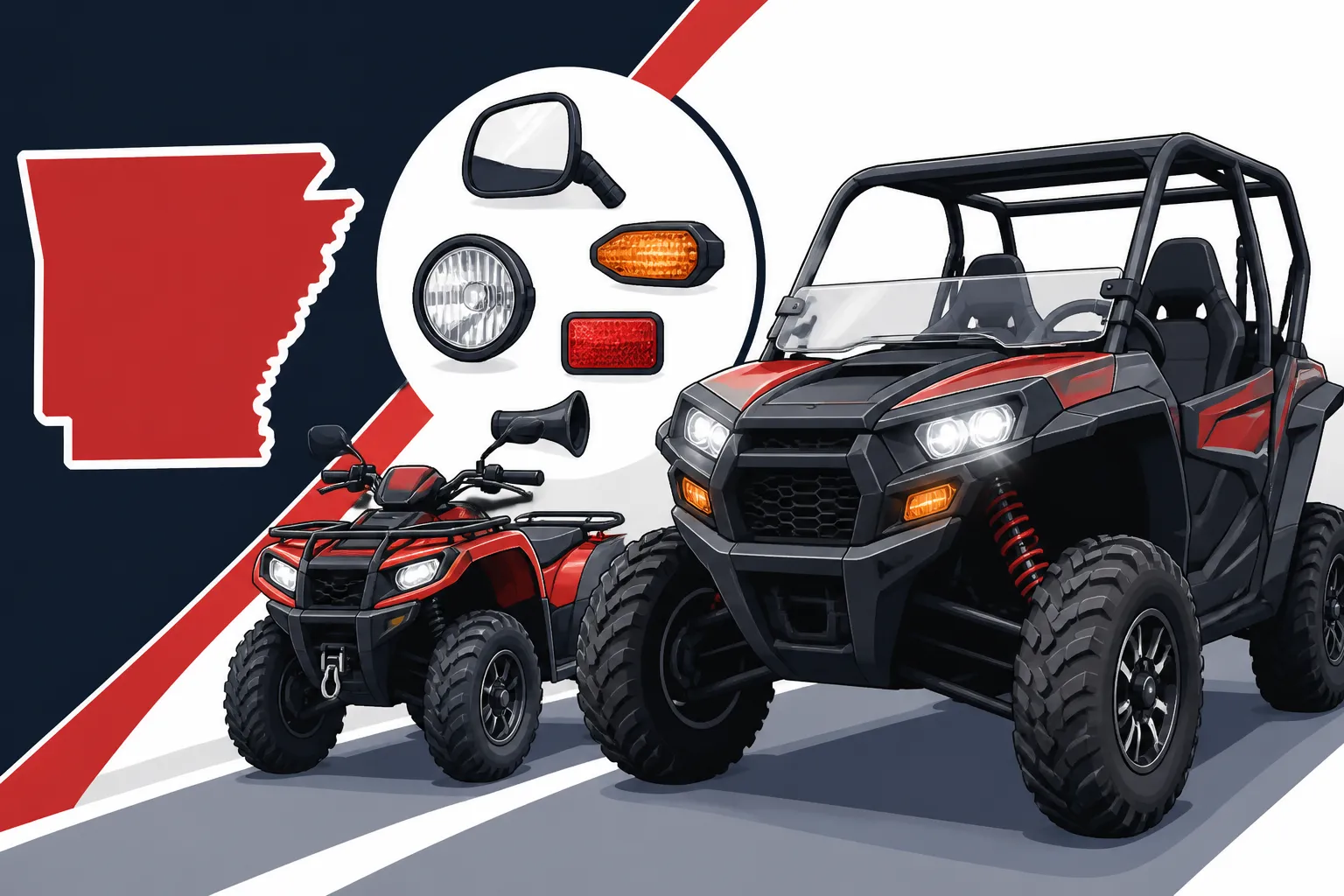
Proper lighting is almost universally required for any vehicle operating on public roads, and ATVs/UTVs are no exception when street-permitted. This goes beyond the basic headlights and taillights your machine probably came with from the factory. Most ordinances will specify a need for:
- Headlights: You’ll need working headlights that provide adequate illumination, usually requiring both high and low beams, similar to what you’d find on a car. These ensure you can see the road ahead, especially crucial if you plan on any night riding.
- Taillights and Brake Lights: Essential for other drivers to see you from behind and to know when you're slowing down or stopping. These are typically integrated into one unit, with a brighter illumination for braking.
- Turn Signals: This is where many factory-stock machines fall short. Most street-legal ordinances will mandate functional front and rear turn signals, allowing you to clearly indicate your intentions to other drivers. This often requires an aftermarket kit. Companies like SuperATV offer kits that integrate seamlessly, making the installation process much smoother. These kits usually include a turn signal switch, flasher relay, and the necessary wiring. You can find out more about [Arkansas Turn Signal Requirements for Street UTVs].
- Reflectors: Often required on the sides and rear of the vehicle to enhance visibility, especially at night or in low-light conditions.
Consider a scenario: You're riding your UTV down Main Street in a town like Bono, making a left turn. Without proper turn signals, you're relying on hand signals, which can be hard for other drivers to see and might not be legal under the local ordinance. Having a reliable turn signal kit makes your intentions clear and significantly enhances safety.
Visibility and Signaling Equipment
Beyond lights, other equipment focuses on your ability to see your surroundings and communicate with other drivers:
- Mirrors: Side mirrors and often a rearview mirror are common requirements. These are crucial for safe lane changes, parking, and generally being aware of traffic around you. Many aftermarket options exist, from clamp-on universal mirrors to specific kits for your machine. You can read more about [Arkansas Turn Signals and Mirrors on a UTV] for more details on these vital components.
- Windshield: While not always explicitly required by every ordinance, a windshield significantly improves rider comfort and safety by protecting against wind, debris, and insects. Some ordinances might mandate shatterproof glass or polycarbonate. Even if not strictly required, it's a highly recommended upgrade for street riding.
- Horn: A functioning horn is almost always a requirement. It's a simple, yet critical, piece of safety equipment for alerting pedestrians or other drivers to your presence in a potentially hazardous situation. Many aftermarket kits are plug-and-play and easy to install.
Imagine trying to navigate a parking lot or a busy intersection without mirrors or a horn. It would be incredibly dangerous and frankly, impractical. These items are fundamental for integrating your off-road machine into the flow of street traffic.
Safety and Occupant Restraint
When you take your machine onto public roads, occupant safety becomes paramount.
- Seat Belts/Restraints: If your UTV has seats, it will almost certainly be required to have seat belts or other occupant restraint systems for all passengers, just like a car. Ensure they are in good working order and properly utilized. For ATVs, which are typically single-rider, this isn't usually a concern unless it's a two-up model.
- Brakes: Your machine must have fully functional service brakes and often a parking brake. This seems obvious, but regular maintenance is key. You'd be surprised how often basic maintenance is overlooked.
- Tires: While not "equipment" in the same sense as lights, the type of tires you have can be a factor. Most ordinances will require that your tires are approved for highway use or are at least not excessively aggressive off-road tires that could damage road surfaces or compromise handling at higher speeds. Non-highway specific tires are what come on most ATVs, so this is important to check. [What Counts as a Nonhighway Tire] provides more context on this.
Additional Considerations and Best Practices
Getting your machine physically equipped is only part of the journey. There are other crucial elements to consider when seeking street permission.
Permits, Insurance, and Licensing
Remember, the equipment is only one piece of the puzzle. Most cities that allow UTVs on their streets will require you to obtain an annual permit. This permit often comes with an annual fee and is usually tied to proving you have adequate insurance coverage and that the driver holds a valid driver's license. [Arkansas UTV Street Permits and Annual Fees] and [Arkansas Insurance for a Street-Permitted UTV] are vital topics to explore. Don't assume that just because your machine is equipped, you're good to go. The paperwork is just as important!
Vehicle Width and Size Limitations
Some local ordinances, particularly those concerning UTVs, might impose width limits. While the state ATV definition generally references a 50-inch width for many ATVs, UTVs are often wider. Some city ordinances have an 80-inch width cap. This is an important detail to verify before you invest in a wider axle kit or new tires that might push your machine beyond local limits. For example, if you're looking at a new suspension or tire/wheel package from a brand like SuperATV, always double-check your vehicle's final width against the local ordinance. You don't want to inadvertently make your machine non-compliant.
Why Quality Matters: Aftermarket Upgrades
When you’re looking to add turn signals, mirrors, or other street-legal components, investing in quality aftermarket parts is a smart move. Not only will these parts typically be more durable and reliable, but they’re also often designed for easier installation and better integration with your specific machine.
Consider a scenario where you buy cheap, flimsy mirrors. They might vibrate excessively, making it hard to see, or break easily on bumpy roads. Opting for reputable brands ensures that your investment provides lasting safety and functionality. For instance, high-quality LED turn signal kits offer brighter illumination and a longer lifespan than cheaper incandescent options, meaning less time spent on repairs and more time on the trail or street.
It's also worth thinking about how different pieces of equipment work together. A good wiring harness that’s designed to accommodate multiple accessories, like a horn, turn signals, and perhaps even auxiliary lighting, can make future upgrades much simpler. While the exact setup will depend on your local ordinance, aiming for high-quality, robust parts will pay off in the long run.
Here's a quick reference table for common street-legal equipment considerations:
| Equipment Type | Common Requirement | Why It's Important | Check Local Ordinance For… |
|---|---|---|---|
| Lighting | Headlights (High/Low) | Visibility for driver at night, alerting oncoming traffic | Specific Lumen output, mounting height |
| Taillights | Visibility for following vehicles | Brightness, mounting height | |
| Brake Lights | Signaling deceleration/stopping to following vehicles | Brightness, activation method | |
| Turn Signals (Front/Rear) | Clearly indicating turns and lane changes | Color, location, visibility range (many factory machines lack these) | |
| Reflectors | Passive visibility from sides and rear, especially at night | Color, quantity, placement | |
| Visibility/Signaling | Mirrors (Side/Rearview) | Awareness of surrounding traffic | Quantity (one rearview, two side), adjustability, size |
| Windshield | Protection from wind and debris (comfort and safety) | Material (shatterproof), wiper requirement | |
| Horn | Audibly alerting pedestrians and other drivers to presence | Decibel level, type (electric) | |
| Safety | Seat Belts/Restraints | Occupant safety, injury prevention | Number of restraints, proper function |
| Brakes (Service/Parking) | Stopping and securing the vehicle | Effectiveness, separate parking brake | |
| Tires | Proper road handling and traction | Highway rating, tread depth, width restrictions | |
| Other | Annual City Permit | Legal authorization to operate on city streets | Cost, renewal process, display requirements |
| Insurance | Financial protection in case of accident | Minimum liability limits | |
| Driver's License | Legal qualification of driver | Minimum age (often 16 for UTVs on streets) | |
| Vehicle Width | Compliance with local road and safety regulations | Maximum allowed width (e.g., 80 inches) |
Understanding and equipping your ATV or UTV for street use in Arkansas can feel like navigating a maze, but by focusing on your local ordinance and investing in the right equipment, you can enjoy the convenience and fun of street-legal riding.
Disclaimer
This article is for general informational purposes only and does not constitute professional advice. Laws, prices and regulations vary by location and change over time. Consult a qualified professional for guidance on your specific situation.