Arkansas Rules for Riding a Ditch
It’s a scenario many of us riders in Arkansas have considered: that tempting, open stretch of ditch alongside a country road. It looks like a fun, easy path, maybe a shortcut, or just a different kind of terrain to explore when you’re out on your ATV or UTV. But before you dip those tires off the main thoroughfare, it’s crucial to understand the rules of the road – and the ditch – in Arkansas. This guide will walk you through what the law generally says about riding your machine in ditches and why it’s often not as straightforward as it seems.
Understanding Arkansas's Default Stance on Public Rights-of-Way
Arkansas law, like most states, tends to be pretty clear about where off-highway vehicles (OHVs) like ATVs and UTVs can and cannot operate. The general rule is that they are not street legal and, by extension, not legal on the public rights-of-way that accompany those streets and roads. Ditches are almost always considered part of that public right-of-way, meaning they're typically off-limits for recreational riding.
Why Ditches Are Often Considered Part of the Roadway
Many riders assume that if they aren't on the paved or gravel surface, they aren't on the "road." This is a common misconception that can lead to unexpected citations. In Arkansas, public roads, whether they are state highways, county roads, or city streets, come with an associated right-of-way. This right-of-way is the strip of land acquired or designated for transportation purposes, and it extends far beyond the actual driving surface.
Think about it: who maintains that ditch? Who mows the grass, clears debris, or reshapes the banks after a heavy rain? Often, it’s the county road crew or the Arkansas Department of Transportation (ARDOT). That maintenance work is a huge clue that the land is considered public property or at least under public easement. For example, a county road might have a 50-foot right-of-way, but the paved part is only 20 feet wide. The remaining 15 feet on each side, which includes the shoulder and the ditch, is still part of the public right-of-way. Riding your ATV or UTV in this area is generally treated the same as riding on the road itself because you are still within the jurisdiction of public thoroughfares. This is one of the reasons why you'll find that even riding on an Arkansas county road is typically restricted.
The General Prohibition Against Off-Road Vehicles on Public Rights-of-Way
The core principle here is that ATVs and UTVs are primarily designed for off-road use. They don't typically meet the safety and equipment standards required for street-legal vehicles. Because of this, Arkansas law generally restricts their operation on public highways, streets, and the adjacent rights-of-way. While there are a handful of specific exceptions outlined in Arkansas statutes for certain circumstances (which we'll touch on later), these exceptions are usually very narrowly defined and do not open the floodgates for general recreational ditch riding.
Consider a scenario where you're cruising down a gravel county road and see a long, inviting ditch running parallel to it. Even if no cars are present and it seems harmless, a local sheriff's deputy or state trooper could still issue a citation. They view that ditch as part of the county road's domain, and your off-road machine is simply not permitted there. The intent behind the law is to keep off-road vehicles on designated trails or private property, separate from the traffic and infrastructure of public roads. You can find more details about general road rules in [Arkansas Rules for Riding a Ditch].
Situations Where Ditch Riding Might Be Permitted (or Tolerated)
While the default position is "no," there are specific, limited circumstances where riding in a ditch might be permissible, or at least less likely to draw unwanted attention. However, it's absolutely critical to understand the nuances and not assume general permission.
Riding on Private Land with Permission (Including Ditches Adjoining It)
This is perhaps the clearest exception: if the ditch is entirely located within private property, and you have explicit permission from the landowner, then riding there is generally fine. The tricky part, however, is knowing exactly where property lines lie, especially concerning ditches that often mark property boundaries or run adjacent to public rights-of-way.
Imagine your neighbor has a large field, and a ditch runs along the edge of it, entirely within their property line, not touching the county road's right-of-way. If your neighbor gives you permission to ride there, you're usually in the clear. However, if that ditch parallels a public road, even if it's mostly on private land, the public right-of-way might still extend into a portion of it. You absolutely must verify the property boundaries and get clear, written permission from the landowner for any riding, especially near roads. Don't just assume a wave and a smile means you're good to go. This is especially true if you are [Arkansas Rules on Land You Lease] or have just [Arkansas Rules With a Landowner's Permission].
Agricultural and Hunting Operation Exceptions
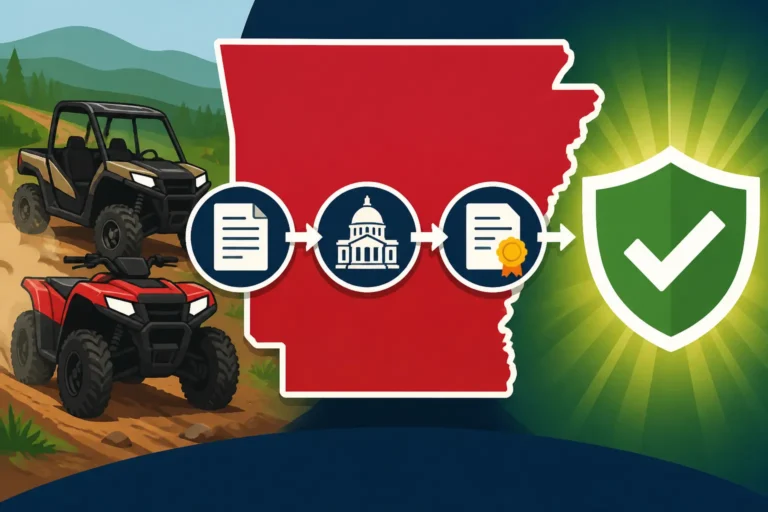
Arkansas law does provide limited exceptions for ATVs and UTVs used in specific agricultural or hunting operations. For instance, an ATV might be used by a farmer to travel short distances on a road or its shoulder between fields or to access machinery. Similarly, a hunter might be allowed to cross a highway at a ninety-degree angle to get to a deer lease.
However, these exceptions are very narrow. They generally allow for necessary, incidental use directly related to the operation, not for recreational riding in the ditch for an extended period. You can't just take your machine out for a joyride in the ditch under the guise of "hunting operations" if you're not actively moving to or from a hunting area or conducting direct hunting-related tasks. The purpose must be genuinely tied to the farming or hunting activity, and the travel must be as direct and limited as possible. For more on these, look up [Arkansas Farming Operation Road Use] and [Arkansas Hunting Operation Road Use]. These exceptions are designed for utility, not leisure, and officers typically know the difference.
Local Ordinances and Their Limited Scope
Another area of potential confusion stems from local city or county ordinances. As of late, some Arkansas towns have begun to adopt ordinances that allow UTVs (and sometimes ATVs) to be ridden on certain city streets. This is exciting for many riders, as it provides a legal avenue for street use in those specific locales.
However, it's crucial to understand that these ordinances almost always specify streets or roadways and rarely extend to ditches. The intent of these local laws is usually to facilitate travel on the designated public road surfaces, typically those with lower speed limits, within city limits. They are not generally opening up the entire right-of-way, including ditches, for off-road recreation. If a town like Bono has passed a UTV ordinance, it will specify which streets are open and what equipment is required. You can find out more about this in [Arkansas Towns Can Open Their Streets to UTVs] and [Arkansas UTV Street Legal Rules by Town]. Always check the exact wording of any local ordinance, and if it doesn't explicitly mention ditches, assume they are still off-limits.
Risks and Consequences of Illegal Ditch Riding
The allure of an open ditch can be strong, but the potential risks and consequences of illegal riding are significant. It’s not just about getting caught; it’s also about safety and your reputation as a responsible rider.
Potential Fines and Citations
The most immediate consequence of riding an ATV or UTV illegally in a public ditch is a citation from law enforcement. Depending on the specific statute violated and the county, fines can range significantly. These aren't just minor slaps on the wrist; they can be substantial, often involving court costs and fees that add up quickly. A deputy isn't going to distinguish between riding on the pavement and riding in the ditch when both are within the public right-of-way. You could face penalties similar to those for operating your machine directly on a highway.
Beyond the initial fine, repeat offenses or more serious infractions could lead to your machine being impounded. Imagine the hassle and expense of getting your ATV or UTV released from impound, on top of the fines. It’s a costly lesson many riders learn the hard way. Understanding [Arkansas Penalties for Illegal Road Riding] and [Arkansas Ticket Cost for Road Riding] is essential to avoid these pitfalls.
Safety Hazards and Property Damage
Ditches, while they might look like natural trails, are often far from safe for ATV and UTV riding. They are designed for drainage, not recreation. This means they can hide all sorts of hazards:
- Hidden Obstacles: Rocks, stumps, construction debris, drainage pipes, and even trash can be obscured by grass or water. Hitting one of these unexpectedly, especially at speed, can cause severe damage to your machine or throw you from it, leading to serious injury.
- Unstable Terrain: The soil in ditches is often prone to erosion, making banks unstable and potentially causing rollovers. After heavy rain, they can become slick mud traps.
- Blind Spots: Ditches often have sudden drops or curves that can create blind spots, making it easy to collide with another rider, a pedestrian, or even a vehicle if you decide to pop out onto the road unexpectedly.
- Erosion and Damage: Repeated riding in ditches can cause significant erosion, damaging the ditch structure and potentially impacting nearby property or public infrastructure. County road crews have to repair this, and you could be held liable for the damage.
Investing in quality protective gear, ensuring your machine is well-maintained, and perhaps even looking into aftermarket parts from reputable companies like SuperATV for enhanced durability (like skid plates or upgraded suspension) are always good ideas for any off-road riding, but they don't negate the inherent dangers or illegality of riding in public ditches.
Environmental Concerns and Community Relations
When riders use ditches for recreation, it can lead to environmental issues. Erosion from tires can damage soil, impact water quality in drainage systems, and disturb local wildlife habitats. This kind of activity contributes to a negative perception of ATV and UTV riders within the community.
Local residents and landowners often become frustrated by machines riding in ditches. They may worry about noise, dust, damage to their property (even if it's just the aesthetic of the right-of-way), and safety concerns, especially if children or pets are playing nearby. These complaints often lead to increased patrols and stricter enforcement, making it harder for all riders to enjoy their machines legally. Being a responsible rider means respecting the land, the law, and your neighbors, which includes finding legal and appropriate places to ride.
Here's a quick overview of ditch riding scenarios:
| Scenario | Legality in Arkansas | Key Considerations |
|---|---|---|
| Public Road Ditch | Generally ILLEGAL | Considered part of public right-of-way; often leads to fines. |
| Private Land Ditch | LEGAL with explicit landowner permission | Verify property lines; get written permission; ensure it's not public right-of-way. |
| Ag/Hunting Operation Ditch | SOMETIMES LEGAL under specific, narrow exceptions | Must be direct, incidental travel to/from operations; not for recreation. |
| Local Ordinance Ditch | Generally ILLEGAL even with street-legal ordinances | Ordinances typically define streets for UTVs, not ditches; check specific wording. |
Disclaimer
This article is for general informational purposes only and does not constitute professional advice. Laws, prices and regulations vary by location and change over time. Consult a qualified professional for guidance on your specific situation.