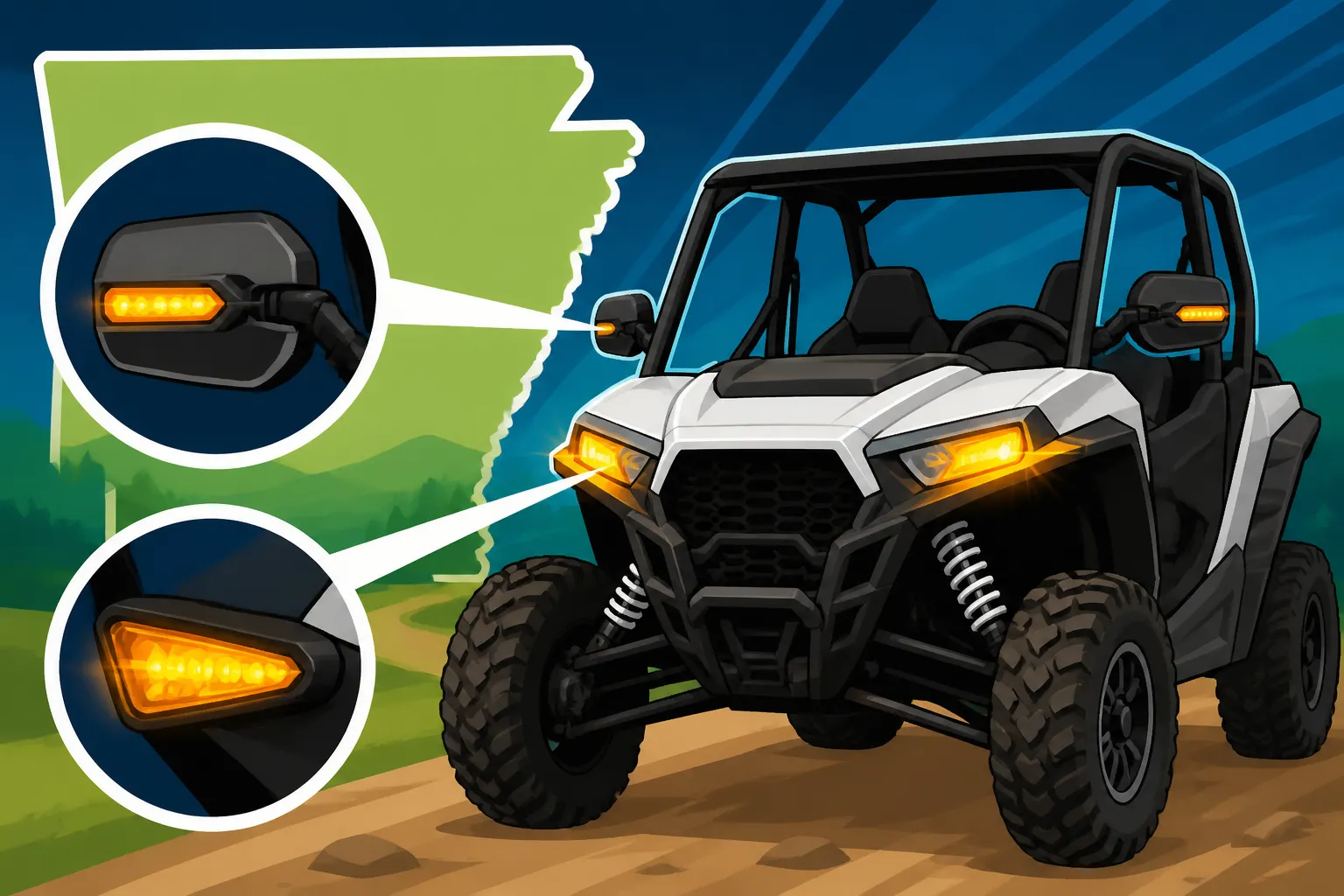
Arkansas Turn Signals and Mirrors on a UTV
It's incredibly frustrating, isn't it? You love your UTV, you want to use it for more than just tearing up the trails, maybe even run to the corner store or cross a few public roads. But the rules around street legality in Arkansas feel like a constantly shifting maze, especially when it comes to specific equipment like turn signals and mirrors. This guide will cut through the confusion, explaining exactly what Arkansas law and local ordinances typically require for your UTV to be street-permitted, and how to get your machine ready.
The Truth About UTV Road Use in Arkansas: It's Local
Before we dive into turn signals and mirrors, we need to address the elephant in the room: Arkansas state law, by default, generally makes it unlawful to operate an all-terrain vehicle (ATV) or utility terrain vehicle (UTV) on public streets and highways. This is where a lot of confusion begins. Unlike states that might have a blanket set of rules for making a UTV street legal statewide, Arkansas has a much more localized approach.
State Law vs. Local Control
For years, many UTV owners felt stuck, limited to private land or designated off-road parks. However, changes in state law, notably Act 922, have empowered local municipalities – cities and counties – to decide for themselves whether to allow UTVs on certain public roads within their jurisdiction. This means that what's legal in one town might be completely forbidden just a few miles down the road. It’s a patchwork, for sure, and it means your first step isn't to look at your UTV, but to look at your local city hall or county judge's office.
When a city or county council passes an ordinance allowing UTVs on their streets, that ordinance will invariably come with a list of requirements for the machines themselves. This is where equipment like turn signals and mirrors enter the picture. Without a local ordinance in place, there are no state-level requirements for these items because your UTV isn't legally allowed on public roads anyway, save for a few very specific exceptions like [Arkansas's Six Statutory Road Exceptions] for farming or utility work.
Why Local Ordinances Mandate Equipment
Think about why these rules exist on regular cars. Turn signals tell other drivers your intentions, preventing collisions when you change lanes or make a turn. Mirrors give you crucial visibility to the rear and sides, allowing you to see traffic approaching or already present. When a city decides to open its streets to UTVs, they're essentially integrating a new type of vehicle into their existing traffic flow. To do this safely, they need to ensure UTVs can communicate their movements and provide adequate visibility, just like any other road-going vehicle. It's all about minimizing risk for everyone on the road. Without these basic safety features, a UTV becomes a hazard in a mixed traffic environment.
It's common to see a variety of rules emerge from these local ordinances. For example, some towns might allow UTVs on streets with speed limits under 35 mph, while others might stretch that to 45 mph. But almost universally, when street use is permitted, the ordinances will specify certain equipment. Checking [Reading Your Town's Ordinance Before You Ride] is absolutely essential, as each town can have subtle differences.
Required Gear: Turn Signals and Mirrors for Street-Permitted UTVs
So, you've checked, and your local city council or county has passed an ordinance allowing UTVs on their streets. Fantastic! Now, what exactly do those ordinances typically say about turn signals and mirrors? While the specifics can vary slightly from one town to the next, there's a strong consensus on what's generally required.
Understanding Mirror Requirements
Most local UTV ordinances in Arkansas that permit street travel will require at least one rearview mirror. This is typically positioned centrally, much like the rearview mirror in your car, to give you a clear view of the traffic behind you. However, many ordinances go a step further and mandate two mirrors: one rearview mirror, and at least one exterior side mirror, usually mounted on the driver's side. Some might even specify both driver and passenger side mirrors for maximum visibility.
Why the emphasis on mirrors? It's simple physics and safety. UTVs are often used in environments where rear visibility isn isn't a primary concern, like a trail. But on a street, you need to know if there's a car approaching at a higher speed, if a cyclist is riding alongside, or if you're clear to merge. Good mirrors are your eyes in the back of your head, crucial for safe operation in traffic. Aftermarket options are abundant, with brands like SuperATV offering a wide selection of durable side mirrors designed to withstand off-road conditions while still providing excellent on-road visibility.
Turn Signal Mandates
If your UTV is going to be sharing the road with cars, you absolutely need a way to signal your turns and lane changes. Therefore, virtually every local ordinance allowing UTV street use in Arkansas will require functional turn signals. These signals must be visible from both the front and the rear of the machine.
Typically, this means having:
- Front Turn Signals: Two amber lights, one on each side, that flash to indicate your direction. They need to be clearly visible to oncoming traffic and vehicles you're following.
- Rear Turn Signals: Two red or amber lights, one on each side, that flash to indicate your direction. These are critical for communicating your intentions to vehicles behind you.
These aren't just for show; they need to be fully operational and easily actuated by the driver. Many factory UTVs don't come equipped with turn signals as standard, because they weren't designed for street use. This means you'll almost certainly be looking at an aftermarket turn signal kit to meet compliance. Some of these kits even integrate a horn, which is another common requirement for street-permitted UTVs in many Arkansas towns.
| Equipment Type | General Requirement | Specifics Often Seen | Why It's Important |
|---|---|---|---|
| Rearview Mirror | Required | At least one interior rearview mirror | See traffic directly behind |
| Side Mirrors | Often required | At least one exterior driver's side mirror, sometimes both sides | See blind spots and adjacent lanes |
| Front Turn Signals | Required | Two amber lights, clearly visible from the front | Signal turns to oncoming/forward traffic |
| Rear Turn Signals | Required | Two red or amber lights, clearly visible from the rear | Signal turns to following traffic |
Ensuring Your UTV Meets Local Ordinance Standards
So you understand the general requirements for mirrors and turn signals. Now comes the practical part: getting your UTV up to snuff. This often involves more than just bolting on a few parts; it's about proper installation, functionality, and confirming everything is within the specific letter of your local law.
Aftermarket Solutions for Compliance
As mentioned, many UTVs don't come from the factory with street-legal equipment. This is where the robust aftermarket industry steps in. You can find comprehensive turn signal kits that include everything you need: lights, wiring harness, a switch, and sometimes even a horn and a brake light switch. For mirrors, there are countless options, from clamp-on universal side mirrors to full rearview mirror kits that attach to your roll cage.
When choosing aftermarket parts, consider durability and visibility. Your UTV is likely to encounter dust, mud, and vibrations, so you want components that can withstand those conditions. For turn signals, ensure the lights are bright enough to be seen clearly in daylight. For mirrors, look for robust housings and shatter-resistant glass. Brands like SuperATV offer kits and individual components that are designed specifically for UTVs, often making the installation process straightforward for the mechanically inclined or a competent local shop. Don't forget to consider how the wiring will be run; a clean installation is less likely to cause issues down the line.
DIY vs. Professional Installation
Installing turn signals and mirrors can range from a simple bolt-on job for some mirrors to a more involved wiring project for a full turn signal kit. If you're comfortable with basic wiring, running wires, and mounting components, a DIY installation is definitely an option. Many kits come with detailed instructions, and there are countless online tutorials available.
However, if you're not confident in your electrical skills or want the peace of mind that comes with a professional installation, taking your UTV to a reputable powersports dealer or an off-road specialty shop is a wise choice. They can ensure the installation is done correctly, safely, and in full compliance with your local ordinance. Improper wiring can lead to electrical problems or, worse, safety hazards. Remember, the goal isn't just to have the parts, but for them to work reliably when you're out on public roads.
What to Verify After Installation
Once your turn signals and mirrors are installed, don't just assume everything is good to go. Do a thorough check:
- Visibility: Can you clearly see traffic behind and to your sides using your mirrors? Is your rearview mirror positioned so you don't have to strain to look into it?
- Functionality: Do both front turn signals flash? Do both rear turn signals flash? Do they flash at a consistent rate? Is the switch easy to reach and operate without taking your eyes off the road? Does the horn (if part of the kit) sound loud enough to be heard by other drivers?
- Compliance Check: Double-check your town's specific ordinance. Does it require a certain size for mirrors? Does it specify the color of the turn signal lights (e.g., amber only, or red acceptable for the rear)? Taking a few minutes to confirm these details can save you from a citation later.
- Proof of Compliance: Keep any receipts or documentation for your aftermarket parts. While not always required, it can be helpful if a law enforcement officer has questions about your setup.
Remember, the responsibility lies with you, the operator, to ensure your UTV meets all the requirements before you venture onto city streets. [Arkansas Equipment for a Street-Permitted Machine] covers other common requirements you might need to check.
Beyond Signals and Mirrors: Other Key Street-Legal Considerations
While turn signals and mirrors are central to your UTV's street legality, they are almost never the only requirements specified by local ordinances. If your town has gone through the effort of creating rules for UTV street use, they've likely thought about a broader range of safety and operational aspects. Overlooking these other details can still lead to issues, even if your mirrors are gleaming and your turn signals are flashing perfectly.
Essential Safety Equipment
Beyond turn signals and mirrors, most Arkansas UTV ordinances will mandate several other pieces of equipment to ensure basic safety on public roads. These commonly include:
- Headlights and Taillights: These are usually standard on UTVs, but they must be functional and properly aimed. Many ordinances will require them to be on at all times, especially if riding after dark.
- Brake Lights: A functional brake light that illuminates when you apply the brakes is non-negotiable for safety. Most factory UTVs have these, but ensure they are bright and working.
- Horn: A working horn is almost universally required. It's a crucial tool for alerting other drivers or pedestrians to your presence.
- Windshield: Some ordinances may require a windshield. This protects the operator and passengers from debris and wind, similar to a car. If your UTV has one, ensure it's clear and crack-free.
- Seatbelts: Factory seatbelts should be in good working order and worn by all occupants. This is a fundamental safety device.
- Tires: Your tires must be approved for highway use in some jurisdictions, or at least not be overly aggressive off-road tires that could damage pavement. Look for a DOT rating if required.
Each of these items plays a role in making your UTV a safer, more predictable presence on local roads. It's not just about passing an inspection; it's about minimizing risk.
Operational Requirements and Permits
Even with all the right equipment, there are other rules you'll need to follow. A major one is obtaining a local permit. [Arkansas UTV Permit Cost in a City] will vary, but these annual permits are generally required to show that your machine has been inspected (or self-certified) and you've paid the necessary fees to operate it on city streets. This permit often comes with a sticker or decal that you must display on your UTV.
Furthermore, most ordinances will specify who can drive the UTV. Typically, the operator must hold a valid driver's license, meaning [Arkansas Driver's License at 16 for Street UTVs] is the minimum age for a licensed driver, though specific ordinances might have their own age stipulations. There are also usually restrictions on where you can ride:
- Speed Limits: UTVs are often restricted to streets with speed limits under a certain threshold, such as [Arkansas Streets Under 55 mph for UTVs].
- Road Types: You might be forbidden from riding on state highways, interstates, or [Arkansas Four-Lane Streets Stay Closed].
- Insurance: Proof of liability insurance is almost always a requirement. [Arkansas Insurance for a Street-Permitted UTV] is essential for protecting yourself and others in case of an accident.
Consequences of Non-Compliance
Operating your UTV on public roads without meeting all the local ordinance requirements can lead to more than just a stern warning. You could face fines, have your UTV impounded, or even be charged with more serious offenses if you're involved in an accident while operating an unregistered or improperly equipped vehicle. Law enforcement officers in Arkansas are increasingly aware of the local UTV ordinances, and they will check for compliance. [Arkansas Penalties for Illegal Road Riding] are certainly something you want to avoid.
The bottom line is that while it takes some effort to make your UTV street-permitted in Arkansas, it's a worthwhile endeavor if you plan on using it beyond the trails. By understanding and adhering to the specific requirements of your local ordinance – including, critically, functional turn signals and appropriate mirrors – you can enjoy the convenience and versatility your UTV offers, safely and legally. Always consult your specific city or county ordinance, as these rules are dynamic and vary significantly from one locale to the next.
Disclaimer
This article is for general informational purposes only and does not constitute professional advice. Laws, prices and regulations vary by location and change over time. Consult a qualified professional for guidance on your specific situation.