Why the Helmet Statute Does Not Reach ATVs
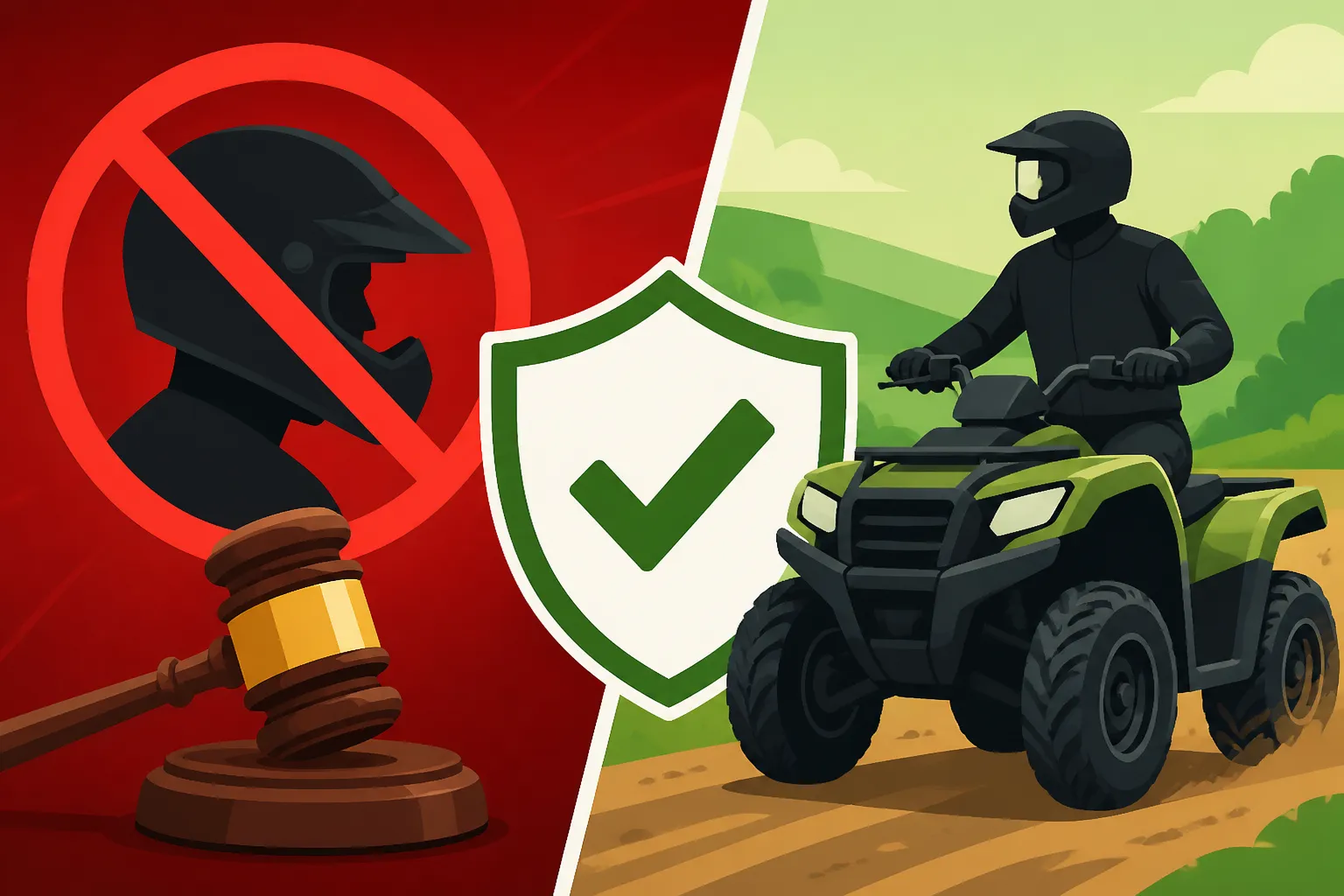
It's a common misconception that often trips up even seasoned riders: many people assume that if they're taking their ATV or UTV out on approved public roads, they absolutely must wear a helmet. The truth, especially here in Arkansas, can be a bit surprising and often leads to confusion, leaving riders wondering about their legal obligations and personal safety. This guide will cut through the noise, clarify Arkansas's specific helmet laws, and explain precisely why off-highway vehicles like ATVs and UTVs often fall outside the typical motorcycle helmet requirements.
The Common Assumption: Why Helmets Seem Obvious for ATV Road Riding
When you think about riding any kind of motor vehicle on a public road, especially something open-air like an ATV or UTV, the idea of wearing a helmet just feels right, doesn't it? It's ingrained in our minds that helmets are a fundamental piece of safety equipment, right up there with seatbelts in a car. This instinct isn't wrong when it comes to personal protection, but it can create a bit of a misunderstanding when we look at the letter of the law here in Arkansas.
Safety First Mentality: It Just Makes Sense, Right?
From a purely logical and safety-oriented standpoint, donning a helmet before hitting the pavement on an ATV or UTV makes a ton of sense. These machines are powerful, they can reach considerable speeds, and they offer very little in the way of occupant protection in the event of a crash or rollover. Head injuries are devastating, and a helmet is undeniably the best defense against them. So, when people see an ATV or UTV on a road, their immediate thought is often, "Where's their helmet?" It's a natural leap, born from a desire for safety and perhaps a lack of specific knowledge about the legal distinctions.
This "safety first" mindset is something we should all embrace, regardless of what the law dictates. Even if you've outfitted your machine with all sorts of safety enhancements like a full windshield or robust cage extensions from a reputable provider like SuperATV, a helmet still offers that crucial layer of protection for your head. It’s hard to argue against an extra layer of defense when you're out enjoying the trails or even just cruising down a low-speed county road.
Blurring the Lines: Motorcycles Versus ATVs in the Public Eye
One of the biggest reasons for the confusion stems from how people often lump all two-wheeled and open-air vehicles together in their minds. To many, a motorcycle, a scooter, and an ATV might all seem to fall under a similar umbrella regarding road use and safety gear. Motorcycles, with their obvious vulnerability on public roads, are almost universally associated with helmet laws, and for good reason. It’s easy to extend that same requirement mentally to an ATV, especially when it's operating in a similar environment.
However, the legal definitions are very precise, and that's where the distinction lies. What might look similar to the casual observer is often categorized very differently in the eyes of the law. This legal nuance is what determines whether a helmet is a mandatory piece of equipment or a highly recommended personal choice. Understanding this distinction is key to navigating the rules of the road for your ATV or UTV. [Arkansas ATV Road Rules: What 27-21-106 Says] can shed more light on the general framework.
Arkansas's Specific Helmet Law: What it Actually Says (and Doesn't Say)
When we dig into the Arkansas statutes, we find that the state is very explicit about which types of vehicles require helmet use. And surprisingly to many, ATVs and UTVs, as defined by Arkansas law, are not among them. This isn't an oversight; it's a deliberate categorization based on the unique characteristics and primary intended use of these off-highway vehicles, even if local ordinances allow them on some roads.
Who Arkansas Law Does Require to Wear a Helmet
Arkansas law is quite clear about who must wear a helmet. The primary focus of the helmet statute (Arkansas Code Annotated § 27-20-104) is on riders of motorcycles, motor-driven cycles, and motorized bicycles. Specifically, it states that "No person shall operate or ride upon a motorcycle or a motor-driven cycle upon the streets or highways of this state without a protective helmet of a type approved by the Office of Motor Vehicle." There’s also a specific provision for riders 21 and under on motorcycles.
This means if you're hopping on a Harley, a sport bike, or even a smaller motor-driven cycle that's designed for road use, a helmet is legally required. The law is designed to protect those operating vehicles that are explicitly categorized as "motorcycles" or "motor-driven cycles" when sharing space with cars and trucks on the state's public thoroughfares. If you're looking for more details on these categories, [Motor-Driven Cycles and Motorized Bicycles] or [Riders 21 and Under on a Motorcycle] are good resources.
The Legal Definition of an ATV in Arkansas: How It Differs from Motorcycles
The critical difference lies in how Arkansas legally defines an "all-terrain vehicle" (ATV) or "off-highway vehicle" (OHV). Arkansas Code Annotated § 27-21-102 outlines this definition, and it's distinct from that of a motorcycle. An ATV is generally described as a motorized vehicle manufactured for off-highway use, having three, four, or six wheels, an engine 1,000cc or less, and a width of 50 inches or less, and primarily intended to be ridden by a single operator. A side-by-side (UTV) typically falls under a similar OHV definition, often with slightly different width and passenger capacity allowances.
Crucially, these definitions do not include language that places ATVs or UTVs into the same category as "motorcycles" or "motor-driven cycles" for the purpose of the helmet law. The legislature has created separate classifications for these vehicles, recognizing their different design, use, and regulatory needs. This separate classification is the bedrock of why the standard motorcycle helmet law doesn't apply to them. [Arkansas's 50-Inch, 1,000cc ATV Definition] delves into these specifics.
Decoding the Statute: Where ATVs Are Conspicuously Absent
When you meticulously read through Arkansas Code Annotated § 27-20-104, which covers "Motorcycle Helmets," you'll find a glaring absence: any mention of ATVs, UTVs, or OHVs. The statute is narrowly focused on "motorcycles" and "motor-driven cycles." This isn't an accidental omission; it reflects the legislature's intent to regulate these vehicle types differently.
Consider the following comparison of vehicles and state helmet requirements:
| Vehicle Type | Arkansas State Helmet Requirement (27-20-104) | Common Perception |
|---|---|---|
| Motorcycle | Yes, for all riders. | Definitely required. |
| Motor-Driven Cycle | Yes, for all riders. | Likely required (smaller motorcycles/scooters). |
| Motorized Bicycle | Yes, for all riders. | Probably required. |
| All-Terrain Vehicle (ATV) | No, not by state helmet law. | Often assumed to be required, especially on roads. |
| Utility Task Vehicle (UTV) | No, not by state helmet law. | Often assumed to be required, especially on roads. |
| Golf Cart | No, not by state helmet law (though local ordinances may apply for street use). | Rarely assumed to be required. |
This table clearly illustrates the distinction in state law. While a motorcycle rider in Hot Springs or Fayetteville is legally obligated to wear a helmet, an ATV rider using a designated [Arkansas Towns Can Open Their Streets to UTVs] route is not under the same state-level mandate.
What this boils down to is that the Arkansas state statutes define an ATV as a machine primarily designed for off-road use, even if specific local ordinances, like those that emerged after [August 5, 2025 and What Changed], might allow them on certain low-speed public roads. These specific allowances for road use do not, however, automatically trigger the motorcycle helmet law. It's a key distinction that many people miss, often leading to confusion and unnecessary worry about legal compliance. This means if you're out enjoying the trails at Wolf Pen Gap or even just navigating a permitted county road, the state isn't going to ticket you specifically for not wearing a helmet on your ATV or UTV. [Arkansas's Six Statutory Road Exceptions] detail the scenarios where ATVs might legally find themselves on a public road, none of which add a helmet mandate.
Practical Realities and Smart Choices: Beyond the Legal Mandate
So, the state of Arkansas doesn't legally require you to wear a helmet on your ATV or UTV. Great, right? Well, yes, from a purely legal standpoint. But for us riders who value our safety and want to enjoy our machines for years to come, there's a much bigger conversation to be had about smart choices and personal responsibility. Just because something isn't legally mandated doesn't mean it's not critically important for your well-being.
Why Wearing a Helmet is Still a Good Idea: Prioritizing Your Safety
Let's be real: riding an ATV or UTV, whether on a challenging trail or a paved county road, comes with inherent risks. Accidents can happen in a flash – a hidden pothole, an unexpected turn, a momentary lapse in concentration, or a collision with another vehicle. When these incidents occur, your head is one of the most vulnerable parts of your body. A good quality helmet is designed to absorb impact, spread force, and protect your skull from direct trauma, significantly reducing the risk of severe injury or fatality.
Think about it this way: you invest in a robust roll cage, harnesses, and perhaps even aftermarket protection from brands like SuperATV for your machine. Why wouldn't you invest in the most crucial piece of safety equipment for yourself? The cost of a good helmet pales in comparison to the potential medical bills, long-term recovery, or irreversible damage that a head injury can cause. Even a low-speed tip-over on a gravel road can result in a serious head impact if you're not protected.
Other Safety Gear to Consider: Beyond Just a Helmet
While a helmet is paramount, it's just one piece of the safety puzzle. For truly safe and enjoyable riding, consider a broader range of protective gear. Goggles or a full-face helmet visor are essential for protecting your eyes from dust, debris, insects, and low-hanging branches. Sturdy, over-the-ankle boots can protect your feet and ankles from impacts and provide better grip on foot pegs. Long pants and a long-sleeved shirt, preferably made of durable material, can prevent scrapes, cuts, and sunburn.
Gloves offer better grip on the handlebars, reduce vibration fatigue, and protect your hands in a fall. For more aggressive riding or trail work, a chest protector and knee pads can prevent significant injuries. It's all about creating layers of protection that prepare you for the unexpected. When you're kitting out your machine for performance and durability with products like those from SuperATV, make sure you're also kitting out yourself with the gear that keeps you safe. [Eye Protection Worth Wearing] is definitely something to consider for every ride.
Local Ordinances and Private Property Rules: When Rules Can Change
It's vital to remember that while Arkansas state law doesn't mandate helmets for ATVs, local municipalities or private land owners can implement their own rules. Many cities that have passed ordinances allowing UTVs on certain streets, for example, might also have specific safety requirements, which could include helmets. Always check with the city clerk or local authorities if you plan to ride your ATV or UTV on public roads within city limits. [Reading Your Town's Ordinance Before You Ride] is an absolute must-do.
Similarly, if you're riding on private property, whether it's a dedicated off-road park like Hot Springs Off-Road Park or land owned by a friend or family member, they may have their own helmet policies. Many private parks, for insurance and safety reasons, will require helmets for all riders. Always clarify these rules before you show up to ride. Ultimately, while the state gives you the choice, common sense and a commitment to personal safety should guide your decision. A helmet is a small inconvenience for a monumental layer of protection.
Disclaimer
This article is for general informational purposes only and does not constitute professional advice. Laws, prices and regulations vary by location and change over time. Consult a qualified professional for guidance on your specific situation.