Arkansas Rules for Riding After Dark
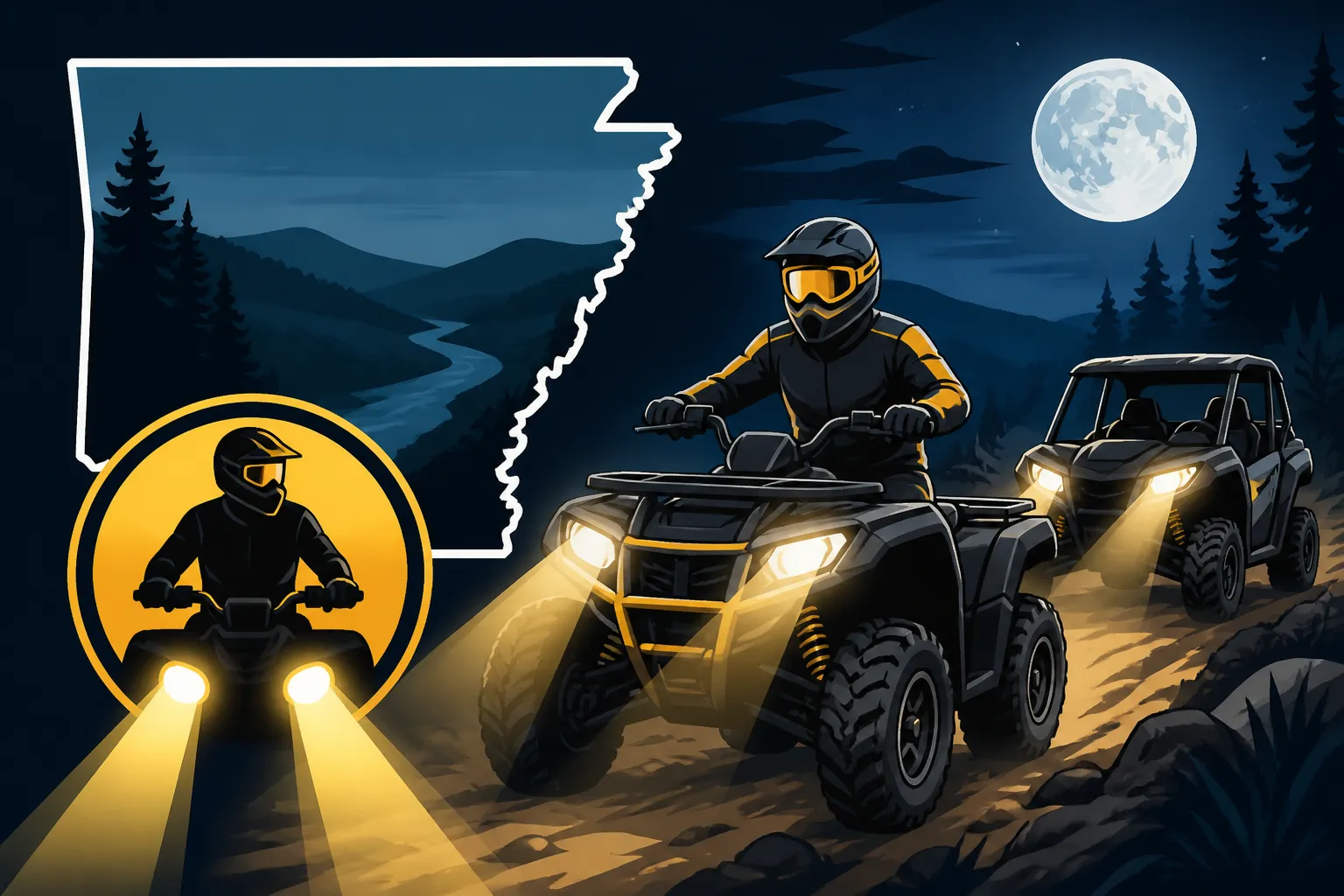
One common question that pops up when you're planning an ATV or UTV adventure in Arkansas is about riding after dark. Maybe you're out on a hunting trip and need to get back to camp, or perhaps you're using your machine for chores around the farm and the sun has already set. Whatever the reason, the rules for operating your off-highway vehicle (OHV) once night falls can be confusing and, if misunderstood, lead to trouble. This guide is here to clear up the darkness, explaining Arkansas's regulations for riding ATVs and UTVs after dark, whether you're on public roads, private property, or cruising through a town that allows street-legal UTVs.
The Default Rule: No Night Riding on Public Roads for ATVs/UTVs
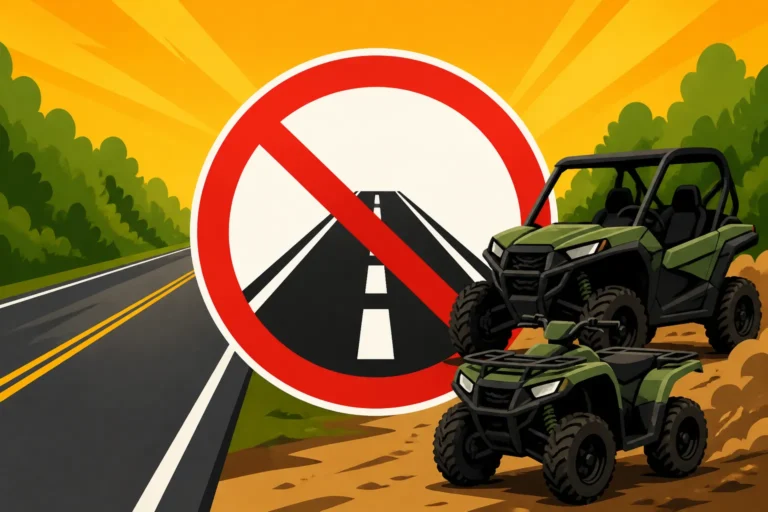
Let's cut right to the chase: for the vast majority of riders and machines, taking your ATV or UTV onto a public road in Arkansas after dark is generally a no-go. Arkansas law is quite specific about where and when these vehicles can operate. By default, ATVs and UTVs are classified as off-highway vehicles, which means they are not designed or permitted for public road use. Nighttime visibility and the lack of standard automotive safety equipment only compound this restriction.
Imagine you've just wrapped up a long day of hunting near the White Rock Mountain Recreation Area, and the last sliver of sunlight is fading behind the Ozark peaks. Your camp is just a mile down a county road, and you figure it's quicker to take the quad. This is exactly the scenario where you could find yourself in hot water. Even if you have the brightest LED light bar on your machine, it doesn't change the underlying legal prohibition against riding most ATVs or UTVs on public roads, especially after dark. The law isn't just about whether you can see; it's about whether your vehicle is authorized to be there in the first place, and after sunset, the visibility issue becomes even more critical for safety.
Understanding Arkansas's ATV Statute
Arkansas Statute 27-21-106 lays out the foundational rules for ATVs and UTVs. Generally, it declares that it is "unlawful for any person to operate an all-terrain vehicle upon any public street or highway of this state." There are a few specific exceptions to this rule, primarily for agricultural or hunting operations, and even then, these exceptions are often limited to daylight hours or very specific conditions, like direct crossings. The statute isn't concerned with whether your ATV has headlights; it's concerned with its designation as an off-highway vehicle. So, if you're thinking about extending your ride into the evening on a gravel county road, it's highly likely you'd be in violation. You can learn more about the broader rules in [Can You Drive an ATV on the Road in Arkansas?].
This blanket prohibition stems from safety concerns. ATVs and UTVs typically lack the features required for safe road use, such as turn signals, brake lights, mirrors, and, crucially, proper lighting for other motorists to easily identify them in low-light conditions. While your machine might have a factory headlight, it's rarely designed to meet the same standards as a street-legal vehicle for night driving on public roads where cars, trucks, and other traffic operate. The risk of an accident drastically increases when an OHV, not clearly visible or equipped, is sharing the road with vehicles traveling at higher speeds after dark.
The Importance of Visibility After Dark
Even when those specific, limited statutory exceptions do apply—such as operating for a legitimate farming or hunting operation during daylight hours, or making a direct crossing—the added element of darkness throws a significant wrench into the works. While the law might permit certain actions during the day, it's far less forgiving when visibility drops. A deer hunter using their ATV to retrieve a downed animal on a county road, for example, might be covered by an exception during the day, but attempting the same task after sunset significantly increases the risk and the likelihood of a citation, even if the primary reason for riding is legitimate.
Consider the potential dangers. A deputy on patrol, seeing an ATV or UTV without proper road-legal lighting on a dark road, is likely to stop you, even if you are legitimately covered by one of the narrow exceptions. They might be concerned for your safety and the safety of others. While you might know you're just traveling a short distance, a passing motorist might not see your machine until it's too late. This is why even when exceptions exist, many riders choose to avoid public roads entirely once dusk settles, opting for trailers or sticking strictly to private property. The potential [Arkansas Penalties for Illegal Road Riding] can be quite steep, making caution the best approach.
When Local Ordinances Change the Game for UTVs
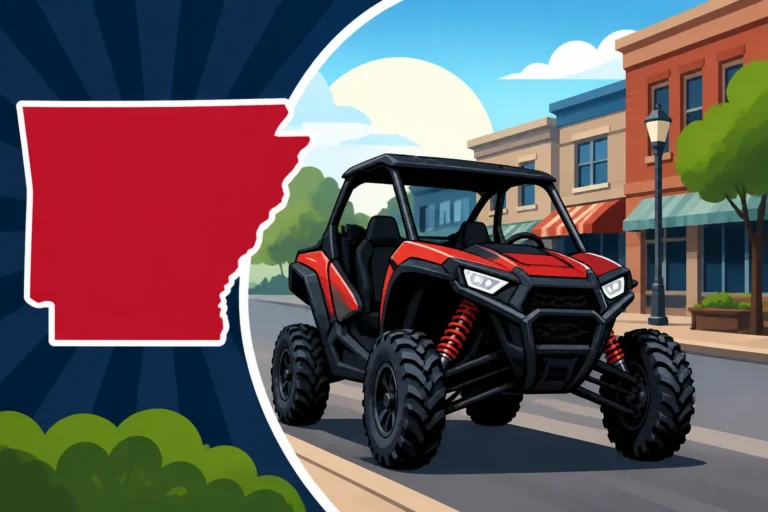
Here's where things get a little more nuanced, specifically for UTVs. While the state's default stance on public roads is restrictive, Arkansas Act 922, effective August 5, 2025, changed the landscape by allowing individual cities and towns the option to pass ordinances permitting UTVs on certain municipal streets. This is a game-changer for UTV owners who want to run errands or get around town on their side-by-sides. However, these local ordinances come with very specific requirements, especially when it comes to riding after dark.
Imagine you live in a town like Bono, which was one of the first to embrace a UTV ordinance. You've gotten your street permit, your UTV is equipped, and you want to drive it to the local diner for an evening meal. If your town has a UTV ordinance, and you meet all the equipment requirements, then yes, you might be able to ride after dark on those designated city streets. But this isn't a free pass; it means your UTV must be outfitted with all the necessary street-legal lighting and safety features that allow it to operate safely and be seen by other motorists at night.
What a Street-Permitted UTV Needs for Night Operation
If your city has passed an ordinance allowing UTVs on its streets, and you've obtained the necessary local permit, your UTV will need specific equipment to be considered street-legal, especially for after-dark operation. These requirements are often mirroring what a standard vehicle needs. This typically includes working headlights, taillights, brake lights, and turn signals. Some ordinances may also require a license plate light, ensuring your rear registration is visible. Essentially, your UTV must be as visible and communicative on the road as a car or truck, particularly when it's dark.
Think about a typical evening drive in your car. You have bright headlights to illuminate the road ahead, taillights so vehicles behind you know you're there, brake lights to signal when you're slowing down, and turn signals to indicate your intentions. A street-permitted UTV operating after dark needs all these same features. A simple factory headlight and taillight might not cut it. You might need to install aftermarket kits to get true [Arkansas Turn Signal Requirements for Street UTVs] and proper brake lights that illuminate when the pedal is pressed. These upgrades are crucial not just for legal compliance but for your own safety and the safety of others sharing the road.
Displaying Lights and Signals Correctly
Having the right equipment is one thing; ensuring it's working and properly displayed is another. For instance, your headlights must be operational and properly aimed so they illuminate the road without blinding oncoming traffic. Taillights should be constantly lit when your UTV is on, and brake lights must activate immediately when you apply the brakes. Turn signals need to flash distinctly and brightly enough to be seen from a reasonable distance, both day and night. Many UTV owners turn to brands like SuperATV for their aftermarket lighting solutions, which often provide brighter, more robust options for street conversions.
Local ordinances will specify these requirements, and it's your responsibility to ensure your UTV meets them fully. A police officer in a town like Bono, for example, could stop you if your taillights are dim or if a turn signal isn't working, especially after dark when visibility is already compromised. These local rules are about ensuring that if UTVs are on the street, they are doing so safely. It's not just about avoiding a ticket; it's about making sure your machine is clearly visible to other drivers who might not expect to see a UTV on the road. Always check your specific town's ordinance, as requirements can vary slightly, but strong, reliable lighting for night operation will always be a priority. You can generally find information on [Arkansas UTV Street Legal Rules by Town] to understand local specifics.
Navigating Private Land After Sunset
When it comes to riding ATVs and UTVs on private property after dark, the rules change significantly. State statutes primarily focus on public roads and public lands. On private land, the primary authority rests with the landowner. This means that if you own the land, or have explicit permission from the landowner, you generally have much more leeway regarding when and how you ride your machine, including after dark. This is often the case for farmers tending to livestock late into the evening or hunters heading to a stand before dawn or returning after dusk.
Consider a large timber tract in Polk County that you lease for hunting. You’re trying to get to your deer stand before sunrise, or maybe you've just bagged a deer and need to haul it out after the sun has set. As long as you have the landowner’s permission to be on the property, and there are no specific lease agreement clauses prohibiting night riding, you are generally free to operate your ATV or UTV with the lights you have. The state isn't dictating your operational hours on private ground. However, "free to operate" doesn't mean "free from responsibility," and safety considerations become paramount.
Landowner Permission Dictates Night Riding on Private Property
The most crucial element for riding after dark on private land is clear, explicit permission from the landowner. If you own the land, you set the rules for your property. If you're on land that belongs to someone else, you absolutely must have their permission, ideally in writing, to ride at any time, but especially after dark. This permission should specify what areas you can access, what times you can ride, and any other conditions they might have. For example, a landowner might be perfectly fine with you riding your UTV to your deer stand at 5 AM, but might not want you joyriding through fields at midnight.
Without proper permission, riding on private land—day or night—is trespassing, which can lead to legal issues. Add darkness to the mix, and it becomes even more problematic if you're mistaken for someone up to no good. Always respect the landowner’s wishes. If you're leasing land for hunting or farming, ensure your lease agreement covers your use of ATVs or UTVs, including after-dark operations. Even if not explicitly written, a verbal agreement or understanding with the owner is crucial. You can read more about the general rules regarding [Arkansas Rules With a Landowner's Permission] and [Arkansas Rules on Land You Lease].
Essential Safety Practices for Private Land Night Riding
While the law might give you more freedom on private land after dark, personal safety is entirely in your hands. Night riding, even on familiar terrain, introduces significant hazards. What looks like a small rut during the day can become a wheel-eating ditch at night. Tree branches you easily ducked under in daylight can become face-slappers in the dark. It's essential to be extra cautious.
Always ride at a reduced speed when visibility is low. Even with powerful aftermarket lights, your depth perception is reduced, and obstacles can appear suddenly. Consider equipping your machine with additional lighting beyond what came from the factory. A good LED light bar can make a world of difference for illuminating trails and fields, helping you spot wildlife, stumps, or deep puddles that would be invisible with just your stock headlights. Also, make sure you wear appropriate safety gear, including a helmet and eye protection, even on private land. This is especially true when navigating in the dark where hazards are harder to see. Many experienced riders will also ensure they have a fully charged phone, a small toolkit, and possibly a winch if they're venturing into remote areas after dark, just in case something goes wrong and they need assistance.
Enhancing Visibility and Safety for All Night Riding
Whether you're permitted to ride a street-legal UTV after dark in a town or you're navigating your own property, enhancing your machine's visibility and your personal preparedness is paramount. Factory lighting on ATVs and UTVs is often sufficient for basic daylight use or very limited low-light scenarios, but it's rarely designed for serious nighttime operation, especially when safety is a top concern. Investing in upgrades and practicing good rider habits can make all the difference.
Imagine you're out on your farm, moving equipment with your UTV long after the sun has dipped below the horizon. Your stock headlights just aren't cutting it; they create too many shadows, making it hard to judge terrain or spot obstacles. This is where strategic upgrades come into play. It's not just about seeing where you're going; it's about being seen by others, whether they are other farm vehicles, curious neighbors, or, if you're street legal, other motorists.
Essential Lighting Upgrades Beyond Basic Requirements
For any serious night riding, especially on private land or permitted street use, consider upgrading your lighting system. SuperATV, for example, offers a wide array of aftermarket LED light bars, cube lights, and rock lights that can dramatically improve your visibility. A robust LED light bar mounted on the front of your UTV or ATV can turn night into day, illuminating a much wider and farther path than stock headlights ever could. These are especially useful for spotting deer, assessing trail conditions, or navigating through dense woods.
Don't forget rear visibility either. While your taillights are there, adding brighter LED taillights or even a rear-facing light bar can make your machine much more noticeable to anyone approaching from behind, whether it's another rider, a farm truck, or a street vehicle. If you're using your UTV for utility purposes, additional work lights can be invaluable for tasks like loading firewood or fixing a fence after dark. Also, think about accent lighting like "rock lights" that illuminate the ground around your tires; these can be incredibly helpful for navigating technical terrain or simply getting in and out of your machine in the dark without stumbling.
Rider Preparedness for Low-Light Conditions
Beyond the machine itself, your personal preparedness is critical for safe night riding. Always wear clear or yellow-tinted safety glasses or goggles. Dark or tinted lenses that are perfect for sunny days become a major liability at night, severely reducing your vision. A clear visor or goggles will protect your eyes from debris while maximizing your ability to see.
It's also a good idea to wear some reflective gear, especially if there's any chance you might encounter other people or vehicles. A reflective vest or strips on your helmet and jacket can make you much more visible to others, even if their headlights aren't directly on you. Always carry a reliable flashlight or headlamp in addition to your machine's lights. If your machine breaks down, or you need to dismount for any reason, a personal light source is invaluable. Finally, always let someone know where you're going and when you expect to return, especially if you're riding alone after dark in a remote area. A simple text message saying "heading out, back in an hour" could be a lifesaver if an unforeseen issue arises. These small steps in preparation can significantly reduce the risks associated with [Arkansas Rules for Riding After Dark].
| Riding Scenario | Legal Status After Dark (General) | Required Lighting (Minimum) | Recommended Additional Lighting | Key Considerations |
|---|---|---|---|---|
| Public Roads (ATVs) | Generally UNLAWFUL | None (as generally not permitted) | N/A | High risk of citations; safety hazard for all traffic. |
| Public Roads (UTVs w/ permit) | PERMITTED by local ordinance | Headlights, Taillights, Brake Lights, Turn Signals | LED light bar, brighter turn signals, license plate light | Must comply with specific local ordinance; check [Arkansas Equipment for a Street-Permitted Machine]. |
| Private Land (ATVs & UTVs) | PERMITTED with landowner consent | Stock headlights/taillights (for safety) | LED light bars, cube lights, rock lights, rear work lights | Landowner permission is paramount; reduce speed, enhance visibility. |
| Public Trails (OHV Parks/Forests) | Varies by park/forest rules | Headlights, Taillights | High-powered light bars, trail-specific lighting | Check specific trail rules (e.g., Wolf Pen Gap); often allowed but with safety precautions. |
Disclaimer
This article is for general informational purposes only and does not constitute professional advice. Laws, prices and regulations vary by location and change over time. Consult a qualified professional for guidance on your specific situation.