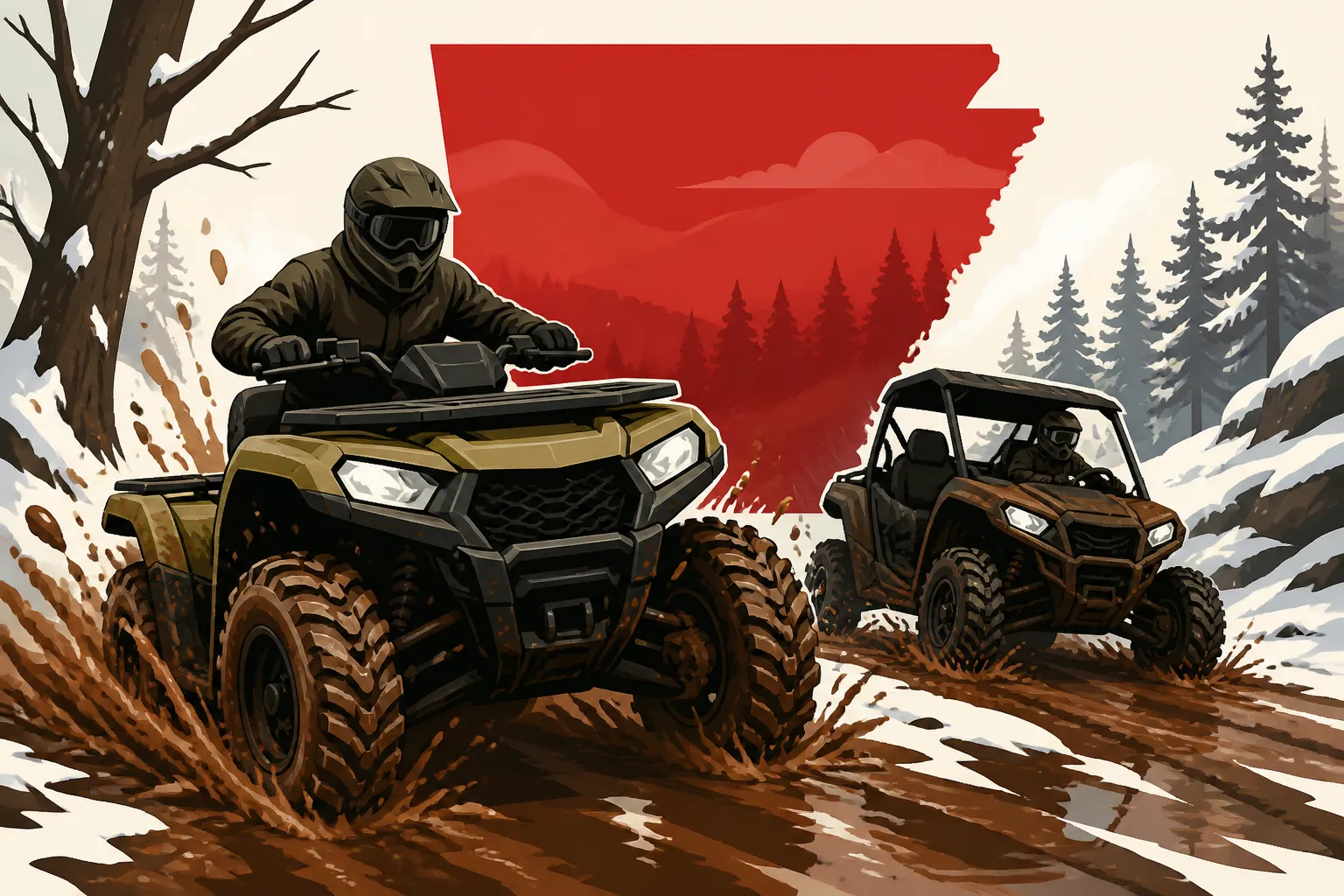
Arkansas Riding in Winter Mud
Arkansas winter mud can turn a familiar trail into a slippery, rutted mess, especially after rain or a freeze-thaw cycle. This guide explains how to judge trail conditions, choose a suitable route, ride with less risk, and protect the land and your machine. A little planning can prevent a cold, frustrating day from becoming a costly recovery.
Why Arkansas winter trails get muddy
Rain, cold, and thawing ground change the ride
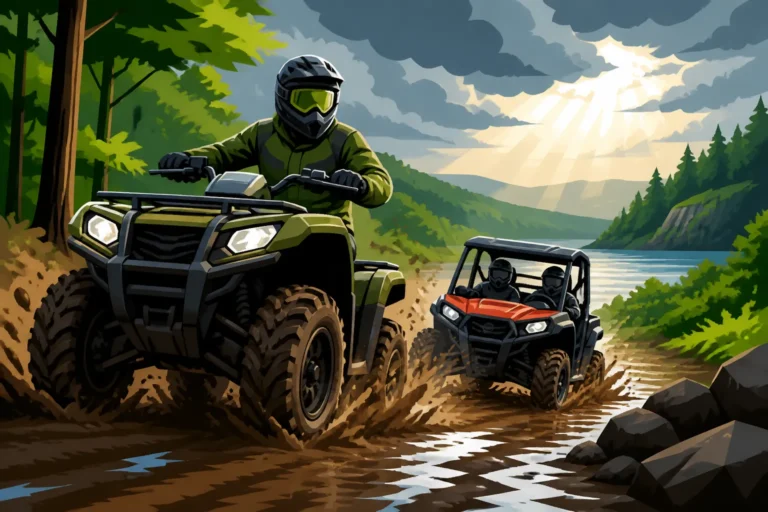
Winter riding conditions can shift quickly in the Ouachita and Ozark Mountains. A trail that feels firm early in the day may soften as temperatures rise, while overnight freezing can leave hard, slick patches beside thawed mud. Shaded hollows often stay wet longer than exposed ridgelines, and water can pool where trail surfaces are compacted or drainage is poor.
Not all mud behaves the same way. Some spots are shallow and firm underneath; others hide ruts, rocks, roots, or soft edges that can pull a tire sideways. Red clay can coat tires and reduce grip, while wet leaves over rock can be slippery even when the trail does not look especially muddy. A short walk ahead can reveal more than a quick glance from the driver’s seat.
The biggest concern is often not whether you can get through a muddy section. It is what repeated traffic does to the trail. Spinning tires can cut deep ruts, push water into the riding surface, widen the track as riders go around the mess, and damage the ground beyond the established route. If the trail is turning into churned soil, choosing not to ride it is often the most responsible call.
Check access and conditions before you leave
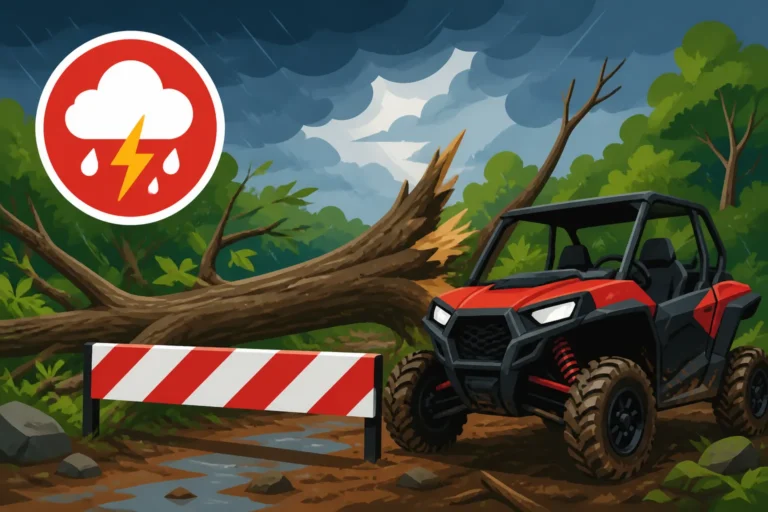
A winter weekend does not guarantee that a route is open or suitable. Access rules, maintenance work, weather-related closures, and seasonal restrictions can vary by riding area. Check the managing agency or private park directly before towing to a trailhead, and read posted notices when you arrive. A trail shown on a map is not necessarily open for riding.
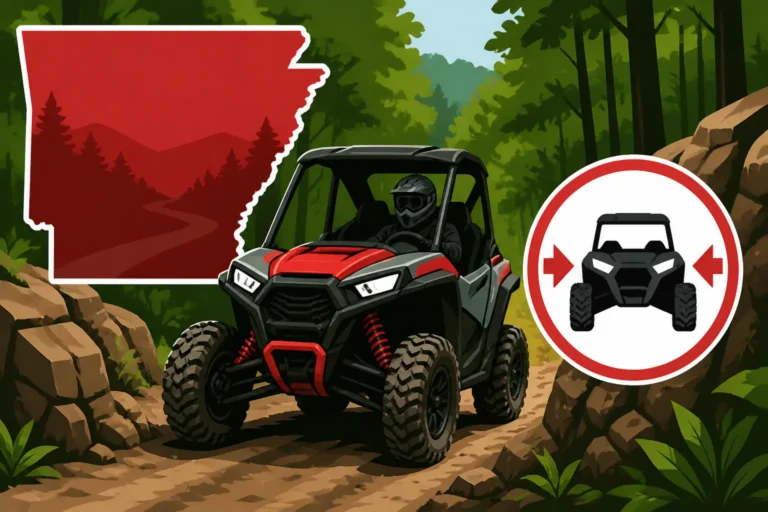
For national forest routes, review the applicable permit and travel rules as well as the trail’s condition. Forest permits are not interchangeable across every riding area, and some routes may have width limits or other restrictions. Start with [Arkansas OHV Permits: Two Forests, Two Prices] and [Arkansas Trail Closures After a Storm] when sorting out the basics.
A mapping app such as onX Offroad can help you orient yourself and understand nearby roads and trail networks, but a digital map is not a substitute for current closure notices or signs at the trailhead. Download or save the information you need before you lose cell service, and carry a paper map as backup. The Ouachita Mountains have dead zones, and a phone battery can drain faster in cold weather.
Plan a winter ride around the ground, not the calendar
Choose a route that matches the conditions
A dry, rocky route may remain manageable after light rain, while a low-lying trail can become soft and deeply rutted after the same weather. Think about the terrain, not just the forecast. Look for routes that offer room to turn around, avoid long stretches of low ground, and have a trailhead or staging area you can reach without driving through questionable conditions.
Arkansas riding areas differ in terrain and access. Wolf Pen Gap near Mena is a well-known Ouachita riding destination, while Mill Creek near Ozark offers a separate trail system and its own access considerations. Before choosing either, check the current trail information, permitted machine widths, and weather impacts. [Arkansas Ozark and Ouachita Riding Compared] can help frame the regional differences, and [Wolf Pen Gap: Arkansas's Best Known OHV Complex] offers a starting point for learning about that area.
Use a conservative turnaround rule: if the trail is visibly eroding, if water is running down the track, or if you cannot safely see what lies beyond a muddy dip, turn back before the group becomes committed. This is especially important when riding with a mixed group. A skilled driver may be able to cross a section that is not appropriate for a newer rider, a smaller machine, or a passenger.
| Trail condition | What it can mean | Safer choice |
|---|---|---|
| Damp surface with firm ground underneath | Tires may track normally, but grip can vary | Ride smoothly and avoid sudden steering |
| Slick clay or wet leaves over rock | Braking and cornering can become unpredictable | Reduce speed before the surface changes |
| Deep ruts or standing water | Hidden rocks, soft edges, or machine-trapping mud may be present | Walk the section or turn around |
| Water flowing along the trail | The trail may be eroding or draining poorly | Do not ride through; find another route |
| Frozen ground with thawing patches | Grip can change abruptly from hard to slick | Leave extra space and avoid abrupt inputs |
Build a flexible day plan
Treat the route as a plan, not a promise. Pick a primary area and a backup option, then check access for both. If conditions deteriorate, a shorter ride on suitable ground is better than pressing on just because the group traveled a long way. Agree on a turnaround time and a clear regrouping point before leaving the trailhead.
Tell someone who is not riding where you plan to go and when you expect to be back. Share the name of the riding area and your general route, rather than relying on a live phone signal. In a group, agree on who leads and who rides last. Keep the group together at junctions so no one follows the wrong spur while others wait in cold weather.
If you use onX Offroad to review a route, take time to understand the map before you reach the trail. Confirm the trailhead, nearby access roads, and likely turnarounds in advance. Download the map area for offline use if that option is available to you, and still carry a paper backup. For more preparation ideas, see [Arkansas Trail Conditions Before You Tow] and [Carrying a Paper Map as Backup].
Ride carefully when mud reduces traction
Use smooth controls and preserve momentum
In mud, abrupt throttle, braking, and steering can all break traction. Approach a slick patch at a controlled speed, keep your hands relaxed, and make gradual adjustments. A sudden burst of throttle may spin the tires and dig a hole; slamming on the brakes may cause a slide, particularly on a downhill section or wet rock.
Keep a safe following distance. The rider ahead may stop suddenly, slide toward the edge, or discover a rut that is hidden from view. Give the machine in front room to clear a difficult section before entering it yourself. If you are riding a side-by-side, account for its width and turning space, and never assume a narrow muddy track can safely accommodate a pass.
Choose a line only after looking at the full section. Avoid riding along the soft edge to bypass a rut, since that can widen the trail and damage vegetation. Do not enter water when you cannot see the bottom or identify a safe exit. If the route looks too soft, do not use a winch or repeated attempts to force your way through; the machine may become more deeply stuck while the trail is damaged further.
Know when to turn around or ask for help
A stuck machine can turn a recreational ride into a recovery problem, especially when the group is far from the trailhead and temperatures are low. Before attempting recovery, assess whether the machine is stable, whether anyone is at risk, and whether the recovery point is suitable. Keep people clear of winch lines and straps, and follow the equipment manufacturer’s instructions. Never wrap a recovery line around a person or attach it to a part of the machine not intended for recovery.
If the machine is high-centered, sliding toward a drop, or stuck in water, stop and reassess rather than adding power. A second machine can also become stuck if it enters the same soft ground. In some situations, the safest option is to contact the riding-area operator or seek qualified recovery assistance rather than risking an injury or damaging more trail.
Good judgment includes knowing when to end the ride. If the route is deteriorating, the group is cold or tired, or daylight is fading, head back by the safest known route. [Arkansas Trail Etiquette Locals Expect] is worth reviewing before a group outing, particularly when conditions are wet and other riders are sharing the same trail.
Prepare your machine and gear for winter mud
Pack for cold, wet, and low-cell-service conditions
Wear layers that stay warm when damp, plus gloves that let you control the machine without becoming clumsy. Eye protection helps with mud and debris, and sturdy footwear matters when you need to walk a trail section or help with a recovery. Carry water and food even for a shorter ride; cold weather can make it easy to underestimate how much energy you are using.
Bring a basic first-aid kit, a charged phone, and a backup power source kept somewhere it can stay dry. A paper map and a way to communicate with your group are especially useful where service is unreliable. Consider packing a tow strap, appropriate recovery gear, and a small tool kit, but make sure everyone knows how to use the equipment safely before leaving the staging area. [First Aid Worth Carrying on a Long Loop] and [Carrying a Tow Strap in the Hills] cover useful preparation topics.
Before departure, check tires, lights, brakes, belts, and fluid levels. Mud can hide a tire puncture or damage sustained during a previous ride, so do not assume the machine is ready just because it ran well last time. If you are riding with a passenger, make sure they understand the route plan, how to stay seated through rough sections, and what to do if the group stops.
Clean and inspect the machine after the ride
Mud left on a machine can hide loose fasteners, damaged hoses, or debris around moving parts. After the ride, rinse off grit and clay without directing high-pressure water into seals, bearings, electrical connections, or other sensitive areas. Check the undercarriage, wheel wells, brakes, radiator area, and tires for packed mud, leaves, sticks, or damage. Follow the maintenance guidance in the owner’s manual.
Let the machine dry, then inspect it again in good light. Look for new scrapes, bent components, unusual leaks, or a change in how the steering and brakes feel. If something seems wrong, avoid taking the machine back out until it has been checked. [Washing Grit Off After a Ride] and [Radiator Screens for Ozark Leaf Litter] offer related maintenance topics for Arkansas trail riders.
Finally, leave the riding area as you found it. Pack out trash, avoid spinning tires in the staging area, and report a serious hazard or damaged trail to the appropriate land manager or park operator. Responsible winter riding is not about conquering every muddy section. It is about getting home safely while leaving the route in good shape for the next rider.
Disclaimer
This article is for general informational purposes only and does not constitute professional advice. Laws, prices and regulations vary by location and change over time. Consult a qualified professional for guidance on your specific situation.