Arkansas ATV Decal Rules and Where It Goes
It's incredibly frustrating when you're trying to do the right thing as an ATV or UTV owner in Arkansas, but the rules around something as simple as a decal feel shrouded in mystery. You’ve likely heard whispers about where it should go, or perhaps seen machines with decals plastered in all sorts of places, leaving you wondering if there's a "right" way. This comprehensive guide is designed to clear up all that confusion, walking you through the ins and outs of Arkansas ATV decal rules, why they matter, and exactly where that little sticker needs to reside on your machine.
Understanding the Arkansas ATV Decal: More Than Just a Sticker
When you first hear about registering your ATV or UTV in Arkansas, one of the primary pieces of information you receive is that you'll be issued a decal. This isn't just any sticker; it's a critical component of legal operation for your off-highway vehicle (OHV) within the state. Ignoring its purpose or placement can lead to more than just a minor inconvenience – it can lead to legal issues and fines.
What Exactly is an Arkansas ATV Decal?
An Arkansas ATV decal is a unique, numbered sticker issued by the state's Department of Finance and Administration (DFA) through its revenue offices. Think of it as your off-road vehicle's identification badge. Unlike a traditional license plate you’d see on a car or truck, this decal doesn't signify road-legal status. Instead, it serves as visible proof that your ATV or UTV has been properly registered with the state, fulfilling a crucial legal requirement for operation. Each decal carries a specific identifying number, which is linked to your machine's Vehicle Identification Number (VIN) and your ownership records in the state database. It's how law enforcement and park rangers can quickly confirm that your machine is compliant without needing to run a full database search.
The decal itself is designed to be durable and weather-resistant, able to withstand the varied and often harsh conditions of Arkansas trails. It typically features the state's name, the year of issue (though it doesn't expire annually, as we'll discuss), and its unique registration number. This visual proof of registration is important because Arkansas does not issue traditional titles for ATVs and UTVs in the same way it does for highway vehicles. So, the decal becomes a key identifier and a piece of your machine's official history. For many riders, the moment that decal is affixed marks the official start of their legal off-road adventures, offering peace of mind that they're following the state's guidelines.
Why Arkansas Uses Decals Instead of Plates for ATVs
The choice to use decals rather than traditional license plates for ATVs and UTVs in Arkansas stems from the fundamental legal classification of these vehicles. In Arkansas, ATVs and UTVs are primarily defined as "non-highway vehicles." This designation means they are generally not intended for operation on public roads, streets, or highways, and thus do not fall under the same regulatory framework as cars, trucks, or motorcycles that do require a full license plate. The state's intent is to create a system that allows for identification and registration of these machines for off-road use, without implying any form of street legality.
The practical reasons for using a decal are also quite clear. ATV and UTV frames often don't have suitable, easily visible, and durable mounting points for a rigid metal license plate that would withstand the rigors of off-road riding. Imagine trying to attach a standard car plate to the front fender of a quad – it would quickly get bent, torn off by brush, or covered in mud, making it unreadable. Decals, on the other hand, can be securely affixed to a flat, prominent surface on the vehicle, offering a more robust and practical solution for identification in an off-road environment. This method ensures that the unique registration number remains visible and intact, even after a dusty ride through the Ouachitas or a muddy excursion near the Delta. It’s a pragmatic approach that acknowledges the distinct operational environment of these machines.
Where Your Arkansas ATV Decal Absolutely Must Go
This is perhaps the most common question riders have, and for good reason. Placing your decal in the wrong spot, even if you’ve properly registered your machine, can still lead to issues with law enforcement or park officials. Arkansas law is quite specific about where this decal needs to be displayed, and understanding this rule is crucial for every ATV and UTV owner.
The Left Front Rule: Why Specific Placement Matters
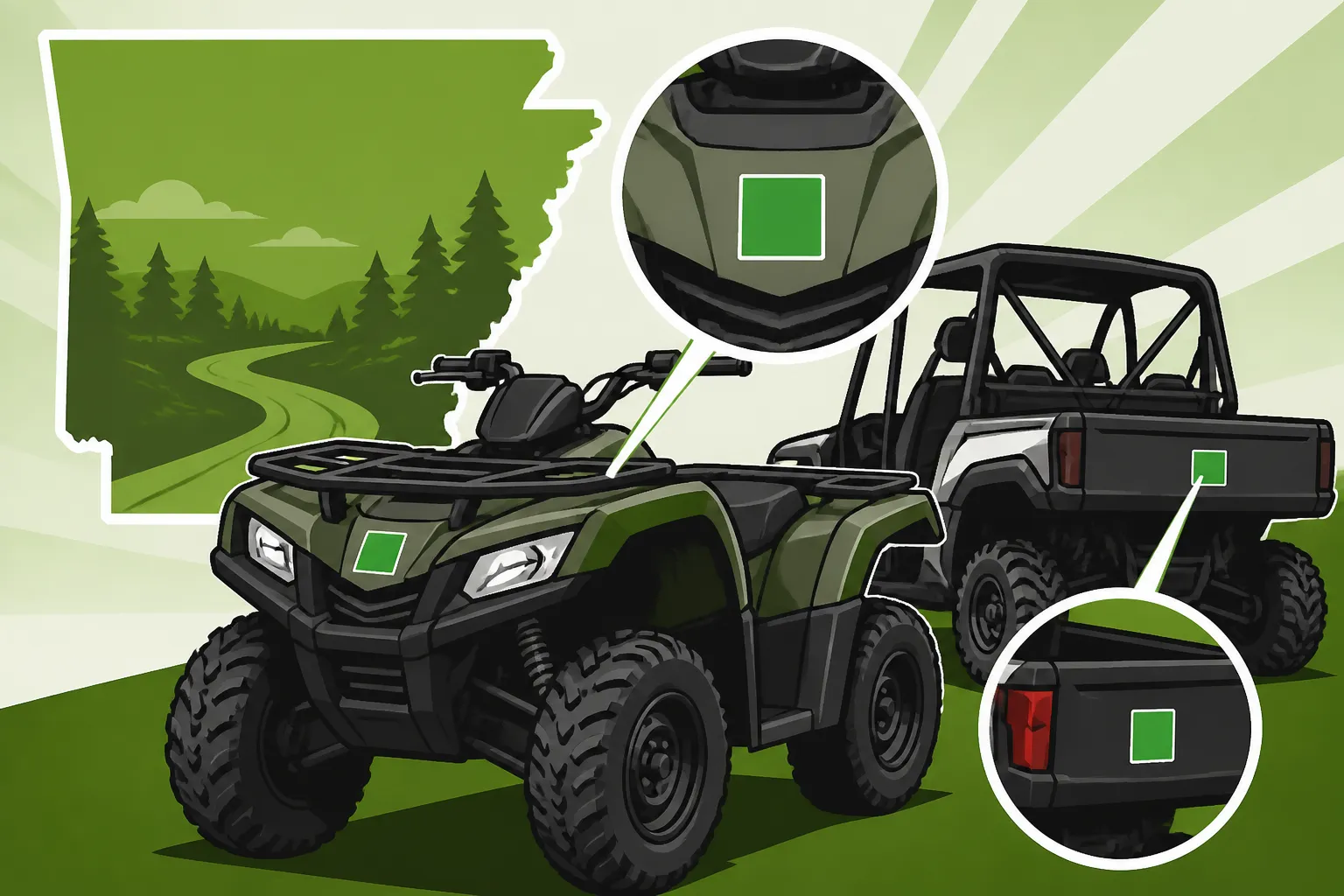
For both ATVs and UTVs in Arkansas, the law explicitly states that the registration decal must be affixed to the "left front" of the machine. This isn't just a suggestion; it's a mandatory requirement designed for consistency and ease of identification. When a game warden, forest ranger, or sheriff's deputy approaches your machine, whether it's parked at a trailhead or you're pulled over for a quick chat on a fire road, they need to be able to quickly locate and read that decal. The "left front" provides a standardized spot that officials can instinctively look for, ensuring efficient checks without unnecessary delays or confusion.
Think about it from an enforcement perspective: if decals could be placed anywhere, an officer would have to search your entire machine, which is inefficient and could be seen as an intrusion. By mandating the left front, the state creates a uniform expectation. For many traditional ATVs (quads), this usually means the left side of the front fender or the front rack, provided it's clearly visible. On UTVs (side-by-sides), it typically goes on the left side of the front fascia, often near the headlight or on the protective grille. The key is visibility and accessibility from the front-left angle. Common mistakes include placing it on the handlebars, the rear fender, or even inside the cab of a UTV where it might not be readily seen without a close inspection. These placements, while perhaps well-intentioned, do not comply with the "left front" rule and could lead to questions from authorities.
Decal Placement on Different ATV Types (Quads vs. Side-by-Sides)
While the "left front" rule is universal for all machines that fall under Arkansas's ATV definition, the specific flat surface you choose will naturally vary depending on whether you're riding a traditional quad or a modern side-by-side UTV. The goal remains consistent: ensure maximum visibility from the left front perspective.
For traditional ATVs (quads), you're usually looking for a smooth, flat surface on the front left fender or perhaps a non-moving part of the front rack. It needs to be a spot that won't be easily obscured by mud, brush, or riding gear. Some riders choose the plastic fender just above the left front wheel, or a flat area on the very front bodywork. The key is to pick a spot that's relatively protected from direct impacts but still easily seen. Avoid placing it on curved surfaces where it might bubble or peel prematurely.
When it comes to UTVs (side-by-sides), you often have more flat surfaces, but the principle remains the same. Many UTV owners place their decal on the front left side of the grille, near the driver's side headlight, or on a flat part of the front bumper's plastic fascia. If your UTV has a windshield, do not place it on the windshield itself unless it’s a dedicated, non-obstructive decal zone, as it could impede your vision or be difficult to read. The left front quarter panel or a flat surface on the side of the hood are also common and acceptable spots. Always ensure the decal is not covered by aftermarket accessories like light bars, winches, or oversized bumpers. The spirit of the law is clear visibility, so take a moment to step back and confirm that your decal is easily spotted from a short distance away on the left front side. This diligent placement will save you headaches down the trail. You can find more specific guidance in the internal link [Arkansas Decal Placement on a Side-by-Side].
The Longevity and Renewal (or Lack Thereof) of Your Arkansas Decal
One of the most appealing aspects of Arkansas's ATV and UTV registration system is its unique approach to renewals. Unlike vehicle tags or other annual registrations you might be familiar with, the ATV decal is a one-time issuance, which significantly simplifies long-term ownership.
Arkansas ATV Registration Has No Annual Renewal
This is fantastic news for riders in Arkansas: once you've successfully registered your ATV or UTV and received your decal, you generally won't need to worry about annual renewals or recurring fees for that specific machine. The state established a system where the registration is a one-time process, and the decal issued is essentially permanent for the life of that machine under your ownership. This means no more scrambling at the end of the year to pay another fee or wait for a new sticker to arrive in the mail. The state wanted to create a straightforward system that encouraged compliance without burdening owners with perpetual administrative tasks.
This non-renewal policy stands in stark contrast to many other states and vehicle types, which often require annual or biennial re-registration. For Arkansas riders, it translates to significant long-term savings and much less paperwork. Once that initial registration fee is paid and the decal is affixed, your machine is considered registered indefinitely, as long as it remains in your possession and the decal is still legible and properly displayed. This simplified approach is a major benefit, allowing you to focus more on enjoying the trails and less on tracking renewal dates. You can explore this further by checking out [Arkansas ATV Registration Has No Annual Renewal] and [Arkansas ATV Registration: One Time, Never Renewed].
What Happens to the Decal When You Sell Your Machine
Given that the Arkansas ATV decal is a one-time registration and doesn't expire annually, it raises an important question: what happens to that decal when you decide to sell your machine? The short answer is, the decal generally stays with the machine, but the registration is effectively reset for the new owner. Arkansas's system is designed such that the registration is tied to the machine itself, but primarily under the specific owner who originally registered it.
When you sell your ATV or UTV, the original registration for your ownership effectively ends. The decal itself is not meant to be peeled off and transferred to another machine, nor does it automatically grant the new owner full legal registration status under their name. The new owner will be required to go through the full registration process themselves. This involves providing their own proof of ownership (like a bill of sale, which a template from LawDepot can help you draft), their identification, and paying the initial registration fee. They will then be issued a new decal with a unique number, which they will affix to the machine. This ensures that the state's records accurately reflect the current owner of the machine. It also helps prevent issues where a sold machine might still be mistakenly associated with the previous owner. So, while the old decal remains on the machine, its validity for the new owner is essentially nil until they complete their own registration.
Obtaining Your Arkansas ATV Decal: The Registration Process
Getting your ATV or UTV registered in Arkansas and receiving that all-important decal is a relatively straightforward process, provided you have all your ducks in a row. It primarily involves gathering the necessary documentation and making a trip to your local revenue office.
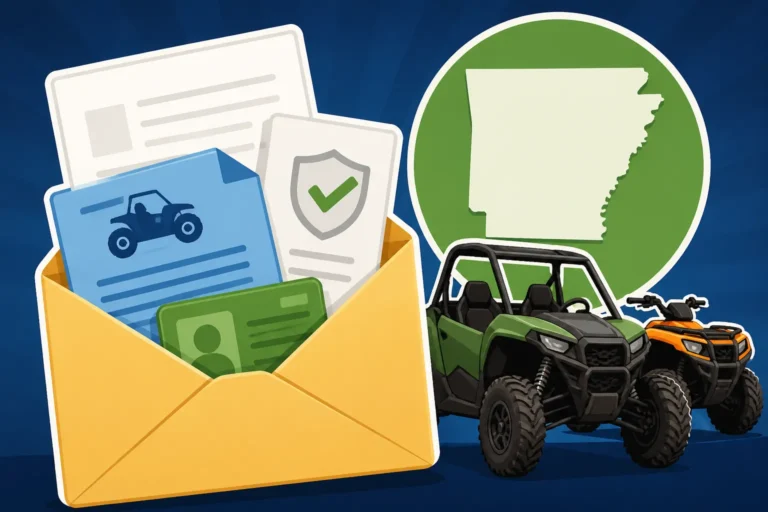
The Paperwork Checklist for Decal Issuance
To successfully register your ATV or UTV in Arkansas and receive your decal, you'll need to present a few key documents. Being prepared with these items before you head to the revenue office will save you a lot of time and potential frustration. The clerks are there to help, but they can't process your registration if you're missing critical information.
Here’s a typical checklist of what you'll need:
- Arkansas DFA Form 10-381: This is the official "Application for Arkansas Off-Highway Vehicle Decal." You can usually print this form online from the Arkansas Department of Finance and Administration (DFA) website or pick one up at any revenue office. Make sure to fill it out completely and accurately. Incorrect or incomplete forms are one of the most common reasons for delays. You can learn more about this specific form by looking into [Arkansas DFA Form 10-381 Explained].
- Proof of Ownership: This is perhaps the most critical document.
- New Machines: If your ATV or UTV is brand new, you'll need the Manufacturer's Statement of Origin (MSO) or Manufacturer's Certificate of Origin (MCO). This is essentially the birth certificate of your machine.
- Used Machines (Dealer Purchase): If you bought a used machine from a licensed dealer, you'll need a bill of sale from that dealer.
- Used Machines (Private Sale): For a private party purchase, you'll need a clear, legible bill of sale that includes the buyer's name, seller's name, purchase date, purchase price, and the machine's VIN. Using a reliable template from a service like LawDepot can ensure your bill of sale meets all necessary requirements and avoids common pitfalls that might lead to rejection at the revenue office. This proof of ownership is vital for showing that you legally acquired the machine. You can find out more about what the state accepts at [Arkansas Proof of Ownership for Registration].
- Photo Identification: You'll need a valid, government-issued photo ID, such as an Arkansas driver's license or state ID card. This is to verify your identity as the registering owner.
- Payment for Fees and Taxes: Be prepared to pay the registration fee and any applicable sales tax. While the registration fee is a fixed amount, sales tax will be calculated based on the purchase price of your machine and current state and local tax rates, if you haven't already paid it to a dealer. It's always a good idea to call your local revenue office ahead of time or check the DFA website to get an estimate of the current fees and tax rates. You can find details about the costs at [What Arkansas Charges to Register an ATV].
Having these documents neatly organized will make your visit to the revenue office smooth and efficient, ensuring you walk out with your new decal in hand.
Walking Through the Revenue Office Experience
Once you've gathered all your required paperwork, the next step is to visit an Arkansas Revenue Office that handles ATV registrations. While the process is generally straightforward, knowing what to expect can ease any anxiety you might have. These offices are designed to handle a variety of vehicle-related transactions, and ATV registration is a common one.
When you arrive, you'll typically take a number or be directed to a specific counter. It's a good idea to go during off-peak hours if possible (mid-morning or mid-afternoon on a weekday, avoiding lunch rushes) to minimize your wait time. When your number is called, you'll approach the clerk and present your completed Form 10-381, your proof of ownership, and your photo ID. The clerk will review all your documents to ensure everything is correct and complete. They'll verify the VIN on your machine against your proof of ownership and the application form. This step is crucial for accurate record-keeping. They might ask a few clarifying questions, especially if there's any ambiguity in your bill of sale or if your machine was purchased out-of-state.
After verifying your paperwork, the clerk will calculate the total amount due, which includes the ATV registration fee and any sales tax that needs to be collected. Remember, if you purchased your machine from a licensed dealer in Arkansas, they likely collected the sales tax at the time of sale. If you bought it in a private sale or from an out-of-state seller, you'll pay the sales tax directly at the revenue office. Once you've paid the required fees, the clerk will process your application and issue your official Arkansas ATV registration decal. They will typically hand you the decal along with a copy of your registration receipt. Take a moment to inspect the decal and ensure the registration number matches your receipt. At that point, you're all set! Just remember to securely affix your new decal to the "left front" of your machine as soon as possible. You can find the closest office to you by checking [Arkansas Revenue Offices That Handle ATVs].
Common Decal Misconceptions and Troubleshooting
Despite the straightforward nature of Arkansas's ATV registration and decal system, some common misunderstandings persist. Clarifying these points can prevent issues down the line and help you maintain compliance.
Why a Decal Is Not a Plate: Clarifying Legal Differences
This is a critical distinction that new and even experienced riders sometimes misunderstand. An Arkansas ATV decal is not a license plate, and it absolutely does not grant your off-highway vehicle (OHV) the right to operate on public roads, streets, or highways unless specific, limited exceptions apply. This is a common pitfall that can lead to significant penalties. A license plate signifies a vehicle is registered and typically insured for highway use, meeting specific safety and emissions standards. An ATV decal, by contrast, merely confirms that your OHV is registered for off-highway use.
The fundamental legal difference lies in their purpose and the vehicle types they identify. Traditional license plates in Arkansas, like those for cars and trucks, are designed for highway-legal vehicles, often requiring annual renewal, inspections, and specific insurance. The ATV decal, however, is for vehicles explicitly defined as non-highway vehicles. Trying to operate your ATV or UTV on a paved public road, despite having your decal displayed, is generally illegal in Arkansas, with only a handful of very specific exceptions, such as crossing a highway at a 90-degree angle after a complete stop, or specific allowances made by local municipalities for UTVs on certain low-speed streets (which is a different category altogether and requires additional permits). Understanding that [Arkansas Has No ATV License Plate] for ATVs and UTVs reinforces the fact that the decal is an off-road identifier, not a pass for street riding. This distinction is vital for avoiding traffic citations and ensuring you ride responsibly and legally.
What to Do When an Arkansas Decal Fades Off or Peels
Decals, by their nature, are exposed to the elements. Sun, rain, mud, and general wear and tear from riding can cause them to fade, peel, or even become detached over time. If your Arkansas ATV decal becomes unreadable or falls off, you are no longer in compliance with state law, even if your registration is still valid in the state's records. It's crucial to address this issue promptly to avoid potential fines or complications.
The solution is to obtain a replacement decal. The process for this is similar to the initial registration, though often simpler as you already have an existing record. You will need to visit an Arkansas Revenue Office and request a duplicate decal. Typically, you'll need to fill out a form (often the same DFA Form 10-381, or a specific duplicate request form, indicating that you need a replacement), present your photo ID, and provide proof of your original registration (such as your prior registration receipt). There will be a nominal fee for issuing a duplicate decal. This fee covers the administrative cost and the production of a new decal. It’s a minor expense compared to the potential cost of a citation for an unreadable or missing decal. Once you receive your new decal, make sure to clean the application area thoroughly and affix it securely to the "left front" of your machine to prevent a repeat issue. Always check [Arkansas Decal Replacement If It Peels Off] for the most up-to-date information on the process and fees. Taking this proactive step ensures you remain compliant and can continue enjoying your rides without concern.
Legal Implications of Decal Compliance
Operating an ATV or UTV in Arkansas comes with responsibilities, and one of the most fundamental is ensuring your machine is properly registered and its decal is correctly displayed. Ignoring these requirements can lead to real legal consequences, impacting both your wallet and your riding privileges.
Riding Unregistered and Getting Caught: Penalties
If you choose to ride your ATV or UTV on public lands, designated trails, or even on private land where others' machines are registered, without having the required Arkansas decal, you are operating an unregistered vehicle. This can lead to significant legal trouble if you are stopped by law enforcement, a game warden, or a park ranger. The penalties for riding an unregistered ATV in Arkansas typically involve fines, which can vary depending on the jurisdiction and the specific circumstances. These fines are often comparable to other minor traffic citations and can quickly add up, especially if you're caught repeatedly.
Beyond just financial penalties, there can be other consequences. In some cases, authorities might impound your vehicle, requiring you to pay additional towing and storage fees to retrieve it, on top of the original fine. This can turn a fun day of riding into a costly and frustrating ordeal. Furthermore, if you are involved in an accident while operating an unregistered machine, it could complicate insurance claims or even expose you to greater personal liability. The state's registration system is in place to ensure accountability and to help fund trail maintenance and enforcement efforts. By failing to register, you're circumventing this system. It's simply not worth the risk. Understanding [Arkansas Penalties for Riding Unregistered] highlights the importance of compliance for a worry-free riding experience.
Carrying Proof on the Trail: Beyond Just the Decal
While the decal affixed to your ATV or UTV is the primary visual proof of registration, it's always a good practice to carry additional documentation with you when you ride. Think of the decal as the quick visual check, but the physical paperwork as your indisputable evidence. Just like you'd carry your driver's license in your wallet, having your actual registration receipt on hand can save you a lot of hassle during a stop or inspection.
Here’s why it’s important:
- Verification of Decal: In rare cases, a decal might be damaged, obscured, or perhaps a new decal hasn't been issued yet after a replacement request. Having the official paper receipt directly links the decal number (or the VIN if the decal is unreadable) to your personal ownership records.
- Proof of Purchase Date: If you've recently purchased your machine, you have a 30-day grace period to register it after the date of purchase. Carrying your bill of sale, especially if it's within that 30-day window, serves as crucial proof that you're within the legal timeframe for registration. This is also why having a well-documented bill of sale, potentially drafted with the help of a tool like LawDepot, is so valuable.
- Personal Identification: While your decal identifies the machine, your photo ID identifies you as the owner or operator. You should always carry a valid government-issued photo ID when operating any motorized vehicle, including ATVs and UTVs.
Many riders choose to keep these documents in a waterproof bag or container stored securely on their machine – perhaps in a glove box, under the seat, or in a saddlebag. This ensures they are protected from the elements and easily accessible if needed. While the decal does most of the heavy lifting, a little extra preparedness with your physical documents goes a long way in ensuring a smooth and enjoyable trail ride.
Special Scenarios and Decal Considerations
The general rules for ATV decals cover most situations, but there are a few special scenarios that often lead to questions from riders. Understanding how the decal requirements apply in these unique circumstances can prevent confusion and ensure continued compliance.
Arkansas ATV Registration for Private Land Only Machines
This is one of the most frequently asked questions: "If I only ride my ATV or UTV on my own private property, or on private land with permission, do I still need to register it and get a decal?" The short answer, as per Arkansas law, is generally yes. Arkansas statute broadly requires all ATVs and UTVs operated within the state to be registered, regardless of whether that operation occurs on public or private land. The only explicit exemption typically applies to machines used exclusively for farming or ranching operations on agricultural land, and even that comes with specific criteria.
The state's reasoning is rooted in identification and enforcement. Even on private land, particularly large tracts like hunting leases or timber properties, an unregistered machine can pose problems. If a machine is stolen, having it registered and linked to a unique decal number in the state database significantly aids in recovery efforts. Furthermore, many private land leases or hunting clubs may require registered machines as part of their own rules, even if they're not explicitly enforcing state law. If you're riding on a deer lease, for example, having your machine registered ensures compliance and accountability. It's best to assume that if you own an ATV or UTV in Arkansas, it needs to be registered and have a decal, even if you rarely venture beyond your backyard or a friend's sprawling acreage. You can dive deeper into this topic by exploring [Arkansas ATV Registration for Private Land Only Machines] or [Registering an Arkansas ATV Used Only on a Deer Lease].
Registering a Machine Bought Out of State or Without Paperwork
Purchasing an ATV or UTV can be a great deal, especially from an out-of-state seller or through an informal private transaction that might lack traditional paperwork like an MSO. However, these situations can present unique challenges when it comes to registering your machine in Arkansas and obtaining a decal. The state's primary concern is establishing clear proof of ownership.
If you bought your machine out of state, you'll still need the same fundamental documents: a bill of sale, and preferably the MSO/MCO if it's a newer machine, or a clear chain of ownership if it's used. The sales tax calculation might differ, as you'll likely pay Arkansas use tax at the revenue office if you didn't pay a comparable sales tax in the state of purchase. Ensure your out-of-state bill of sale is comprehensive, detailing the buyer, seller, date, price, and VIN.
The more challenging scenario arises when you acquire a machine without adequate paperwork, such as an older ATV passed down through family, a barn find, or a trade where no formal bill of sale was exchanged. In these cases, the Arkansas DFA needs sufficient evidence to believe you are the rightful owner.
- No Bill of Sale: If you don't have one, you'll need to create one. A simple, handwritten bill of sale between you and the person you acquired the machine from (if applicable) can sometimes suffice. Tools like LawDepot can provide templates for generic bill of sales, which, while not specifically for ATVs, can be adapted to ensure all essential information (like VIN, make, model, year, and signatures) is included.
- Lost MSO/MCO or Title: If the original ownership documents are missing, you might need to establish a chain of ownership through previous registrations or sworn affidavits. This can be complex and might require additional steps, such as seeking a bonded title (though not common for ATVs, it's a concept used for other vehicles) or working directly with the DFA to prove legitimate possession. In some extreme cases, if no proof of ownership can be established, registration might not be possible without a court order.
- Homemade Machines: If you've built your own ATV or UTV, you'll need to provide documentation of parts, a VIN inspection (which the DFA can arrange), and potentially an affidavit detailing the construction process.
Always contact your local Arkansas Revenue Office or the DFA directly for guidance on these non-standard situations. They can provide the most accurate and up-to-date requirements for getting your machine legally registered and decaled.
Ensuring Your Decal Stays Visible and Compliant
Once you've gone through the process of registering your ATV or UTV and carefully affixed your decal, your job isn't quite finished. To remain compliant and avoid the hassle of obtaining a replacement, it's important to actively protect your decal and ensure its longevity. After all, the "one-time" nature of the registration is a benefit you want to enjoy for as long as possible!
Protecting Your Decal from Wear and Tear
Your Arkansas ATV decal is designed to be tough, but it's not indestructible. The harsh environments ATVs and UTVs operate in — sun exposure, mud, dust, water, and brush — can all take their toll. Proactively protecting your decal can significantly extend its life and keep it legible, saving you the trip to the revenue office for a replacement.
Here are some tips to protect your decal:
- Clean Surface Before Application: This is foundational. Before applying the decal, thoroughly clean and dry the "left front" surface of your machine. Use rubbing alcohol or a degreaser to remove any wax, oil, or residue. A clean surface ensures maximum adhesion, which is crucial for preventing peeling.
- Proper Application Technique: Apply the decal slowly and carefully, smoothing out any air bubbles as you go. Start from one edge and work your way across, using a squeegee or even a credit card to press it down firmly. Bubbles and poor adhesion are prime culprits for early peeling.
- Clear Protective Film (Optional): Some riders choose to apply a thin, clear protective film or laminate over the decal once it's fully adhered. These films are often designed for vehicle graphics and can provide an extra layer of defense against UV fading, scratches, and abrasion from mud or brush. Ensure the film is specifically made for outdoor use and is UV-resistant itself.
- Avoid Direct High-Pressure Washing: While it's important to keep your machine clean, avoid aiming high-pressure washers directly at the decal's edges. The force of the water can lift the edges, allowing dirt and moisture underneath, which leads to peeling. Use a gentler spray or hand-wash the area around the decal.
- Mind Your Riding Gear and Accessories: Be aware of where your gear (like tie-downs, bungee cords, or even bulky jackets) might rub against the decal. Similarly, ensure any aftermarket accessories you install on the front of your machine don't constantly chafe or obscure the decal's position.
By taking these small preventative measures, you can significantly extend the life of your decal, ensuring it remains a clear and compliant indicator of your ATV's registration.
Regular Checks and Maintenance for Decal Integrity
Just like you perform routine maintenance on your ATV's engine, tires, and brakes, it's a good idea to periodically check the condition of your registration decal. These quick visual inspections can help you catch minor issues before they become major problems, ensuring you stay compliant with Arkansas law.
After every few rides, or at least once a month, take a moment to specifically examine your decal:
- Check for Peeling Edges: Run your finger gently along all the edges of the decal. If you notice any lifting or peeling, you might be able to press it back down firmly before it worsens. If the peeling is significant, it's likely time for a replacement.
- Inspect for Fading: While often subtle, sun exposure can cause decals to fade, making the numbers and text less legible. If the decal is no longer easily readable from a short distance, it's time to consider a replacement.
- Look for Cracks or Tears: Physical damage from branches, rocks, or even rough handling can cause cracks or tears in the decal. Any damage that compromises its legibility or causes pieces to come off means it needs replacement.
- Cleanliness Check: Ensure the decal itself is clean and free of caked-on mud, dirt, or debris that might obscure its appearance. A gentle wipe with a damp cloth is usually sufficient. Avoid abrasive cleaners that could damage the decal's surface.
By incorporating these simple decal checks into your regular machine maintenance routine, you can proactively address any issues. This ensures that your Arkansas ATV decal remains intact, visible, and fully compliant, allowing you to focus on enjoying your off-road adventures rather than worrying about regulatory issues.
| Feature | Arkansas ATV Decal | Arkansas Highway License Plate |
|---|---|---|
| Purpose | Registration for off-highway vehicles | Registration for highway-legal vehicles |
| Placement | Left front of the machine | Rear of the vehicle (often front also for cars) |
| Renewal | One-time registration, no annual renewal | Annual or biennial renewal required |
| Road Legality | Does NOT grant general road-legal status | Grants general road-legal status (with other rules) |
| Material | Durable, weather-resistant sticker | Metal plate |
| Primary Use | Off-road trails, private land (with exceptions) | Public roads, streets, highways |
| Vehicle Type | ATVs, UTVs (within defined specs) | Cars, trucks, motorcycles, trailers |
| Associated Title | Arkansas does not title ATVs in the same way | Required for most highway-legal vehicles |
Disclaimer
This article is for general informational purposes only and does not constitute professional advice. Laws, prices and regulations vary by location and change over time. Consult a qualified professional for guidance on your specific situation.