Arkansas Penalties for Riding Unregistered
It’s easy to get swept up in the excitement of a new ATV or side-by-side, or perhaps you've just inherited an old quad for the deer lease. But let's be real, navigating Arkansas’s registration rules can feel like trying to ride a trail blindfolded. The biggest headache, and one we all want to avoid, comes when you're caught riding an unregistered machine. This guide will walk you through exactly what those penalties can look like, helping you understand the stakes and how to keep your ride on the right side of the law.
What Makes an ATV or UTV "Unregistered" in Arkansas?
First off, let’s clear up what we mean by "unregistered" in the eyes of Arkansas law. It's not always as simple as forgetting to apply for a decal. There are several ways your otherwise legitimate machine could be deemed unregistered, leading to potential trouble. Understanding these nuances is key to staying compliant and avoiding penalties.
The Basic Requirement: Decal and Documentation
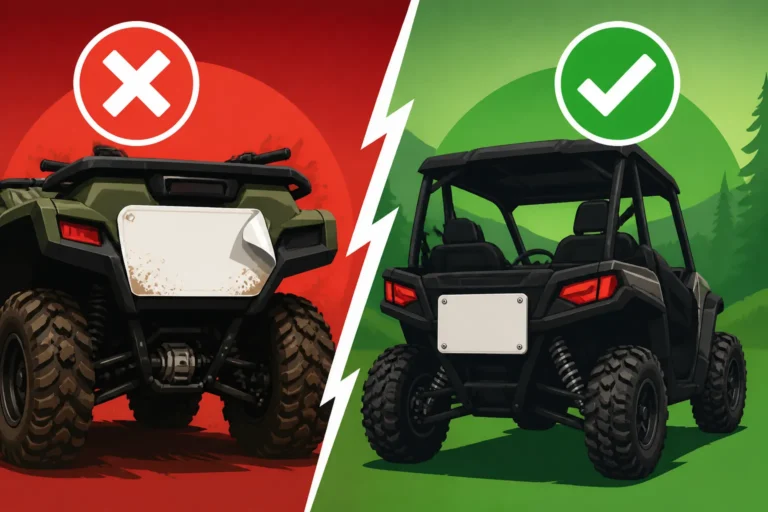
In Arkansas, ATVs and UTVs used off private land for recreational purposes, or even just crossing a public road, typically need to be registered. This involves a one-time process through the Department of Finance and Administration (DFA) that results in a unique registration decal. This decal, usually affixed to the left front of your machine, is your official proof that your ATV or UTV is on the state's books.
But it's not just the decal. Registration also means you've correctly filed the necessary paperwork, established proof of ownership, and paid any applicable fees, including sales tax. If any part of this chain is broken—say, you have the decal but the underlying paperwork never actually went through, or you bought a machine from a private seller and never transferred the registration into your name—then your machine could technically be considered unregistered. For more on the initial steps, check out [How to Register an ATV in Arkansas].
Common Pitfalls Leading to Unregistered Status
Life happens, and sometimes things slip through the cracks. It's easy to assume everything is in order, only to find out later that it's not. Here are a few common scenarios that can lead to your machine being classified as unregistered:
- Expired or Missing Decal (Though Arkansas is One-Time): While Arkansas ATV registration is a one-time deal with no annual renewal, a missing or unreadable decal is still a red flag. If your decal falls off, fades, or gets damaged, it's effectively "missing" in the eyes of law enforcement. You need to apply for a replacement decal promptly. Remember, [Arkansas ATV Registration Has No Annual Renewal], but that doesn't mean your decal is bulletproof.
- Improper Proof of Ownership: When you register, you need solid proof you own the machine. This could be a manufacturer's statement of origin (MSO) for a new machine, or a bill of sale and previous registration for a used one. If your proof of ownership is incomplete, fraudulent, or missing entirely—perhaps you bought it with a handwritten note that doesn't meet state standards—then your registration might not be valid, or you might not be able to register it at all. A comprehensive [Arkansas ATV Bill of Sale Requirements] can help.
- Buying from a Private Party Without Transferring: This is a big one. You buy a sweet used quad, the seller says "it's already registered!" and you take their word for it. But if you don't actually transfer that registration into your name, you're the one on the hook. The registration follows the owner, not just the machine.
- Riding on Public Land or Crossing Roads Without Registration: Even if you primarily use your ATV on private land, if you venture onto public trails or need to cross a county or state road, Arkansas law often requires registration. Many folks assume their "backyard rider" is exempt, only to learn otherwise when they get a citation. [Do You Need to Register an ATV in Arkansas?] explains these scenarios in detail.
It's truly a maze sometimes, and the burden is always on the owner to ensure their machine is properly registered and documented. Don't let a simple misunderstanding turn into a costly mistake.
The Immediate Consequences of Riding Unregistered
Okay, so you've been stopped. Maybe you're on a trail in the Ozark National Forest, or you just crossed a county road to get to another section of your hunting lease, and a deputy pulls you over. What happens next? The immediate consequences can range from a stern warning to a much more severe and disruptive experience.
The Initial Encounter: What a Deputy Checks For
When a law enforcement officer stops you on an ATV or UTV, one of the first things they're going to look for is that registration decal. They'll also typically ask for your driver's license (if you're on a public road or certain designated areas) and possibly your proof of ownership or registration paperwork, which you should carry with you. They might ask [What a Deputy Can Ask to See] during a stop.
If they don't see a decal, or if the decal appears altered or is for a different machine, that's when the questions really start. They'll likely run the VIN (Vehicle Identification Number) to see if it's registered in the state or if it's been reported stolen. This is a crucial step for deputies, as it helps identify not just unregistered machines, but also potentially stolen property.
Warnings, Citations, and Fines
Let's start with the "best case" scenario: a warning. Sometimes, if it's a first offense, the officer might simply issue a verbal warning and instruct you to get your machine registered immediately. This is often more likely if you can show you're actively in the process of registering, or if there's a minor, easily rectifiable issue. However, don't count on it; warnings are at the discretion of the officer.
More commonly, you'll receive a citation. This is essentially a ticket, much like a traffic ticket, for operating an unregistered vehicle. The fine for riding an unregistered ATV in Arkansas can vary, but generally, it's considered a misdemeanor offense. Misdemeanor fines can be significant, often ranging into the hundreds of dollars, plus court costs. These aren't just minor parking tickets; they can hit your wallet hard.
For example, a typical fine might be set at a base amount, and then various court fees, administrative charges, and state surcharges get tacked on. Before you know it, a seemingly simple ticket can turn into a substantial payment. And remember, paying the fine means you're admitting guilt, which could have other implications.
Impoundment and Recovery Headaches
Here's where things can get really complicated and expensive: impoundment. In many cases, if an officer determines your ATV or UTV is being operated illegally (e.g., it's unregistered, stolen, or you're riding it in a prohibited area), they have the authority to impound the vehicle. This means your pride and joy is loaded onto a tow truck and taken to an impound lot.
Impoundment is a massive headache. First, you'll need to pay the towing fee, which can be hundreds of dollars depending on the distance and type of tow. Then, your machine starts racking up daily storage fees at the impound lot. These fees can quickly accumulate, sometimes exceeding the value of the machine itself, especially for older or less expensive models.
To get your ATV or UTV back, you'll typically need to provide proof of ownership, and, crucially, proof that it is now legally registered or that you're taking immediate steps to register it. You'll also have to pay all outstanding fines and impoundment fees. This whole process can be incredibly frustrating and time-consuming, often requiring multiple trips to the courthouse, the revenue office, and the impound lot. It’s a situation nobody wants to be in, and it's a stark reminder of why registration matters.
Beyond the Initial Stop: Fines, Court, and Your Wallet
The immediate consequences like citations and impoundment are just the beginning. The ripple effects of riding an unregistered ATV or UTV in Arkansas can extend much further, impacting your finances, your legal standing, and even your peace of mind. Let’s dive into the longer-term implications.
The True Cost of a Citation: Fines and Court Fees
As mentioned, an initial citation for riding unregistered often carries a base fine. However, it’s rarely just that one number. When you receive a citation, you’re usually directed to appear in district court or to pay the fine by a certain date. If you choose to pay, you'll likely be hit with a host of additional court costs, administrative fees, and state-mandated surcharges. These can sometimes double or even triple the original base fine.
For instance, a base fine of $100 could easily become a $300-$400 bill once all the added costs are factored in. This financial hit is purely for the infraction itself, not counting the cost of towing or impoundment if that occurred. It's a significant amount of money that could have been spent on upgrading your gear or enjoying more rides. Understanding [What Arkansas Charges to Register an ATV] pales in comparison to the cost of not registering it.
The Court Process and What to Expect
If you contest the citation or fail to pay it, you'll have to appear in court. This means taking time off work, traveling to the courthouse, and navigating the legal system. In court, you'll face a judge, explain your situation, and potentially argue why you believe the citation was unwarranted.
While you don't necessarily need a lawyer for a misdemeanor like this, having legal representation can certainly help, especially if the situation is complex or if you're facing multiple charges. Of course, adding a lawyer's fees to the mix only increases the overall cost. The judge will ultimately decide your guilt or innocence and the appropriate penalty, which could include the fine, court costs, and potentially other requirements.
The Long-Term Financial Impact and Potential for Repeat Offenses
Beyond the immediate fees, there can be longer-term financial implications. While typically not as severe as moving violations for automobiles, some jurisdictions might keep a record of such offenses. This could potentially affect future legal proceedings or even certain insurance rates, though ATV-specific insurance is generally separate.
Furthermore, if you get caught repeatedly riding an unregistered machine, the penalties can escalate. Judges are less lenient with repeat offenders. What might have been a warning or a smaller fine the first time could become a larger fine, mandatory court appearances, or even community service if you're cited again. The state wants to see compliance, and continued disregard for registration laws will likely be met with increasingly stern measures. It's truly not worth the ongoing risk.
Protecting Yourself: Documentation and Legal Resources
This is where having your ducks in a row becomes invaluable. If you’re ever stopped, being able to immediately present your valid registration decal, a clear [Arkansas ATV Bill of Sale Requirements], and any other relevant ownership documents can often de-escalate the situation. Many people keep digital copies on their phone, but a physical copy is always a good backup.
If you're buying a used machine and want to ensure your paperwork is watertight, or if you need to draft a formal bill of sale for your records, resources like LawDepot can be incredibly helpful. Using a reliable template from a service like LawDepot ensures your documents meet common legal standards and provide clear proof of ownership. This can save you a world of trouble down the line, both for registration and in the event of a stop.
Even for personal use, having clear, documented proof of purchase and ownership, perhaps generated with the help of a tool like LawDepot, can be a lifesaver. It’s all about being prepared and showing that you’re a responsible owner who respects the law.
Avoiding the Hassle: Easy Steps to Stay Registered
Nobody wants to face fines, impoundment, or court dates. The good news is that avoiding these penalties is usually quite straightforward, requiring just a bit of proactive effort. Let’s look at the simple steps you can take to ensure your ATV or UTV is always legally compliant in Arkansas.
Understanding the Initial Registration Process
The most fundamental step is understanding and completing the initial registration. For most ATVs and UTVs operated off private land, Arkansas requires a one-time registration. This involves going to a local Arkansas Revenue Office, presenting proof of ownership, filling out the necessary forms (like [Arkansas DFA Form 10-381 Explained]), and paying any applicable sales tax and the registration fee.
It's a process that needs to be completed within 30 days of purchasing your machine or becoming an Arkansas resident with an out-of-state machine. Don't procrastinate! That 30-day clock starts ticking the moment you take possession. For a comprehensive guide, refer to [Arkansas ATV Registration Deadline After Purchase].
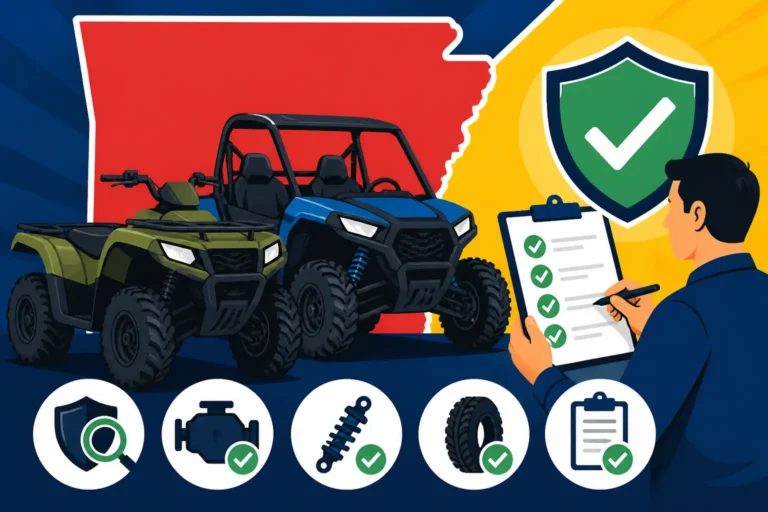
Key Registration Checklist:
| Requirement | Description |
|---|---|
| Proof of Ownership | Manufacturer's Statement of Origin (MSO) for new, or Bill of Sale + previous registration for used. Must clearly show purchase date and price. |
| Arkansas Form 10-381 | The official Application for Certificate of Title and Registration for an All-Terrain Vehicle or Off-Highway Vehicle. Fill this out completely. |
| Proof of Sales Tax | Receipt from a dealer, or payment at the revenue office if bought privately. This includes both state and [Arkansas Local Sales Tax on a Machine]. |
| Valid ID | Your driver's license or state ID. |
| Payment for Fees | The one-time registration fee. |
If you're buying from a private seller, ensure you get a properly filled-out bill of sale. If there's no previous registration, the process can be more complex, sometimes requiring a VIN verification or a bonded title, but generally, a solid bill of sale is your foundation. Many people use online templates, perhaps from a reputable source like LawDepot, to ensure their bill of sale is legally sound and includes all the necessary details.
Keeping Your Decal and Documents in Order
Once you have your registration decal, it’s vital to ensure it's properly displayed on the [Arkansas ATV Decal on the Left Front] of your machine. This isn't just a suggestion; it's a legal requirement. If your decal gets damaged, fades, or falls off, you need to apply for a replacement. While the registration itself doesn't expire, the physical decal can, through wear and tear. Don't wait until you're stopped to realize it's gone.
Equally important is carrying proof of your registration and ownership with you when you ride. While you don't need a physical title in Arkansas for an ATV (as [Does Arkansas Issue a Title for an ATV?] confirms they don't typically issue them), you do need something to prove the machine belongs to you and is registered. A copy of your completed Form 10-381 and your bill of sale, perhaps stored securely on your phone or in a waterproof pouch on your machine, is excellent practice.
Staying Informed About Local Rules
Arkansas law allows cities and counties to create their own ordinances regarding ATV and UTV use, especially on public roads. While the state generally restricts road riding, some towns have opted to allow UTVs (and sometimes ATVs) on certain streets, often with additional permits, equipment requirements, and fees. For instance, [Arkansas Towns Can Open Their Streets to UTVs].
If you plan to ride in different areas, make it a habit to check the local regulations. What's perfectly legal in one town might lead to a citation in another. A quick call to the city clerk's office or checking the city's official website can save you a lot of grief. Don't assume that because your buddy rides his UTV on the streets in his town, you can do the same in yours. The laws vary widely, and ignorance is rarely a successful defense in court.
Proactive Measures and Resources
If you’ve purchased a machine that was never registered, or you've lost crucial paperwork, don't despair. The DFA has processes in place to help. It might require more legwork, like getting a bonded title or a VIN verification from law enforcement, but it’s always better to go through the proper channels than risk riding unregistered.
Remember, the goal is to enjoy the incredible trails and outdoor spaces Arkansas has to offer without the constant worry of legal trouble. A little bit of attention to the details of registration and local ordinances goes a long way in ensuring your riding adventures are hassle-free and fun. Keep your documents handy, make sure that decal is visible, and always be aware of where you’re riding.
Disclaimer
This article is for general informational purposes only and does not constitute professional advice. Laws, prices and regulations vary by location and change over time. Consult a qualified professional for guidance on your specific situation.