Arkansas Rules for a Visiting Louisiana Rider
Hey there, fellow off-road enthusiast! Planning a trip from the Bayou State to the Natural State with your ATV or UTV can feel like navigating a swamp in the dark if you're not sure about the local rules. You've heard whispers that Arkansas is an amazing place to ride, with incredible trails and scenic beauty, but the thought of getting pulled over or running into a snag because you didn't know the specific regulations can definitely put a damper on your excitement. This guide is all about clearing up that confusion, specifically for you, the visiting Louisiana rider, so you can focus on making memories on Arkansas's fantastic terrain, not stressing over legalities.
Understanding Arkansas's ATV & UTV Registration for Nonresidents
When you're rolling into a new state with your off-road machine, one of the first questions on your mind is almost always, "Do I need to register this here?" It's a valid concern, especially since registration laws can vary wildly from one state to the next. What might be perfectly legal in Louisiana could land you in a bit of a pickle in Arkansas if you're not careful.
Do You Need to Register Your ATV/UTV in Arkansas if You're from Louisiana?
Here’s the deal: Arkansas has a unique, one-time ATV and UTV registration system. Unlike many states where you renew a tag every year, Arkansas issues a decal that, once purchased, is valid for the lifetime of that machine, with no annual renewal required. This is a huge benefit for residents, but it also means there isn't a direct "reciprocity" rule for out-of-state registrations in the same way you might find for passenger vehicles.
For recreational trail riding on public lands, such as in the National Forests, an Arkansas decal is generally required. This isn't about collecting extra fees from visitors; it's about helping fund trail maintenance and management. So, if your Louisiana-registered ATV or UTV is headed for places like Wolf Pen Gap or the Mill Creek OHV Trail, you'll likely need to acquire an Arkansas OHV decal, even if your machine is legally registered back home. This decal is specific to the machine and signifies that it has met Arkansas's basic registration requirements for off-highway use. You can read more about this in [Arkansas ATV Registration: One Time, Never Renewed] and [Arkansas ATV Decal Rules and Where It Goes]. It's a distinct system that often catches visitors by surprise, so it’s good to be aware of it upfront.
What Paperwork Should a Louisiana Rider Bring to Arkansas?
Even if you're just visiting, having your ducks in a row with paperwork is always a smart move. Think of it as your portable "peace of mind" kit. While you might not be registering your ATV or UTV permanently in Arkansas, you'll still want to carry documents that prove ownership and identify yourself.
Here's a breakdown of what a Louisiana rider should absolutely have on hand when visiting Arkansas:
- Proof of Ownership: This is paramount. Whether it's your official title from Louisiana, a manufacturer's statement of origin (MSO) if the machine is new, or a detailed bill of sale if you bought it from a private party, you need something that clearly shows you own the machine. If you're stopped on a trail or involved in an incident, this is the first thing law enforcement will want to see. Don't assume your word is enough. A proper bill of sale will include the buyer's and seller's names and addresses, the purchase date, the purchase price, and a full description of the ATV or UTV, including the Vehicle Identification Number (VIN). Having this readily accessible in a waterproof bag is a must. For more on what Arkansas considers acceptable proof, check out [Arkansas Proof of Ownership for Registration].
- Louisiana Registration (if applicable): If your ATV or UTV is registered in Louisiana (perhaps for certain road-legal uses there), bring that documentation. While Arkansas's system is different, having your home state's registration demonstrates good faith and compliance with your local laws. It's an extra layer of proof that your machine is legitimate.
- Personal Identification: Your driver's license or state-issued ID is essential. This is standard procedure for any interaction with law enforcement, and it verifies who you are.
- Proof of Insurance: While Arkansas doesn't mandate insurance for off-road vehicle registration or for riding on public trails (unless you're seeking a specific city's street-legal UTV permit, which we'll get into), carrying proof of liability insurance is always a good idea. Accidents happen, and having coverage can save you a world of trouble, regardless of where you're riding. Some private parks might even require it.
Having these documents with you helps avoid misunderstandings and can expedite any necessary interactions, letting you get back to enjoying your ride faster.
Arkansas's Road Riding Laws for ATVs & UTVs: What Visitors Need to Know
This is where things can get particularly tricky and where many out-of-state riders, especially from states with more lenient road-use laws, can inadvertently find themselves in violation. Arkansas has a very specific stance on off-highway vehicles and public roads, and it's crucial for visitors to understand this before they even think about putting a tire on the pavement.
The General Ban on Public Roads and Its Exceptions
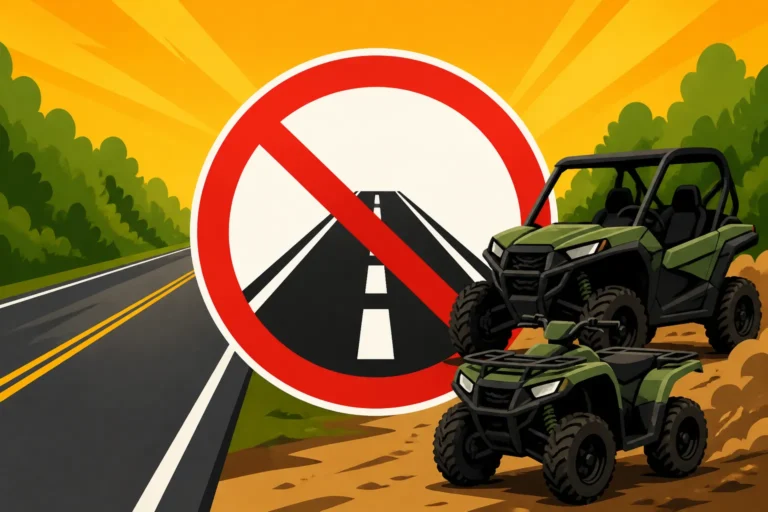
First and foremost, Arkansas law generally makes it unlawful to operate an ATV or UTV on a public street, road, or highway. This is the default rule. It means you can't just drive your side-by-side down the highway to the gas station or cruise your quad through town to get to a trail. This might be a stark contrast to some areas of Louisiana where certain roads might be permissible for ATVs or UTVs. Don't assume the rules are the same here. The state prioritizes safety and the distinct operational differences between off-road machines and traditional street-legal vehicles. You can dive deeper into the specifics by reading [Arkansas ATV Road Rules: What 27-21-106 Says].
However, there are six specific exceptions carved out in state law where an off-highway vehicle can be legally operated on a public road:
- Direct Crossing: You can cross a street, road, or highway at approximately a ninety-degree angle, but you must first come to a complete stop and yield to all traffic. This means you can't ride along the road, only across it to get from one piece of private property or trail to another.
- Farming Operations: If you're using your ATV or UTV as part of a legitimate farming operation, you might be allowed to operate it on public roads adjacent to or connecting different parts of the farm. This is strictly tied to agricultural work, not recreational use.
- Hunting Operations: Similar to farming, if you're using your machine as part of a legitimate hunting operation, you may have limited road access. Again, this is for specific purposes, like accessing hunting lands, not joyriding.
- Disability Exception: Individuals with a serious walking disability can obtain a special permit that allows for limited use on public roads.
- Law Enforcement/Emergency Services/Utility Crews: These professionals are exempt when performing their official duties.
- State Parks Employees: Employees of Arkansas State Parks may use ATVs/UTVs on park roads as part of their job.
For a comprehensive look at these allowances, refer to [Arkansas's Six Statutory Road Exceptions]. These exceptions are quite narrow, and recreational riders from Louisiana should be particularly mindful that "going to get lunch" or "riding to the trailhead" are not included. Your best bet is to trailer your machine to where you plan to ride.
Local Ordinances for UTVs: A City-by-City Approach
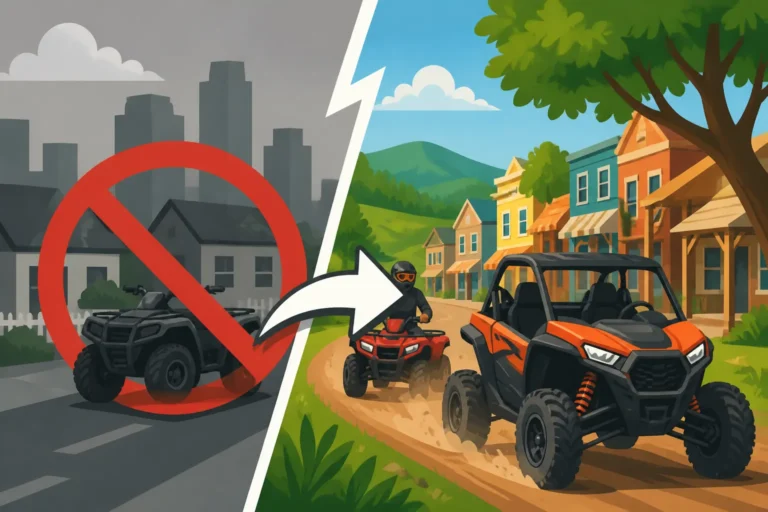
While the state law is pretty clear on ATVs and public roads, there's a specific wrinkle when it comes to UTVs (side-by-sides) and local city streets. Arkansas state law allows cities and towns to pass their own ordinances permitting UTVs on certain municipal streets. This is a "local option" rule that became effective on August 5, 2025. This means that whether you can legally ride your UTV on city streets will depend entirely on the specific town you're in. For instance, the town of Bono in Craighead County was one of the first to implement such an ordinance, setting an example for other municipalities.
Here’s what you need to understand about these local UTV ordinances:
- UTVs Only, Not ATVs: These ordinances typically apply only to UTVs, which generally have features more akin to cars, like steering wheels, bucket seats, and often, seat belts. Traditional ATVs (quads) are almost always excluded from these street-legal provisions.
- Specific Road Restrictions: If a city passes an ordinance, it will specify which streets are open to UTVs. Often, these are streets with speed limits under 55 mph. Four-lane highways or state highways running through town are usually excluded.
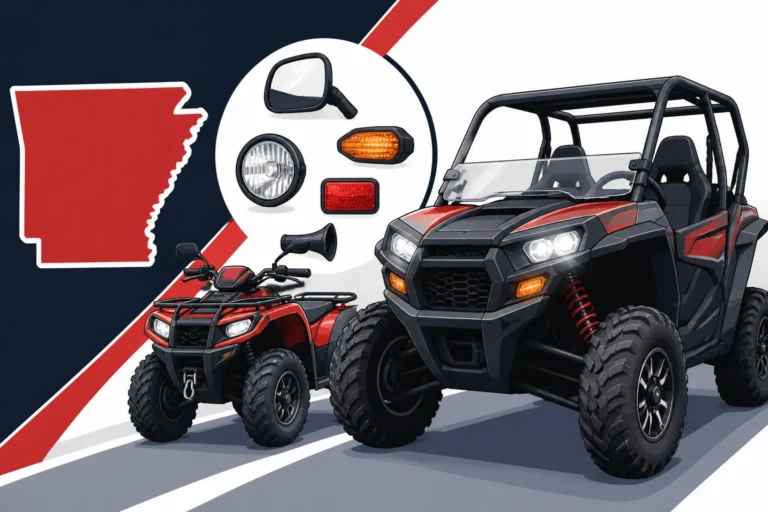
- Equipment Requirements: For a UTV to be street-legal under a local ordinance, it must meet certain equipment standards. This typically includes headlights, taillights, brake lights, turn signals, a horn, a rearview mirror, and sometimes a windshield. Many riders install aftermarket accessories from reputable brands like SuperATV to ensure their machines meet these requirements.
- Permits and Fees: Cities that allow street-legal UTVs will often require an annual permit and charge a fee. You’ll need to display this permit, usually as a sticker, on your UTV.
- Insurance and Driver's License: You'll likely need to show proof of liability insurance and possess a valid driver's license (usually 16 years or older) to operate a street-legal UTV in these towns.
The key takeaway here for Louisiana riders is: do your homework for the specific town you plan to visit. What's allowed in one Arkansas town might be strictly forbidden in another. Do not assume. You can get a general overview from [Arkansas UTV Street Legal Rules by Town] and [How Arkansas Cities Got the Choice on UTVs], but always verify with the city clerk or local police department before riding on municipal roads. Otherwise, stick to designated trails and private property.
Navigating Arkansas ATV & UTV Trails: Permits and Etiquette for Visitors
Now for the fun part: hitting the trails! Arkansas is renowned for its diverse and beautiful off-road riding opportunities, particularly in the Ouachita and Ozark-St. Francis National Forests. But even here, there are rules designed to ensure safety and preserve these natural treasures for everyone.
Ouachita and Ozark-St. Francis National Forest Permits
If you're planning to ride the most popular OHV trail systems in Arkansas, like the legendary Wolf Pen Gap near Mena or the expansive Mill Creek OHV Trail near Ozark, you'll be riding on land managed by the U.S. Forest Service. This means you’ll need a specific permit. This is a common requirement in many national forests across the country, regardless of what state your machine is registered in.
Here’s what Louisiana riders need to know about these permits:
- Two Forests, Two Permits: Arkansas is home to two primary National Forests: the Ouachita National Forest (where Wolf Pen Gap is located) and the Ozark-St. Francis National Forest (home to Mill Creek). Critically, one permit does not cover both forests. If you plan to ride in the Ouachita, you need an Ouachita permit. If you plan to ride in the Ozark-St. Francis, you need an Ozark-St. Francis permit. Many visitors are unaware of this distinction and purchase the wrong pass or only one, leading to potential citations. [Arkansas OHV Permits: Two Forests, Two Prices] provides more detail on this.
- Purchasing Permits: You can often purchase these permits online via Recreation.gov before your trip. This is highly recommended, especially during peak season or if you're arriving after hours when local offices might be closed. You print the permit and display it on your machine. Some trailheads also have self-service fee stations where you can purchase a day pass, but these often require exact cash or a check, and sometimes the machines can be finicky. For more on where to buy, see [Arkansas Permits Bought on Recreation.gov].
- Day vs. Annual Passes: Both forests offer day passes and annual passes. If you're visiting for just a weekend, a day pass might suffice. However, if you're planning multiple trips throughout the year or a longer stay, an annual pass can be more cost-effective. Check the current pricing structure, as fees have been undergoing a phase-in period, detailed in [Wolf Pen Gap Permit Prices and the Fee Phase-In].
- Why the Permits? The fees collected from these permits go directly back into maintaining the trail systems, improving signage, managing erosion, and ensuring a safe and enjoyable experience for all riders. It's an investment in the trails you love to ride.
Always carry your permit with you, preferably displayed clearly on your machine as instructed (often on the front fender or windshield for UTVs). Forest rangers frequently patrol these areas and will check for valid permits.
Safety Gear, Age Rules, and Other Considerations for Out-of-State Riders
Beyond permits, a few other common-sense and regulatory points are important for visitors:
- Helmets: While Arkansas does not have a mandatory helmet law for adult ATV or UTV riders, wearing a helmet is always, always a smart choice. Accidents can happen to anyone, regardless of experience, and a helmet is your best defense against head injuries. Many private parks do require helmets for all riders, so even if the state doesn't mandate it on public trails, it's a good habit. For more on the state's stance, check out [Arkansas ATV Helmet Requirements]. For children, the rules are stricter.
- Age and Supervision: Arkansas law states that children under 12 years old must be under the direct supervision of an adult (18 or older) when operating an ATV. "Direct supervision" means the adult is within sight and can immediately respond. Additionally, machines often have manufacturer-recommended age limits based on engine size, which should always be adhered to. Never put a child on a machine too powerful or too large for them. Read [Arkansas Supervision Rules Under Twelve] for more insights.
- Spark Arrestors: This is a crucial, often overlooked requirement. All ATVs and UTVs operating on National Forest land (and many other public lands) must be equipped with a U.S. Forest Service-approved spark arrestor. This device prevents hot carbon particles from escaping the exhaust and igniting dry vegetation, which is a major fire hazard. Ensure your machine has one and that it's in good working order before you hit the trails. Aftermarket exhaust systems often come with them, but always double-check.
- Sound Limits: Respecting sound limits is also important. While not always heavily enforced in the backcountry, excessively loud machines can disturb wildlife and other trail users. Modifications like performance exhaust systems from companies like SuperATV are popular for their benefits, but always be mindful of local sound ordinances, especially near residential areas or campgrounds.
- Tread Lightly: Practice responsible riding. Stay on marked trails, don't create new ones, avoid riding through water bodies excessively, and pack out everything you pack in. This ensures the trails remain open and enjoyable for future generations.
Common Misconceptions and Actionable Advice for Louisiana Riders
Let's wrap things up with some direct, actionable advice to make your Arkansas ATV/UTV adventure smooth and trouble-free. The biggest hurdle for many out-of-state riders is simply assuming Arkansas operates like home.
Don't Assume Arkansas Laws Mirror Louisiana's
This cannot be stressed enough. Louisiana has its own unique set of regulations regarding ATVs and UTVs, and what's permissible there, whether it's registration, road access, or equipment, might be entirely different in Arkansas.
- Registration Differences: Remember the one-time decal system in Arkansas versus any annual renewals you might have in Louisiana. Don't assume your Louisiana registration is all you need for Arkansas trails.
- Road Access: The state-wide ban on public roads for ATVs, with very specific exceptions, is a major difference. While Louisiana might have parish roads or specific allowances for certain machines, Arkansas is much more restrictive unless a specific city has passed a UTV ordinance.
- Helmet Laws: Even if you're not accustomed to wearing a helmet for certain rides in Louisiana, seriously consider it in Arkansas. The terrain can be challenging, and safety should always be your top priority.
Always do your research for the specific county, city, or National Forest you plan to visit. A quick call to the local sheriff's office for county roads, the city clerk for municipal streets, or the U.S. Forest Service ranger district for trails can save you a lot of headache.
Preparing Your Machine for Arkansas Trails
Arkansas trails, especially in the mountains, can be rugged and challenging. Preparing your machine properly is not just about compliance, but also about safety and enjoyment.
- Maintenance Check: Before you load up, perform a thorough pre-ride inspection. Check tires (and tire pressure), brakes, fluid levels, lights, and ensure everything is in good working order. A breakdown far from civilization is no fun.
- Spark Arrestor Verification: As mentioned, this is critical for forest riding. Ensure your exhaust has a USFS-approved spark arrestor. If you have an aftermarket exhaust, verify it includes this.
- Equip for the Terrain: Many Arkansas trails feature rocky sections, steep climbs, and creek crossings. Consider equipping your machine with appropriate tires (like robust mud or all-terrain tires), skid plates for undercarriage protection, and a winch. Companies like SuperATV offer a wide range of durable parts and accessories designed to tackle tough conditions, from heavy-duty axles to full skid plate kits, which can really give you peace of mind on the trail.
- Pack Smart: Carry essential tools, a tire repair kit, a small air compressor, first-aid kit, plenty of water, snacks, and a way to communicate (cell service can be spotty, so a satellite messenger or paper map might be useful).
Essential Contacts and Resources
Don't be afraid to ask for information! The people on the ground often know the most up-to-date local rules and trail conditions.
- U.S. Forest Service Ranger Districts: If you're riding in a National Forest, contact the specific ranger district responsible for that area (e.g., Mena-Oden Ranger District for Wolf Pen Gap). They can provide current trail conditions, closure information, and permit details.
- City Clerks/Local Police: For questions about UTV street-legal ordinances in a particular town, the city clerk's office or local police department are your go-to sources.
- Private Park Operators: If you're visiting a private off-road park, check their website or call ahead for their specific rules on registration, helmets, age limits, and any other requirements. They often have their own waivers and regulations.
- Online Resources: Websites like Recreation.gov are invaluable for purchasing forest permits and checking trail status. Look for local riding groups or forums for current conditions and tips from experienced riders.
By taking these steps, you'll ensure your Arkansas ATV or UTV adventure is spent enjoying the beautiful landscapes and thrilling trails, rather than worrying about unforeseen legal issues.
Arkansas Rules for Visiting Louisiana Riders: Quick Reference
| Feature | Arkansas Rule (for visitors) | Key Considerations for Louisiana Riders |
|---|---|---|
| Registration | One-time decal required for public lands (e.g., National Forests). | Your Louisiana registration does not substitute an Arkansas decal for public trail riding. |
| Road Riding (ATV) | Generally unlawful on public streets/roads. | Very limited exceptions (direct crossing, farming, hunting). Do NOT assume similar rules to Louisiana road access. |
| Road Riding (UTV) | Generally unlawful, unless a specific city has a local ordinance. | Check with city clerks for specific towns. These ordinances have strict equipment (e.g., SuperATV lights) & permit requirements. |
| National Forest Permits | Required for most popular public trails (Ouachita, Ozark-St. Francis). | Two separate permits: one for Ouachita NF, one for Ozark-St. Francis NF. Buy online via Recreation.gov or at kiosks. |
| Helmets | Not mandated for adults statewide, but highly recommended. | Many private parks require them. Always wear one, especially for challenging terrain. Children under 12 often required. |
| Spark Arrestor | REQUIRED for National Forest riding. | Ensure your machine has a USFS-approved spark arrestor to prevent wildfires. |
| Age Rules | Under 12 must be under direct adult supervision. | Adhere to manufacturer age/size recommendations. |
| Proof of Ownership | Always carry title, MSO, or bill of sale. | Essential for identification and in case of incidents, even if not registering. |
Disclaimer
This article is for general informational purposes only and does not constitute professional advice. Laws, prices and regulations vary by location and change over time. Consult a qualified professional for guidance on your specific situation.