Arkansas Rules With a Landowner’s Permission
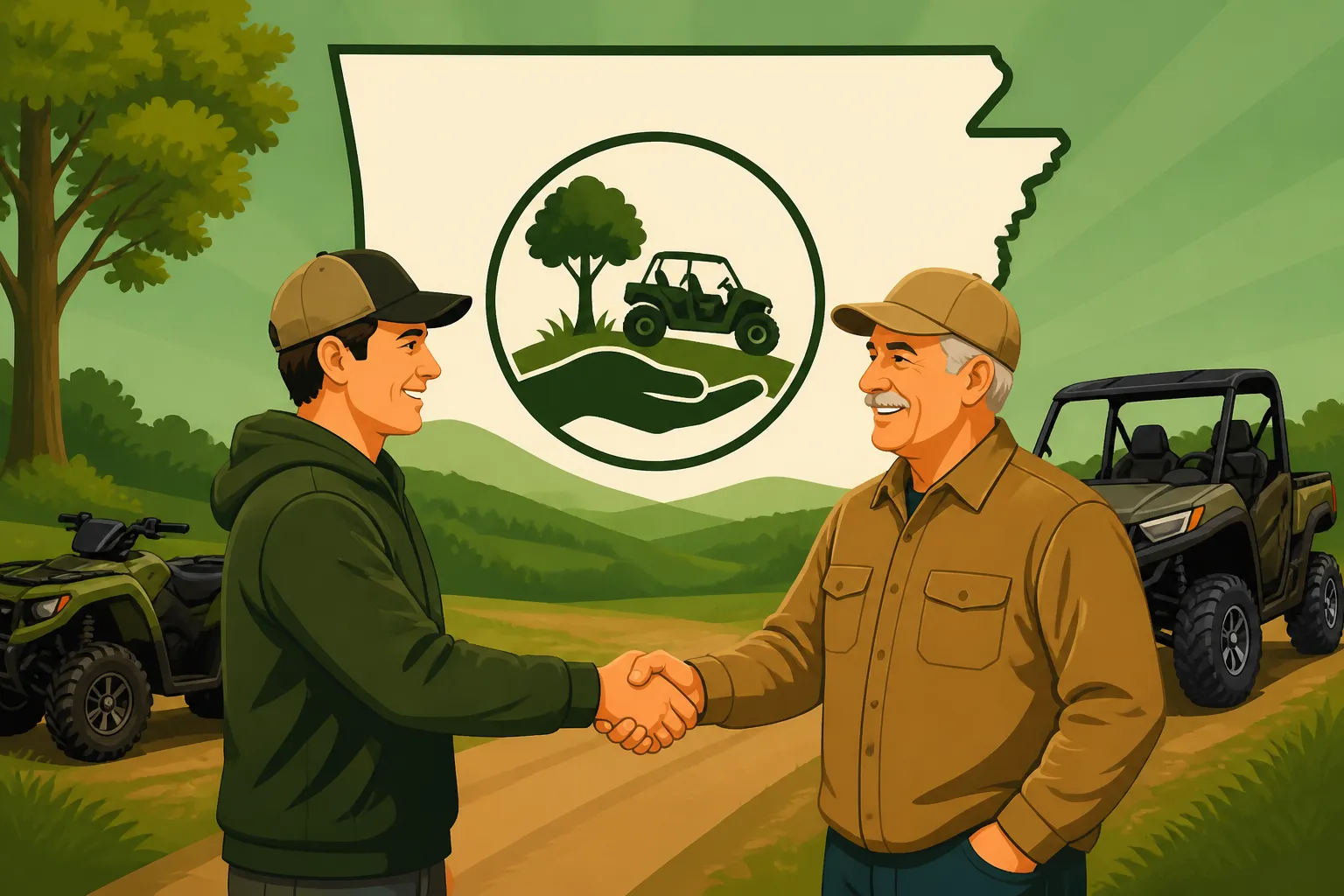
You’ve got your ATV or UTV, and you've secured what feels like the holy grail of riding opportunities: permission to tear up some private land. Maybe it's a friend's sprawling acreage, a family member's hunting lease, or even a local farmer who's given you the green light to use their back fields. It feels great, right? Like you've bypassed all those tricky public road laws and complicated trail permits. But hold on a minute. While having a landowner's blessing is a fantastic start, it doesn't always mean a complete free-for-all. Even on private property, there are crucial Arkansas rules and best practices you need to understand to ensure you're riding safely, legally, and respectfully. This guide will walk you through exactly what "permission" entails, what state laws still apply, and how to maintain that valuable relationship with the landowner.
Understanding the Basics of Private Land Riding in Arkansas
When you're out on your ATV or UTV, whether it's a trusty quad or a rugged side-by-side from brands like SuperATV, the dream is often wide-open spaces where you can really let loose. Private land often offers that freedom. However, the legal and practical landscape shifts dramatically depending on whether that land is yours or someone else's. Getting this distinction right is the first step to avoiding headaches, fines, or even losing your riding privileges.
Why Landowner Permission is Key and Not Just a Suggestion
Let's be blunt: riding on someone else's property without their express permission is trespassing. It's not just a polite request; it's a fundamental legal principle. In Arkansas, trespassing can lead to fines, your machine being impounded, and in some cases, even more serious legal trouble. Imagine pulling up to a remote property, seeing an open gate, and thinking, "Looks like fun!" only to have a deputy show up an hour later because the owner's game cameras caught you. That friendly ride can quickly turn into a costly nightmare.
The intent of the law is clear: property owners have rights. They have a right to control who is on their land, what they're doing, and when they're doing it. By riding without permission, you're not only breaking the law but also showing a profound disrespect for someone else's investment and privacy. This isn't about being a stickler; it's about protecting yourself and the landowner from potential legal issues, property damage, or even personal injury claims. Always assume that if you don't have permission, you shouldn't be there. It’s better to ask and be denied than to trespass and face the consequences.
The Difference Between Your Land and Someone Else's
You might think, "Well, if I own the land, I can do whatever I want with my ATV!" For the most part, you're right. If the property deed has your name on it, you have a lot more leeway. You're typically free from trespassing concerns, and you don't need to ask yourself for permission. However, even on your own property, there can be subtle nuances to consider. For instance, extremely loud exhaust systems might still fall under local noise ordinances if you have close neighbors, especially if you're riding late at night or early in the morning. Also, if your property lines are unclear, you might inadvertently drift onto a neighbor's land, leading to the very same trespassing issues you're trying to avoid.
When you're riding on someone else's property, even if it's a close family member or a trusted friend, the rules become much more stringent. The permission you receive is a privilege, not an inherent right. This means you are essentially a guest, and you should treat their property with the utmost care and respect. This isn't just about avoiding legal trouble, but about maintaining that good relationship. If you're granted access to a deer lease owned by a friend, for example, remember that their investment and reputation are on the line. Abusing that privilege could mean not only losing your access but also jeopardizing your friend's relationship with the landowner. Always clarify the boundaries, expectations, and any specific requests the landowner might have. Riding on [Riding on a Parent's Leased Land] often comes with its own set of unspoken rules and family dynamics to navigate, so clear communication is always best.
What "Permission" Really Means: Specifics and Best Practices
Securing permission is more than just a nod and a wink. To genuinely protect yourself and the landowner, you need to understand the depth and breadth of that permission. Ambiguity can lead to misunderstandings, damaged relationships, and legal problems. Being proactive and thorough in clarifying the terms of your access is paramount.
Getting Explicit Permission: Written vs. Verbal
In the world of off-road riding, securing explicit permission is non-negotiable. While a verbal "sure, go ahead" might feel sufficient in the moment, it can lead to massive headaches down the road. Imagine you're enjoying a fantastic day on a friend's property, only for a new neighbor or a family member of the landowner to confront you, claiming you're trespassing. Without clear, documented permission, it becomes your word against theirs. This is why [Written Permission From an Arkansas Landowner] is always the gold standard.
A written permission form doesn't need to be a formal legal document drafted by an attorney, but it should clearly outline the terms of your access. Key details to include are:
- Who is allowed to ride? List specific names.
- What machines are allowed? Describe the type (ATV, UTV, brand, maybe even VINs).
- When can they ride? Specific dates, times of day, or a duration (e.g., "during deer season," "for the month of October").
- Where can they ride? Specify areas (e.g., "south forty," "designated trails only," "avoid crop fields").
- Any specific restrictions? (e.g., "no night riding," "stay off paved driveways," "speed limit of 15 mph").
- Landowner contact information and signature.
- Rider contact information and signature.
This type of clarity protects both parties. For instance, if you're planning a group ride with several friends on a borrowed property, a casual verbal agreement with the landowner might lead to them forgetting they gave permission for that many machines or those specific people. A written agreement ensures everyone is on the same page, provides proof if questioned by authorities, and minimizes misunderstandings. It's simply the safest and most respectful way to handle access to someone else's land.
Boundaries, Posted Land, and "Purple Paint" Law
Even with permission, understanding and respecting property boundaries is critical. A landowner might grant you access to a portion of their land, but not all of it. Knowing where you are and where you can't go is crucial. In Arkansas, landowners have several ways to mark their property lines and delineate areas where trespass is prohibited.
One common method is physical posting with "No Trespassing" signs. These signs clearly communicate the owner's intent. However, Arkansas also has a specific law concerning "purple paint" that acts as a legal "No Trespassing" marker. This law states that vertical purple paint marks on trees or posts, at specific heights and intervals, serve the same legal purpose as a written "No Trespassing" sign. This means if you see purple paint, you should absolutely not cross that boundary unless your specific, written permission explicitly states otherwise. Ignoring these markers, even if you have permission for an adjacent area, can still lead to legal trouble.
Before you even unload your machine, take the time to walk or drive the boundaries with the landowner. Ask them to point out where you can and cannot ride. If there are gates, ask if they should be closed and locked behind you. Are there crops, sensitive wildlife areas, or other features you should avoid? A good approach is to ask for a map, even a hand-drawn one, showing the allowed riding areas. This due diligence ensures you don't inadvertently stray into off-limits zones, potentially damaging crops, disturbing livestock, or infringing on the privacy of another part of the property. Knowing about [Posted Land and Purple Paint] can save you a lot of grief.
Respecting the Landowner's Rules Beyond the Law
Beyond legal boundaries, there are often unwritten rules and courtesies that are just as vital to maintaining your privilege to ride. Think of it as being a good guest. Landowners are entrusting you with their property, and demonstrating respect for that trust goes a long way.
Consider noise, for example. While your ATV or UTV might be perfectly legal regarding decibel levels, riding a loud machine repeatedly past a farmhouse during naptime or late into the evening can quickly annoy the landowner and their neighbors. Ask about preferred riding hours. Similarly, dust can be a major issue, especially in dry conditions. If you're constantly churning up dust clouds near homes or sensitive areas, it can be a nuisance. You might even consider modifying your machine with accessories from SuperATV, like fender flares, to help contain some of the flung debris, or simply adjust your speed in dusty areas.
Excessive rutting, especially in wet conditions, can cause long-term damage to fields and trails, making them unusable for farming or other activities. Stay on designated paths, or if there are none, ride responsibly to minimize impact. Don't litter, and pack out everything you pack in. Even small things like leaving gates open, driving through puddles unnecessarily, or not stopping to chat if you see the landowner can chip away at their goodwill.
The golden rule here is to leave the property in the same or better condition than you found it. If you demonstrate that you are a responsible and respectful rider, that landowner will be much more likely to grant you access again in the future. The relationship is a two-way street, and your actions reflect not only on you but on the entire off-roading community.
Arkansas ATV Laws That Still Apply on Private Land (Even With Permission)
Many riders mistakenly believe that once they're on private property with permission, all state laws regarding ATVs and UTVs magically disappear. This is a dangerous misconception. While some public-road-specific regulations won't apply, several key Arkansas laws, particularly those concerning safety and public welfare, absolutely still hold sway. Knowing these can prevent serious legal and personal consequences.
Age and Supervision Rules for Young Riders
This is a critical point that many parents overlook. Even if a child is riding an ATV or UTV on private land owned by a family member with full permission, Arkansas state laws regarding rider age and supervision still apply. These laws are in place for the safety of young riders, regardless of where they are operating their machine.
In Arkansas, children under 12 years of age typically require direct adult supervision when operating an ATV. This isn't just a suggestion; it's a legal requirement. "Direct supervision" usually means the adult is in a position to monitor the child's actions and intervene immediately if necessary. This often means riding on another ATV nearby or closely observing from a vantage point. Allowing a young child to ride unsupervised, even in a vast, private field, can lead to serious injury or worse. If an accident occurs and the child was unsupervised in violation of state law, the supervising adult (or lack thereof) could face legal repercussions, including charges of negligence.
It's also important to consider the size and power of the machine relative to the child's age and experience. While some youth ATVs are designed for smaller riders, placing a young child on an adult-sized machine, even on private property, significantly increases the risk of an accident. Always adhere to manufacturer guidelines regarding age and weight limits for specific machines. Understanding [Arkansas Rules for Riders Under Twelve] and [Adult Supervision Rules for Arkansas Riders Under 12] is not just about legality; it's about protecting the most vulnerable riders.
Crossing Public Roads and Highways
This is perhaps one of the most common pitfalls for private land riders. You might have permission to ride on two separate parcels of private land, but if those parcels are divided by a public road or highway, your permission to ride on the land does not automatically extend to the road. Arkansas has very specific and generally restrictive laws about operating ATVs and UTVs on public roads.
Generally, operating an ATV or UTV on a public road in Arkansas is unlawful. There are a few statutory exceptions, such as crossing a highway at a ninety-degree angle after coming to a complete stop, or specific exemptions for farming or hunting operations, or if your machine is approved under a local city ordinance in certain towns. However, simply having permission to ride on the private land adjacent to the road is not an exception.
Imagine you're riding on Farmer Joe's back forty, and you want to get to his front forty, which is across a county road. Even if Farmer Joe says, "Just zip across the road," you are technically breaking the law by operating your ATV on that public thoroughfare without meeting one of the strict statutory exceptions. This means you could be stopped by law enforcement, issued a citation, and face fines. Always educate yourself on [Arkansas Direct Crossing at Ninety Degrees] and [Crossing a Highway on an ATV in Arkansas] before attempting to traverse any public road. Reviewing [Arkansas's Six Statutory Road Exceptions] will provide clarity on the extremely limited circumstances under which a road crossing might be permissible.
Other Safety and Equipment Considerations
While Arkansas doesn't have a universal mandatory helmet law for all ATV riders (unlike motorcycles), and many equipment requirements are tied to public road use, it's still prudent to consider certain safety equipment and practices even on private land.
- Helmets: While [Arkansas Has No ATV Helmet Law] for adults, wearing a helmet is always a wise decision. A significant number of ATV-related injuries involve head trauma. On private land, there's no law enforcement to enforce helmet use, but there's also no pavement to break your fall—only trees, rocks, and hard ground. For children, helmets are strongly recommended, and some manufacturers and safety organizations advocate for them as a standard.
- Spark Arrestors: If your riding area borders forests, fields, or has dry vegetation, a spark arrestor on your exhaust is crucial. Wildfires are a serious threat, especially in Arkansas's dry seasons. Many private landowners will appreciate the responsibility of having one, even if they don't explicitly require it. A missing spark arrestor could turn a fun ride into an accidental inferno, leading to catastrophic property damage and potential legal liability. [Arkansas Spark Arrestor Requirements] typically apply more broadly to forest service lands, but the principle of fire prevention is universal.
- Eye Protection: Goggles or safety glasses protect your eyes from dust, branches, insects, and flung debris. An eye injury can severely impair your ability to ride safely.
- Protective Clothing: Long pants, long-sleeved shirts, and sturdy over-the-ankle boots offer protection against scrapes, abrasions, and minor impacts, reducing the severity of injuries from a fall or stray branch.
Remember, just because it's private land doesn't mean it's risk-free. Taking personal responsibility for safety equipment demonstrates respect for yourself, your fellow riders, and the landowner.
Navigating Potential Pitfalls and Ensuring a Smooth Ride
Riding on private land with permission can be one of the most rewarding experiences for an ATV or UTV enthusiast. However, it’s not without its unique challenges and responsibilities. Understanding potential pitfalls and proactively addressing them will ensure your rides are safe, enjoyable, and that you maintain a positive relationship with the landowner.
Landowner Liability and Your Responsibility
One of the primary reasons landowners are often hesitant to grant permission for ATV/UTV riding is concerns about liability. If you or someone in your riding party gets injured on their property, could the landowner be held responsible? Arkansas, like many states, has premises liability laws that outline a landowner's duty of care to visitors. However, there are also protections for landowners who allow recreational use of their property without charge.
Generally, if a landowner allows you to ride on their property for free, their duty of care is usually reduced. They are typically not liable for injuries sustained due to ordinary hazards of the land, unless they intentionally caused harm, acted with gross negligence, or failed to warn of a known, hidden danger. This doesn't mean they're entirely off the hook, but it does shift more responsibility onto the rider.
As a rider, you have a responsibility to ride safely and mitigate your own risks. This means operating your machine within your skill level, not taking unnecessary risks, being aware of your surroundings, and adhering to any rules set by the landowner. If you bring others with you, you also have a responsibility to ensure they understand and follow the rules. An accident on private land can quickly strain relationships and lead to legal headaches for everyone involved, so always err on the side of caution. Reviewing resources like [What a Landowner Can Do About Riders] might give you insight into the landowner's perspective on liability.
Insurance Considerations
It might sound overly cautious to talk about insurance for riding on private land, but it's an absolutely essential component of responsible off-roading. Most riders assume their existing car insurance or homeowner's policy will cover their ATV or UTV, but this is rarely the case, especially for off-road use.
Specialized ATV/UTV insurance policies are designed to cover your machine for damage, theft, and — crucially — liability. Imagine you're riding on a friend's private property, lose control, and collide with their barn, causing significant damage. Without liability coverage, you could be personally responsible for thousands of dollars in repairs. Or, if you hit another rider in your group, their medical bills could become your burden.
Even if the landowner states they're not liable, your own personal liability coverage (if you have an off-road policy) can provide a layer of protection. It shields you from financial ruin if an accident occurs and you're deemed at fault. It's not just about protecting the landowner; it's about protecting yourself and your assets. Before heading out, always check with your insurance provider to understand what, if any, coverage you have for off-road riding on private property. For peace of mind, a dedicated ATV/UTV policy is almost always the best option.
Being a Good Steward of the Land
Finally, and perhaps most importantly, being a good steward of the land is paramount to ensuring continued access and a positive reputation for all riders. This extends beyond legal requirements and delves into the realm of ethical riding.
The core principle is "Leave No Trace." This means:
- Pack it in, pack it out: Any trash, no matter how small, should leave with you. This includes food wrappers, empty drink cans, and especially broken machine parts.
- Minimize impact: Avoid creating excessive ruts, especially in wet areas. Ride around sensitive vegetation rather than through it. Respect natural features and don't intentionally damage trees, fences, or other structures.
- Respect wildlife: Avoid disturbing animals, especially during sensitive breeding or nesting seasons. Give livestock wide berth and close gates to prevent them from straying.
- Fire safety: Be extremely careful with campfires or anything that could start a blaze. Carry a fire extinguisher if you can, and always ensure fires are completely out before leaving.
Think long-term. Every time you ride on private land, you're building a reputation. If you consistently demonstrate respect for the property, the landowner, and the environment, you not only ensure your own future access but also help create a positive image for the entire off-road community. This makes landowners more likely to open their gates to others, expanding opportunities for everyone. Tools from SuperATV, such as robust cargo boxes or specialized racks, can help you carry out all your trash and gear, making it easier to leave no trace. Your actions speak volumes, and being a good steward is the most profound way to say "thank you" for the privilege of riding.
Disclaimer
This article is for general informational purposes only and does not constitute professional advice. Laws, prices and regulations vary by location and change over time. Consult a qualified professional for guidance on your specific situation.