Arkansas Snake Season on the Trail
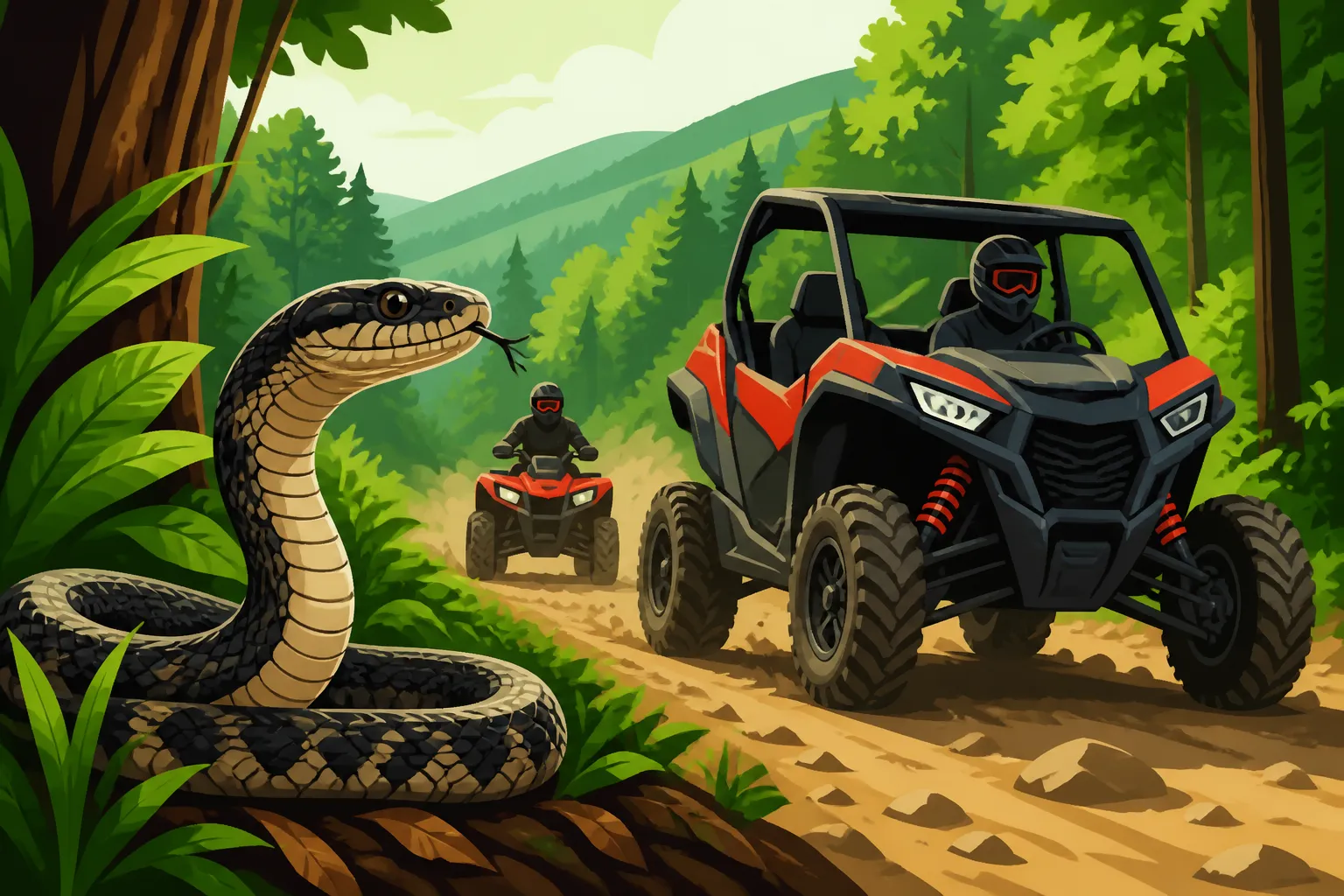
An Arkansas trail ride can feel carefree until a snake appears beside a warm rock, under leaves, or near a creek crossing. Snake activity changes with temperature, weather, and habitat, so there is no single date when the trail is reliably snake-free. This guide explains when to be alert, how to reduce surprise encounters, and what to do if someone is bitten.
When snakes are active on Arkansas trails
Seasonal patterns to expect
Snakes are most active when temperatures allow them to move and hunt comfortably. In Arkansas, that often means paying closer attention from spring through fall, especially on warm days. Activity can start earlier during a mild spring and last later into autumn when warm weather continues. A cool morning does not guarantee that a snake will remain hidden all day; a sheltered rock, sunny trail edge, or patch of leaf litter may warm faster than the surrounding air.
Summer brings its own pattern. Snakes may be less exposed during the hottest part of a very warm day, but they can still be encountered in shaded areas, near water, or where prey is available. Don’t treat midday heat as a safety window. On an ATV or side-by-side, you may also pass a snake before you have a clear view of it, particularly on a narrow, overgrown trail.
Cool weather can reduce the chance of seeing a snake moving across an open trail, but it does not make encounters impossible. A snake may be out during an unexpectedly warm stretch or resting in a protected spot. Instead of planning around a strict “snake season” calendar, use the day’s conditions as a reminder to watch the trail edges and choose where you stop carefully. For broader seasonal planning, [Arkansas Riding Season Month by Month] can help you think through changing conditions beyond snakes.
Habitats where riders should look carefully
Arkansas has a mix of forests, rocky slopes, creek bottoms, and open ground, and snakes use different parts of that landscape for shelter and movement. On a ride, take extra care near rocks, logs, brush piles, tall grass, and leaf-covered edges. These places can offer cover, shade, warmth, or prey. A snake may also be difficult to see when its coloring blends into leaves or soil.
Water crossings and damp areas deserve attention, too. A snake may be near a creek bank or tucked into vegetation beside a trail. That doesn’t mean every creek crossing is risky, but it is a good reason not to step off your machine blindly to test the ground or take a photo. [Arkansas Trails With Creek Crossings] is a useful companion topic for riders thinking about the terrain they may encounter.
A parked machine can create a false sense of security. Riders often focus on the trail while moving, then relax once they reach a scenic pull-off or campsite. Before you put a foot down, look at the ground around the tires and the place where you plan to stand. Avoid reaching into brush or under a log to retrieve a dropped item. If something is hidden, use a tool or choose a safer route to it rather than putting your hand where you cannot see.
How to reduce the chance of a close encounter
Ride and stop with visibility in mind
You cannot guarantee that you will see every snake before you approach it, but a few habits make surprise encounters less likely. Keep your eyes moving across the trail ahead and along the edges, especially in areas with leaves, rocks, or dense vegetation. Slow down where sightlines are short. A controlled pace gives you more time to notice movement and gives wildlife more opportunity to move away.
When stopping, choose an open, visible patch of ground rather than stepping into tall grass or brush. Look before dismounting, and check the area again before sitting down or unpacking gear. If you are walking around a trailhead, campsite, or scenic overlook, stay on clear paths where practical. Avoid placing hands or feet into gaps between rocks, under logs, or into piles of vegetation.
These habits work best when the whole group follows them. On a family ride, remind children not to chase, touch, or crowd wildlife, even if a snake appears motionless. Ask passengers to tell the driver when they spot an animal rather than leaning out or jumping down to get a closer look. For general trail behavior that helps protect riders and the landscape, see [Arkansas Trail Etiquette Locals Expect].
Pack for the ride and check conditions
Wear sturdy footwear when you expect to walk away from the machine. Long pants can provide some protection from scratches and brush, though clothing should never be treated as a reliable barrier against a snakebite. Stay on visible ground when you walk, and use a flashlight to check your immediate path if you are moving around camp or a trailhead in low light.
Before leaving, check the riding area’s access information and recent conditions. Storm damage, standing water, fallen limbs, or overgrown vegetation can change which routes are practical and how clearly you can see the ground. [Arkansas Trail Conditions Before You Tow] and [Arkansas Trail Closures After a Storm] can help frame that pre-trip check. A route that looks straightforward on a map may feel very different after heavy rain or a period of rapid plant growth.
A mapping app such as onX Offroad can help riders review routes and orient themselves before setting out. It can be useful for staying aware of where the group is and planning a route back to a trailhead, but it cannot identify every snake or replace paying attention to the trail. Download or prepare the information you need before entering an area with limited signal, and don’t let map-checking distract the driver. For remote rides, [Arkansas Trails With Camping] and [Arkansas Trailheads With No Water] are also worth considering when you plan supplies and stops.
| Trail situation | Safer habit |
|---|---|
| Narrow trail with leaves or brush | Reduce speed and watch the edges as well as the path ahead |
| Creek bank or rocky crossing | Look before stepping down and avoid reaching into concealed gaps |
| Scenic stop or campsite | Choose clear ground and inspect the area before sitting or unpacking |
| Low-light walk around camp | Use a flashlight and keep to visible paths |
| Snake spotted near the route | Give it room, keep the group back, and let it move away |
What to do if you see a snake or someone is bitten
Give a snake space and leave it alone
If you spot a snake, stop at a safe distance and give it a way to move away. Do not try to pick it up, prod it with a stick, pin it, or move it for a photograph. A snake that appears still may be resting or may not have room to escape. Getting closer can turn a brief sighting into a defensive strike.
If the animal is on the trail, wait for it to move away when it is safe to do so. If the trail is blocked and the group cannot pass without approaching it, turn around or choose another route rather than trying to force the issue. Keep children and pets back, and make sure everyone understands that the goal is distance, not identification. Many people are not confident distinguishing species in the moment, and trying to decide whether a snake is venomous can encourage them to get too close.
Do not kill a snake. Besides increasing the chance of an injury, trying to strike or handle it creates an avoidable risk for the rider and can harm wildlife. Once it has moved away, continue with care and let other riders in your group know where you saw it so they can watch the area without crowding it.
Treat a suspected bite as an emergency
If someone may have been bitten, move away from the snake and get emergency medical help promptly. Call emergency services if you have a signal. If the group is in a remote area, use your route information to communicate the closest accessible trailhead or meeting point, and arrange evacuation without delaying care. Do not attempt to catch or kill the snake to show responders; a description or a photo taken from a safe distance is not worth another encounter.
Keep the person as calm and still as you can while help is arranged. Remove rings, watches, or tight items near the affected area before swelling becomes a problem, if this can be done without moving the person more than necessary. Follow instructions from emergency dispatchers and medical professionals. Do not cut the bite, suck out venom, apply ice, use a tourniquet, or try a home remedy. These actions can cause further harm or delay appropriate treatment.
For a longer loop, consider how you would reach help before leaving the staging area. Tell someone outside the ride where you are going and when you expect to return, keep your phone accessible, and carry a basic first-aid kit. A first-aid kit does not treat venom, but it can support a safer response while help is on the way. [First Aid Worth Carrying on a Long Loop] can help you think through general trail preparedness. Keep in mind that a snakebite response depends on professional medical care, not a trail-side treatment kit.
Planning a safer Arkansas ride
Match your route and group to the conditions
A route that feels comfortable in cool, dry weather may be more demanding when vegetation is thick, the ground is wet, or visibility is poor. Choose a trail that suits the least experienced rider in your group, and leave room in the schedule to turn around if a section feels unsafe. Don’t let the pressure to complete a loop push anyone into stepping through brush or approaching wildlife.
Trail access can also change seasonally. Check whether the route is open, whether there are restrictions, and what conditions riders should expect before you haul your machine. [Arkansas Trails Open All Year-Round] is a helpful starting point, but “open” does not mean that every trail will be equally easy to ride in every condition. For advice on riding after wet weather, see [Riding Arkansas Trails After Heavy Rain].
If you are riding with children, set simple rules before you leave: stay near the group, never touch wildlife, and tell an adult immediately if they see a snake. Make sure passengers know not to step off a machine without the driver’s approval. These small conversations can prevent an impulsive close-up or an unnoticed child wandering into brush.
Keep wildlife awareness part of normal trail preparation
Snake awareness does not need to turn a ride into a source of worry. It is one part of paying attention to the terrain, much like watching for loose rock, low branches, or changing trail conditions. A steady pace, visible stopping spots, and a clear plan for emergencies can make riders feel more prepared without encouraging them to avoid every natural area.
Build the habit into your regular checklist: check the forecast and access conditions, tell someone your route, carry water and a basic first-aid kit, and review how the group will communicate if riders become separated. If your route has limited cell coverage, decide ahead of time where you will regroup. [Arkansas Trail Closures After a Storm] and [Arkansas Trails With Camping] can help with the broader planning involved in a longer outing.
The most useful rule is simple: look before you step, leave wildlife alone, and give a snake room to retreat. Arkansas trails are shared outdoor spaces, and a little caution helps protect both the people riding and the animals living there.
Disclaimer
This article is for general informational purposes only and does not constitute professional advice. Laws, prices and regulations vary by location and change over time. Consult a qualified professional for guidance on your specific situation.