Arkansas Riding in Spring Rain
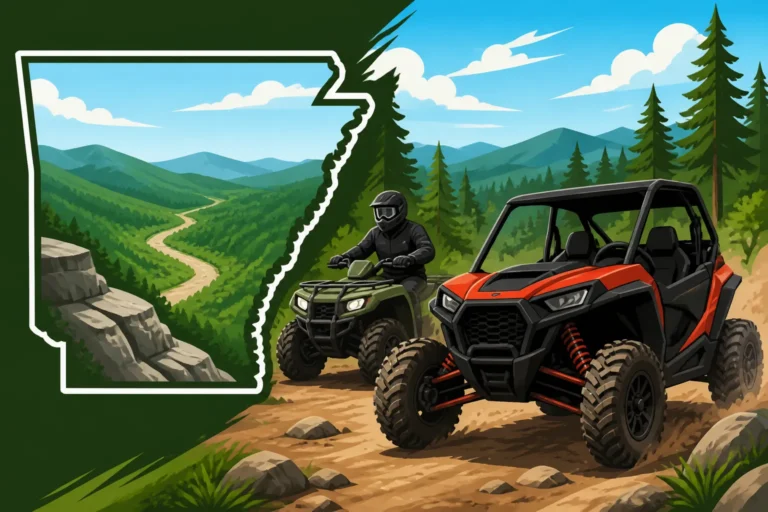
Spring rain can turn a favorite Arkansas trail into slick clay, deep ruts, and a long recovery job—or close access altogether. If you’re planning to ride near Mena, Ozark, or Hot Springs, the key is to check the trail’s status, match your route to conditions, and know when to turn around. This guide helps you make those calls before and during a wet-weather ride.
Why spring rain changes Arkansas trail conditions
Clay, rock, and creek crossings behave differently
Arkansas trails don’t all respond to rain in the same way. A rocky stretch in the Ouachita Mountains may stay passable while a clay-heavy section nearby becomes slick enough to make steering and braking difficult. Even familiar trails can feel completely different after a short shower, especially on hills where water runs down the track and carries loose soil with it.
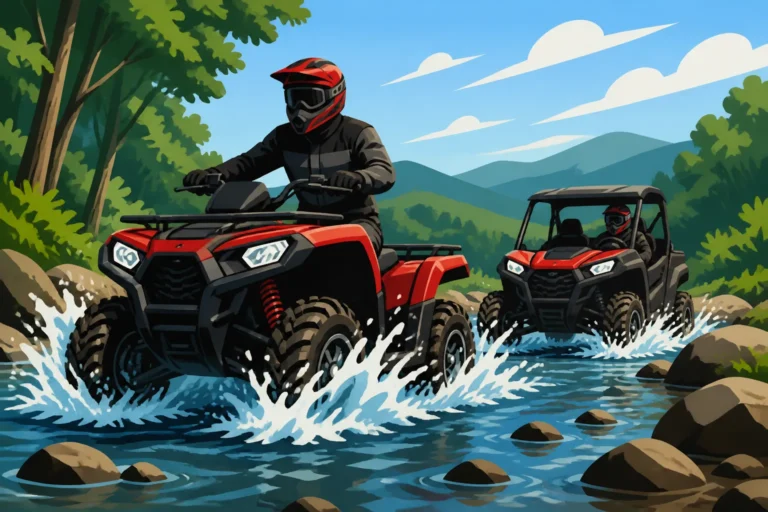
Creek crossings deserve extra caution. Water can rise or become cloudier after rain upstream, and a crossing that looked shallow on the way in may be deeper or faster when you return. Don’t assume a clear view of the bottom means the crossing is safe. If you can’t confidently judge the depth, current, and exit, turn around rather than testing it with your ATV or UTV.
Rain also changes the ground after the shower ends. Wet leaves can hide holes and slick rock, while soft shoulders may give way under a machine’s weight. A sunny forecast doesn’t instantly make a soaked trail firm again; shaded hollows and low spots can stay muddy long after exposed ridges begin to dry.
Ruts can damage trails and make riding harder
A tire rut isn’t just an inconvenience. Repeated wheelspin can carve deeper channels into soft ground, funnel water down the trail, and make erosion worse. Once a rut becomes deep, it can pull a machine off line or leave the undercarriage hung up. Trying to power through often makes both the trail damage and the recovery problem worse.
This is why land managers may close a route after heavy rain, even when nearby roads look fine. A closure can protect a vulnerable trail from damage and reduce the chance of riders getting stuck or injured. Check [Arkansas Trail Closures After a Storm](Arkansas Trail Closures After a Storm) and [Arkansas Trails Closed in Spring](Arkansas Trails Closed in Spring) when deciding whether a planned ride is still appropriate.
A useful rule is to treat visible standing water, fresh washouts, and deepening ruts as signs to reassess—not as obstacles to conquer. If you see damage that wasn’t there earlier in the ride, slow down, avoid widening the trail to get around it, and consider turning back.
How to plan a spring ride before leaving home
Check access, weather, and trail-specific notices
Start with the land manager or riding area’s own trail-status information. A general weather app can tell you about rain near Mena or Ozark, but it may not reflect conditions on a particular forest road, trail loop, or creek crossing. Look for closures, temporary restrictions, notices about storm damage, and updates about access roads to the trailhead.
Conditions can vary within the same riding area. A trailhead might be dry while a shaded section farther into the loop is saturated. Ask a local office, park operator, or knowledgeable contact what recent conditions have been like, and confirm which roads and trails are open before you tow. [Arkansas Trail Conditions Before You Tow](Arkansas Trail Conditions Before You Tow) is a helpful related read for building that pre-trip check into your routine.
If your plan includes Wolf Pen Gap, check the status of the specific trails you intend to ride, rather than relying on an old map or a friend’s report from a previous weekend. [How to Check Wolf Pen Gap Trail Status](How to Check Wolf Pen Gap Trail Status) can help you think through that step. For other areas, including Mill Creek OHV Trail System and Hot Springs Off-Road Park, check the relevant operator or land manager directly.
Match the route to your machine and your group
A wet-weather route should be easier than the route you might choose on a dry day. If your group includes new riders, children, or machines with limited ground clearance, choose a route with straightforward terrain and an easy way to turn around. Don’t build the day around a long loop with only one difficult exit; a blocked or washed-out segment can turn a fun ride into a stressful recovery.
Think about width restrictions, gates, and trail surface before you go. A wide side-by-side may not fit through every gate or along every narrow route, and a machine that clears a rocky climb in dry weather may struggle on slick ground. Use a reliable map to study the area, but treat it as a planning tool rather than proof that a trail is currently open. Some riders use onX Offroad to review routes and keep track of their position; it can be useful to pair a digital map with current land-manager information.
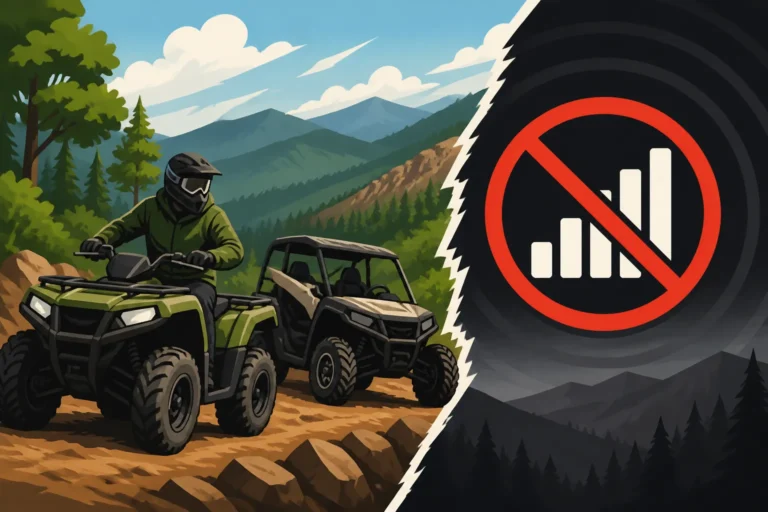
Bring a paper map or another backup way to orient yourself. Cell coverage can be unreliable in parts of the Ouachitas and Ozarks, and wet weather is a poor time to discover that your phone has no signal or a depleted battery. [Carrying a Paper Map as Backup](Carrying a Paper Map as Backup) covers why a second navigation option is worth packing.
| Before you go | What to check | Why it matters in spring rain |
|---|---|---|
| Trail status | Closures, restrictions, storm damage, and open routes | A route may be closed even if the access road is open |
| Recent weather | Rain at the riding area and upstream from crossings | Conditions can differ from the forecast near home |
| Route difficulty | Hills, low spots, gates, and places to turn around | Wet terrain can make familiar obstacles more difficult |
| Machine fit | Width, clearance, tires, and passenger load | A machine may not suit every trail or muddy section |
| Navigation | Current map, offline access, and backup map | Cell service may be limited away from towns |
Riding safely when trails are wet
Slow down and avoid forcing a line
Wet ground reduces your margin for error. Keep more space between machines, ease off the throttle, and brake gradually where the surface is slick. On a downhill, avoid sudden steering or hard braking that could cause a slide. On an uphill, choose a manageable line before you start climbing; spinning the tires halfway up can dig a rut and leave you stuck in a poor position.
If the machine starts sliding, avoid making a sharp correction that could send it farther off line. Slow down as smoothly as you can, give yourself room, and assess the surface before continuing. Don’t follow another rider’s tracks automatically: those tracks may be deeper or more polished than the surrounding trail, and they may lead toward a rut you could have avoided.
Use extra care around roots, loose rock, and leaf-covered sections. A short, cautious approach is usually better than carrying speed into an obstacle. If you’re riding with a group, agree on a simple plan for stopping and regrouping so that the last rider doesn’t feel pressured to keep moving when conditions become uncomfortable.
Turn around before a small problem becomes a recovery
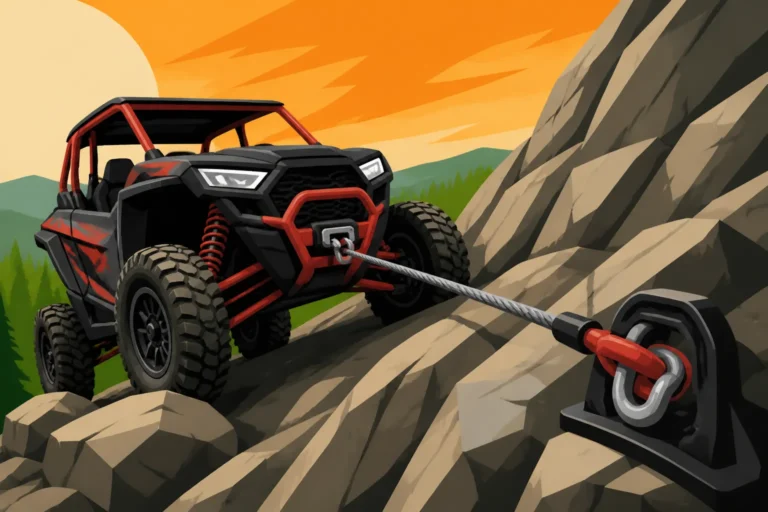
A turn-around point is part of a good ride plan, not a sign that the group has failed. If you encounter a rising creek, a fresh washout, a blocked trail, or mud that requires repeated attempts to cross, stop and reconsider. A winch or tow strap can help with some recoveries, but it doesn’t make every crossing or climb safe.
Avoid driving through water when you can’t see a clear, safe exit. Don’t enter a crossing simply because another machine made it across; vehicle weight, tires, ground clearance, and rider experience all matter. If the group cannot agree on a safe route forward, choose the conservative option and turn back together.
Respect gates, signs, and barriers even when a route appears passable. Conditions can change after a storm, and a closure may be there to protect both riders and the trail. Keep to open routes, don’t create a bypass around a muddy section, and follow [Arkansas Trail Etiquette Locals Expect](Arkansas Trail Etiquette Locals Expect). If a trail’s difficulty is unclear, [Arkansas Trail Ratings and What They Mean](Arkansas Trail Ratings and What They Mean) can help you evaluate whether it fits your group.
What to do after the ride
Clean and inspect the machine before the next trip
Mud can hide damage. After riding, wash off packed soil and grit, especially around the tires, brakes, radiator area, suspension, and undercarriage. Check for branches or debris caught beneath the machine, look for loose parts, and inspect tires for cuts or objects embedded in the tread. Follow your owner’s manual for cleaning and maintenance guidance; avoid directing high-pressure water at sensitive components.
Give your gear the same attention. Dry helmets, gloves, boots, and clothing thoroughly before storing them, and check for torn straps or damaged protective equipment. If the ride involved a hard impact, unusual noise, overheating, or a deep-water crossing, inspect the machine carefully before riding again. A problem that seems minor in the driveway can become more serious on a remote trail.
If you used a designated wash area, follow its rules and avoid carrying mud from one riding area to another. Some parks have wash stations, while other locations may not. Check [Arkansas Riding Areas With Wash Stations](Arkansas Riding Areas With Wash Stations) if washing facilities are part of your trip planning.
Share useful condition reports without encouraging risky riding
A brief, factual report can help the next rider make a better decision. Note the trail or section, when you rode it, where you found a closure or washout, and whether conditions changed during the day. Report damage or a hazard to the land manager or riding-area operator rather than posting directions around a barrier.
Avoid describing a muddy section as a challenge to push through. That can encourage riders to damage the trail or attempt a crossing beyond their ability. If you use onX Offroad or another navigation app to record a route, remember that a saved track doesn’t establish that the route is open or safe today. Confirm access independently before sharing it as a recommended ride.
Spring riding in Arkansas can still be enjoyable after rain, particularly when you plan around the conditions instead of trying to outride them. Build flexibility into the day, keep the group together, and be willing to choose a shorter route or reschedule. A cautious decision at the trailhead is much easier than dealing with a damaged machine or a difficult recovery miles from the truck.
Disclaimer
This article is for general informational purposes only and does not constitute professional advice. Laws, prices and regulations vary by location and change over time. Consult a qualified professional for guidance on your specific situation.