Arkansas Trailheads With Trailer Parking
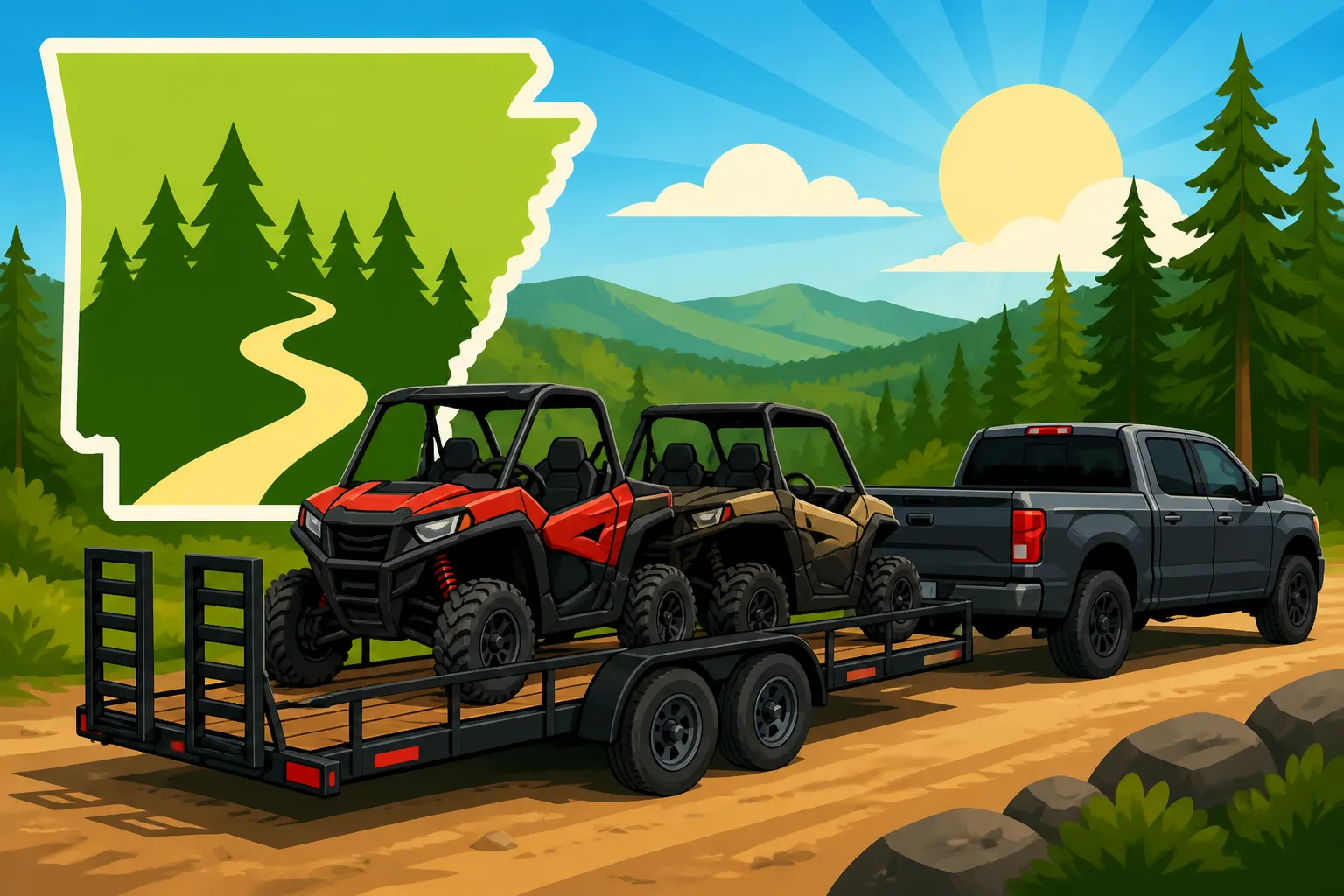
A trailer-friendly ride can go sideways before you even unload: the trailhead lot may be tight, crowded, or unsuitable for a long truck-and-trailer combination. This guide explains how to assess parking at Arkansas ATV and UTV trailheads, what to check before towing, and how to plan around busy areas such as Wolf Pen Gap, Mill Creek, and Hot Springs.
What Trailer Parking Means at an Arkansas Trailhead
Look beyond the word parking
A trailhead may have a place to leave a vehicle without having room for a truck and trailer to turn around, park, and unload safely. A small gravel pull-off, for example, might work for a pickup but be awkward for a long trailer. Even a larger lot can become difficult to use when vehicles park across the turning area or occupy the edges.
Before you set out, look for practical details rather than assuming every marked trailhead is trailer-friendly. Consider whether the lot appears to have enough room for a full rig, whether there is a clear entrance and exit, and whether you can unload without blocking other visitors. If you are towing a wide side-by-side or a long enclosed trailer, these details matter even more.
It is also worth distinguishing trailhead parking from campground or private-park parking. A campground may offer space for a truck and trailer, but that does not necessarily mean you can leave the trailer at a nearby public trailhead. Private off-road parks may have their own check-in procedures, parking areas, and rules. Confirm where you are expected to stage before you arrive.
Check the specific access point, not just the riding area
A well-known trail system can have several access points, and their parking layouts may differ. One entrance might suit a truck and trailer, while another is a narrow forest-road pull-off with limited room to maneuver. When planning a visit to [Wolf Pen Gap: Arkansas's Best Known OHV Complex] or [Mill Creek OHV Trail System in Arkansas], identify the exact trailhead you intend to use—not just the name of the trail system.
Use a current map or trail-system information to locate the access point, then check recent local information where available. onX Offroad can help you examine your route and the roads approaching a trail area, but a map view cannot confirm that a lot is open, spacious, or suitable for your particular trailer. Treat mapping tools as one part of your check, not a guarantee of parking conditions.
When details are unclear, contact the managing office or the private park directly. Ask a concrete question: “Can a pickup towing a 20-foot trailer turn around and unload at this entrance?” That is more useful than asking only whether parking is available.
Arkansas Trail Areas to Research Before You Tow
Wolf Pen Gap and the Mena area
Wolf Pen Gap is a major riding destination near Mena, so it is sensible to plan parking as carefully as the ride itself. Trailhead conditions and access can vary, and a busy weekend can make a workable parking area feel much tighter than it does on a quiet weekday. Before towing, confirm which access point you plan to use and check for current trail or road conditions. [How to Check Wolf Pen Gap Trail Status] can help you build that check into your departure routine.
The approach matters, too. Mountain roads can include curves, grades, and limited places to pull over. A trailer that feels manageable on a broad highway may be less comfortable on a narrow forest road, especially if you meet another large vehicle. Review the route before leaving town, and avoid relying on a last-minute turn-around if the parking area is full. For more on the drive itself, see [Trailering Over Mountain Roads].
If you arrive and find the lot crowded, do not park in a way that blocks a gate, road, or turning space. A vehicle left partly across the access route can create a problem for other riders and for maintenance or emergency vehicles. Have a backup plan—such as another suitable access point or a later arrival—rather than assuming roadside parking is acceptable.
Mill Creek, Hot Springs, and private riding areas
Mill Creek OHV Trail System is another area where it pays to confirm the exact trailhead and parking arrangement before loading up. A trailhead’s amenities do not tell you how easy it is to maneuver a trailer, so check both the access road and the parking area. If you are unfamiliar with the route, use a map to review the approach and ask about trailer parking at the trailhead you expect to use.
Hot Springs Off-Road Park and other private riding areas may provide a different experience from public forest trailheads. Private operators can explain their parking layout, check-in process, and any rules for unloading or leaving a trailer on-site. Do not assume that a nearby campground or lodging property is automatically connected to the riding park or allows you to stage there. [Arkansas Off-Road Parks With RV Hookups] may be useful if your trip includes camping, but confirm trailer parking separately.
Across any Arkansas riding area, parking can be affected by weather, trail closures, maintenance, events, and seasonal demand. Check [Arkansas Trail Conditions Before You Tow] before leaving, especially after heavy rain or when a long drive makes a wasted trip particularly frustrating.
| Riding area | What to confirm before towing | Useful planning approach |
|---|---|---|
| Wolf Pen Gap near Mena | The specific access point, approach roads, current conditions, and room to turn around | Check trail status and identify a backup plan before reaching the area |
| Mill Creek near Ozark | Which trailhead you will use and whether the parking layout suits your rig | Confirm the access point and inspect the route before departure |
| Hot Springs Off-Road Park | Private-park parking, check-in instructions, and unloading rules | Contact the park directly and follow its current directions |
| Other public forest trailheads | Lot access, road conditions, closures, and any parking restrictions | Check with the managing office and avoid blocking gates or roads |
How to Check Trailer Parking Before You Leave
Ask questions that match your rig
A clear phone call or message can prevent hours of towing to an unsuitable lot. Give the person you contact enough information to answer accurately: the approximate combined length of your truck and trailer, whether the trailer is enclosed, how many machines you are bringing, and which trailhead you plan to use.
Ask whether there is room to turn around, whether unloading is allowed in the lot, and whether parking is limited to a designated area. If the approach includes a narrow or steep road, ask about that specifically. A simple “yes, there is parking” may not answer the question you actually need answered.
It helps to ask what happens when the lot is full. Is there an approved overflow area? Is roadside parking prohibited? Is there another access point that can accommodate trailers? Answers may vary by location, so do not assume that a workaround used at one trail system is acceptable at another.
Review the route and prepare a backup
Map the full drive from the highway to the trailhead, not just the final destination pin. Look for narrow approaches, sharp turns, steep grades, gates, and places where turning around would be difficult. onX Offroad can be useful for reviewing off-road routes and planning around mapped access, while a standard road map or navigation app may help with the highway portion. Save the route and key locations before setting off, particularly if you expect weak cell service.
Build a backup into your plan. That could mean knowing another verified trailhead, choosing a less busy arrival time, or having a nearby place to wait while the lot clears—provided that the location is suitable and permitted. Do not count on turning around in a driveway, blocking a forest road, or leaving the trailer on private property without permission.
Check conditions again shortly before departure. A route that looked straightforward during trip planning may be affected by a closure or storm damage. [Arkansas National Forest Riding Explained] offers broader context for public-land riding, while [Where to Stage When a Lot Fills] is a useful reminder to think through congestion before it happens.
Parking and Unloading Without Creating a Bottleneck
Arrive with a simple unloading plan
Once you reach the lot, pause before backing into the first open-looking space. Check signs, gates, traffic flow, and where other vehicles are parked. If the lot is small, take a moment to identify a position that leaves room for others to enter and exit. Do not block an access road or park across a space needed for turning.
Keep your unloading routine organized. Secure loose items before opening the trailer, keep children and pets away from moving vehicles, and avoid spreading gear across shared parking space. If you are traveling with several machines, decide beforehand who will unload and where everyone will wait. A little coordination keeps the process calmer when other riders are arriving.
Follow posted instructions and any directions from staff, land managers, or event organizers. Public forest trailheads and private parks may have different rules. Parking in a signed no-parking area or obstructing a gate can affect access for everyone, not just your group.
Leave room for a change of plan
A full lot does not mean you should squeeze into an unsafe spot. If there is no suitable room for your truck and trailer, leave the access route clear and use the backup plan you arranged. When there is no confirmed alternative, contact the trail manager or park rather than improvising on the roadside.
Before heading home, make sure your machines and gear are secured and that you have not left trash or equipment behind. If you notice a blocked entrance, damaged access road, or confusing parking sign, report it through the appropriate management contact. Small acts of care help keep trail access usable for the next group of riders.
For a smoother trip, check the parking location, approach route, rules, and current conditions as separate questions. A map can help you plan, and a direct call can clarify details that a map cannot show. That combination is especially valuable when your truck, trailer, and machines make turning around difficult.
Disclaimer
This article is for general informational purposes only and does not constitute professional advice. Laws, prices and regulations vary by location and change over time. Consult a qualified professional for guidance on your specific situation.