Byrd’s Adventure Center on the Mulberry River
Byrd’s Adventure Center offers a distinctive way to pair off-road riding with time beside the Mulberry River, but planning can feel confusing if you are unsure what access, lodging, or trail conditions to expect. This guide explains how to prepare, what to ask before you go, how to ride considerately, and how to shape a visit around your group, machine, and comfort level.
Getting to know Byrd’s Adventure Center
A river destination as well as a riding stop
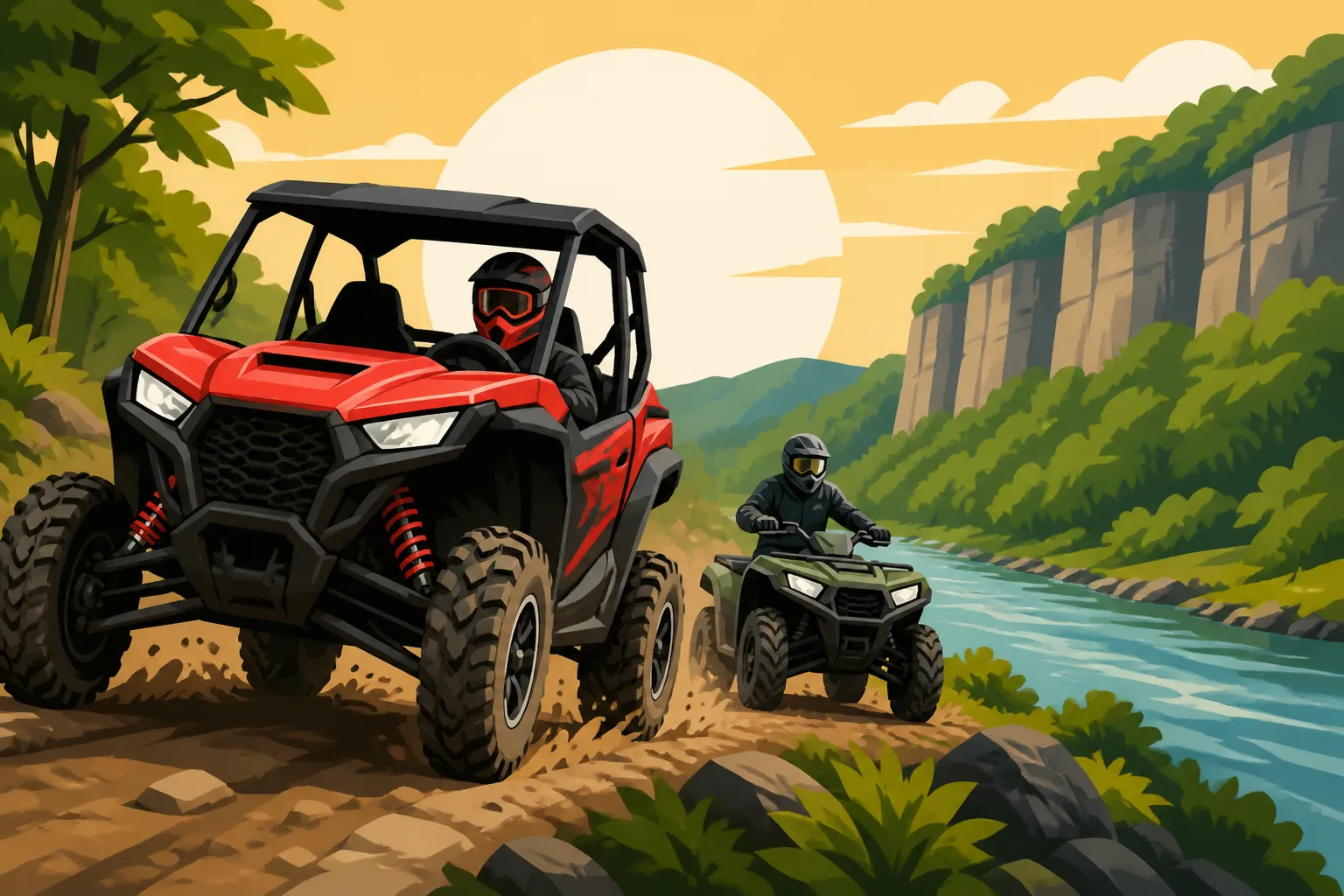
Byrd’s Adventure Center is associated with the Mulberry River area near Ozark, Arkansas. It is not simply a place to unload a quad and head straight onto a trail: the draw is the combination of outdoor recreation, river scenery, and a base for a weekend in the Ozarks. That mix can suit a group whose members do not all want to spend every hour riding.
The Mulberry River setting helps define the experience. A ride can be part of a broader day that includes relaxing at camp or enjoying other outdoor activities, depending on what the center is offering and what conditions allow. For a family or a group of friends, that flexibility can make the trip feel less like an all-or-nothing riding weekend.
It is useful to think of Byrd’s as a destination with its own access rules, rather than assuming it works exactly like a public forest trail system. Access, services, and permitted activities can differ between private recreation areas and nearby public land. Before heading out, confirm which places your booking or day visit actually includes and whether a particular activity requires separate permission.
For broader trip planning across the state, start with [Arkansas ATV Trails: Where to Ride](Arkansas ATV Trails: Where to Ride). If the river itself is part of your plans, [Arkansas Riding on the Mulberry River](Arkansas Riding on the Mulberry River) can help you think about the area beyond the trail ride.
Why the setting matters for trip planning
A river location can make the trip feel wonderfully relaxed, but it also means conditions may change what makes sense on a given day. Rain, muddy ground, high water, or a recent storm can affect access, riding comfort, and outdoor plans. A forecast for the nearest town is a useful starting point, but it does not tell you everything about conditions on the property or along a trail.
The area’s Ozark terrain also makes preparation important. Riders may encounter uneven ground, rock, slopes, changing surfaces, and narrow or wooded stretches. How challenging a route feels depends on its condition, the machine, the rider’s experience, and the group’s pace. A route that looks short on a map may take longer than expected when riders stop, regroup, or negotiate rough spots.
If your group is arriving from outside the area, plan for the drive as carefully as the ride. Check where you will unload, whether your lodging or campsite has room for your tow vehicle and trailer, and what time you can access the property. These basic details can prevent the familiar first-day frustration of arriving with a loaded trailer and no clear place to stage.
The difference between a private recreation area and public trails
A private recreation center may have a different arrangement from the surrounding national forest or other public land. Permission to ride at one location does not automatically grant permission to use nearby roads or trails. Likewise, a public-land permit or forest pass does not necessarily provide access to a privately operated property.
That distinction matters when using a mapping app. onX Offroad can help riders explore route possibilities and orient themselves, but a line on a map is not proof that a route is open, legal, or included with a visit. Check property boundaries, posted signs, local rules, and the center’s directions before riding. If anything is unclear, ask the operator rather than making an assumption from a map layer.
A useful habit is to separate your plans into three categories: routes specifically confirmed with Byrd’s, routes on public land that have their own rules, and roads or paths you should not use unless access is clearly authorized. This small bit of organization helps everyone in the group understand where permission begins and ends.
Choosing the right kind of visit
A day visit or an overnight trip
A day visit can work well for nearby riders or people who want to focus on a single activity. It requires less packing and can be easier to schedule, but it leaves less room for delays. If the group spends extra time unloading, checking in, or getting familiar with the property, the actual riding window may feel shorter than expected.
An overnight stay gives you more flexibility. You can arrive without trying to squeeze every part of the experience into one afternoon, and you have more breathing room if weather or trail conditions change the plan. Lodging and camping options, availability, and rules can vary, so confirm details directly before building your itinerary around a particular setup.
If you are deciding between camping and a cabin-style stay, consider the whole group’s needs rather than focusing only on the sleeping arrangement. Think about meals, drying wet gear, access to bathrooms, space for children, and how you will store riding equipment. [Arkansas ATV Camping With Trail Access](Arkansas ATV Camping With Trail Access) and [Arkansas Off-Road Parks With Cabins](Arkansas Off-Road Parks With Cabins) offer helpful starting points for comparing trip styles.
A riding-focused weekend or a mixed-activity getaway
Some groups want to spend most of the visit riding. Others include people who would rather relax, explore the river area, or enjoy a slower day. Byrd’s river setting can make a mixed-activity weekend appealing, but do not assume every activity is available during every visit. Ask what is open, what needs advance planning, and whether activities operate independently of riding access.
For a riding-focused weekend, make sure your group’s expectations match the type of experience the center offers. Ask what machines are permitted, whether you ride your own machine or can arrange a rental, how access is managed, and whether routes are marked. If anyone is new to off-road riding, ask about the easiest options and whether a guided experience or orientation is available.
For a mixed-activity trip, avoid scheduling every hour. A relaxed plan might leave one part of the day open for riding, another for river-area downtime, and enough time for meals and rest. That is especially helpful when traveling with children or a mixed-experience group. The people who want to ride hard can still enjoy a substantial outing, while others do not feel pressured to keep pace.
Matching the destination to your group
Before booking, consider the least experienced rider in your party. A group’s ability is not determined by the most confident person. A beginner may be comfortable on gentle, open terrain but uneasy on steep slopes, loose rock, tight turns, or muddy ground. Ask for guidance about what the routes are like and be candid about your group’s experience.
For families, check age and passenger rules, supervision expectations, and any safety requirements before arrival. Do not assume that a child can ride as a passenger on every machine or that a small youth machine is suitable for every child. Review the operator’s requirements and make sure the equipment fits the rider, rather than relying on age alone.
Groups with different machines should also check width and access limitations. A side-by-side and a narrow quad may have different practical needs, especially where routes, gates, or staging areas are involved. If you are unsure whether your machine fits, share its make, model, and width with the operator before the trip. It is much easier to resolve a fit question by phone than at a trail entrance.
| Visit style | Often works best for | Questions to settle before you go |
|---|---|---|
| Day visit | Nearby riders or a short outdoor outing | Arrival and riding access, check-in process, and how much time to allow |
| Overnight camping | Groups that want flexibility and outdoor downtime | Site availability, facilities, vehicle and trailer space, and camping rules |
| Cabin or lodging stay | Families or groups who prefer a more comfortable base | Sleeping arrangements, meals, equipment storage, and check-in details |
| Riding-focused trip | Experienced groups with a clear off-road goal | Permitted machines, route difficulty, access rules, and current conditions |
| Mixed-activity getaway | Groups with varied interests or experience | Which activities are available, their schedules, and whether they need separate arrangements |
Planning your ride before arrival
Confirm access, reservations, and operating details
Treat direct confirmation as part of the trip, not as a last-minute formality. Ask whether you need a reservation, what your visit includes, what time you can arrive, and whether there are specific check-in instructions. If your plans depend on a particular activity, machine, or lodging option, confirm that exact detail rather than asking only whether the center is open.
It is also worth asking what happens if conditions change. Is there a different activity available if riding is limited? Do you need to reschedule? Are there rules about arriving after a certain time or leaving a machine overnight? The answers will help you make a realistic plan and avoid turning a weather delay into a stressful scramble.
If you are comparing destinations, look at the full trip rather than only the riding itself. Consider the drive, equipment transport, lodging, meals, and what your group will do outside riding hours. [Arkansas ATV Trails With Camping](Arkansas ATV Trails With Camping) and [Arkansas Off-Road Parks With RV Hookups](Arkansas Off-Road Parks With RV Hookups) can help you compare the kinds of facilities that may matter for a longer stay.
Check weather and ground conditions
Weather in the Ozarks can change the character of a ride quickly. A damp surface may be manageable for one rider and intimidating for another; a heavy downpour can make a route muddy or unsuitable. Hot, dry conditions bring different concerns, such as dust, heat stress, and the need to carry enough water. Plan for the conditions you may actually encounter, not just the ideal day you hope for.
Ask the center about current conditions close to your visit. A forecast is useful, but local staff may know whether a section is affected by recent rain, maintenance, or a temporary closure. Be prepared to change your plan if the recommendation is to avoid a route. Riding through a closure or creating new ruts in soft ground can damage trails and make access harder for everyone.
Use onX Offroad as a planning aid rather than a substitute for a local update. You can use it to review the general area, think about route context, and keep track of your group’s position where the map supports it. Still, check that your intended route is open and authorized. Download or carry a backup map if your phone service may be unreliable, and do not rely on a single device to keep a group oriented.
Prepare a route plan that fits your riders
A good route plan is not necessarily the longest one. Choose an outing that leaves time for breaks, regrouping, and the unexpected. A beginner may need more time to negotiate a section than an experienced rider, and a group may stop often to check on passengers or enjoy a view. A plan with breathing room is safer and usually more enjoyable than trying to cover as much ground as possible.
Before setting out, identify a meeting point and agree on what the group will do if riders become separated. Keep the plan simple: decide who leads, who rides at the back, and where you will regroup if someone stops. Make sure everyone knows how to signal a problem and understands not to leave an injured or stranded rider alone.
If you are traveling as a group, share the plan with someone who is not riding. Tell them where you expect to be and when you plan to return. This is especially sensible when riding in an area where phone coverage may be limited. The plan does not need to be elaborate; it simply gives someone a useful reference if the day does not go as expected.
What to bring and how to prepare your machine
Personal clothing and safety gear
Wear clothing suited to off-road travel, not just the drive to the property. Closed-toe footwear, gloves, eye protection, and clothes that can handle dust or mud are practical basics. A helmet is an important safety choice, even when a particular legal requirement does not apply to a specific setting. Make sure it fits properly and is in good condition.
Bring layers, rain protection, and a change of clothes if the forecast or activity calls for them. A ride can feel comfortable at the start and chilly later, especially if you get wet or stop in the shade. In warm weather, sun protection and regular hydration matter just as much as the machine’s preparation. Pack water where it is easy to reach rather than buried under camping gear.
For children and passengers, check that equipment fits the person who will use it. Oversized gloves, a loose helmet, or shoes that can slip off are not small inconveniences when riding. Before leaving home, have each rider try on their gear and confirm that they can move comfortably, see clearly, and operate any controls they need to reach.
Machine inspection and transport
A pre-trip inspection can catch the sort of small problem that becomes a major headache far from home. Check tires, brakes, lights, controls, fluids, belts where applicable, and the condition of the battery and straps. Make sure the machine is appropriate for the ride you intend to take and that any required safety equipment is present.
Transport deserves equal care. Confirm that your trailer is properly connected, the load is secured, and your tow vehicle is suited to the combined weight. Bring the tools and tie-downs you need, and make sure you can unload safely at the destination. If the group is bringing more than one machine, label keys or organize them so riders are not sorting through a pile of gear at the staging area.
Pack a basic repair and recovery kit matched to your machine and experience. That might include a tire repair kit, a small tool set, a tow strap, gloves, and a first-aid kit. Do not attempt a recovery that exceeds your training or equipment. On uneven ground, a rushed pull can injure someone or damage a machine; if a situation feels unsafe, stop and get help.
Food, water, and practical supplies
Even a short ride can run longer than planned. Carry enough water for the conditions and the length of your outing, and bring food or snacks if you will be away from your base for a while. Keep supplies secured so they do not shift or fall from a rack on rough terrain.
A small personal kit can make the day more comfortable: sunscreen, insect repellent, a basic first-aid kit, a phone power bank, and a dry bag for items that should stay dry. If your group includes children, pack extra water and snacks, and plan more frequent stops. Tired or thirsty riders are more likely to make poor decisions.
Think through what you will need after the ride, too. A towel, clean clothes, and a bag for muddy gear can keep the truck or lodging area from becoming a mess. If you are unsure what facilities are available, ask before leaving home rather than assuming there will be a place to rinse off gear or store wet clothing. [Arkansas Riding Areas With Wash Stations](Arkansas Riding Areas With Wash Stations) is useful when comparing destinations with cleanup facilities.
Riding safely and respectfully near the Mulberry River
Ride within your ability and the conditions
Choose a pace that lets you respond to what is ahead. Dust, mud, loose rock, blind corners, and uneven surfaces all reduce the time you have to react. Keep enough space between machines to see clearly, and slow down when visibility drops or the surface changes. A rider who feels pressured to keep up may take risks that they would avoid when riding at a comfortable pace.
Do not treat an unfamiliar route as a test of skill. If you encounter an obstacle that feels beyond your ability, stop in a safe place and decide whether to turn around or ask for help. It is perfectly reasonable to walk a short section or skip it. A good day is one where everyone gets back safely, not one where every obstacle is conquered.
Passengers need particular attention. Make sure the machine is designed for a passenger and that the passenger can hold on securely and keep their feet in the appropriate position. Explain what to expect before moving, and stop if the passenger becomes uncomfortable. Avoid carrying anyone who is too small to sit securely or follow basic instructions.
Protect trails, land, and water
Stay on authorized routes and avoid cutting across vegetation, streambanks, or soft ground. Riding around a muddy patch can widen a trail and create additional damage. If a route is closed or conditions are too wet, respect the closure. Short-term restraint can prevent long-lasting ruts and erosion.
Near a river, be especially mindful of where you park, wash, or move equipment. Do not assume that a riverbank or access point is open for every use. Follow posted instructions and keep fuel, oil, trash, and cleaning products away from the water. If a machine leaks or suffers damage, deal with it promptly and avoid allowing fluids to reach soil or water.
Leave the area as you found it. Pack out wrappers, bottles, broken parts, and anything else you brought in. Keep noise considerate around camps and other visitors, and do not assume that an empty-looking area is unused. The Mulberry River draws people seeking different outdoor experiences, and a little care helps riders and non-riders share the setting.
For more guidance on sharing routes responsibly, read [Arkansas Trail Etiquette Locals Expect](Arkansas Trail Etiquette Locals Expect). If you are planning to ride beyond the center, confirm the rules and permits for that specific public-land area rather than carrying assumptions from the private property.
Keep the group together and communicate
Before the ride, agree on a basic communication plan. Decide who leads, who stays behind the last rider, and where the group will stop if someone falls behind. A simple hand signal or agreed stopping point is more useful than assuming everyone can hear instructions over engines and helmets.
Keep the group’s pace appropriate for the least experienced rider. The leader should avoid disappearing around a bend, and the rider at the back should be able to alert the group if someone has a problem. Stop in a place where the group is visible and out of the way, rather than clustering in a blind corner or narrow section.
If a machine breaks down, keep people away from traffic or other moving riders, and make the machine visible if it is safe to do so. Avoid leaving someone alone while the rest of the group rides ahead. A phone may help, but coverage can be inconsistent, so carry the center’s contact details and know where you are relative to a familiar landmark or meeting point.
Staying overnight and building a comfortable weekend
Choosing a place to stay
The right base depends on your group’s habits. Camping can keep everyone close to the outdoors and make it easy to bring equipment, while a cabin or other lodging arrangement may be more comfortable for families or riders who prefer a proper bed after a full day. Check the available options directly and make sure the details fit your group, rather than assuming a category of lodging includes particular amenities.
Ask how parking and trailer storage work. A site may be comfortable for a car but awkward for a large tow vehicle and trailer. Confirm whether your machine can be stored securely and whether you need to unload in a designated area. These are especially important questions if you arrive late or have a group with several vehicles.
Plan meals realistically. Find out what is available nearby and whether you need to bring food, cooking supplies, or drinking water. A remote-feeling weekend can be lovely, but it is less relaxing when the group realizes after arrival that nobody planned dinner or brought a way to prepare it.
Making room for downtime and river activities
A riding weekend does not need to be a nonstop riding weekend. Build in time to rest, eat, and enjoy the river setting. That can be especially valuable for new riders, who may feel worn out sooner than they expected, and for groups with children or older adults.
If you plan river-related activities, confirm what is permitted and what equipment or arrangements are required. Water conditions can change, and an activity that sounds straightforward may require planning, supervision, or suitable gear. Do not enter the water or attempt a crossing with a machine unless it is specifically authorized and safe under the conditions.
Keep a flexible schedule. If the weather makes riding unpleasant, a relaxed meal or a different outdoor activity can salvage the day. If the riding is excellent, your group may choose to spend more time on the trail. Having options makes the visit less dependent on one perfect forecast.
Respecting shared spaces
At a recreation center, you may be sharing the property with campers, families, river visitors, and other riders. Keep engines and voices considerate around lodging and camps, especially during quiet hours or early in the morning. Follow parking instructions, keep equipment out of walkways, and supervise children near machines and water.
Secure your gear when you are away from it. Put away tools, keys, and riding equipment rather than leaving them scattered around a campsite or common area. Keep food stored appropriately and dispose of rubbish as directed. A tidy site makes it easier for your group and the next visitors.
If something goes wrong, tell the staff promptly. A damaged facility, leaking machine, or confusing access point is easier to address early than after the end of the trip. Respectful communication also helps staff give useful guidance about conditions and local practices.
Making the most of maps, directions, and local information
Use mapping tools with a local reality check
A digital map can help you understand the general layout of an area, but it cannot replace permission or current route information. onX Offroad may help you plan, orient yourself, and review mapped roads or trails. Before relying on any route, verify that it is open, that your machine is allowed, and that access is included in your visit.
Map layers can differ in what they show and how recently information was updated. A route may appear on a screen even when it is private, closed, or unsuitable for your machine. Pay attention to signs and instructions on the ground. If the map and a posted restriction disagree, do not treat the map as permission to proceed.
Save the information you need before you reach an area with limited service. Download maps where possible, save the address and contact details, and keep a written note of the meeting point. A second person in the group should know how to access the route plan. This is a simple backup for a dead phone battery or a device that gets damaged.
Know when you are leaving the center’s access area
It can be easy to cross from one kind of land to another without noticing, especially when roads and trails connect visually. Keep track of property boundaries and pay attention to signs that indicate a change in ownership or rules. Never assume that a familiar-looking road is open just because it connects to a route you were already using.
If you are planning to ride in nearby public forest areas, identify those areas in advance and learn their permit and machine requirements separately. Public-land access may involve rules that do not apply at a private center, and a pass for one forest may not cover another. Check the rules for the exact riding location rather than relying on a general statement that a route is “nearby.”
onX Offroad can be one tool for reviewing the broader area, but it should sit alongside official instructions, local signs, and direct confirmation. Use it to ask better questions: Where does this route appear to lead? Does it seem to cross a boundary? Is there an alternate route? Then verify the answers before setting out.
Keep a practical backup plan
A backup plan can be as simple as a shorter route, a different activity, or a nearby place to eat if weather disrupts the day. It is helpful to identify options before arrival, when everyone is calm and has time to think. That way, the group is not trying to solve every problem while tired, wet, or hungry.
Tell a non-riding contact where you are staying and when you expect to return. If your schedule changes, send an update when you have service. Keep key details accessible to more than one person, including the property address, vehicle location, and emergency contact information.
Before leaving, check trail and property conditions again, especially after heavy rain or storms. [Arkansas Trail Conditions Before You Tow](Arkansas Trail Conditions Before You Tow) is a useful reminder that a successful riding trip starts before the trailer is loaded. Conditions and access can change, so make the final check part of your departure routine.
A practical pre-trip checklist
A few days before departure
Confirm your reservation or day-visit arrangements and ask what your access includes. Verify current operating details, permitted machines, arrival instructions, lodging or camping arrangements, and any activity that requires separate planning. If you are bringing a side-by-side, describe its dimensions and ask about route or gate restrictions.
Review the weather and contact the center about local conditions if rain, flooding, or a storm is expected. Check your machine and trailer, and arrange repairs before you leave. Make sure every rider has appropriate clothing and safety equipment that fits.
Share the plan with your group. Agree on who is driving, who is bringing supplies, and where you will meet. Confirm that everyone knows the experience level and pace the ride is being planned around. If you have new riders, reassure them that turning around or taking a break is part of a sensible ride.
The evening before the trip
Load equipment in a way that keeps essentials accessible. Put helmets, gloves, water, and a first-aid kit where you can reach them without unloading the whole truck. Secure machines and camping gear, and check that you have keys, documents, charging cables, and any required permits or confirmations.
Save directions and contact details for the destination. Download maps if you use them, and make sure more than one person can access the plan. Check that phones and power banks are charged, but do not depend on mobile service as your only navigation or communication option.
Set a realistic departure time. Leave room for fuel, food, a rest stop, and unloading. Rushing to make a check-in window or catch the last part of daylight can lead to mistakes before the ride even starts.
On arrival and before riding
Follow the center’s check-in process and ask any remaining questions before unloading. Confirm where you may park, where machines may be used, and which routes or activities are available. If the conditions differ from what you expected, adjust the plan rather than pressing ahead.
Walk around your machine and check that transport did not loosen straps or damage equipment. Make sure each rider has their helmet and other gear, and explain the group’s route and communication plan. Identify a place to regroup and agree on what to do if someone stops or becomes separated.
Start conservatively. A first ride is a chance to learn the terrain and how the group feels, not a reason to push hard immediately. If everyone is comfortable and conditions support it, you can make the next outing longer. Beginning with a manageable ride often makes the entire visit more enjoyable.
Disclaimer
This article is for general informational purposes only and does not constitute professional advice. Laws, prices and regulations vary by location and change over time. Consult a qualified professional for guidance on your specific situation.