Arkansas Trail Etiquette Locals Expect
Arkansas trails can change from hard-packed gravel to slick clay, loose rock, or a narrow forest track in a few miles. That makes poor etiquette more than an annoyance: one careless pass or muddy shortcut can damage a route and sour a day for everyone. This guide covers the habits that help ATV and UTV riders share trails safely and respectfully.
Share the Trail Without Creating a Hazard
Slow down and make your presence clear
A trail that feels quiet around Mena or Ozark can still have hikers, cyclists, horseback riders, or another group of machines just beyond a bend. Keep your speed low enough to stop within the distance you can see, especially on blind corners, steep sections, and dusty stretches. A fast approach can frighten people and leave little room to avoid a collision.
When you meet another trail user, ease off the throttle and give them time to notice you. Avoid revving, swerving, or crowding the edge to squeeze past. On a narrow trail, stop in a place with stable footing and enough room for the other person to pass safely. If you are with a group, make sure every rider knows someone is coming through before the line starts moving again.
Dust can make a seemingly open trail feel unsafe. Leave enough space between machines that the rider behind you can see, and slow down when the surface is dry. If you are approaching a family, a campsite, or a cluster of parked vehicles, reduce speed well before you reach them rather than waiting until you are right on top of them.
Yield thoughtfully and communicate within your group
There is no benefit to turning a narrow trail into a contest over who moves first. When riders meet on a steep or rocky section, the person with the safer, more stable place to pull over should generally make room. Avoid stopping where a machine could roll, block a blind turn, or force someone to balance on a dangerous slope. Use judgment, and make eye contact or a clear hand signal when possible.
In a group, avoid leaving large gaps that invite confusion about whether the group has passed. The lead rider should slow down when approaching other people, and the last rider can make sure nobody is left behind. If the trail is dusty, keep enough distance to see clearly rather than staying close just to keep the group visually together.
For new riders, agree on simple signals before setting out: stop, slow down, obstacle ahead, and mechanical trouble. A quick conversation at the trailhead is easier than trying to explain a signal over engines in the middle of a rocky climb. If you are unsure about conditions or access at a particular trail system, check the managing agency or park’s posted guidance before riding. [Arkansas Trail Etiquette Locals Expect] is useful context, but on-the-ground signs and site rules still matter.
Protect Arkansas Trails and Respect Access
Stay on the established route
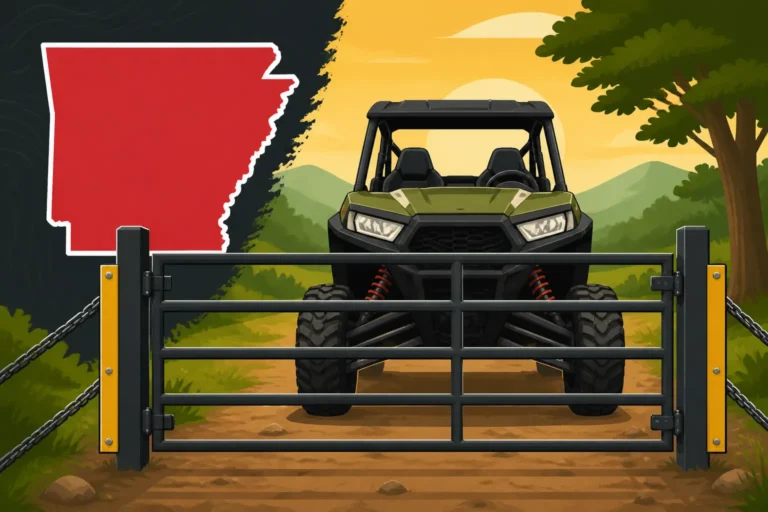
Cutting a corner can look harmless, especially when the main track is rutted or muddy. But repeated shortcuts widen a trail, damage plants, and create new ruts that collect water. Stay on the marked route, even if a neighboring patch of ground looks easier to cross. Do not ride around a closed gate, barrier, or posted sign.
This matters on forest routes as much as at private parks. In the Ouachita Mountains, a bypass around a muddy section can cause erosion that lasts long after the weekend crowd goes home. Near Mill Creek or Wolf Pen Gap, trail markers and closures help direct riders toward routes that are open and suitable for use. If a route is blocked or closed, turn around rather than making your own detour.
Maps can help with planning, but they are not permission to ride every visible road or track. Land ownership and access can be confusing, especially where forest roads, private parcels, and trail systems sit close together. Tools such as onX Offroad can help riders understand mapped routes and plan a trip, but confirm access with the land manager or park before riding. [Arkansas Trail Conditions Before You Tow] can help you think through checks to make before you leave home.
Treat mud, water, and closures with care
Riding through mud is part of the appeal for some people, but there is a difference between enjoying an open trail and chewing up a saturated route. If the ground is soft enough that tires are digging deep ruts, consider turning back or choosing another route. Deep ruts can channel water, damage the trail surface, and make the route harder for the next rider.
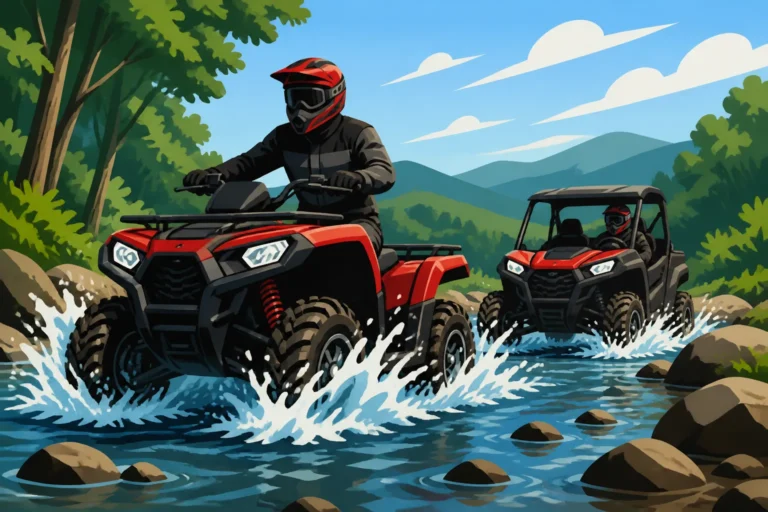
Creek crossings deserve the same restraint. Use designated crossings and follow posted instructions; do not widen a crossing by climbing the banks or driving through vegetation. A small shortcut around a puddle can quickly become a wide, eroded bypass when dozens of machines repeat it. [Arkansas ATV Trails With Creek Crossings] offers related planning context for riders choosing routes.
Closures are not an invitation to find a way around a barrier. Trails may close because of weather, maintenance, erosion, fire conditions, or other site-specific concerns. Check current notices before traveling, then obey any signs at the trailhead. If a route looks damaged or unsafe, report the issue to the park or land manager instead of trying to repair it with your machine.
Be a Good Neighbor at Trailheads and Camps
Keep noise and parking under control
A trailhead is often shared by riders, campers, nearby residents, and people trying to get a vehicle or trailer in and out. Park only where permitted, leave room for emergency access, and avoid blocking gates, turnarounds, or the path to a kiosk. If the lot is busy, unload efficiently and move your truck and trailer to an approved parking spot rather than occupying extra space.
Engine noise carries farther than it seems in a quiet valley. Avoid unnecessary revving, spinning tires, or letting machines idle for long periods near homes, campsites, and other visitors. A quiet start and a little patience can make a noticeable difference, especially early in the morning or later in the day.
Keep your campsite and staging area tidy. Secure loose gear so it cannot blow into the woods, and pack out food scraps, cans, oil containers, and broken parts. A bag of trash left beside a fire ring is still trash someone else has to deal with. At a private park, follow its instructions for washing machines, fueling, pets, alcohol, and quiet hours; policies vary from one property to another.
Respect people, property, and local expectations
Not every road or path that looks rideable is open to the public. Ask before crossing private land, and do not assume that a gate standing open means riders are welcome. Avoid driving through yards, fields, or farm lanes unless you have permission. If someone asks you to leave, stay calm, turn around, and resolve access questions with the landowner or managing agency rather than arguing on the trail.
A friendly greeting goes a long way. Local residents may be used to seeing riders, but they still appreciate a slow pass, a wave, and a little distance from livestock, homes, and parked vehicles. If you see a sign or barrier, treat it as meaningful even when you do not know who put it there. [Arkansas Riding With Owner Permission] and [Arkansas Trespass Law for Riders] are useful related reads when a route’s access is unclear.
A navigation app can help you avoid accidental detours, but it cannot replace permission. onX Offroad may help you review mapped property boundaries and route options before heading out; still, verify access directly when a boundary or route is uncertain. Being willing to turn around is part of responsible riding, not a failure of planning.
Make Group Rides Safer and More Considerate
Plan the ride around the least experienced person
A group ride goes better when the route matches the abilities of everyone attending. A steep, rocky loop that feels manageable to a seasoned rider may be overwhelming for someone on a first trip. Talk through the route, expected terrain, machine widths, and turnaround options before leaving the staging area. Choose a pace that lets the whole group ride comfortably instead of pressuring newer riders to keep up.
Set a lead and sweep rider, and make sure everyone knows where to stop if the group separates. At intersections, wait until the group is accounted for before continuing. Keep children and inexperienced riders within appropriate supervision, and do not assume that a rider who has handled a parking lot is ready for a technical trail. [Best Arkansas ATV Trails for Beginners] can help with choosing a manageable outing.
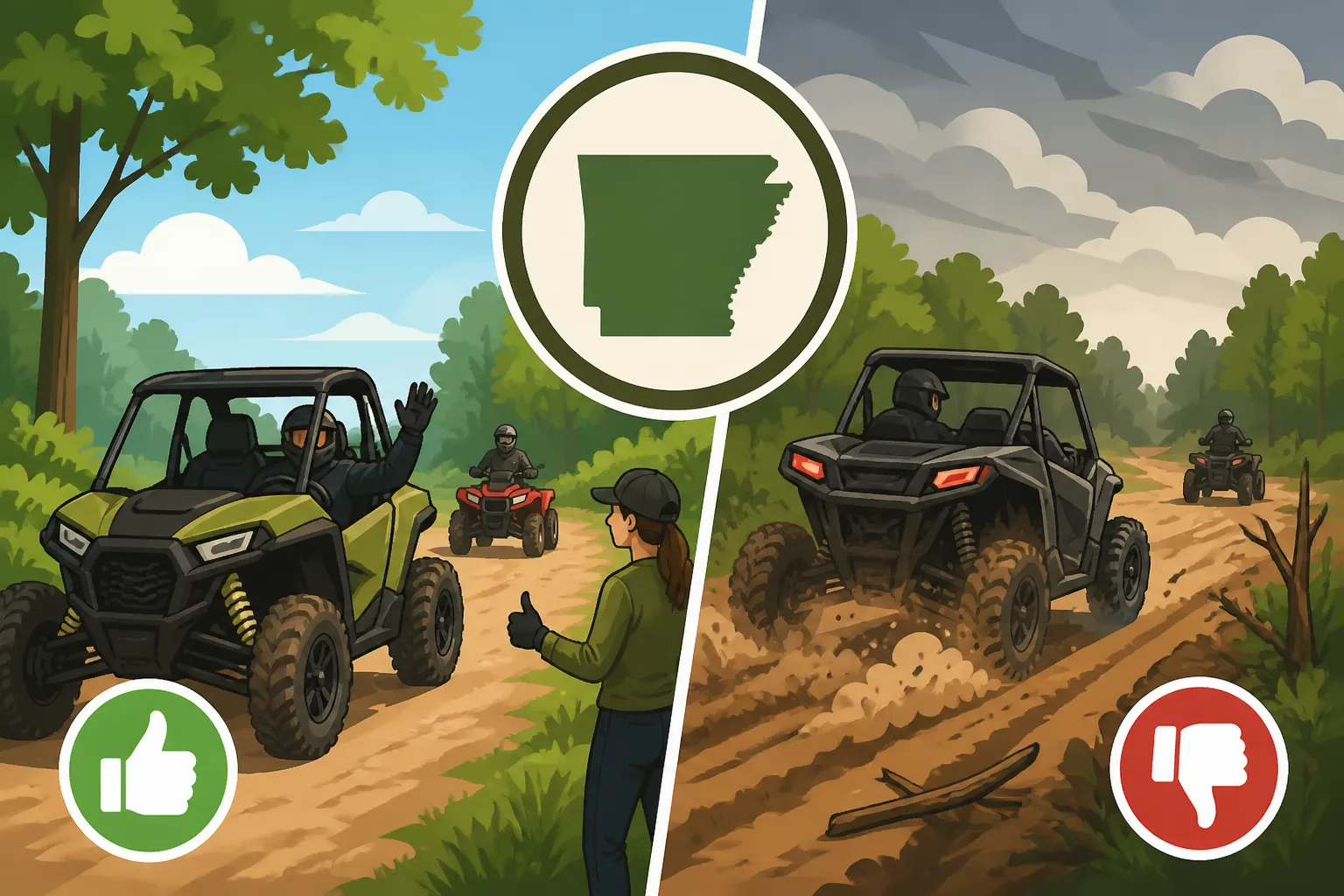
| Situation | Considerate choice | Avoid |
|---|---|---|
| Meeting another group | Slow down, communicate, and pass with room | Racing through or crowding the trail edge |
| Dusty conditions | Increase following distance and reduce speed | Riding close enough to lose visibility |
| Muddy or damaged section | Stay on the route or turn around | Creating a new bypass through vegetation |
| Busy trailhead | Park in designated space and unload efficiently | Blocking a gate, lane, or turnaround |
| Unclear access | Check signs and ask the land manager | Assuming an open gate means public access |
Prepare for the route and leave it ready for the next rider
Before riding, check that your machine is suited to the route and that everyone has basic safety gear, water, and a way to communicate if the group gets separated. Carrying a small first-aid kit and a tow strap can make a minor problem easier to handle without turning it into a trail obstruction. On longer rides in the Ouachitas or Ozarks, let someone outside the group know your general plan and expected return.
Do not leave broken equipment, oil, fuel containers, or personal items behind. If a machine breaks down, move it out of the main travel line if it is safe to do so, and ask for help rather than blocking a narrow section. Riders who stop to assist should park clear of the trail so others can pass.
Before you head out, verify the trail system’s access, permit, width, and closure requirements with the appropriate manager. Requirements can differ between public land and private parks, and a route listed on a map may not be open to every machine. onX Offroad can be one planning aid for reviewing route options, but posted signs and official site information take priority. For additional trip preparation, see [Arkansas Trailhead With Trailer Parking] and [Arkansas Trail Etiquette Locals Expect].
Leave a positive impression
Good etiquette is usually a series of small choices: slowing down near other people, staying on the trail, packing out litter, and accepting a closure without looking for a workaround. Those habits protect the riding experience and make it easier for local communities and land managers to keep routes available.
When riders consistently show consideration, they help prevent avoidable conflicts with residents, other trail users, and property owners. Whether you are exploring near Mena, riding around Ozark, or visiting a private park, leave the place in at least as good a condition as you found it. That is the kind of riding locals are glad to see return.
Disclaimer
This article is for general informational purposes only and does not constitute professional advice. Laws, prices and regulations vary by location and change over time. Consult a qualified professional for guidance on your specific situation.