Byrd’s Adventure Center on the Mulberry
Planning a ride at Byrd’s Adventure Center can feel confusing when trail access, machine choice, lodging, river activities, and changing ground conditions all need sorting before you tow to the Mulberry River. This guide explains what to check, how to prepare, and how to shape a practical ATV or UTV visit near Ozark, Arkansas, without assuming every service or trail is open.
What makes Byrd’s Adventure Center a distinctive ride destination
A private riding destination beside the Mulberry River
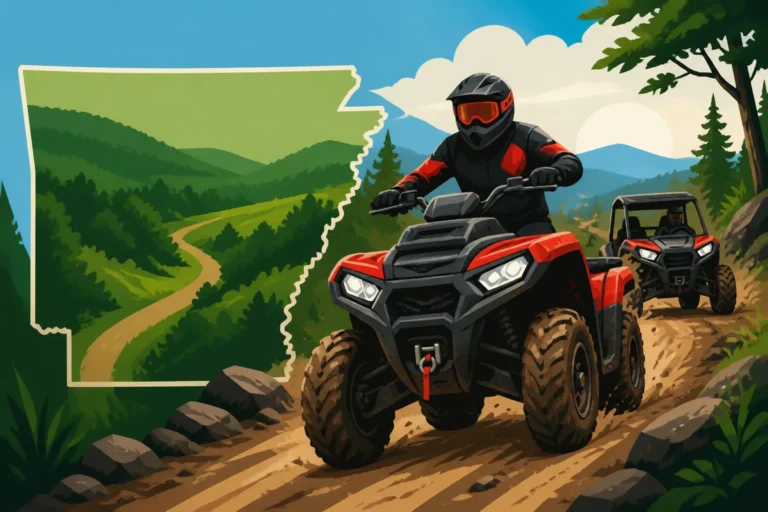
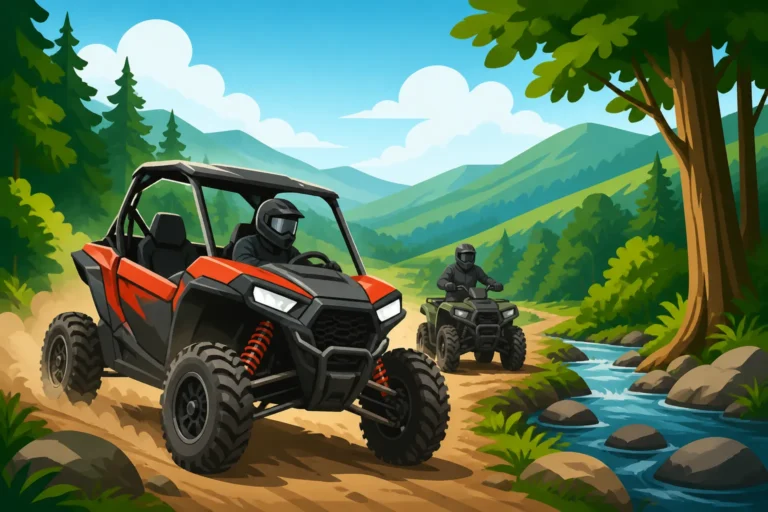
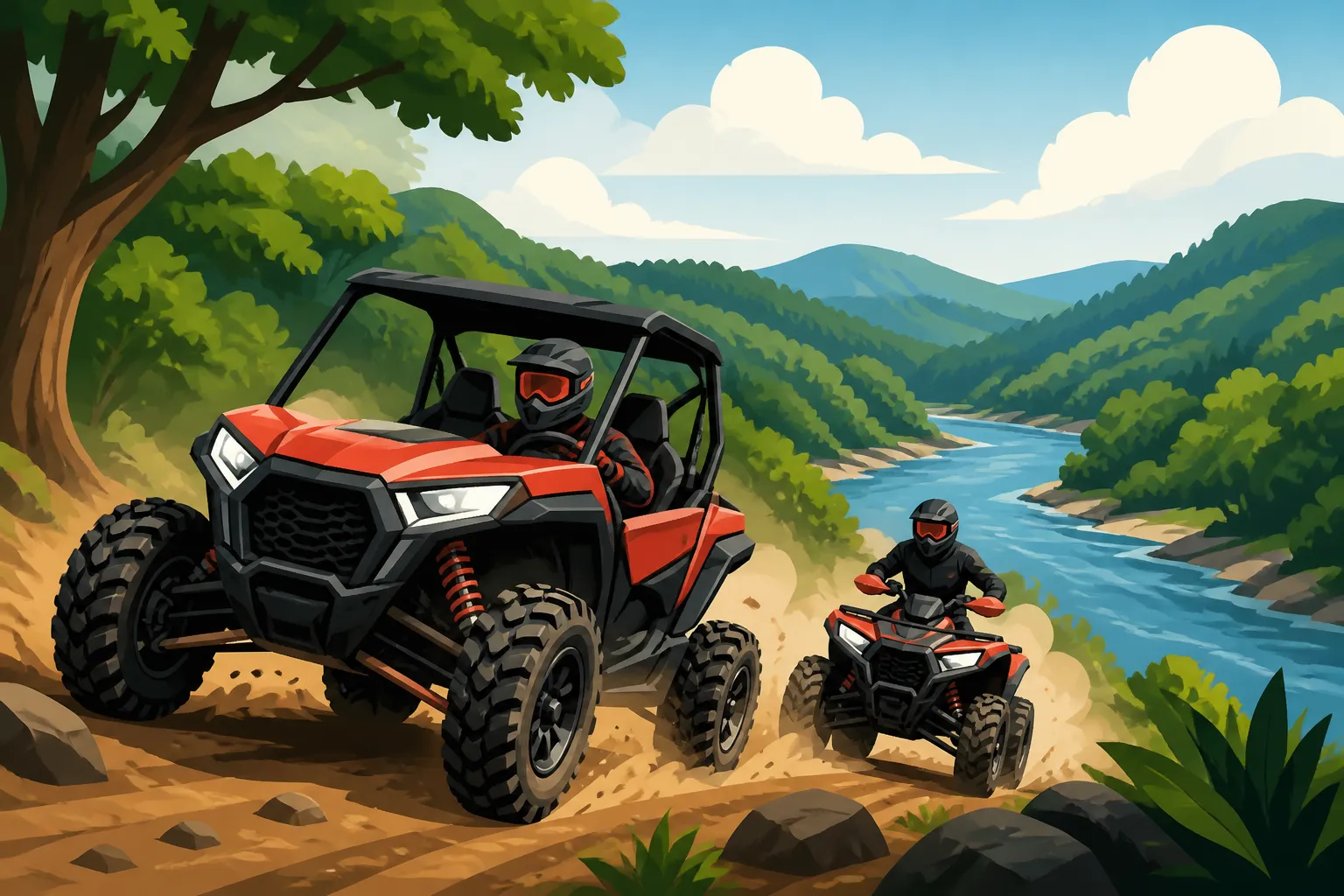
Byrd’s Adventure Center is in the Ozark area of Arkansas, along the Mulberry River. It brings together off-road recreation and a broader outdoor setting, which can make it appealing to groups whose interests do not all revolve around riding. One person may want to spend most of the day on a machine, while someone else is happier fishing, paddling, relaxing at camp, or simply enjoying the river scenery.
That combination is also why it helps to plan the visit around the whole group, not just the trail system. A riding weekend can involve arrival and check-in, machine preparation, trail time, meals, and decisions about where everyone will sleep. If you are trying to understand what the property offers, Byrd’s Adventure Center on the Mulberry is a useful companion topic, as is Byrd’s 800 Acres in Arkansas for more context about the riding setting.
The property is private, so do not assume that rules for a nearby public trail or national forest apply automatically. Confirm how riding access works for your visit, what areas are open to your machine, and whether the center has property-specific requirements. A national forest permit, for example, should not be treated as a substitute for whatever access or check-in rules apply at a private riding destination.
Choosing an ATV or UTV for your group
The right machine depends on the riders, the terrain you plan to tackle, and how you want to spend the day. A quad can suit a solo rider who is comfortable managing a smaller machine. A side-by-side may be more practical for a couple, a family, or a group that wants to ride together, but its width can affect where it can go. Don’t choose a machine based only on the number of seats; consider the riders’ experience, comfort, and ability to handle the terrain.
If you are bringing your own machine, ask about width restrictions and any trail limitations before loading it. Measure the machine at its widest point, including accessories if they extend beyond the body. A side-by-side that looks compact in the garage can be a different proposition at a narrow gate or on a tight trail. If you plan to rent, ask what models are available and whether a helmet or other riding gear is provided.
| Your group or plan | What to consider before choosing |
|---|---|
| One experienced rider | A quad may be a straightforward option, provided it suits the rider and the permitted trails |
| Two riders who want to travel together | Compare a two-seat side-by-side with two separate machines, including trail access and passenger rules |
| Family or larger group | Ask about seat capacity, age and size rules, and whether everyone can ride in the same machine |
| Bringing a wide UTV | Confirm the property’s width limits and trail access before towing it to the center |
| First visit or limited riding experience | Ask about beginner-friendly routes, orientation, and whether a guided option is available |
A machine’s advertised passenger capacity does not answer every safety question. A child who can technically sit in a seat may still need a properly fitting helmet, a secure riding position, and close adult attention. Confirm the center’s own age, passenger, and safety policies before you book or unload.
Plan your visit before you tow
Confirm access, services, and current conditions
A little advance checking can prevent the frustrating kind of trip where you arrive with a trailer full of gear and discover that a service you expected is unavailable or that conditions have changed. Ask the center directly about riding access, check-in procedures, trail availability, machine requirements, and any rules for passengers. If you are staying overnight, confirm what kind of accommodation or camping option fits your group and what you need to bring.
Trail and property conditions can shift after heavy rain, maintenance, or other closures. Call before departure rather than relying on an old post, a saved route, or a friend’s recollection of a previous visit. The advice in Arkansas Trail Conditions Before You Tow is useful for building that habit, while Arkansas Trail Etiquette Locals Expect offers broader reminders about sharing riding areas responsibly.
If you use onX Offroad to explore your route and organize a riding plan, download the information you may need before leaving home, especially if you expect limited cell service. Treat a map app as a planning aid, not as confirmation that a route is open or that you have permission to ride it. Check access with the center and follow posted directions on the property.
Make lodging and transportation part of the plan
A weekend at Byrd’s can involve more than finding a place to sleep. Think through where your trailer will be parked, how you will unload, whether you need to transport your machine to a particular staging area, and what your group will do if one person wants a break from riding. Ask about lodging and camping options directly, since the best fit depends on your group size, equipment, and preferences. Arkansas Off-Road Parks With Cabins and Arkansas Off-Road Parks With RV Hookups can help you compare the kinds of stays riders often look for.
If you are driving from farther away, consider how long the tow will take and what roads you will use for the final approach. A loaded trailer can make steep grades, narrow turns, and unfamiliar entrances more stressful than they appear on a map. Check your trailer lights, tire condition, hitch connection, and tie-downs before setting out. Keep the machine’s registration and proof of ownership accessible if you are traveling with your own vehicle, and carry any required documents for the trailer as well.
Pack for a full day outdoors even if your plan is only to ride for a few hours. Weather near the Mulberry River can make a warm, sunny morning feel very different from a wet or windy afternoon. Bring drinking water, suitable layers, rain protection when the forecast calls for it, and a change of clothes if you expect to spend time near the river. Store essentials where they remain protected from dust and splashes.
Get more from the ride day
Build a realistic itinerary
A comfortable itinerary leaves room for the practical parts of the day. If you are bringing your own ATV or UTV, allow time to unload, check the machine, review the property rules, and get everyone organized before riding. A group that rushes straight from the trailer to the trail is more likely to forget a helmet, water, or an important check-in step.
For a first visit, keep the first ride modest. Start with a route that matches the least experienced person in your group, then decide whether everyone is comfortable continuing. The most confident rider may be eager to cover more ground, but a family group or mixed-experience party often has a better day when nobody feels pushed into riding beyond their comfort level. Ask the center which areas are appropriate for your machine and experience rather than trying to infer difficulty from a map line.
A sample day might look like this:
- Arrive with enough time to check in and unload without rushing.
- Confirm where your machine is permitted to ride and review any safety instructions.
- Start with a shorter ride to get familiar with the terrain and how the group is handling it.
- Pause for water and a quick machine check before continuing.
- Leave time to return, clean up, refuel as needed, and secure equipment before dinner.
The point is not to follow a rigid schedule. It is to avoid treating every minute as trail time. Breaks matter, especially for children, new riders, and anyone who is not used to a full day of vibration, dust, or rough ground.
Respect the land and ride within your limits
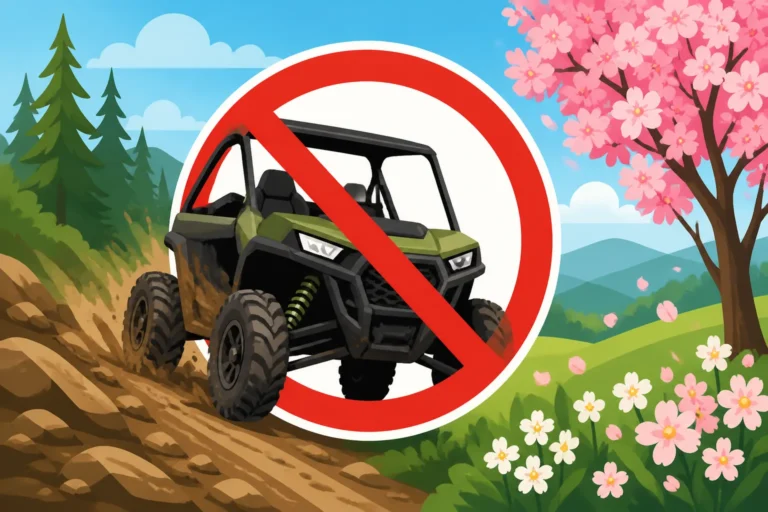
The Mulberry River setting is part of the appeal, but it also calls for care. Stay on authorized routes, avoid damaging vegetation or banks, and do not assume that a tempting side track is open just because it is visible. If a route is blocked or marked closed, turn around rather than trying to find a way around the barrier. Respecting closures helps protect the property and can make access more sustainable for everyone.
Ride at a pace that leaves room to react. Dust can reduce visibility, and loose or uneven ground can surprise someone who is focused on the rider ahead. Leave enough space between machines to avoid following too closely, and agree on a simple way to stop the group if someone needs help. Carry basic repair and recovery items suited to your machine, and tell someone in your group where you are going if you split into smaller parties.
For a broader look at the area beyond the property, Arkansas Riding on the Mulberry River and Arkansas Riding Near Ozark can help you explore related riding context. Keep the distinction clear between the center’s private riding access and other nearby land. Access rules can change from one property or trail system to another, so never extend permission from one riding area to a neighboring road or tract.
Prepare for weather, cleanup, and the trip home
Rain and changing ground conditions
Rain can change the character of a ride quickly. A route that felt manageable on firm ground may become slick, deeply rutted, or harder to climb after a storm. If conditions look questionable, ask whether riding is limited or whether particular routes have been closed. Avoid making a difficult section worse by spinning tires or forcing a line that is beyond your machine or your group’s skill level.
Use onX Offroad or another map tool to keep your planned route organized, but make decisions based on current instructions and what you see on the ground. A mapped line does not tell you whether a trail is muddy, blocked, or unsuitable for your machine today. If you are unsure, turn back and choose a safer route. The same caution applies near the river: do not treat a familiar crossing or shoreline as safe when water levels or conditions have changed.
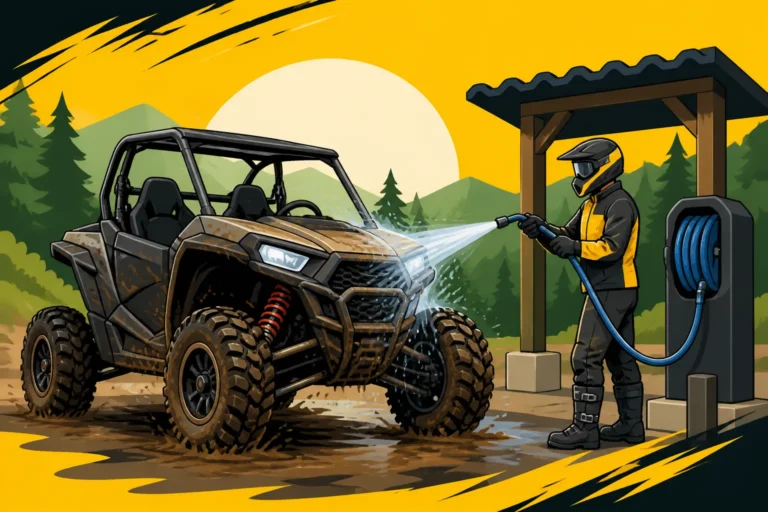
After a wet ride, inspect the machine before loading it. Look for mud packed around moving parts, debris near the radiator, loose straps, and anything that may have shifted during the ride. A quick check at the property can save you from discovering a problem on the road. If you need a place to wash your machine, ask what facilities are available rather than assuming a wash area is provided.
Pack for comfort and leave the site responsibly
The gear that makes the biggest difference is often the unglamorous stuff: a properly fitting helmet, eye protection, gloves, long sleeves, sturdy footwear, water, and a dry layer for afterward. Dusty conditions can make goggles especially useful, while rain gear can keep a short shower from turning into a miserable ride. Keep spare clothing in a sealed bag so it stays clean and dry while you are out.
Before you leave, check the machine and trailer again. Confirm the tie-downs are secure, trailer lights work, and loose equipment is stowed. Pick up trash and follow the center’s directions for disposing of waste, parking, and cleaning. If you stayed overnight, check the specific checkout instructions for your lodging or campsite rather than assuming they match another campground you have used.
A visit to Byrd’s Adventure Center works best when you treat it as a complete outdoor trip, not simply a trail stop. Confirm access and services before departure, match the machine to the group, and leave enough flexibility for weather and breaks. With that preparation, you can enjoy the riding and the river setting without letting avoidable logistics take over the weekend.
Disclaimer
This article is for general informational purposes only and does not constitute professional advice. Laws, prices and regulations vary by location and change over time. Consult a qualified professional for guidance on your specific situation.