72 Inch Gates at Both Ends
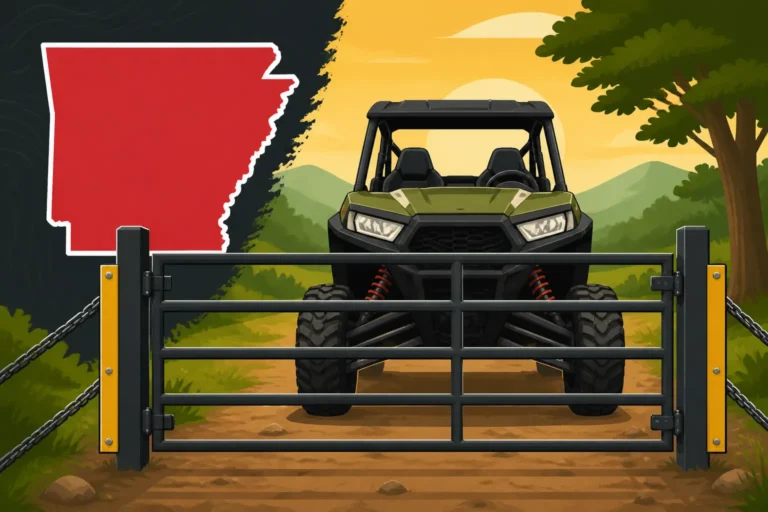
A side-by-side can look narrow enough in the driveway and still become a problem when it reaches a fixed-width trail gate. At Huckleberry Mountain in the Ouachita National Forest, 72-inch gates at both ends make machine width a practical go-or-no-go question. This guide explains what the gates mean, how to check your machine and plan a ride without risking damage or a wasted trip.
What the 72-inch gates mean at Huckleberry Mountain
The gates are a real access constraint
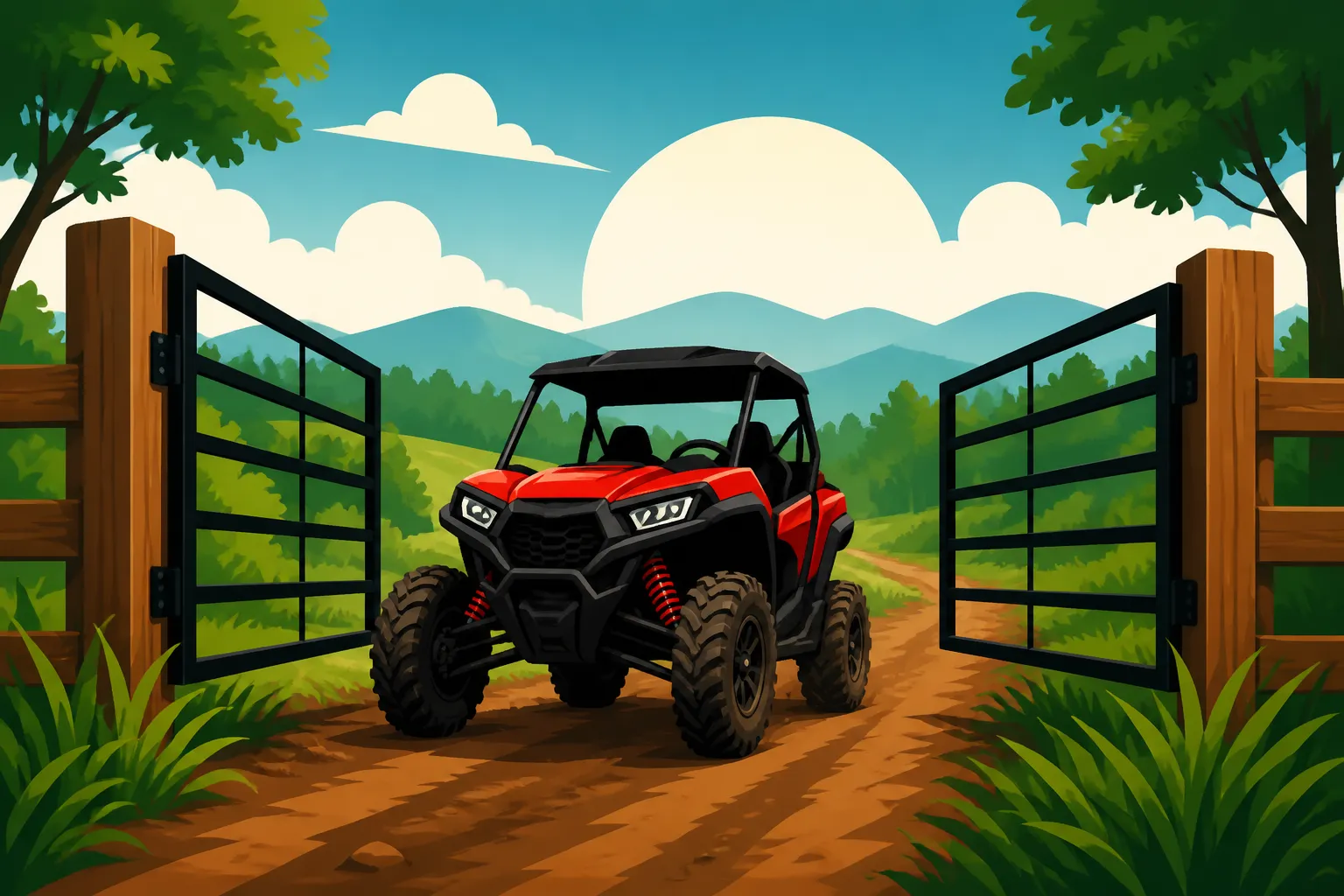
The 72-inch figure refers to the opening a machine must pass through to enter or leave the trail. It is not just a suggestion to keep wide machines off the trail: if your ATV or UTV cannot physically clear the gate, you cannot use that entrance. Because gates are at both ends, you should treat the width limit as applying to the route, not merely one approach.
That matters when planning a day around Huckleberry Mountain Trail 2611. A machine might be manageable on open forest roads and still be too wide for the access point. And because you have to be able to get back out, reaching the first gate is not a useful test of whether the whole outing will work.
The gate measurement also should not be confused with a general guarantee that every machine under 72 inches will fit comfortably. A machine close to the limit may have little room to spare, especially if the opening is uneven or the approach makes it difficult to line up squarely. The practical question is not only, “What does the brochure say?” It is, “What is the widest point on my machine, and can it pass through this specific opening without contact?”
For trail background and route context, start with Huckleberry Mountain Trail in Arkansas. If you are comparing trail systems before choosing a destination, Arkansas ATV Trails With Width Limits can help you think about width as a trip-planning factor rather than something to check at the last minute.
A gate width is not the same as a machine’s advertised width
Vehicle specifications usually give a width figure, but that number may not account for every accessory or modification. Added wheels, tires, wheel spacers, fender flares, bumpers, mirrors, racks, or other equipment can affect the widest point. Some details may extend beyond the bodywork, so measuring only the cab or plastic panels can give you a false sense of clearance.
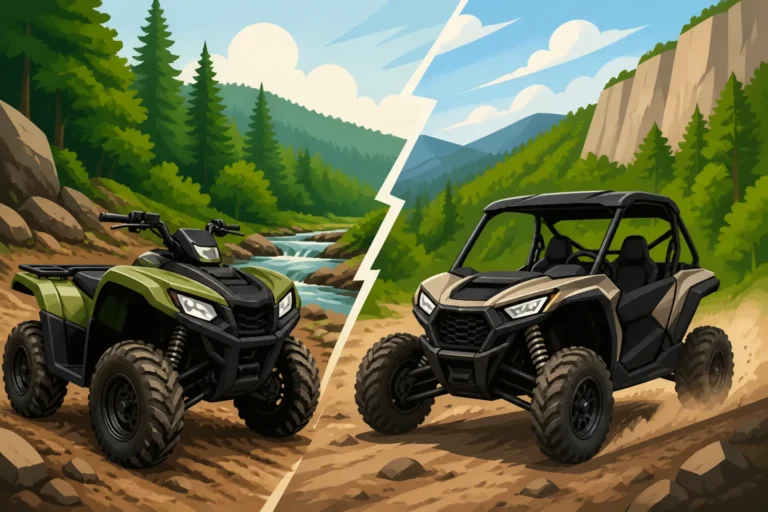
Measure across the widest fixed points on the machine, from side to side. If you regularly ride with accessories attached, measure the machine as it will actually be used. A UTV that fits in its stock configuration may not have the same clearance after a wheel or tire change. The same principle applies to an ATV with wider-than-stock tires or added guards.
Also account for the fact that a tape measure reading does not tell the whole story. If your machine measures close to the opening, a small alignment error can put a tire or accessory against a post. A muddy or sloped approach may make it harder to line up straight. Avoid treating a close fit as permission to force your way through: scraping a machine, damaging a gate, or getting stuck at an access point can turn a planned ride into a stressful recovery.
| What to check | Why it matters | Practical approach |
|---|---|---|
| Widest point on the machine | The body width may not include tires or accessories | Measure from the outermost points on both sides |
| Added equipment | Modifications can change clearance | Measure the setup you will take on the ride |
| Gate and approach condition | An angled or uneven approach can reduce usable clearance | Check current trail information and approach carefully |
| Width of the route | Access limits may rule out some machines | Confirm the trail’s restrictions before loading up |
| Return access | The same gate constraint applies when leaving | Make sure your machine can pass at both ends |
The physical gate does not replace current trail rules
A gate can tell you something about physical access, but it does not answer every question about whether a trail is open or suitable for your trip. Forest roads and trails may have closures, seasonal restrictions, maintenance changes, or other rules that affect access. A machine fitting through the gate is not proof that the route is open on the day you arrive.
Check current information from the land manager before traveling, especially if you are planning around a weekend, a long drive, or a rental pickup. For Huckleberry Mountain, this includes checking for seasonal closures and other access notices. Huckleberry Mountain’s Closure Months in Arkansas is a useful companion topic when building a trip plan, but you should still verify the latest status before leaving.
A mapping app such as onX Offroad can help you review an area and organize a route, but use it as a planning aid rather than the final authority on closures or access permission. Look for current land-manager notices as well, and do not assume that a mapped line means a trail is open to your machine.
How to tell whether your ATV or UTV will fit
Measure the machine you are actually bringing
Start with the machine itself, not a remembered specification or a sales listing. Park it on reasonably level ground, set the tires as they will be for the ride, and measure across the widest points. If you have mirrors, guards, or other parts that stick out, include them in your check. If a passenger will ride along, do not forget that your loaded setup may be harder to position precisely at a narrow entrance.
Write the measurement down and keep it with your trip notes. This is especially useful if more than one machine is coming. A group can have several models that look similar from the front but differ in width because of trim, tires, or accessories. Checking each machine separately avoids the uncomfortable surprise of finding out at the trailhead that one vehicle cannot enter.
If the measurement is close to 72 inches, do not rely on a hopeful estimate. Contact the appropriate land-management office or check its current trail guidance to clarify the restriction and any measurement information available. A small margin is reassuring; a measurement that leaves virtually no room for positioning is a warning to choose a different route or a narrower machine.
Check modifications before you tow
It is easy to focus on the original factory setup and overlook changes made over time. Wider tires, wheel spacers, aftermarket fender extensions, and replacement bumpers can alter the overall width. Some changes may be small individually but add up when the machine is measured from its outermost points.
If you are renting, ask the rental provider for the width of the exact model and configuration you will receive. Do not assume every machine in a fleet has identical dimensions. If the provider cannot confirm the measurement, ask whether the machine is suitable for the trail’s gate restriction and get a clear answer before you book or drive to the pickup location. This is much easier than discovering a mismatch after you have loaded the machine or arrived near the trail.
For your own equipment, take a fresh measurement after any change that could affect width. Save a photo of the measurement or make a note in your phone. If you use onX Offroad for route planning, keep the machine dimensions in your trip notes too; a route plan is only useful if the vehicle you take can physically use it.
Leave room for careful positioning
A machine’s measured width and a gate’s clear opening are not interchangeable numbers. Even when the nominal figures seem to line up, the driver still needs to approach straight and pass without rubbing the posts. A narrow gap can be particularly awkward if visibility is limited, the surface is uneven, or a passenger cannot help the driver judge the sides.
If a gate looks tighter than expected, stop and reassess. Do not remove a gate, push it beyond its intended range, or drive over a barrier to get around the restriction. Do not ask a passenger to squeeze between the vehicle and a post while the machine is moving. A spotter can help from a safe position, but they cannot make an over-wide vehicle fit.
When in doubt, turn around only if you can do so safely and without blocking access. If a vehicle is already at the entrance and cannot pass, do not make the problem worse by forcing it. A little caution before departure is far less frustrating than having to improvise at a remote trail access point.
Plan a Huckleberry Mountain ride around the gate restriction
Confirm access before you load up
Make a short checklist before putting machines on the trailer:
- Identify the exact trail or trail segment you plan to ride.
- Check current access information from the land manager.
- Confirm any width restrictions and seasonal closures.
- Measure every machine, including accessories.
- Make sure the planned entrance and exit work for your vehicle.
- Save a map and relevant contact information for the trip.
Using onX Offroad to review your planned area can be useful, particularly when you want to organize a route before you leave home. Download or save the information you expect to need if you may lose cell service, but still compare your plan with current official access notices. Map information and land-manager rules serve different purposes: one helps you orient yourself, and the other tells you what access is allowed.
For a broader picture of the Huckleberry Mountain area, Huckleberry Mountain’s Three Interconnecting Loops can help you understand how the riding routes relate to one another. Before towing from elsewhere in the state, Arkansas Trail Conditions Before You Tow is also a sensible reminder to check conditions rather than assume a route is unchanged.
Do not assume both ends offer the same practical approach
The gates may have the same stated width, but the ground leading to them may not feel identical. One approach could be easier to line up than the other, while the other might have a slope, uneven surface, or limited room to maneuver. That does not change the restriction, but it can affect how comfortably a vehicle near the limit can pass.
Plan your route with both access points in mind. If your itinerary involves entering at one end and leaving at another, make sure the vehicle can clear both gates and that the route is open in the direction you intend to travel. Do not rely on arriving at one gate and assuming the other will be manageable just because the listed width is the same.
If your group has a mix of machines, set expectations before the ride. Agree on what to do if a vehicle cannot safely pass, and avoid letting the group split up without a clear plan. That discussion may feel overly cautious while everyone is loading at home, but it is much better than debating options at a narrow gate with a trailer, limited service, and daylight slipping away.
Have a backup destination
A backup plan is especially helpful if you are traveling a long distance or bringing a machine whose width is close to the limit. Choose another legal riding area that suits your machine and confirm its access rules in advance. Do not assume a nearby forest road or trail is a suitable substitute; different routes can have different restrictions and closure conditions.
Keep the plan flexible. Rain, maintenance, or a closure notice can change what is practical even when your ATV or UTV fits the gate. onX Offroad can help you keep alternate areas and route notes organized, while official notices should guide decisions about whether you may ride a particular trail.
For more route-planning context, Arkansas Trails in the Ouachita Mountains covers the broader region, and Arkansas ATV Trail Map Downloads is relevant when you want to prepare maps before you lose reliable service. Neither replaces checking the specific status and rules for the route you intend to use.
Common mistakes to avoid at a 72-inch gate
Measuring only the vehicle body
A common mistake is checking the cab, seat, or body panels and assuming that is the machine’s total width. The widest point may be at the tires, wheels, mirrors, guards, or an aftermarket accessory. This is why measuring the complete machine matters more than looking up a single specification.
Another easy mistake is measuring a machine in one setup and riding it in another. If you add equipment after measuring, recheck the width. A measurement from last season may no longer apply after upgrades or repairs.
Treating a close fit as a guaranteed fit
A machine that is nearly as wide as the opening leaves little room for error. A driver may need to reposition, and a passenger may be unable to see the far side clearly. If you have to angle the vehicle sharply or press against the posts to get through, the setup is not a comfortable fit.
Do not rely on tire deflation, removing a barrier, or forcing an accessory through as a workaround. If the machine does not clear the gate safely as configured, choose a trail that suits it. The goal is to ride, not to test the strength of a gate or the width of your fenders.
Assuming a map or past visit settles today’s access
A route displayed in a mapping app is not a promise that it is currently open. Likewise, a successful ride from a previous year does not settle today’s restrictions or conditions. Closures, rules, and trail conditions can change, so check before every trip.
The safest routine is simple: verify current access, measure your machine, and make sure both ends of the route are workable. That small amount of preparation helps avoid a tow, a disappointed group, or an unsafe attempt to squeeze through a gate that your machine was never suited to pass.
Disclaimer
This article is for general informational purposes only and does not constitute professional advice. Laws, prices and regulations vary by location and change over time. Consult a qualified professional for guidance on your specific situation.