Who Must Register an ATV in Arkansas
It's incredibly frustrating when you just want to hit the trails or use your ATV for farm chores, but you're constantly second-guessing whether you need to jump through bureaucratic hoops. The rules for ATV and UTV registration in Arkansas can feel like a tangled mess, leaving many riders unsure of their obligations. This comprehensive guide is here to untangle that confusion, clearly outlining exactly who is required to register their ATV or side-by-side in the Natural State, and why.
Understanding Arkansas's Official ATV Definition
Before we can even talk about who needs to register, we first need to understand what Arkansas defines as an All-Terrain Vehicle (ATV) for the purpose of registration. It might sound obvious, but the state has specific criteria that determine if your machine falls under the ATV registration mandate. Not every motorized off-road vehicle is treated the same way, and knowing these distinctions is your first step to compliance. Ignoring this foundational definition is a common pitfall that can lead to unexpected tickets or fines.
The "Nonhighway Tire" Clause
One of the most defining characteristics in Arkansas's ATV statute revolves around the type of tires your machine uses. The law specifically mentions "nonhighway tires." What does this mean in practical terms? It refers to those knobby, aggressive tires designed for gripping dirt, mud, and rocks, rather than the smooth, treaded tires you'd find on a car or truck meant for paved roads. If your machine is equipped with tires clearly not intended for highway use, it's a strong indicator that the state considers it an ATV. This distinction helps differentiate true off-road vehicles from, say, a modified golf cart that someone might try to push into an ATV category. It's all about the intended primary use of the vehicle, as evidenced by its very design.
Riding on nonhighway tires on public roads can also be a red flag for law enforcement, even if you believe you have an exemption. While some areas might permit certain machines on city streets, the core design around nonhighway tires usually pushes a machine into the ATV category for registration purposes. You can find more details in [What Arkansas's ATV Statute Covers].
Engine Size and Width Limits
Beyond the tires, Arkansas law also sets parameters based on the machine's physical dimensions and power. Generally, an ATV is described as a three-, four-, or six-wheeled vehicle that's 50 inches or less in width and has an engine displacement of 1,000 cubic centimeters (1,000cc) or less. These numbers aren't arbitrary; they help distinguish typical ATVs from larger, often more powerful utility vehicles (UTVs) or specialized off-road buggies that might fall under different regulations or even be too large for certain trails.
It's crucial to measure your machine if you're close to these limits, especially the 50-inch width. Many popular side-by-sides, for instance, are wider than 50 inches, which means they might be excluded from the strict ATV definition but still require registration under UTV rules. This subtle difference can be a real headache, as owners often assume "off-road vehicle" means "ATV" without checking the specifics. If your machine is designed with a broader stance for stability or passenger comfort, it's likely to exceed the ATV width limit. For those owning larger machines, checking [Arkansas Machines Wider Than 50 Inches] and [Arkansas Machines Over 1,000cc] might be helpful.
Three, Four, or Six Wheels?
The number of wheels your machine has also plays a role in the definition. Arkansas's statute specifically includes three-wheeled, four-wheeled, and six-wheeled vehicles. This covers your traditional quad, the less common three-wheelers (which are rare these days but still exist), and some of the more specialized six-wheel drive utility vehicles. It’s important to note that dirt bikes, while off-road capable, typically fall under a separate category in Arkansas and have their own distinct registration requirements.
So, if you have a four-wheeler that fits the tire, width, and engine size criteria, it's almost certainly an ATV in the eyes of the state. If you own a six-wheel drive vehicle often used for hauling or farm work, it's also likely included, assuming it meets the other specifications. This broad inclusion ensures that most common off-road recreational and utility vehicles are captured by the registration framework, preventing loopholes based on minor design variations.
The Basic Requirement: Public Land Use
Here’s the golden rule, the primary trigger for ATV registration in Arkansas: if you intend to operate your machine on any public lands, trails, or even briefly cross a public road, you must register it. This isn't just about designated OHV parks; it extends to national forest trails, state land, and any property owned or managed by a government entity where ATV riding is permitted. Many riders mistakenly believe that if they're not riding on a paved highway, they're "off-road" and therefore exempt. However, "public land" covers a vast array of terrain, and simply having access to it through a forest service road can bring you under the registration mandate. This requirement is in place for safety, identification, and funding for trail maintenance.
Riding on Public Trails and Lands
Picture this: you've planned a fantastic weekend trip to the Ouachita National Forest, excited to explore the miles of winding trails at Wolf Pen Gap or Mill Creek. You've loaded your quad onto the trailer, packed your gear, and you're ready to go. But before your tires even touch the dirt on a federal or state-managed trail, your ATV absolutely needs to be registered. This is the clearest-cut scenario for mandatory registration. These public trail systems, while designed for off-road recreation, are maintained with public funds, and registration fees contribute to that upkeep and safety management. Without registration, you're not just risking a fine; you're also potentially riding on trails without contributing to their sustainability or providing a means for authorities to identify you if an incident occurs.
It’s not just the big, named trail systems either. Any public land, whether it’s a wildlife management area (WMA) where ATVs are allowed on specific roads (always check WMA-specific rules, as many restrict ATV use heavily), or even designated easements on public utility land, will likely require your machine to be registered. This is critical for ensuring accountability and helping land managers enforce rules about vehicle types and impacts. For more on where you might ride, check out [Arkansas ATV Trails: Where to Ride].
Crossing Public Roads and Highways
This is where many riders get tripped up. You might use your ATV primarily on your private farm or hunting lease, but what happens when that private land is split by a county road, or you need to cross a short stretch of state highway to get from one section of your property to another? Even these brief, direct crossings of public roads—even gravel county roads—trigger the registration requirement. The law isn't concerned with the duration of your presence on the public road, but rather the act of being on it at all.
Think of it this way: the moment your wheels touch asphalt or a public gravel surface, you're interacting with public infrastructure. This exposure means that, should an accident occur or a legal issue arise, your vehicle needs to be identifiable. While Arkansas does have [Arkansas's Six Statutory Road Exceptions] that permit certain types of use on public roads, these exceptions do not waive the registration requirement itself. They merely outline when you might legally be on a road. Therefore, even if you're only crossing a two-lane highway to reach another part of your hunting ground, your ATV must be registered and display a valid decal. It's a small step that can save you a significant headache with law enforcement.
Farm and Hunting Operations Exemptions (and their limits)
Arkansas offers some specific, limited exemptions for ATVs used primarily in agricultural or hunting operations. This can be a huge relief for farmers and hunters who rely on these machines for their livelihoods or outdoor pursuits. However, these aren't blanket exemptions, and they come with important stipulations. For instance, an ATV used exclusively for direct farm work on private land, such as checking fences, hauling feed, or spraying crops, typically does not need to be registered. The same often applies to machines used solely for traversing private hunting leases to retrieve game or access stands.
The critical word here is "exclusively" or "primarily." If that same farm ATV is then taken to a public trail system for recreational riding on the weekend, the exemption disappears, and registration becomes mandatory. Likewise, if your hunting ATV is used to cross a public road, even if only to get to another part of your private lease, it also needs to be registered. The line is drawn where private, operational use bleeds into public access or recreational activity. It's a common misconception that all "farm use" means "no registration ever." Always verify the specifics, as these exemptions are narrowly defined to prevent abuse and ensure public safety on shared resources. For more on farm use, see [Arkansas Farming Operation Road Use].
Private Land Riding: When Registration Isn't Needed (and when it subtly is)
This is perhaps the most common area of confusion for ATV owners in Arkansas. Many assume that if they only ever ride on private property, they are completely exempt from registration. While largely true, there are nuances that riders absolutely must understand to avoid inadvertently breaking the law. The spirit of the law focuses on public access and the need for identification in those contexts. However, the moment that private use intersects with public access, even briefly, the rules change.
Your Own Property and Leased Land
Let's start with the straightforward scenario: you own a large tract of land in rural Arkansas, or you have a long-term lease on a substantial piece of property. If your ATV or UTV never leaves the boundaries of that private land, you generally do not need to register it with the state. This includes riding around your own backyard, using it for chores on your farm, or simply enjoying the trails you've built on your own acreage. The state’s interest in identifying and regulating your vehicle is significantly diminished when it operates exclusively within private confines. This freedom is one of the joys of land ownership or secure leasing for many ATV enthusiasts.
However, even within this seemingly clear-cut rule, caution is advised. If your property abuts a public road and you regularly ride near that boundary, you could be mistaken for riding on public access points. It’s always best practice to ensure your riding is unmistakably on your private property. Moreover, should you ever decide to sell the machine, having some form of proof of ownership, even without prior registration, will be essential for the next owner. [Arkansas ATV Bill of Sale Requirements] can help with that.
The Nuance of Accessing Private Land
Now, for the tricky part. What if your private land isn't one contiguous block? What if you own 80 acres, but to get to the back 40, you have to cross a county road for a hundred yards? Or perhaps your hunting lease requires you to ride a short stretch of a gravel road that's open to the public to reach a specific gate. In these situations, even though your ultimate destination and primary use are private, the act of traversing that public access point triggers the registration requirement. The law doesn't differentiate between recreational riding on public roads and merely crossing them.
This nuance catches a lot of people off guard. They think, "But I'm not riding on the road, I'm just getting to my land!" Unfortunately, from a legal standpoint, that distinction often doesn't matter. The machine is on a public thoroughfare, and therefore, it needs to be registered. This is where the local sheriff's deputy or game warden will often intervene. Their concern is less about your intent and more about the fact that an unregistered, untraceable vehicle is operating on publicly accessible land or roads, even for a brief moment.
Backyard Riding and Isolated Use
For those who use their ATVs purely for "backyard riding," meaning within the confines of their private residential property or a small, isolated tract of land, registration is generally not required. This would include children riding small quads in the yard, or adults using a machine to pull a small trailer for yard work, as long as the machine never leaves that private space. The key here is "isolated use" – no public access points are involved, and the machine doesn't interact with any public infrastructure or land.
However, be mindful of noise ordinances and potential nuisance complaints from neighbors if your "backyard riding" becomes a disturbance. While not a registration issue, it's a common factor in why local authorities might investigate ATV use on private land. Furthermore, if you ever transport that machine on a public road, even on a trailer, you don't need the ATV itself to be registered (as it's being transported, not operated). But the moment it's unloaded and ridden, the rules about public access apply. If you're riding with no paper trail, consider options like [Arkansas ATV Registration Without a Receipt] if you ever do need to register it.
Specific Scenarios That Trigger Registration
Beyond the basic public land use rule, various circumstances surrounding the acquisition and ownership of an ATV in Arkansas can specifically trigger the need for registration. It's not just about where you ride, but also how you came to own the machine and from where it originated. Understanding these specific scenarios can help you prepare the necessary paperwork and avoid delays or fines.
New Purchases and Transfers
When you purchase a new or used ATV in Arkansas, whether from a dealership or a private seller, the clock typically starts ticking for registration. Arkansas generally requires you to register your newly acquired ATV within a specific timeframe, usually 30 days from the date of purchase. This applies to both brand-new machines from a dealer and pre-owned machines bought from an individual. The purpose is to establish official ownership and ensure that sales tax (if applicable) is collected. The seller will usually provide you with a bill of sale, and if it's a new machine, a Manufacturer's Statement of Origin (MSO) which are vital documents for the registration process.
Even if you intend to ride your newly purchased ATV only on private land, many owners choose to register it anyway. Why? Because registration provides official proof of ownership through the state's system, which can be invaluable for insurance purposes, proving legal ownership in case of theft, or facilitating a future sale. While not always required for private land use, it's often a smart move for protecting your investment. For a helpful checklist, see [Arkansas Registration Paperwork Checklist].
Machines Brought from Out of State
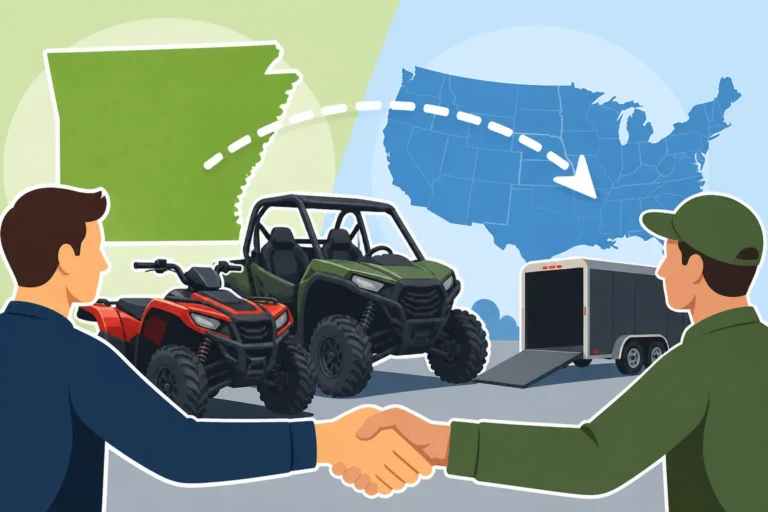
Moving to Arkansas with your ATV, or buying a machine from a seller in a neighboring state like Missouri or Texas, presents a specific registration scenario. If you're a new resident bringing your ATV into Arkansas and plan to ride it on public lands, you'll need to register it in Arkansas. Similarly, if you purchase an ATV out-of-state and bring it back to Arkansas for public land use, it will need to be registered in Arkansas. This ensures that all machines operating on public land within the state adhere to Arkansas's regulations and contribute to its trail maintenance funds.
The process for out-of-state machines typically involves providing proof of ownership from the previous state (like a title or registration) and paying any applicable Arkansas sales or use taxes. The state wants to ensure that it collects its fair share of revenue and that the vehicle legally belongs to you before issuing an Arkansas decal. Don't assume that a valid registration from Oklahoma or Louisiana will suffice; for ongoing public land use within Arkansas, you'll need an Arkansas registration. More information can be found in [Arkansas Registration for a Machine Bought Out of State] and [Arkansas Use Tax on a Machine Brought Home].
Inherited or Gifted ATVs
Receiving an ATV as a gift or inheriting one after the passing of a family member also triggers specific registration requirements if you plan to use it on public land. Even though no money changed hands in these situations, the ownership transfer still needs to be formalized with the state. You’ll typically need documents like a gift letter, a death certificate, or probate documents, along with the previous owner’s proof of ownership (like an old registration card or a title, if one existed).
The challenge here can sometimes be a lack of formal paperwork, especially if the ATV was older or had been passed down informally over the years. However, the Arkansas Department of Finance and Administration (DFA) has procedures for handling these cases, often requiring affidavits or other declarations to establish rightful ownership. This process ensures that the state can accurately record the new owner and issue a decal, providing a clear chain of custody for the machine. For help with the necessary forms, a platform like LawDepot can be useful for drafting legally sound gift letters or affidavits of ownership, ensuring all the required details are present for the revenue office.
Exemptions and Special Cases
While the general rule is "public land use equals registration," Arkansas law does carve out specific exemptions and special cases where registration might not be required, or where different rules apply. It's important to know these situations, as they can save certain individuals or entities from unnecessary bureaucratic steps. However, always remember that these exemptions are typically narrowly defined and don't grant a free pass for general public land riding.
Farm Machines and Agricultural Use
As briefly touched upon, ATVs used exclusively for bona fide agricultural purposes on private land are generally exempt from registration. This means if your quad is solely for herding cattle, inspecting crops, hauling fencing materials, or performing other tasks directly related to the operation of a farm, and it never leaves your private property or the private property you are farming, you likely don't need to register it. This exemption acknowledges the vital role these machines play in Arkansas's agricultural sector and aims to ease the burden on farmers.
However, the "exclusively" and "private land" clauses are key. If that same ATV is taken for a recreational ride on a public trail, or used to cross a public road, the exemption vanishes, and registration becomes necessary. It’s also crucial that the use is genuinely agricultural. Using a "farm machine" to joyride on a friend's private land (not your farm) or to go hunting on public land would not qualify for this exemption. Always be prepared to demonstrate that your ATV's use falls squarely within the agricultural definition if questioned. Documentation regarding your farm operation might be helpful here.
Government and Utility Use
ATVs and UTVs operated by government agencies (federal, state, or local) or by utility companies for official business are typically exempt from standard public registration requirements. Think of forestry service personnel using ATVs to patrol national forests, game wardens using side-by-sides to access remote areas of a wildlife management area, or utility crews using quads to service power lines or pipelines. These machines are integral to public service and infrastructure maintenance.
While these vehicles might not carry the same public registration decal, they are still usually clearly marked as government or utility vehicles and are operated by trained personnel under specific departmental regulations. This exemption ensures that essential services can be performed efficiently without unnecessary administrative hurdles, recognizing that these entities have their own internal systems for tracking and identifying their vehicles.
Dealer Inventory and Rental Fleets
For businesses involved in the sale or rental of ATVs, the rules are also slightly different. Dealerships are not required to register every ATV in their inventory. These machines are considered merchandise until they are sold to a customer. Once purchased, the new owner is then responsible for registering the machine if they intend to use it on public land. Similarly, companies that operate ATV rental fleets at private parks or for guided tours are generally exempt from individual public registration for each machine in their fleet.
However, rental companies often have their own internal tracking systems and may be subject to specific business licensing or insurance requirements. If a rental machine is taken off the rental company's property and used on public land by the rental operator (not the customer), then standard registration rules might apply. For the customer renting the ATV, the rental agreement often covers any necessary permits for riding on designated trails, but the machine itself isn't typically registered to the individual renter. For a business looking to manage their fleet documentation, LawDepot offers templates for various business agreements and waivers that could be useful in ensuring legal compliance.
The Role of the OHV Decal
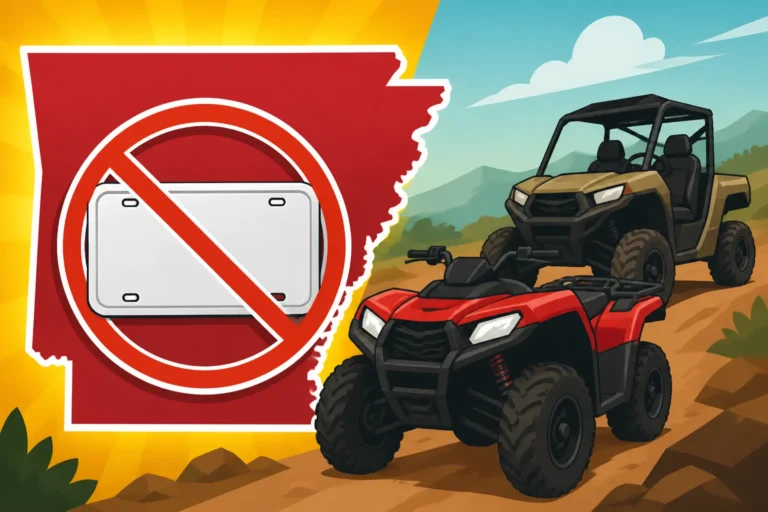
When you successfully register your ATV in Arkansas, you won't receive a traditional license plate like you would for a car or truck. Instead, you'll be issued an Off-Highway Vehicle (OHV) decal. This decal is your proof of registration and is absolutely critical if you plan to ride on public lands or cross public roads. Many first-time registrants are surprised by this, expecting something more akin to vehicle registration. Understanding the decal's purpose and proper placement is just as important as understanding who needs to register.
Why it's Not a License Plate
The Arkansas OHV decal is distinct from a vehicle license plate in several key ways. A license plate implies road-legal status and typically includes validation stickers that change annually. Arkansas's ATV registration, however, is a [Arkansas ATV Registration Has No Annual Renewal]. Once you register your ATV, that registration is generally valid for the lifetime of the machine in Arkansas, or until it's sold and ownership transfers. The decal serves as a one-time identifier, signifying that the machine has been brought into the state's system and that any applicable initial fees and taxes have been paid.
This permanent nature of the registration is a huge relief for riders who might otherwise have to deal with annual renewals. The decal's primary function is identification and proof of registration for off-road use, not as a road-legal marker. It doesn't grant you general permission to ride on public streets, highways, or interstates. It simply acknowledges that your ATV is officially recognized by the state for use in designated off-road areas. You can learn more by reading [Why a Decal Is Not a Plate].
Placement and Visibility
The Arkansas OHV decal isn't just handed to you to stick anywhere you please. There are specific rules regarding its placement to ensure it's easily visible to law enforcement or trail rangers. Generally, the decal must be affixed to the left front of the ATV. This is typically on the left-front fender or a prominent, visible location on the front portion of the machine, ensuring it can be quickly seen by an officer approaching from the front or side. Improper placement, or a decal that is obscured by mud, accessories, or damage, can lead to questions or even a citation.
Ensuring your decal is properly affixed and maintained is part of your responsibility as a registered ATV owner. If your decal fades, peels off, or becomes damaged over time, you can typically request a replacement from the Arkansas Department of Finance and Administration. It's a small but vital piece of compliance that demonstrates you've met the state's requirements. Remember, the decal is your proof, so keep it prominent and in good condition. [Arkansas ATV Decal on the Left Front] provides more context.
What Happens if You Don't Register
Ignoring the registration requirement, especially if you fall into one of the categories that mandate it (like public land use), can lead to a host of problems. At best, you might receive a warning from a friendly game warden or sheriff's deputy. At worst, you could face significant fines, have your ATV impounded, or even face legal action. The state takes these regulations seriously, not just for revenue, but for ensuring responsible off-road recreation and safety.
Furthermore, if you're involved in an accident on public land with an unregistered ATV, you could face additional legal complications and insurance issues. Your ability to file a claim, or for others to claim against you, might be severely hampered if your vehicle isn't properly registered. It's a risk that far outweighs the relatively minor cost and effort of getting your machine registered in the first place. Compliance is not just about avoiding penalties; it's about protecting yourself and your investment.
Consequences of Non-Registration
The temptation to skip registration, especially for machines used mostly on private land, might seem appealing to some. However, for those who truly need to register their ATV in Arkansas, ignoring this requirement can lead to unpleasant and costly consequences. Law enforcement, including county sheriffs, state police, and particularly Arkansas Game and Fish Commission officers, are vigilant about enforcing ATV regulations on public lands and roads.
Fines and Legal Ramifications
If you're caught operating an unregistered ATV on public land or crossing a public road where registration is required, you can expect to receive a citation. The specific fine amount can vary depending on the jurisdiction and the officer's discretion, but it's rarely a slap on the wrist. These fines can quickly add up, easily exceeding the original cost of registration. Beyond the monetary penalty, repeated violations or more egregious circumstances could lead to more severe legal ramifications, potentially impacting your driving record or even leading to misdemeanor charges in some cases.
It's also worth noting that legal trouble stemming from an unregistered vehicle can complicate other aspects of your life. For instance, if you were involved in an accident, even a minor one, the fact that your ATV was unregistered could be an aggravating factor in any civil or criminal proceedings. The goal of registration is not just to collect a fee, but to ensure accountability and identifiability, and bypassing this strips away those layers of protection. [Arkansas Penalties for Riding Unregistered] can give you an idea of what to expect.
Impoundment and Other Penalties
In addition to fines, law enforcement has the authority to impound an unregistered ATV found operating illegally. This means your machine could be towed away and stored at an impound lot, incurring towing fees and daily storage charges that you would be responsible for. Getting your ATV back would then involve not only paying the fine for non-registration but also covering these impoundment costs, which can escalate rapidly. This situation can quickly turn a fun day of riding into a very expensive and frustrating ordeal.
Furthermore, an officer might order you to immediately cease operation and transport your ATV off public land, even if it means you have to arrange for a friend with a trailer to pick you up. This can ruin your plans and leave you stranded. These stricter penalties serve as a significant deterrent, highlighting that the state views unregistered operation seriously. The inconvenience and financial burden of impoundment are often far greater than the initial registration fee.
The Hidden Costs Beyond the Ticket
The costs of non-registration extend beyond just direct fines and impoundment fees. Consider the time lost dealing with legal issues, appearing in court, or arranging for your impounded ATV to be retrieved. There's also the potential for increased insurance premiums if a citation impacts your overall risk profile, or even the outright refusal of an insurance claim if your vehicle was operating illegally. If your machine is stolen and it was never registered, recovering it or proving ownership can become significantly more difficult, leading to a total loss that might have been mitigated with proper paperwork.
Finally, there’s the impact on the riding community. When a few individuals disregard registration rules, it can lead to stricter enforcement for everyone, or even restrictions on trail access as authorities seek to control illegal activity. The registration fees ultimately help fund the maintenance and oversight of the very trails and public lands that riders enjoy. So, failing to register not only puts you at personal risk but also indirectly affects the broader ATV community in Arkansas.
Summary of Arkansas ATV Registration Requirements
To help clarify all these points, here’s a quick overview of common scenarios and whether registration is generally required. This table should serve as a handy reference, but remember that specific situations can always have unique nuances.
| Scenario | Does Registration Apply? | Key Considerations |
|---|---|---|
| Riding on public ATV trails/parks | Yes, always. | This is the primary trigger. Essential for compliance and trail funding. |
| Crossing a public road/highway | Yes, always. | Even brief crossings require registration. |
| Riding exclusively on your own private land | No, generally not. | As long as it never touches public land or roads. |
| Riding on a hunting lease | No, if strictly private. | If accessing via public road or riding on public land within lease, then yes. |
| Using for farm work on private land | No, if strictly agricultural. | Must be solely for farm operation, on private land. |
| New purchase from a dealer/private seller | Yes, within 30 days. | For public land use; highly recommended for ownership proof regardless. |
| Machine brought from out-of-state | Yes, upon establishing residency or bringing into AR for public use. | Must register in Arkansas for public land use. |
| Inherited or gifted ATV | Yes, upon ownership transfer. | If used on public land; establishes new owner on state records. |
| Dealer's inventory | No. | Machines are merchandise; customer registers after purchase. |
| Rental fleet at private park | No. | Fleet is exempt, but park or tour operator may have internal permits. |
| Used by government/utility crews | No. | Exempt for official duties. |
Disclaimer
This article is for general informational purposes only and does not constitute professional advice. Laws, prices and regulations vary by location and change over time. Consult a qualified professional for guidance on your specific situation.