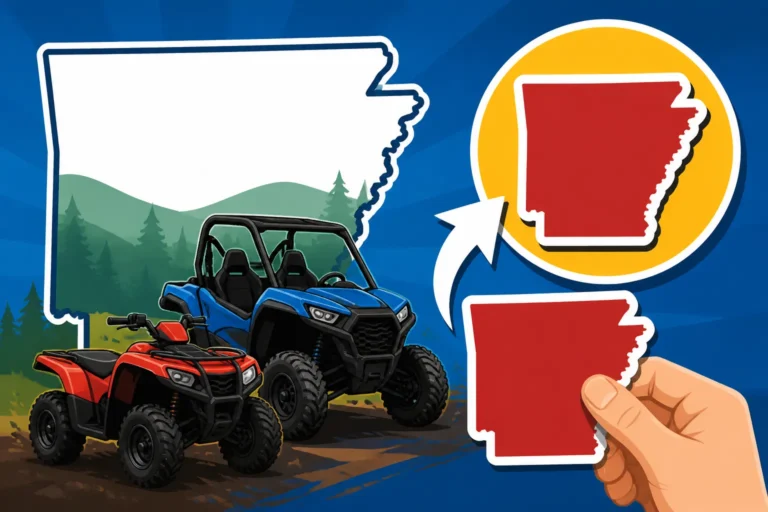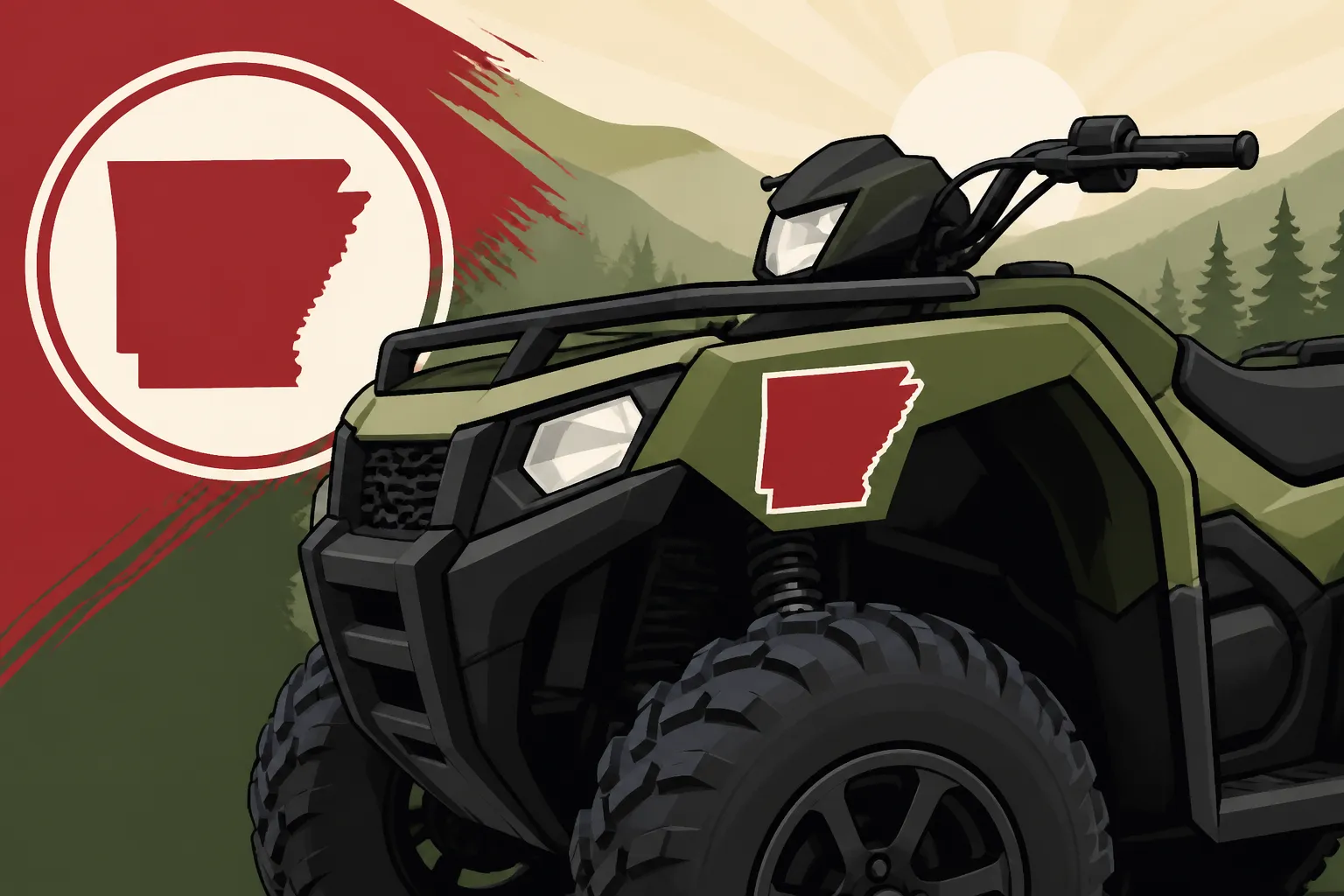
Arkansas ATV Decal on the Left Front
One of the most common head-scratchers for new and even experienced ATV and UTV owners in Arkansas is figuring out exactly where that registration decal is supposed to go. It seems like a small detail, but getting it wrong can lead to unnecessary hassle or even a citation. This guide is here to clear up all the confusion, walking you through Arkansas's specific requirements for decal placement so you can ride with confidence, knowing you're in full compliance.
Understanding Arkansas's Decal Mandate for ATVs and UTVs
When you go through the process of registering your off-highway vehicle in Arkansas, one of the key items you receive is that little decal. It might not look like much, but it's arguably the most important piece of visual proof that your machine is legally registered for public lands and managed trails across the state. Without it, or with it improperly displayed, you might as well not have registered at all in the eyes of local law enforcement or park rangers.
The "Why" Behind the Decal Requirement
Think of the decal as your ATV's unique ID badge. Just like a car has a license plate, your ATV or UTV has this decal, which carries a specific registration number. When a game warden, park ranger, or sheriff's deputy spots your machine, that decal is their quick visual cue that you've done your part to comply with state law. It immediately tells them that the machine has been processed through the Department of Finance and Administration (DFA) system. Without a clear, visible decal, an officer has no immediate way of knowing if your machine is registered, leading to questions, delays, and potentially a citation for riding an unregistered vehicle. It's about easy identification and accountability on shared trails and public access points, helping to ensure everyone is operating within the rules.
The Broader Context of Arkansas ATV Registration
It's helpful to remember that Arkansas has a somewhat unique system for ATV and UTV registration. Unlike many other states that require annual renewals, Arkansas's ATV registration is generally a one-time affair. Once you register your machine and get that decal, it's good for the lifetime of that machine, or until it leaves the state or changes hands in a way that necessitates new registration for a new owner. This one-time registration makes the decal even more crucial, as it's the permanent mark of that initial compliance. There's no annual sticker to update, no expiration date to worry about on the decal itself. It's simply there to show you've met the state's requirements. You can learn more about this unique system in [Arkansas ATV Registration: One Time, Never Renewed]. Understanding [Who Must Register an ATV in Arkansas] is also key to grasping the overall framework.
Decal vs. License Plate: A Common Misconception
Many riders coming from states with more traditional vehicle registration systems, or even those new to off-road vehicles, often wonder if their ATV or UTV needs a license plate. It's a natural question, given how often we associate vehicle registration with plates. However, for ATVs and UTVs in Arkansas, the answer is a resounding "no." The state does not issue traditional license plates for these machines. Instead, the small, brightly colored decal is the sole identifier issued by the DFA for registration purposes. This is an important distinction to make, as trying to find a place for a non-existent plate, or expecting one to arrive, can just add to confusion. The decal is your "plate," so to speak, but without the metal and mounting hardware. If you're curious about this, check out [Arkansas Has No ATV License Plate].
Pinpointing the "Left Front": What the Law Says
So, with the "why" out of the way, let's get down to the brass tacks: where exactly does that decal go? Arkansas law is quite specific, though it does allow for a little practical interpretation depending on the machine. The key phrase to remember is "left front."
The Exact Wording of the Statute
The Arkansas Code Annotated, specifically the sections dealing with off-highway vehicles, generally mandates that the registration decal be displayed on the "left front" of the ATV or UTV. While the statute doesn't necessarily get into microscopic detail about every single make and model, the intent is clear: the decal must be prominently visible from the front-left side of the machine. This ensures that an officer approaching your vehicle, or viewing it as it passes, can easily see and read the unique registration number without having to search or ask you to move your machine. It’s designed for efficiency and clarity in enforcement.
Practical Interpretation for Four-Wheel ATVs
For traditional four-wheel ATVs, finding the "left front" is usually pretty straightforward. Think about where an officer would naturally look if your quad was facing them slightly to the right. Common and acceptable placement spots include:
- Left Front Fender: This is perhaps the most common and ideal location. It's usually a flat, smooth surface, highly visible, and often protected from direct impact.
- Left Side of the Front Bumper or Brush Guard: If your ATV has a sturdy front bumper or brush guard, the left side of this accessory can also be a good spot, provided it's not obscured by mud, equipment, or other accessories during normal operation.
- Left Front Headlight Housing (if flat enough): Some ATV models have a flat area on the plastic housing around the left headlight that can work. However, avoid curved surfaces where the decal won't adhere well or will peel easily.
The goal is unobstruction. Don't put it in a spot where a tree branch might constantly scrape it, or where mud is guaranteed to plaster it over immediately. The cleaner and more visible, the better.
Side-by-Side Specifics: Where to Affix it on a UTV
Side-by-sides, or UTVs, present a slightly different challenge due given their often larger and more enclosed body styles. However, the "left front" principle still applies. You'll want to look for a flat, visible area on the driver's side front of the vehicle. Good options for UTVs include:
- Left Side of the Front Hood/Fender: Similar to an ATV, if the UTV has an exposed front fender or a hood that extends over the front wheels, the left-hand side is a prime location.
- Left Side of the Dash or Console: For UTVs with more interior space, a flat section of the dash on the driver's side, near the windshield or in a clear sightline from the exterior, can work. Make sure it's not obscured by accessories like GPS units, phones, or mounted radios.
- Left Side of the A-Pillar or Roll Cage: Some UTVs might have a flat section on the roll cage or A-pillar (the support structure on either side of the windshield) that is visible from the front-left. Ensure it's not a spot that will get covered by doors or other attachments.
- Left Front Bumper: Just like with ATVs, the left side of the front bumper is a viable option, again ensuring it won't be easily damaged or obscured.
The critical factor is that the decal remains clearly visible and readable from the specified angle. If you're ever in doubt, consider how a law enforcement officer would scan your vehicle to quickly confirm its registration status. You can find more specific guidance on this in [Arkansas Decal Placement on a Side-by-Side].
Beyond the Quad: Decal Placement for Other Off-Road Machines
While four-wheel ATVs and side-by-sides are the most common off-road machines in Arkansas, the state's registration requirements and decal placement rules can extend to other vehicle types that fall under the OHV definition. It's essential to apply the "left front" principle consistently, regardless of your machine's specific configuration.
Six-Wheeled Machines and the Front Decal
Arkansas's off-highway vehicle definition can include various machine types, and six-wheeled ATVs or utility vehicles are certainly part of the landscape. For these machines, the decal placement follows the same logic as their four-wheeled counterparts. You need to find a visible, flat surface on the front-left portion of the vehicle. This might be on the front fender above the first set of wheels, on the front of the cargo bed if it wraps around to the front, or on a prominent part of the front frame or bumper. The key is to maintain that easily identifiable "left front" location. Regardless of how many wheels you're rolling on, the state wants that decal to be seen. If you own one of these unique machines, it's worth checking out [Arkansas Registration for a Six-Wheel Machine].
Defining "Front" on Diverse Machine Types
Some off-road machines can have quite unique designs, making the "front" a bit subjective. For instance, what if you have a custom-built machine with a very minimalist front end, or a specific type of utility vehicle that doesn't have a traditional fender? In these cases, the spirit of the law still applies. You're looking for the foremost point on the left side of the machine where the decal can be affixed securely and be read without obstruction.
Imagine the machine is stationary, and someone is walking past it from left to right, viewing it from the front. Where would their eyes naturally fall to check for a registration sticker? That's your spot. It might require a little creativity, but always prioritize visibility, security of adhesion, and protection from common wear and tear.
What About Homemade or Modified Machines?
The world of off-road riding is full of ingenious mechanics and customizers. Many riders create their own unique machines, or heavily modify existing ones, sometimes removing or altering the very body panels where a decal might traditionally go. Even in these scenarios, the decal requirement doesn't disappear. If your homemade machine falls under Arkansas's definition of an off-highway vehicle and is subject to registration, then it absolutely needs that decal.
For a homemade machine, you might need to find a suitable flat surface on the frame itself, or perhaps a custom-fabricated panel that serves as the "front-left" bodywork. The same goes for heavily modified machines where original fenders might be replaced with custom cages or armor. The core principle remains: the decal must be affixed to the vehicle, on the left-front, in a manner that is clearly visible. This often requires a bit more thought and planning during the build process. Documents like a clear bill of sale, even for components, might be important for registration, and resources like LawDepot can provide templates for these. For more on this, consult [Arkansas ATV Registration for a Homemade Machine].
Why "Left Front" and What Happens if You Don't Comply
There's always a reason behind specific regulations, and the "left front" rule for Arkansas ATV decals is no exception. It's not arbitrary; it's designed for practical enforcement and public safety. Understanding this can help you appreciate why correct placement is so important, and why neglecting it can lead to problems.
The Logic Behind the Left Front Rule
The choice of the "left front" for decal placement is primarily about consistency and visibility for law enforcement and land managers. When an officer or ranger needs to verify a machine's registration, they typically approach from a specific vantage point or observe vehicles as they pass. Standardizing the decal location means they don't have to guess or search for it.
Imagine a busy trail where dozens of ATVs are passing by. If the decal could be anywhere—front, back, side, top—it would be impossible for an officer to quickly confirm compliance without stopping every single rider, which would slow down everyone and be incredibly inefficient. By having a designated, common location, it makes identification swift and seamless. It also often places the decal on a part of the vehicle that is less likely to be obstructed by cargo, passengers, or the rider themselves, enhancing its visibility. For additional context on this, you might find [Why the Left Front Was Chosen] informative.
Potential Penalties for Incorrect or Missing Placement
This is where the rubber meets the road, or more accurately, where the decal meets the fender. If your ATV or UTV decal is missing, obscured, or placed incorrectly, you could face consequences. While the exact penalty can vary depending on the officer, the jurisdiction, and the specific circumstances, the primary risk is being cited for operating an unregistered vehicle.
Operating an unregistered off-highway vehicle in Arkansas can lead to fines and, in some cases, other legal repercussions. It's not just a slap on the wrist for a minor technicality; it’s treated as non-compliance with a state registration law. Even if you've paid the registration fee and have the decal in your glove box, if it's not properly displayed, it's considered unregistered for enforcement purposes. This is why paying attention to placement is so crucial. Avoid these headaches by ensuring your decal is exactly where it needs to be. You can learn more about the consequences in [Arkansas Penalties for Riding Unregistered].
Avoiding Common Placement Mistakes
To help you steer clear of these potential penalties, let's look at some common mistakes riders make with their decals:
- Placing it on the Rear: This is a big no-no. While some vehicles have rear license plates, ATVs in Arkansas use the front decal for registration. A rear-mounted decal is out of compliance.
- Mounting it on an Underside or Obscured Area: Putting the decal inside a fender well, underneath a seat, or in any location not clearly visible from the front-left is a mistake. It defeats the purpose of easy identification.
- Attaching it to Removable Gear: Some riders might try to stick the decal on a cooler, a removable cargo box, or a piece of soft luggage. The decal must be affixed directly to the machine itself, not to something that can be easily detached or removed.
- Not Cleaning the Surface Properly: If the surface isn't clean and dry, the decal won't adhere correctly and will likely peel off quickly, leaving you without proper registration identification.
- Obscuring it with Accessories: While lights, winches, and other accessories are part of the fun, ensure they don't block the view of your decal. If an accessory covers it, you might need to reconsider the accessory's placement or find an alternative decal spot.
By avoiding these common pitfalls, you ensure your decal serves its intended purpose and keeps you in good standing with Arkansas's OHV regulations.
Maintaining Your Decal and Ensuring Visibility
Getting the decal on correctly is only half the battle; keeping it in good condition and ensuring its ongoing visibility is just as important. Your registration decal is a durable item, but like anything exposed to the elements and the rigors of off-road riding, it can suffer wear and tear. A faded, peeling, or mud-caked decal is as problematic as a missing one, as it fails to meet the clear identification requirement.
Best Practices for Applying the Decal
Proper application is the first step to ensuring your decal lasts. Taking a few extra minutes during installation can save you a lot of hassle down the line.
- Clean the Surface Thoroughly: This is critical. Use rubbing alcohol or a mild degreaser to clean the chosen "left front" area. Any dirt, grease, wax, or even residue from past stickers will prevent the decal from adhering properly. After cleaning, let the surface dry completely.
- Ensure a Flat Surface: The decal is designed for flat or very gently curved surfaces. Trying to apply it to a sharply curved or textured area will result in bubbles, wrinkles, and peeling edges. Choose the flattest, smoothest spot available.
- Apply Firm, Even Pressure: Once you've peeled the backing, carefully position the decal without letting it touch the surface until you're sure of the placement. Start applying from one edge, slowly pressing it down, working out any air bubbles as you go. A squeegee or a credit card can be helpful here.
- Allow for Curing Time: While the decal will stick immediately, the adhesive needs a little time to fully cure and bond with the surface. Avoid washing the area or exposing it to harsh conditions for at least 24-48 hours if possible.
- Consider a Clear Protective Layer: For extra durability, especially if your decal is in a high-impact area, some riders apply a clear vinyl protector or a layer of clear coat (designed for decals) over the top. This isn't required, but it can extend the life of your decal significantly.
What to Do If Your Decal is Damaged or Fades
It happens. Mud, sun, branches, pressure washers—all can take their toll. If your Arkansas ATV decal becomes torn, peels off, or fades to the point where it's no longer clearly readable, you need to replace it. A damaged or illegible decal is not considered valid proof of registration, and you could still face issues with law enforcement.
To get a replacement decal, you'll typically need to contact the Arkansas Department of Finance and Administration (DFA) or visit a local revenue office. You may need to provide proof of your original registration (such as the registration card you received). There will usually be a small fee for a duplicate decal. It's much better to proactively replace a worn decal than to wait until you're stopped on the trail. For details on how to get a new one, refer to [Arkansas Decal Replacement If It Peels Off].
Keeping Your Decal Legible for Law Enforcement
Beyond proper application and replacement when damaged, a little routine care can go a long way in keeping your decal visible and legible.
- Regular Cleaning: After a muddy ride, make it a habit to gently clean the area around your decal. Use a soft cloth and mild soap and water. Avoid aggressive scrubbing or using harsh chemicals that could damage the decal's finish or lift its edges.
- Protection from Debris: If you frequently ride in conditions where your decal might get plastered with mud or hit by flying debris, consider adding a small, non-obstructive shield or mud flap near its location, if practical for your machine.
- Avoid Direct Pressure Washing: When cleaning your ATV or UTV, be mindful of using a high-pressure washer directly on the decal. The force of the water can lift edges or even peel the decal right off, especially if it's already older or has minor damage. Keep the nozzle a safe distance away and use a gentler spray on that area.
By following these simple maintenance tips, you can ensure your Arkansas ATV decal remains a clear and valid indicator of your machine's registered status for years to come.
The Lifespan of Your Arkansas ATV Decal
One of the most appealing aspects of Arkansas's ATV registration system is its longevity. Unlike annual renewals for cars or boats, your ATV decal, once properly issued and affixed, is designed to last a very long time. This feature sets Arkansas apart and simplifies the long-term ownership experience, but it also means understanding what the decal represents and how its status changes (or doesn't change) over time is important.
A One-Time Affixation: No Annual Renewal
Let's reiterate one of the biggest benefits of the Arkansas system: once you've registered your ATV or UTV and received your decal, there are no annual renewal fees or yearly re-registrations required. This isn't like your car tags that come up for renewal every year or two. The state issues a single decal that, in theory, remains valid for the entire operational life of that specific machine in Arkansas. This means less paperwork, fewer fees, and one less thing to remember each year.
This also means that you won't receive a renewal notice in the mail for your ATV decal. You might get reminders for your car, but for your quad, silence is golden. This can sometimes lead to confusion for new residents or those used to other state systems. But rest assured, for your ATV, no news is good news in this case. You can explore this further in [Arkansas ATV Registration Has No Annual Renewal] and [No Renewal Notice Will Ever Arrive].
Decal's Journey When the Machine Changes Hands
The permanent nature of the Arkansas ATV decal extends to ownership changes within the state. When you sell an ATV or UTV that has been previously registered in Arkansas, the decal stays with the machine. The registration is tied to the vehicle identification number (VIN), not directly to the owner in a way that requires the decal to be removed or re-issued for a new Arkansas resident.
This is a significant difference from how many vehicle registrations work. For the buyer of a previously registered Arkansas ATV, they typically do not need to re-register the machine or obtain a new decal, unless the previous owner never registered it, or the machine came from out-of-state. The decal already on the machine serves as proof of its registration status. However, the new owner should still update the ownership records with the DFA to reflect their title and ensure they have proof of their purchase, such as a bill of sale. For this, resources like LawDepot can be invaluable for creating legally sound documents. If you're selling a machine, it's worth knowing [What Happens to the Decal When You Sell].
What the Decal Tells You and Others
Beyond just being a sticker, the Arkansas ATV decal is packed with information, even if it's not immediately obvious to the casual observer. Each decal features a unique alpha-numeric code that corresponds directly to the specific registration record held by the DFA for that particular VIN.
- Unique Identifier: This number is how law enforcement and the DFA can quickly look up the machine's registration details, linking it to the owner on record.
- Proof of Compliance: It signifies that the machine has gone through the formal registration process, and any applicable sales tax has been paid.
- Longevity: The fact that it's a one-time issue speaks to the state's system, designed for simplicity for the ATV owner.
Understanding [How an Arkansas OHV Decal Number Is Formatted] can provide insight into the specific codes and what they represent, further solidifying the decal's role as a critical component of legal ATV and UTV operation in the state.
Here's a quick overview of decal placement:
| Machine Type | Ideal Decal Placement | Important Considerations |
|---|---|---|
| 4-Wheel ATV | Left front fender, left side of front bumper/brush guard. | Flat, clean surface. Avoid extreme curves. Must be clearly visible from front-left. |
| Side-by-Side (UTV) | Left front hood/fender, left dash/console, left A-pillar. | Ensure no obstruction by doors, accessories, or passengers. Choose a smooth, easily accessible area. |
| 6-Wheel Machine | Left front fender (over first axle), front frame, front cargo area. | Adapt to the machine's unique body style while maintaining front-left visibility. Avoid high-impact areas if possible. |
| Homemade/Modified | Prominent flat surface on the front-left, custom panel/frame. | Prioritize visibility and secure adhesion. May require creative placement. Document ownership with a clear bill of sale. |
Disclaimer
This article is for general informational purposes only and does not constitute professional advice. Laws, prices and regulations vary by location and change over time. Consult a qualified professional for guidance on your specific situation.