Arkansas ATV Registration Cost
It's a common scenario: you've finally found the perfect ATV or side-by-side, maybe after weeks of searching online marketplaces or browsing dealerships. Now, with the thrill of the ride still in your mind, you're faced with the practicalities – specifically, what's this whole "registration cost" going to set you back in Arkansas? It can feel like a bit of a mystery, with different fees and taxes sometimes blurring into one big number. This guide is here to untangle the various financial components that make up the total cost of registering your ATV in Arkansas, so you can approach the process with confidence and no unwelcome surprises.
Deconstructing the Core Costs of Arkansas ATV Registration
When you think about the "cost" of registering an ATV in Arkansas, it's not a single, flat fee like you might find for some other vehicles. Instead, it's a combination of different elements that, when added together, form your total financial outlay. Understanding each piece of this puzzle is key to budgeting and avoiding surprises.
The Enduring "One-Time" Registration Fee
Let's start with a big sigh of relief for many riders: the actual registration fee for an ATV in Arkansas is a one-time payment. That's right, it's not an annual thing that you have to remember to renew year after year. Once you pay it and receive your decal, that machine is registered for as long as you own it and keep it in Arkansas. This is a huge difference compared to car tags or boat registrations, which often come with yearly renewal notices and associated fees.
This "one-time, never renewed" aspect is often a pleasant surprise for new residents or those accustomed to other states' systems. You pay it once at your local Arkansas revenue office, and you're good to go. This simplifies long-term ownership considerably, taking one annual headache off your plate. Just remember to keep your registration paperwork handy, as you'll still need to carry proof of registration when you ride on permitted trails or cross public roads. This unique system is a core aspect of [Arkansas ATV Registration: One Time, Never Renewed], making it distinct from many other vehicle registration processes.
The Significant Impact of Arkansas Sales Tax
While the registration fee itself is a one-time, relatively small amount, the real heavy hitter in your total cost is almost always the Arkansas sales tax. This is where most of your money will go, and it's calculated based on the purchase price of your ATV or side-by-side. It’s not just a state sales tax; it also includes any applicable local sales taxes.
Here's how it generally works: Arkansas has a state sales tax rate that applies to almost all purchases, including ATVs. On top of that, individual cities and counties have the authority to levy their own local sales taxes. These local taxes stack directly on top of the state sales tax, meaning your final sales tax percentage can vary significantly depending on where you live. This is why a machine bought in one county might have a slightly different overall tax bill than an identical machine bought in another, even if the purchase price is the same. For a deeper dive into this, you might find [Arkansas Sales Tax on an ATV Purchase] helpful. It’s also crucial to remember that unlike some other vehicle purchases, Arkansas does not impose a cap on the sales tax for ATVs, which means the full purchase price is subject to both state and local taxes, no matter how expensive the machine. This is a key difference from other vehicle categories and is often discussed in [Arkansas Sales Tax With No Vehicle Tax Cap].
Other Fees That Might Creep Into Your Total
Beyond the core registration fee and the sales tax, there are a few other charges that could potentially add to your total. These aren't always applicable to every rider or every situation, but it's wise to be aware of them.
For instance, if you financed your ATV purchase, there might be a small fee associated with recording a lien against the machine. This is typically handled by the lender or dealership, but it's part of the administrative costs of securing a loan. Another potential cost comes if you lose or damage your registration decal. While the original registration is one-time, if your decal peels off or gets destroyed, you'll need to pay a small fee for a replacement decal. Then there's the issue of time: Arkansas expects you to register your ATV within a certain timeframe after purchase, typically 30 days. If you miss this deadline, you could face late penalty fees, which definitely add an unwelcome extra to your budget. It’s always best to get to the revenue office promptly to avoid these extra charges, as detailed in articles like [Arkansas ATV Registration Deadline After Purchase]. Understanding these potential additions helps you prepare for the overall financial picture of [What Arkansas Charges to Register an ATV].
Understanding How Your Purchase Affects Your Tax Bill
The way you acquire your ATV or side-by-side significantly influences how and when you pay the sales tax component of your registration cost. Whether you buy from a dealership or a private seller, and even where the machine originated, all play a role in the final figures.
Dealer Convenience Versus Private Sale Responsibility
When you buy a brand-new ATV or a used machine from a licensed dealership in Arkansas, they typically handle the collection of sales tax right at the point of sale. This means the sales tax is usually rolled into your total purchase price, and the dealership remits it to the state on your behalf. It's a convenient, one-stop shop experience, as you pay everything upfront and then simply go to the revenue office to finalize the registration and get your decal.
However, if you opt for a private sale – perhaps buying from a neighbor, a friend, or an online classified ad – the responsibility for paying sales tax shifts entirely to you, the buyer. In this scenario, you'll pay the sales tax directly to the Arkansas Department of Finance and Administration (DFA) at the revenue office when you go to register the machine. This requires you to calculate the appropriate state and local sales tax based on the purchase price listed on your bill of sale. Speaking of which, having a solid and accurate [Arkansas ATV Bill of Sale Requirements] is absolutely crucial for these private transactions. You might find resources like LawDepot helpful for generating a legally sound bill of sale to ensure everything is documented correctly for the revenue office.
Navigating Out-of-State Purchases and Use Tax
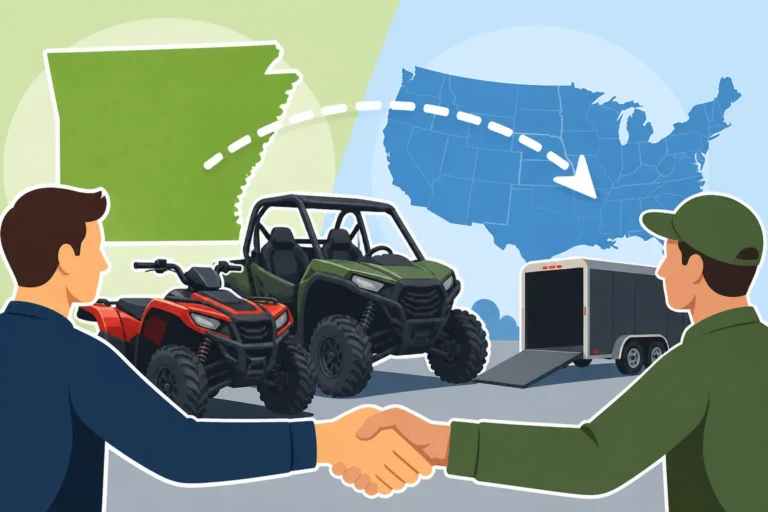
Thinking about a sweet deal on an ATV just across the border in Oklahoma or Missouri? It's a common thought, but it's important to understand how Arkansas's tax laws apply when you bring that machine home. If you purchase an ATV outside of Arkansas and then bring it into the state for use, Arkansas will assess a "use tax," which is essentially the equivalent of the state sales tax. The purpose of the use tax is to prevent residents from avoiding Arkansas sales tax by purchasing items in states with lower or no sales tax.
This means that even if you paid sales tax in another state, you might still owe the difference if Arkansas's combined state and local rates are higher. You'll pay this use tax when you register the ATV at an Arkansas revenue office. So, while you might save a few dollars on the purchase price itself, always factor in Arkansas's use tax when considering an out-of-state purchase. This applies equally to a new machine you haul back or a used gem you found on a road trip. The process for [Arkansas Registration for a Machine Bought Out of State] will clarify this further. Remember, the goal is fair taxation, so [Arkansas Use Tax on a Machine Brought Home] ensures that if you're using it here, you're contributing to local services.
Exploring Potential Exemptions and Unique Situations
While sales tax is a significant part of the cost for most ATV owners, there are a few special circumstances or exemptions that might apply, though they are quite specific. For instance, agricultural operations sometimes qualify for certain tax exemptions on equipment used exclusively for farming purposes. If you're using your ATV solely as a tool on your working farm, it's worth investigating if any [Arkansas Farm Exemptions Worth Asking About] could apply to your situation. These exemptions are usually narrowly defined and require specific documentation, so it’s always best to consult directly with the Arkansas Department of Finance and Administration or a tax professional.
Another unique scenario arises with inherited machines or gifts. If an ATV is genuinely gifted to you, or you inherit it after the owner dies, you typically wouldn't pay sales tax on its value, as there was no "purchase" in the traditional sense. However, you'll still need to provide proper documentation, such as a gift letter or probate documents, to prove the transfer of ownership without a sale. This is vital for [Arkansas Registration for an Inherited Machine] and ensuring a smooth process at the revenue office. Even in these cases, you'll still be responsible for the one-time registration fee. Always ensure all paperwork is in order; LawDepot offers templates for various legal documents that could be useful in such unique situations.
Practical Steps for Calculating and Paying Your ATV Registration Costs
Now that you understand the components of the cost, let's talk about the practical steps you'll take when you're ready to register your ATV. This involves knowing what documents to bring, how payment works, and what you'll receive as proof of your registration.
Gathering Your Documents and Payment Methods
Before you head to an Arkansas revenue office, a little preparation can save you a lot of time and frustration. You'll need several key documents to successfully register your ATV and pay the associated fees and taxes. First and foremost, you'll need proof of ownership. For a new machine, this is typically the Manufacturer's Statement of Origin (MSO) or Certificate of Origin (MCO). For a used machine, it's usually a properly completed bill of sale, especially important for private sales. Again, if you're navigating a private sale, a reliable template from a service like LawDepot for your bill of sale can make a huge difference in ensuring accuracy and acceptance by the revenue office.
You'll also need a valid form of identification, proof of your Arkansas residency, and the funds to cover your registration fee and sales tax. Most revenue offices accept various payment methods, including cash, checks, and often debit or credit cards. However, it's always a good idea to call ahead to your specific local revenue office to confirm accepted payment types, as some smaller offices might have limitations on credit card processing. Having everything ready, from your [Arkansas Registration Paperwork Checklist] to your preferred payment method, streamlines the entire process, as outlined in [Arkansas ATV Registration Payment Methods].
What You Get (and Don't Get) After You Pay
Once you've submitted your documents and paid all the necessary fees and taxes, what do you actually walk away with? The most important item you'll receive is your Arkansas ATV registration decal. This is a small sticker that serves as your official proof of registration, and it needs to be prominently displayed on the left front of your machine, usually on the fender or headlight cowl. Along with the decal, you'll get a receipt for your payment and a registration card, which you should keep with your ATV. This card, combined with the decal, is what a law enforcement officer or forest ranger will typically ask to see if you're ever stopped.
A common point of confusion for new ATV owners in Arkansas is the concept of a title. It's important to clarify that Arkansas does not issue a traditional vehicle title for ATVs. Unlike cars, trucks, or motorcycles, you won't receive a paper title from the state that proves ownership. Your bill of sale (or MSO/MCO) serves as your primary proof of ownership. This is a crucial distinction that can surprise some, as discussed in [Does Arkansas Issue a Title for an ATV?]. So, don't expect to receive a title; your decal and registration card are the state's acknowledgment that your ATV is legally registered. For information on where to affix your decal, you can check out [Arkansas ATV Decal Rules and Where It Goes].
Planning for the Full Financial Picture
When budgeting for your ATV, it's vital to think beyond just the purchase price of the machine itself. The registration cost, primarily driven by sales tax, is a significant part of the overall financial commitment. By understanding that it's a combination of a modest one-time registration fee, the variable state and local sales taxes, and potentially other minor fees, you can avoid any budget shock. Always factor in the sales tax based on your local rates, especially if you're considering a higher-priced side-by-side.
Remember, the goal is not just to get the machine, but to enjoy it legally and without hassle. Being prepared for the financial aspects of registration, including calculating your sales tax accurately (or having your dealer do it), ensures a smooth transition from purchase to hitting the trails. This table provides a general overview of how different components might apply based on your purchase method:
| Cost Component | Dealer Purchase (Typically) | Private Sale (You Pay at Revenue Office) |
|---|---|---|
| Registration Fee | Paid at Revenue Office | Paid at Revenue Office |
| State Sales Tax | Collected by Dealer (or at Revenue Office if out-of-state) | Paid at Revenue Office |
| Local Sales Tax | Collected by Dealer (or at Revenue Office if out-of-state) | Paid at Revenue Office |
| Lien Fees (if any) | Handled by Lender/Dealer, paid at Revenue Office | Paid at Revenue Office (if applicable to your financing) |
| Penalty Fees | Only if you register late after purchase (regardless of seller) | Only if you register late after purchase (regardless of seller) |
| Document Fees | Dealer may charge their own processing fees | Typically none from the state beyond the core fees |
Taking the time to understand these costs upfront will not only help you budget accurately but also make the registration process a breeze, letting you focus on the fun part: riding your ATV!
Disclaimer
This article is for general informational purposes only and does not constitute professional advice. Laws, prices and regulations vary by location and change over time. Consult a qualified professional for guidance on your specific situation.