Arkansas Registration Compared to Its Neighbors
Trying to figure out ATV or UTV registration is confusing enough within one state, but when you live near a border or love to take your machine on trips across state lines, the patchwork of laws can feel impossible to navigate. Each state has its own way of doing things, and what's perfectly legal in Arkansas might land you a ticket just a few miles down the road in Missouri or Oklahoma. This guide aims to clear up some of that confusion by comparing Arkansas's unique ATV and UTV registration requirements with those of its surrounding states, helping you understand what to expect no matter where your ride takes you.
The Arkansas Approach to ATV Registration
Arkansas has carved out its own path when it comes to registering off-highway vehicles (OHVs), and it’s significantly different from how many other states operate. Understanding these nuances is key, especially if you're used to how vehicles are registered elsewhere. It can be a pleasant surprise for some, and a point of confusion for others who expect a more traditional, annually renewing system.
Unique Aspects of Arkansas Registration
One of the most distinctive features of Arkansas's ATV registration is that it’s a one-time affair. Unlike your car tags, which you have to renew every year, once you register an ATV in Arkansas, you're set for the life of the machine in the state. There's no need to remember an annual deadline or send in renewal payments. This means less administrative hassle and no recurring fees after the initial registration. You simply pay a fee, receive your decal, and you're good to go. This "set it and forget it" system is a welcome relief for many riders who tire of endless bureaucratic paperwork. You can read more about this in [Arkansas ATV Registration Has No Annual Renewal].
Instead of a traditional license plate, Arkansas issues a durable decal that serves as your proof of registration. This decal needs to be prominently displayed on the left front of your machine. This makes it easy for law enforcement to verify registration without needing a full-sized plate, which would be impractical and easily damaged in off-road conditions. The decal contains a unique identifying number, and its proper placement is crucial to avoid any issues during a trail check. For more details on where this decal goes, check out [Arkansas ATV Decal Rules and Where It Goes].
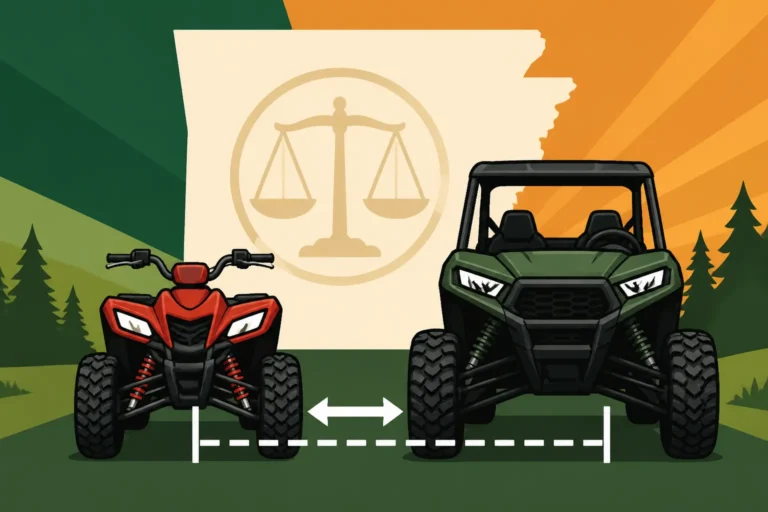
Arkansas also has specific definitions for what constitutes an "ATV" under its registration statute. Generally, this includes machines that are 50 inches or less in width, have an engine size of 1,000cc or less, and ride on three, four, or six wheels. Furthermore, these machines must be designed for off-highway use and equipped with non-highway tires. If your machine falls outside these parameters, it might be classified differently or have separate registration requirements. For instance, many larger side-by-sides often exceed the 50-inch width limit, which can impact how they are treated under the law. Understanding these exact specifications is important when determining if your machine qualifies for standard ATV registration in Arkansas. You can dive deeper into these definitions in [Arkansas's 50-Inch, 1,000cc ATV Definition].
Why Arkansas Differs
The differences in Arkansas's registration approach stem from a fundamental distinction in how the state views these vehicles compared to, say, passenger cars. ATVs and UTVs are primarily considered off-road vehicles, meant for recreational trails, private land, and specific utility tasks, not for general highway use. While local municipalities are gaining more power to allow UTVs on city streets, the state's baseline rules still reflect this off-road focus. This is why you won't get a traditional metal license plate for your ATV in Arkansas; [Arkansas Has No ATV License Plate].
The Department of Finance and Administration (DFA) handles ATV registration in Arkansas, often through its revenue offices. This contrasts with many states where a Department of Motor Vehicles (DMV) or similar agency, typically associated with on-road vehicles, would manage all registrations. The DFA's involvement underscores the state's treatment of ATVs as a distinct category, separate from conventional highway vehicles. This specific setup means that while you'll visit a state office, the process and the forms you fill out (like the Arkansas DFA Form 10-381) are tailored specifically for off-road machines. It's often a straightforward process once you have all your documents in order. To understand where you'll go to register your machine, refer to [Registering an ATV at an Arkansas Revenue Office].
The legislative intent behind Arkansas's system seems to prioritize a streamlined, practical approach for off-road enthusiasts and those who use ATVs for agricultural or work purposes. By implementing a one-time registration and a simple decal, the state minimizes ongoing burdens while still creating a record of ownership and ensuring some level of accountability for machines operated within its borders. This system reflects the state's appreciation for outdoor recreation and the practical uses of these vehicles in its rural landscapes, from farming to hunting.
How Neighboring States Handle ATV Registration
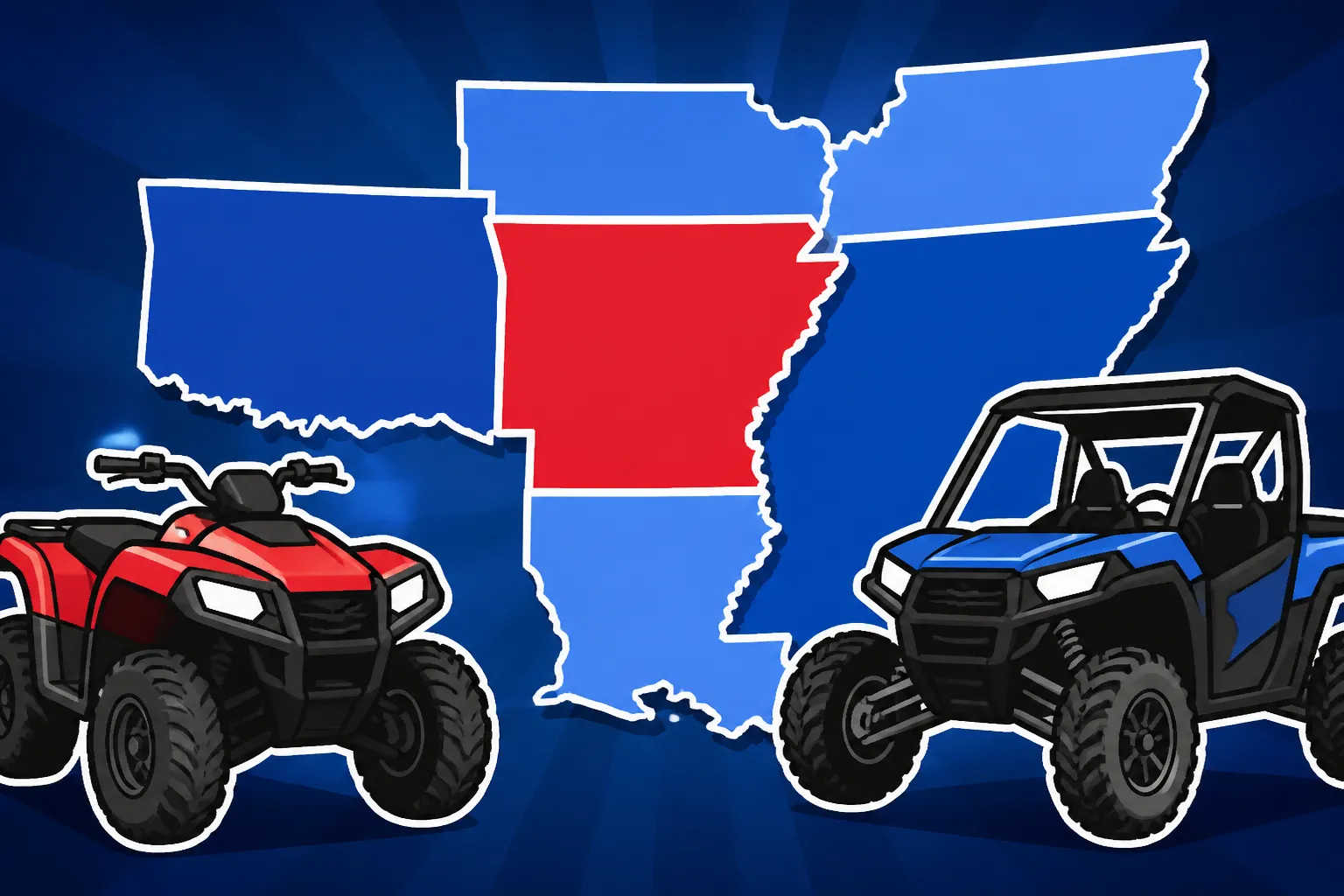
When you venture beyond Arkansas's borders, the rules for ATV and UTV registration can change dramatically. Each neighboring state has its own system, reflecting local priorities, terrain, and legal frameworks. Riders need to be aware of these differences to avoid fines or other legal issues when riding in Missouri, Oklahoma, Texas, Louisiana, or Mississippi.
Missouri's Registration System
Missouri, to Arkansas's north, takes a somewhat different stance. Off-road vehicles (ORVs), which include ATVs and UTVs, are generally required to be titled in Missouri, but registration is primarily focused on state-managed public lands. If you plan to ride your ATV or UTV on designated state trails, you'll need to purchase an ORV user permit. This permit is an annual requirement, meaning you'll need to renew it each year, unlike Arkansas's one-time registration. For machines used exclusively on private property, a permit is typically not required. This distinction is crucial for Missouri riders and those visiting from Arkansas. The focus on public land permits means casual riders on their own property have less red tape, but trail riders have an ongoing cost and annual task.
Missouri also has specific rules regarding the operation of UTVs on public roads. While ATVs are generally prohibited, some UTVs might be allowed on certain county roads or within city limits if local ordinances permit it and the vehicle meets specific equipment requirements (like lights, mirrors, and turn signals). This opens up possibilities for some street-legal UTV use, but it's always highly dependent on local jurisdiction and specific vehicle modifications. Always check with the local sheriff's department or city clerk before attempting to ride a UTV on public roads in Missouri.
Oklahoma's Approach to Off-Road Vehicles
Just to Arkansas's west, Oklahoma has its own set of rules that emphasize titling over registration for many off-road vehicles. In Oklahoma, ATVs and UTVs are generally required to be titled, but registration (similar to annual tags) is not always mandatory for machines used strictly off-road. If you purchase a new ATV or UTV, the dealer typically handles the titling process, which establishes legal ownership. For private sales, you'd need to go through the Oklahoma Tax Commission or a tag agent to transfer the title. This is a significant difference from Arkansas, where a title isn't always issued for ATVs. [Does Arkansas Issue a Title for an ATV?] addresses this for Arkansas.
However, if you plan to operate your ATV or UTV on public lands managed by the state, such as designated OHV parks or state-managed trails, you may need a special permit or sticker. These permits often come with an annual fee and help fund trail maintenance and operations. Oklahoma has also made strides in allowing UTVs on certain county roads, often requiring a special license plate and meeting specific equipment standards. Riders need to understand that simply having a title doesn't automatically grant public land access or street legality; additional permits or equipment might be necessary.
Texas's Off-Highway Vehicle Registration
Further southwest, Texas has an "Off-Highway Vehicle" (OHV) program that includes ATVs and UTVs. While vehicles used exclusively on private property in Texas don't require registration, if you want to ride on any public land or publicly accessible OHV trails, you must have an OHV decal. This decal is issued annually and signifies that you've paid the required fee. The Texas Parks and Wildlife Department oversees this program, and the fees contribute to the development and maintenance of public OHV riding areas. This is another example of an annual renewal system, contrasting sharply with Arkansas's one-time fee.
Texas also has strict laws regarding the operation of ATVs and UTVs on public roads. Generally, it's illegal to operate an ATV on a public highway in Texas. UTVs have slightly more flexibility, with some counties and cities having ordinances that allow limited street use, provided the UTV meets specific safety requirements (headlights, taillights, brake lights, horn, mirrors, and often a slow-moving vehicle emblem). Just like in Oklahoma and Missouri, this means that even if you have an OHV decal, it doesn't automatically make your machine street-legal. Researching local ordinances is crucial.
Louisiana's OHV Rules
To Arkansas's south, Louisiana also has a state-mandated titling and registration process for off-road vehicles. In Louisiana, all new ATVs and recreational off-highway vehicles (ROVs, which include UTVs) must be titled and registered with the Louisiana Department of Public Safety and Corrections, Office of Motor Vehicles. This is a mandatory requirement for all machines, regardless of whether they are used on public or private land. Once registered, you typically receive a decal, similar in function to Arkansas's, but the process and ongoing requirements can differ.
Louisiana's registration is often annual, meaning a yearly renewal fee is typically involved. This consistent annual renewal for all ATVs and ROVs, even if they only touch private property, represents a more comprehensive approach to tracking these vehicles compared to Arkansas. When it comes to road use, Louisiana, like many southern states, generally prohibits ATVs and ROVs on public roads unless specifically exempted (e.g., for agricultural purposes, utility work, or in areas where local parishes have passed specific ordinances allowing limited use).
Mississippi and Tennessee's Perspectives
Traveling east of Arkansas, both Mississippi and Tennessee generally focus on titling for ATVs and UTVs rather than a comprehensive, mandatory registration system for off-road use. In Mississippi, ATVs and UTVs are required to be titled, establishing ownership, but typically there isn't an ongoing registration or annual tag requirement for machines used strictly off-road. If you're riding on public lands, specific permits might be required, similar to other states, but the state as a whole doesn't enforce a universal annual registration.
Tennessee similarly requires ATVs and UTVs to be titled. This helps track ownership and deters theft. However, for machines used exclusively on private property or designated off-highway vehicle areas, a general state-level registration and annual decal akin to Arkansas or Texas is not typically mandated. If you plan to operate on specific state-managed trails, you might need a permit, but this would be specific to those locations rather than a statewide registration. Both Mississippi and Tennessee are strict about keeping ATVs and UTVs off public roads, with very limited exceptions for agricultural or utility use, or in specific communities with local ordinances.
Practical Implications for Border Riders and Travelers
Understanding the varied laws of Arkansas and its neighbors isn't just an academic exercise; it has real, practical consequences for riders. Whether you live in Texarkana, ride the trails near the Missouri border, or plan an adventurous trip through multiple states, knowing the rules is your first line of defense against unexpected issues.
What Happens When You Cross State Lines
The golden rule for any off-road enthusiast is this: When you cross a state line, you are subject to the laws of the state you are currently in. Your Arkansas registration decal, while valid in Arkansas, doesn't automatically grant you the right to ride on public trails or roads in Missouri, Oklahoma, or any other state without complying with their specific requirements. This is where many riders get into trouble, assuming their home state's rules carry over. For instance, an Arkansas rider heading to a designated OHV park in Missouri would need to acquire a Missouri ORV user permit, even with a valid Arkansas decal.
Conversely, a rider from Oklahoma or Texas visiting Arkansas will be expected to adhere to Arkansas's regulations. While Arkansas does not have a separate nonresident registration, you are still required to follow all other state laws, such as age restrictions and rules for operating on specific types of land. You'll also want to be sure you have proper proof of ownership. If you're a nonresident planning to ride in Arkansas, you might want to look into [Arkansas Registration and Nonresident Riders] for specific guidance. It's a bit of a bureaucratic dance, but it's essential for legal and enjoyable riding.
Best Practices for Multi-State Riders
For those of us who love to explore beyond our home state, proactive research is your best friend. Before you even load your machine onto the trailer, spend some time on the official websites of the state parks, forest services, or motor vehicle departments for your destination. They will clearly outline what permits, registrations, or titles are required for non-residents or for riding on their specific public lands. Don't rely on hearsay or old forum posts; laws change.
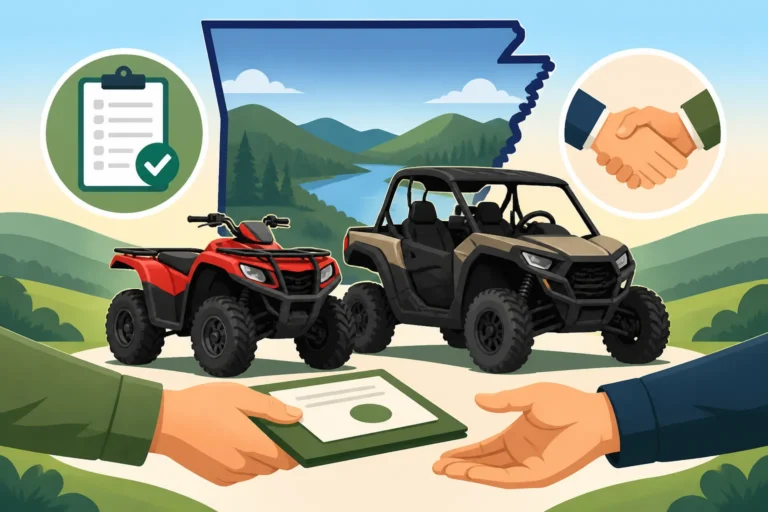
Always carry all your relevant paperwork with you when riding, regardless of the state. This should include your Arkansas registration decal proof (if applicable), proof of ownership (title, manufacturer's statement of origin, or a solid bill of sale), and any required permits for the state you're riding in. A well-drafted bill of sale is crucial for proving ownership, especially if you've purchased your machine privately. Services like LawDepot offer templates for [Arkansas ATV Bill of Sale Requirements] and other legal documents that can help ensure you have valid proof of ownership, which is important not only for registration but also for proving your machine isn't stolen. Having these documents handy can save you a lot of hassle if you encounter law enforcement or an unfortunate accident. You should also consider preparing a comprehensive [Arkansas Registration Paperwork Checklist] to ensure you don't forget anything important.
Finally, consider the nuances of personal liability and insurance. While Arkansas doesn't mandate insurance for off-road use, other states or specific riding parks might. It's wise to check if your personal insurance policy extends to out-of-state riding or if you need additional coverage, especially when trailering your machine long distances. Utilizing reliable legal document services like LawDepot can help you organize and formalize any permission slips if you're riding on private land that isn't your own, adding an extra layer of protection wherever you are.
Key Differences to Watch For
The variances in ATV and UTV regulations across states can be subtle but significant. Knowing what to look for can prevent misunderstandings and ensure you're always riding legally. From how often you pay a fee to what counts as proof of registration, these differences are at the core of why state comparisons are so vital.
Registration Renewal vs. One-Time Fees
The starkest contrast between Arkansas and most of its neighbors is the registration renewal cycle. As we've discussed, Arkansas boasts a truly unique system where [Arkansas ATV Registration Has No Annual Renewal]. You register your machine once, pay the fee, and that's it for as long as you own the ATV in Arkansas. This means no annual stamps, no yearly trips to the revenue office, and no forgotten renewal deadlines. It's a set-it-and-forget-it approach that simplifies ownership.
Compare this to Missouri, Texas, Louisiana, and often public land permits in Oklahoma and Mississippi, which typically require annual renewal. These states usually issue a new sticker or permit each year that you must affix to your machine. This annual process generates ongoing revenue for the state, often earmarked for trail maintenance and OHV programs. For a rider, it means remembering another renewal date, budgeting for an annual fee, and making sure the latest decal is displayed. This difference alone can be a major factor for riders living near state lines or planning regular trips.
Decals vs. Plates
Another key divergence lies in the physical proof of registration. Arkansas issues a specific decal that is placed on the left front of the machine, as detailed in [Arkansas ATV Decal Rules and Where It Goes]. This decal is the official sign of registration, and [Arkansas Has No ATV License Plate] for ATVs. The design is practical for off-road use, less prone to damage, and serves its purpose effectively.
In contrast, some neighboring states might have different decal placements or, in the case of street-legal UTVs, might require a small license plate issued by the motor vehicle department. For instance, in states where UTVs can be made street-legal, a conventional-looking vehicle plate might be issued, which is a world apart from Arkansas's off-road decal. Even for off-road permits, the design and placement can vary. Always verify the specific requirements for decal size, material, and location when riding in another state.
Titling Differences
The concept of an "ATV title" is another area of inconsistency. In Arkansas, a traditional title, similar to what you'd get for a car, is generally not issued for ATVs as part of the registration process. While you'll have a bill of sale or manufacturer's statement of origin to prove ownership, the state doesn't issue a separate vehicle title that tracks liens or transfers in the same way. This is a common question, and [Does Arkansas Issue a Title for an ATV?] provides a clear answer for Arkansas.
Many of Arkansas's neighbors, however, do require ATVs and UTVs to be titled. This means that when you buy or sell a machine in states like Missouri, Oklahoma, Louisiana, or Mississippi, you will likely go through a formal title transfer process at a motor vehicle office or tag agent. The title serves as the primary legal document of ownership, making it essential for purchases, sales, and proving legal possession. For Arkansas residents buying a machine from a state that issues titles, or vice-versa, understanding this difference is crucial for proper ownership transfer and registration in their home state. Utilizing resources like LawDepot can help ensure you have all the necessary legal forms, like bills of sale, when dealing with title or non-title states.
Street Legalization Nuances
The ability to make an ATV or UTV "street legal" is a rapidly evolving area, and policies vary wildly from state to state, and even from county to county or city to city. While Arkansas has recently empowered its local towns to decide on UTV street legality through ordinances, as explained in [Arkansas Towns Can Open Their Streets to UTVs], this is a relatively new development and often comes with specific local restrictions. The default state law still prohibits ATVs on most public roads.
In neighboring states, the approach to street legality for UTVs can range from outright prohibition to comprehensive state-level guidelines for equipment, insurance, and licensing. Some states have specific statutes allowing UTVs on county roads or within designated speed limits, provided they meet car-like safety equipment standards (turn signals, mirrors, windshields, etc.). Others leave it entirely to local jurisdictions, much like Arkansas's current model. Before attempting to drive an ATV or UTV on any public road, it is absolutely essential to check the most current state and local laws for that specific jurisdiction. A quick call to the local sheriff's office or city clerk can save you a significant fine and a potential headache.
Here's a quick comparison of some key differences:
| Feature | Arkansas | Missouri | Oklahoma | Texas |
|---|---|---|---|---|
| Primary Registration Type | One-time decal | Title + Annual public land permit | Title (mandatory) | OHV Decal (annual, public land) |
| Annual Renewal? | No | Yes (for public land permit) | No (for off-road use, but title mandatory) | Yes (for OHV decal) |
| Issued as Plate or Decal? | Decal only | Title, public land decal | Title, some local road plates | OHV Decal |
| State Issues Title? | Generally no (proof of ownership) | Yes | Yes | Yes |
| Street Legal UTVs? | Local ordinances (recent development) | Limited (local ordinances, equipment) | Limited (local ordinances, equipment) | Limited (local ordinances, equipment) |
| Required on Private Land? | Yes (one-time decal) | Title only (no permit needed) | Title only | No (unless accessing public land) |
Disclaimer
This article is for general informational purposes only and does not constitute professional advice. Laws, prices and regulations vary by location and change over time. Consult a qualified professional for guidance on your specific situation.