Arkansas UTV Street Permits and Annual Fees
It’s a common scenario for many Arkansas UTV owners: you’ve got a fantastic side-by-side that’s perfect for the trails or work around the property, but wouldn’t it be nice to take it into town for a quick errand, grab a bite, or just cruise through your neighborhood? The idea of street-legal UTVs used to feel like a distant dream or a legal minefield, but with recent changes in Arkansas law, many cities and towns now have the power to create their own ordinances. This guide will walk you through everything you need to know about navigating the world of Arkansas UTV street permits and the annual fees associated with them, helping you understand how to legally get your machine onto approved local roads.
The Shift to Local Control: Why UTV Street Permits Became Possible
For years, the general rule across Arkansas was pretty clear and, frankly, a bit frustrating for UTV enthusiasts: off-highway vehicles (OHVs), including your beloved side-by-side, were mostly forbidden on public roads and highways. This statewide ban often meant trailering your machine everywhere, even if you just wanted to go a few blocks down the street for gas or to visit a neighbor. It was a huge inconvenience, especially for those in rural communities or towns where a UTV is a practical and common mode of transport.
Arkansas Act 922 and the Local Option
The landscape changed significantly with the passage of Arkansas Act 922. Before this act, the state held firm control over what could and couldn't be driven on public roads. Act 922, however, was a game-changer. It essentially empowered local municipalities – cities and incorporated towns – to decide for themselves whether to allow the operation of UTVs on certain public streets within their jurisdiction. This was a direct response to a growing demand from residents and local businesses who saw the value and utility of UTVs for short-distance travel. Suddenly, the possibility of riding legally on city streets was no longer just a wish, but a reality, if your local leaders chose to embrace it. You can learn more about how this came about in [How Arkansas Cities Got the Choice on UTVs].
This legislative shift was celebrated by many, as it put the decision-making process closer to the people it affects. Instead of a one-size-fits-all state rule, individual communities could now tailor regulations to their specific needs, road types, and public safety considerations. This means that while one town might enthusiastically embrace UTVs on its streets, a neighboring community might choose to maintain a stricter stance, or implement different rules. It's truly a patchwork, making it critical for every rider to understand their local ordinance.
The Role of Your City or Town Council
So, if Act 922 gave cities the power, how does that translate to you getting a permit? It all comes down to your local city or town council. For UTVs to be legally allowed on municipal streets, the local governing body must pass an official ordinance. This isn't a simple handshake agreement; it's a formal legal document that outlines all the specifics: which streets are open, what equipment is required, age restrictions for drivers, insurance mandates, and, crucially, the permit process and any associated fees.
Many towns, like Bono, quickly adopted ordinances, allowing residents to enjoy the convenience of street-legal UTVs. However, other towns, such as Cotter, chose to ban ATVs altogether. It's a localized decision through and through. Before you even think about applying for a permit, your first and most important step is to contact your city clerk's office or check your city's official website for their specific UTV ordinance. Without a local ordinance explicitly permitting UTVs on streets, even with a permit from a different town, you're still riding unlawfully. Understanding [Arkansas UTV Street Legal Rules by Town] is absolutely essential.
What an Arkansas UTV Street Permit Actually Means for You
Once your city or town has passed an ordinance allowing UTVs on certain streets, that's when the "street permit" comes into play. This permit is your official documentation, issued by the local authority, that grants you the privilege to operate your UTV on the specified public roads within that municipality. It's not a free pass to ride anywhere, but it opens up a whole new world of convenience and enjoyment.
The Scope and Limitations of Your Permit
Generally, an Arkansas UTV street permit allows you to operate your side-by-side on streets within the city limits that are posted with a speed limit below a certain threshold, typically 55 mph. This usually excludes major state highways, U.S. routes, and often four-lane roads, even if they pass through your town. The purpose is to allow for local travel within residential and commercial areas, not for high-speed, long-distance commuting.
The permit will also specify any time-of-day restrictions. For instance, some ordinances might restrict nighttime operation unless your UTV meets certain lighting requirements, or they might have specific hours during which street use is allowed. It's crucial to thoroughly read and understand your local ordinance, as these details can vary significantly from one town to another. The permit is permission to operate within the town that issued it, and typically, it doesn't extend to other cities or unincorporated county roads unless those areas have their own, separate ordinances allowing such use. This is why [Riding Between Two Towns] requires careful planning and research.
Required Equipment and Driver Qualifications
To even qualify for a UTV street permit, your machine will need to meet specific equipment standards outlined in your local ordinance. This often mirrors what you'd find on a standard automobile to ensure safety for both the UTV operator and other vehicles on the road. Common requirements include:
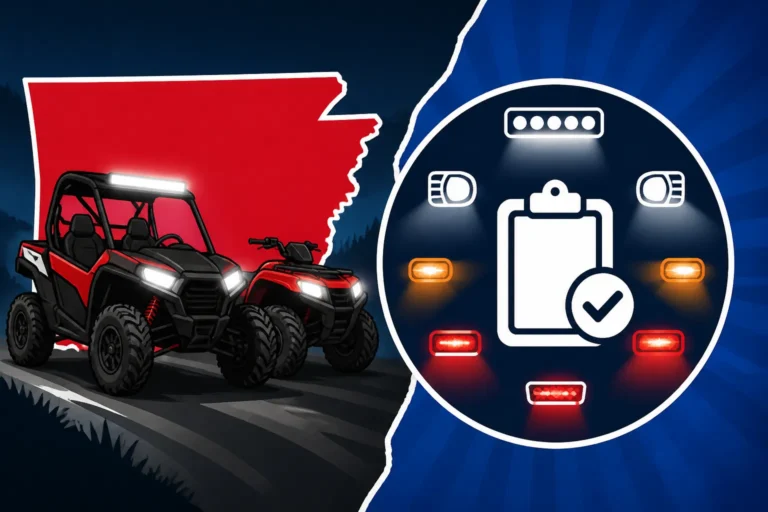
- Headlights and Tail Lights: Must be functional and visible from a certain distance, especially for nighttime operation.
- Brake Lights: Essential for signaling stops to traffic behind you.
- Turn Signals: Necessary for indicating turns and lane changes. Many riders find themselves looking for reliable aftermarket turn signal kits to meet this requirement. SuperATV offers a variety of durable turn signal kits that are popular among riders converting their UTVs for street use.
- Side Mirrors and Rearview Mirror: Crucial for maintaining awareness of surrounding traffic.
- Windshield: Some ordinances may require a full windshield for safety.
- Seat Belts: All occupants must be wearing factory-installed seat belts.
- Horn: A working horn is typically required for signaling.
Beyond the machine itself, the driver will also need to meet qualifications. Most ordinances require the UTV operator to possess a valid state-issued driver's license. This means a learner's permit or a restricted license might not be sufficient. There are also usually age restrictions, with 16 being a common minimum age for drivers of street-legal UTVs. Understanding [Arkansas Driver's License at 16 for Street UTVs] is key.
Applying for Your UTV Street Permit: A Step-by-Step Guide
The process of getting your UTV street permit can feel a bit daunting at first, but breaking it down into manageable steps makes it much easier. Remember, this isn't a statewide, standardized process like registering a car; it's handled at the local municipal level, so patience and attention to your specific town's rules are paramount.
Step 1: Research Your Local Ordinance
As mentioned, this is the absolute first step. Before you even think about buying new equipment or heading to city hall, you need to confirm that your city or town has an active ordinance allowing UTVs on its streets.
- Where to Look: Check your city's official website, often under departments like the City Clerk, Police Department, or Public Works. Many cities will have their municipal code searchable online.
- Who to Ask: If you can't find it online, call or visit your city clerk's office. They are the best resource for official local documents.
- What to Look For: Pay close attention to sections detailing permitted streets, required equipment, driver qualifications, permit application procedures, and, of course, the [Arkansas UTV Street Permit Cost in a City] and any renewal information. Print it out or save it to your phone so you have it handy.
Step 2: Ensure Your UTV Meets All Equipment Requirements
Once you know what's required, take an honest look at your UTV. Does it have all the necessary safety equipment mandated by your town? This might mean installing aftermarket parts like turn signals, a horn, mirrors, or a windshield. Don't assume your stock UTV is ready; most aren't.
Many UTV owners find themselves upgrading their machines with accessories from reputable manufacturers. Companies like SuperATV specialize in aftermarket UTV parts, offering everything from windshields to turn signal kits that help bring your off-road machine into compliance with street-legal requirements. Investing in quality parts for items like [Arkansas Turn Signals and Mirrors on a UTV] is essential for safety and passing inspection.
Step 3: Gather Necessary Documentation
When you're ready to apply, you'll need several documents. While the exact list can vary, common requirements include:
- Proof of Ownership: This could be your bill of sale, title (if Arkansas titles ATVs/UTVs, which it generally doesn't), or previous registration documents.
- Proof of Insurance: You will almost certainly need to provide proof of liability insurance for your UTV. Many cities require a specific amount of coverage. This is a critical safety and legal requirement, so make sure your policy covers street operation. For more details, see [Arkansas Insurance for a Street-Permitted UTV].
- Valid Driver's License: The applicant will need to show a current, valid driver's license.
- Vehicle Identification Number (VIN): Be ready to provide your UTV's VIN.
- Completed Application Form: Your city will provide a specific application form. Fill it out completely and accurately.
Step 4: Submit Your Application and Pay Any Fees
With your UTV ready and documents in hand, head to the designated municipal office. This is typically the city clerk's office, but in some towns, it might be the police department.
- Application Submission: Hand over your completed application and supporting documents.
- Inspection (if required): Some towns require a physical inspection of your UTV by a city official (e.g., police officer) to verify that all required equipment is installed and functioning correctly.
- Fee Payment: Be prepared to pay the initial permit fee. The shape of these fees varies, but expect it to be a modest amount, often designed to cover administrative costs.
Once approved, you'll receive your permit, often a decal or sticker that needs to be prominently displayed on your UTV, usually on the windshield or a visible part of the machine.
Understanding Annual Fees and Renewal Processes
Unlike the initial Arkansas ATV registration which is a one-time thing, many UTV street permits issued by local municipalities come with an annual renewal requirement and associated fees. This is a key difference to keep in mind, as it means staying on top of expiration dates to continue riding legally.
The Nature of Annual Permit Fees
Most cities that issue UTV street permits will charge an annual fee for renewal. The amount of this fee varies widely from town to town, but it’s typically a relatively modest sum. These fees are generally intended to cover the administrative costs associated with issuing and managing the permits, as well as potentially contributing to local road maintenance or public safety initiatives.
It's important to understand that these are local fees, separate from any state taxes or registration fees you might have paid for your UTV when you acquired it. You won't find a single statewide annual fee schedule; instead, you'll need to check your specific town's ordinance or contact the issuing office for the current figures. This annual charge ensures that the city has an updated record of street-legal UTVs and that owners are periodically confirming their compliance with local regulations.
The Renewal Process: Staying Legal Year After Year
Just like renewing your driver's license or vehicle tags, renewing your UTV street permit is a crucial step to maintain your legal riding status. The process typically involves:
- Notification (Sometimes): Some cities might send out renewal reminders, but it's best not to rely solely on this. Mark your calendar with the expiration date!
- Re-application or Form Submission: You'll likely need to fill out a simplified renewal form, confirming your personal and vehicle information hasn't changed, and attesting that your UTV still meets all equipment requirements.
- Proof of Current Insurance: You will almost certainly need to provide updated proof of liability insurance. Insurers often send new cards annually, so keep these handy.
- Fee Payment: Pay the annual renewal fee.
- New Decal or Sticker: Upon successful renewal, you'll usually receive a new decal or sticker with the updated expiration date to place on your UTV, replacing the old one.
It’s easy to forget about annual renewals, especially if you only ride your UTV on the street occasionally. However, riding with an expired permit is the same as riding without one and can lead to fines or other penalties. Always refer to your local ordinance for specifics on [Arkansas Street UTV Annual Renewal].
What Happens If You Miss a Renewal?
Missing a renewal deadline can put you in a tough spot. If you’re caught riding on city streets with an expired permit, you could face consequences similar to those for driving an unregistered vehicle or operating without a permit in the first place. This might include:
- Fines: Monetary penalties are common.
- Citations: A ticket from law enforcement.
- Impoundment: In more severe cases, or if you repeatedly violate the rules, your UTV could be impounded.
Don't let a simple oversight turn into a costly mistake. Set a reminder on your phone or calendar for a month before your permit is due to expire, giving you ample time to complete the renewal process. It's a small administrative task that saves a lot of potential headaches and allows you to continue enjoying the convenience of legally riding your UTV on approved city streets.
Essential Gear and Rules Beyond the Permit
Getting your UTV street permit is a fantastic first step, but it's just one part of the puzzle. To ensure a safe and legal ride on Arkansas city streets, you'll need to make sure your machine is properly equipped and that you understand the rules of the road. This goes beyond what's required for the permit itself and touches on broader safety and operational considerations.
What Your UTV Needs to Be Truly Street Ready
While your local ordinance will specify mandatory equipment for the permit, think about enhancing your UTV's street readiness for both safety and convenience.
- Proper Lighting: Beyond just working headlights and taillights, consider adding additional amber or white lights for better visibility, especially if you plan to ride at dusk or dawn. LED light bars or auxiliary lights can make a huge difference in how well other drivers see you.
- Brake System Check: Regularly inspect your brakes, including pads, fluid levels, and lines. Street riding means more frequent stopping, so reliable brakes are paramount.
- Tires Designed for Roads: While knobby off-road tires are great for mud and trails, they wear quickly and can handle poorly on asphalt. Consider a set of DOT-approved tires designed for mixed-use or street riding. These offer better traction, quieter operation, and longer life on paved surfaces.
- Secure Cargo: If you're using your UTV for errands, make sure any cargo is securely fastened. Loose items can become dangerous projectiles or fall off, creating hazards for other drivers.
- Warning Devices: In addition to a horn, some riders choose to add a high-visibility flag, especially for driving in areas with varied terrain or limited sightlines.
Many enthusiasts turn to companies like SuperATV for a wide range of accessories that not only meet permit requirements but also enhance the overall street riding experience, from full cab enclosures for comfort to durable protection for your undercarriage on the occasional rough patch. [Arkansas Equipment for a Street-Permitted Machine] often means more than just the bare minimum.
The Rules of the Road: Driving Your UTV on City Streets
Even with a shiny new permit and a fully equipped UTV, you're still subject to all standard traffic laws. A UTV on city streets isn't a free-for-all; it's a vehicle sharing the road with cars, trucks, and motorcycles, and it must operate accordingly.
- Obey All Traffic Laws: This means stopping at stop signs and red lights, yielding right-of-way, signaling turns, and following posted speed limits. Remember, your permit likely restricts you to streets with speed limits under a certain threshold, like 55 mph.
- Driver's License is Mandatory: You must possess a valid driver's license. No exceptions.
- Insurance is Key: Carry proof of your UTV's liability insurance. [Arkansas Insurance for a Street-Permitted UTV] is not just a permit requirement, but a crucial financial protection.
- No Reckless Driving: Treat your UTV with respect and operate it safely. Speeding, weaving through traffic, or engaging in unsafe maneuvers will not only get you a ticket but also give UTVs a bad reputation, potentially jeopardizing future allowances.
- Passenger Rules: Adhere to passenger limits for your specific UTV model and ensure all passengers are wearing seatbelts. Children should be in appropriate seating, just as they would be in a car.
- Avoid State and U.S. Highways: Even with a city permit, most state and federal highways remain off-limits. Know your routes and stick to the approved city streets. [Arkansas Makes Road Riding Unlawful by Default] and your city permit is an exception to that, but it has limits.
- Be Visible: UTVs are smaller than most cars. Drive defensively, assume other drivers might not see you, and make yourself as visible as possible, especially in busy areas or at night.
Riding your UTV on city streets is a privilege granted by your local government, and it's up to every rider to demonstrate responsible and safe operation to ensure this privilege continues for all. Always keep a copy of your permit and proof of insurance with you, as law enforcement may ask to see it during a stop.
Common Pitfalls and How to Avoid Them
Venturing out on city streets with your UTV is exciting, but it comes with a new set of responsibilities and potential pitfalls. Being aware of these common mistakes can save you from frustration, fines, and even losing your riding privileges.
The "I Didn't Know" Excuse Won't Work
One of the most frequent issues riders encounter is simply not knowing the specific rules for their area. Arkansas's local option law means that what's legal in Bono might be illegal in Hot Springs or Ozark.
- Pitfall: Assuming a permit from one town applies everywhere, or that if a neighboring town allows UTVs, yours does too. This is a recipe for a ticket.
- Solution: Always, always verify the current ordinance for the specific city or town you intend to ride in. Even if you've ridden there before, ordinances can change. [Reading Your Town's Ordinance Before You Ride] is non-negotiable. Don't rely on hearsay; get the information directly from the city clerk's office or official city website.
Equipment Malfunctions and Non-Compliance
Your UTV might have met all the requirements at the time of permit issuance, but components can fail or wear out over time.
- Pitfall: Riding with a broken turn signal, a non-functional horn, or an expired insurance policy. These are instant grounds for a citation, even if you have a valid permit.
- Solution: Regularly inspect your UTV before each street ride. Check all lights, signals, mirrors, and seat belts. Ensure your insurance is current and proof of coverage is readily accessible. If something breaks, fix it before you ride on the street again. Proactive maintenance, including sourcing durable parts from suppliers like SuperATV, can prevent these issues.
Expired Permits and Missed Renewals
Life gets busy, and it's easy to forget about an annual renewal, especially if you have several vehicles with different expiration dates.
- Pitfall: Riding on an expired permit. Your permit is only valid until its expiration date.
- Solution: Set multiple reminders! Put it on your calendar, set a phone alert, or even write it on a physical calendar in your garage. Renew well in advance of the expiration date to avoid any lapse in coverage. Forgetting about your [Arkansas Street UTV Annual Renewal] can lead to unnecessary fines.
Riding on Restricted Roads
City ordinances typically restrict UTVs to streets with lower speed limits and explicitly exclude major thoroughfares like state highways or U.S. routes.
- Pitfall: Accidentally or intentionally venturing onto a restricted road. This could be due to misunderstanding the ordinance, taking a "shortcut," or simply not paying attention to road signs.
- Solution: Plan your routes. Before you head out, review a map of the city and identify the approved streets. Stick to these routes religiously. If you're unsure about a particular road, err on the side of caution and avoid it. Remember, [Arkansas Penalties for Illegal Road Riding] can be severe.
By being diligent, informed, and responsible, you can navigate the exciting world of Arkansas UTV street permits without running into common problems. The freedom to ride your side-by-side through town is a fantastic perk, but it comes with the responsibility of upholding the rules and ensuring safety for everyone on the road.
| Aspect of Permit | Key Considerations | Importance to Rider |
|---|---|---|
| Local Ordinance | Must exist in your specific town; defines all rules and requirements. | Crucial first step; dictates if and how you can ride legally. |
| Required Equipment | Lights, signals, mirrors, horn, windshield, seat belts; often needs aftermarket additions. | Essential for safety, passing inspection, and avoiding citations. |
| Driver Qualifications | Valid state driver's license; minimum age (often 16). | Non-negotiable for legal operation; ensures driver competence. |
| Proof of Insurance | Mandatory liability coverage; specific limits may apply. | Protects you and others in case of an accident; required for application. |
| Permit Application | Forms, VIN, proof of ownership; may include a vehicle inspection. | Formalizes your right to ride; ensures compliance. |
| Permit Fees | Varies by town; typically annual renewal. | Cost of privilege; often covers administrative and safety initiatives. |
| Renewal Process | Annual renewal, often with updated insurance proof and fee. | Maintains legal status; prevents fines for expired permits. |
| Street Restrictions | Generally under 55 mph speed limits; no state/US highways. | Defines where you can and cannot legally operate your UTV. |
| Traffic Laws | Must obey all standard road rules (stop signs, speed limits, etc.). | Ensures safe co-existence with other vehicles; prevents accidents and tickets. |
Disclaimer
This article is for general informational purposes only and does not constitute professional advice. Laws, prices and regulations vary by location and change over time. Consult a qualified professional for guidance on your specific situation.