Arkansas Streets Under 55 mph for UTVs
The dream of hopping into your UTV and cruising down the local streets to grab groceries, meet friends for dinner, or simply enjoy a scenic drive through town is a powerful one for many Arkansas off-road enthusiasts. But often, that dream crashes into a wall of confusion and local regulations. It's frustrating when you see a UTV on the road in one town, only to be told it's illegal in the next. This guide aims to clear up the muddy waters surrounding Arkansas's specific rules for UTVs on streets with posted speed limits under 55 mph, helping you understand how local ordinances work and what you need to do to ride legally.
The Core of Arkansas's UTV Street Legal Rules
For a long time, the answer to "Can I ride my UTV on the street in Arkansas?" was a pretty firm "no," with only a handful of very specific exceptions for agricultural or utility work. This blanket prohibition was a source of constant irritation for UTV owners who saw their machines as versatile tools, not just off-road toys. The shift towards allowing UTVs on certain city streets is a relatively recent development, born from a growing recognition of these machines' utility and the desire of local communities to cater to their residents. Understanding this foundational change is key to making sense of the current rules.
Why "Under 55 mph" Became the Benchmark
Arkansas law, like that of many states, generally prohibits the operation of ATVs and UTVs on public streets and highways. This primary ban was put in place largely due to safety concerns. These machines aren't designed with the same safety features as conventional automobiles—think airbags, crumple zones, and fully enclosed cabins. However, as UTVs grew in popularity and sophistication, many communities saw the benefit of allowing them on quieter, lower-speed roads. The "under 55 mph" benchmark didn't appear out of thin air; it was a carefully considered component of a legislative change that aimed to balance safety with local flexibility.
This shift was primarily facilitated by [How a Bill Became Arkansas Act 922]. This piece of legislation was a game-changer, acknowledging that while major highways posed significant risks for UTVs, lower-speed local roads were a different story. The logic was that on streets where traffic moves slower, UTVs have a better chance of integrating safely. These are often residential streets, downtown areas, or secondary roads where pedestrians, cyclists, and slower-moving vehicles are already a common sight. By restricting UTVs to these specific speed zones, the state aimed to mitigate the risks associated with high-speed collisions and ensure that UTVs operate in environments where they are more visible and less likely to disrupt the flow of faster traffic. It’s a pragmatic approach that recognizes the diverse landscape of Arkansas roads and the varied uses of UTVs.
How Cities Get the Authority to Open Streets
Even with Act 922 on the books, it's not like every street in Arkansas suddenly opened up to UTVs. The law grants local control, meaning individual cities and towns have the power to decide if, and under what conditions, UTVs can operate on their public streets. This is a crucial distinction and often a point of confusion for riders. Just because your buddy in Bono can zip around town doesn't mean you can do the same in Little Rock without a specific ordinance.
The process for a city to open its streets to UTVs involves the local governing body, usually the city council, taking a series of formal steps. This typically begins with discussions, public hearings where citizens can voice their opinions, and then the drafting and voting on a specific city ordinance. These ordinances are legally binding documents that outline everything from the permitted speed limits (always under 55 mph, as per state law) to required safety equipment, driver qualifications, and permit processes. It's a localized, democratic process that allows each community to tailor the rules to its unique needs and infrastructure. For a deeper dive into this, you might want to read about [How an Arkansas City Council Opens Streets to UTVs]. You'll see how towns like Bono were pioneers in establishing these regulations, creating a framework that other communities could then adapt. [Bono and the First Arkansas UTV Ordinance] provides a great example of an early ordinance and its impact. This local-option approach ensures that while the state sets the general framework, the specifics of street-legal UTV use are determined by the people who live in and know those streets best.
Understanding What "Streets Under 55 mph" Really Means
When an Arkansas city passes an ordinance allowing UTVs on streets with a posted speed limit under 55 mph, it's easy to assume this means any street that doesn't explicitly say "60 mph" or "70 mph." However, the reality is a bit more nuanced and requires careful attention to signage and road classification. This isn't just about the speed you drive your UTV; it's about the designated speed limit of the road itself. Misinterpreting this can lead to an unexpected citation or, worse, a dangerous situation.
Defining "Under 55 mph" for UTV Use
The phrase "streets under 55 mph" refers directly to the posted speed limit of the road in question, not the speed at which your UTV is capable of traveling or how fast you personally drive it. This is a critical distinction. Most residential streets, many downtown thoroughfares, and some collector roads within city limits will have posted speed limits of 25, 35, or 45 mph. These are the types of roads that city ordinances are designed to open up for UTV use. The intent is to keep UTVs off high-speed, high-volume roadways where they could pose a greater risk due to their size, weight, and general design differences compared to cars and trucks.
It's about creating a safe operating environment. On a 25 mph street, a UTV fits in much better with the flow of traffic. Drivers and pedestrians are more accustomed to slower speeds and may have more time to react. The sightlines are often better suited for these types of vehicles. When considering an ordinance, cities are essentially creating a carve-out for a specific type of machine in a specific type of environment. They are not giving UTVs free rein on every piece of asphalt. Always look for the posted speed limit signs. If a sign says 55 mph or higher, or even if there's no sign but it's clearly a major artery where traffic moves at high speeds, assume it's off-limits unless specifically stated otherwise in your city's ordinance.
The Exclusion of Four-Lane Streets and State Highways
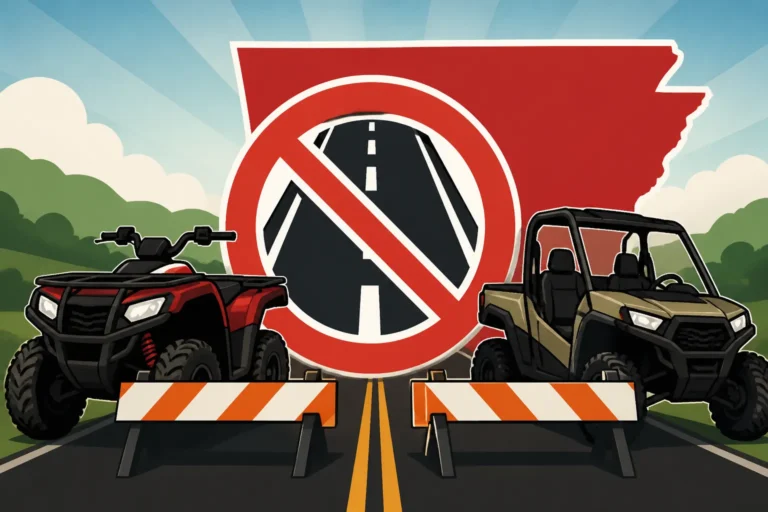
Even within city limits, and even if a four-lane street appears to have sections posted at under 55 mph, there are often explicit exclusions. A common and very important restriction in Arkansas UTV ordinances is the prohibition of UTVs on four-lane streets and state highways, regardless of the posted speed limit. For example, you can find specific guidance on why [Arkansas Four-Lane Streets Stay Closed] to UTVs. The reasoning behind this is multifaceted and primarily rooted in safety and traffic flow.
Four-lane streets typically carry a much higher volume of traffic and are often designed for faster, more continuous movement. They may have multiple turning lanes, complex intersections, and heavier truck traffic. Integrating a UTV, which often has different acceleration, braking, and handling characteristics than a conventional car, into this kind of environment can be hazardous. Furthermore, state highways, even those passing through towns, are generally designed for higher speeds and serve as major transportation corridors. These roads are under state jurisdiction, and while a city can regulate its own streets, it typically cannot override state law regarding state highways. A perfect illustration of this is how [Why Highway 63 Stays Off Limits in Bono], even though Bono was an early adopter of UTV-friendly ordinances. The state maintains its authority over these roads to ensure consistent safety standards across the entire highway system. So, while your UTV might be welcome on a quiet residential street, it's best to assume that bustling four-lane roads and any state-numbered highway are strictly off-limits, even if they momentarily dip below the 55 mph threshold. Always consult your specific city's ordinance for definitive clarity, but these exclusions are a strong general rule.
What Your UTV Needs to Be Street Legal Under Local Ordinances
Getting your UTV registered and permitted for street use in an Arkansas city isn't just about finding the right roads; it's also about making sure your machine is up to snuff. Think of it like getting a car inspected—there are minimum safety requirements that ensure your vehicle can safely share the road with other traffic, pedestrians, and cyclists. These requirements are put in place not to make your life harder, but to ensure that everyone on the road, including you, stays safe. Skimping on these can lead to failed inspections, denied permits, or even a ticket, so it's wise to get these elements dialed in before you even head to city hall.
Essential Equipment for Street-Permitted UTVs
When a city allows UTVs on its streets, it's almost a guarantee that they'll require specific safety equipment. These aren't just suggestions; they're mandatory components designed to make your UTV visible, signal your intentions, and provide a basic level of safety on public roads. While the exact list can vary slightly from one city ordinance to another, there's a common core of equipment you'll need.
Here’s a general rundown of what most Arkansas cities will require:
- Headlights: Must be functional, properly aimed, and typically required to be on when operating on public streets, especially during dawn, dusk, or inclement weather.
- Taillights and Brake Lights: Essential for visibility from the rear and to signal when you're slowing down or stopping. These must be bright and clearly visible.
- Turn Signals: Absolutely crucial for indicating turns or lane changes. Most UTVs don't come with factory turn signals, so this is often an aftermarket addition. If you're looking to add reliable turn signals, companies like SuperATV offer kits that integrate cleanly into many UTV models. You can find more detail on this requirement in [Arkansas Turn Signal Requirements for Street UTVs].
- Rearview Mirrors: You'll need at least one, but often two (one on each side), to give you a clear view of traffic behind you. This is another common aftermarket upgrade. Information on [Arkansas Turn Signals and Mirrors on a UTV] often goes hand-in-hand with turn signal discussions.
- Horn: A working horn is necessary to alert other drivers or pedestrians to your presence in emergency situations.
- Windshield: While not always explicitly stated as "glass," a windshield is often required to protect the driver and passengers from debris.
- Seatbelts: All seating positions typically need to have functioning seatbelts, and occupants must use them.
Before applying for your permit, check your city's specific ordinance for the precise list of required equipment. Many UTVs, especially those primarily used off-road, will need several upgrades to meet these standards. It's often easier and more cost-effective to install these modifications beforehand to avoid issues during the inspection process.
Insurance and Driver's License Requirements
Beyond the physical modifications to your UTV, there are also crucial personal and administrative requirements you'll need to satisfy before you can legally hit the city streets. These pertain to who can drive the UTV and ensuring you have financial protection in case of an accident. It's not enough to just have a machine with all the right lights; you need to be a responsible and legally capable operator.
First and foremost, virtually every Arkansas city that allows UTVs on its streets will require you to carry proof of liability insurance. This is non-negotiable and mirrors the requirements for operating a car or truck on public roads. The purpose of this insurance is to provide financial coverage for damages or injuries you might cause to others while operating your UTV on public property. Without it, you could be personally liable for significant costs in the event of an accident. The specifics of coverage amounts will likely be similar to standard auto insurance minimums, so it’s worth contacting your insurance provider to discuss adding your UTV to an existing policy or obtaining a new one. Details on [Arkansas Insurance for a Street-Permitted UTV] are a must-read for anyone considering street use.
Secondly, the driver of the UTV must hold a valid driver's license. This is a clear distinction from off-road riding, where a license is typically not required. For street-legal UTV operation, most ordinances will specify a minimum age, which is almost always 16 years old, the same as for driving a car. This means that if you're under 16 or do not possess a valid driver's license, you cannot legally operate a street-permitted UTV on city roads. [Arkansas Driver's License at 16 for Street UTVs] will provide further information on this requirement. The rationale is simple: operating a vehicle on public streets requires knowledge of traffic laws, the ability to make quick decisions, and a demonstrated level of driving competence, all of which are assessed when obtaining a driver's license. Some cities might also have specific rules about probationary licenses or restrictions for younger drivers, so always check the local ordinance. In essence, operating a UTV on city streets means you're operating a "vehicle" in the eyes of the law, and you must meet the same fundamental requirements as any other driver.
Navigating Local Permits and Annual Renewals
Once your UTV is equipped and you're personally ready with insurance and a valid driver's license, the next step is the administrative hurdle: obtaining the actual permit to operate on city streets. This isn't a one-and-done deal with the state; it's a specific local process that you'll need to understand and maintain. Many riders get frustrated when they realize a permit from one town doesn't work in another, or that they have to renew it every year, but these are integral parts of local control designed to keep things organized and safe.
How to Obtain a City UTV Permit
Getting a city UTV permit is typically a multi-step process that you'll handle at your local city hall, police department, or sometimes the revenue office. It starts with an application. This form will usually ask for basic information about you (the owner/driver) and your UTV, including its make, model, VIN, and proof of ownership. You'll likely need to show your driver's license and proof of insurance at this stage.
A critical part of the process for most cities is an inspection of your UTV. This isn't a full vehicle safety inspection like for an automobile, but rather a check to ensure your machine meets the specific equipment requirements outlined in the local ordinance. This is where those turn signals, mirrors, horn, and working lights become essential. If your UTV fails this inspection, you'll need to make the necessary corrections and then return for a re-inspection. Once your application is complete, your UTV passes inspection, and you pay the required fee, the city will issue your permit. This often comes in the form of a sticker or decal that you'll need to prominently display on your UTV, typically on the windshield or a visible part of the front. This decal serves as immediate proof to law enforcement that your UTV is authorized for street use in that particular city. The specifics of these fees and the overall process are detailed further in resources like [Arkansas UTV Street Permits and Annual Fees], which can help you prepare for the financial aspect and timeline. Remember, each city's process can be unique, so a call to your city clerk's office is always a good first step.
Understanding Annual Renewal and Moving Between Towns
Obtaining a city UTV permit is rarely a permanent solution. The vast majority of these local permits are issued on an annual basis, meaning they have an expiration date and must be renewed regularly. This is a common practice for many types of local licenses and permits, allowing the city to keep its records current, re-verify compliance, and collect annual fees that help cover administrative costs or local road maintenance. When it comes time for renewal, you'll generally follow a similar, though often streamlined, process as the initial application, which might include re-verification of insurance and possibly another quick equipment check. Make sure you're aware of your permit's expiration date to avoid riding with an expired authorization, which could lead to fines. [Arkansas UTV Street Annual Renewal] provides more context on this ongoing requirement.
Another crucial point of understanding is the geographic limitation of these permits. A UTV permit issued by one Arkansas city is typically valid only within the corporate limits of that specific city. This is a common source of frustration for riders who live near town borders or want to travel through multiple communities. If you have a permit for City A, you cannot assume it allows you to ride on the streets of City B, even if City B also has its own UTV ordinance. Each city's ordinance is a distinct legal document, and your permit is tied directly to the jurisdiction that issued it. There are very few, if any, reciprocal agreements between Arkansas cities regarding UTV permits. This means if you live in one town but frequently ride in an adjacent one, you might need to obtain separate permits from both municipalities if they both have ordinances allowing UTVs on streets. This requires careful planning and a thorough understanding of each locality's rules. Before you venture out, always make it a habit to check the specific ordinances of any town you plan to ride in, as highlighted in [Reading Your Town's Ordinance Before You Ride]. This proactive approach will save you from potential headaches and ensure your riding adventures stay legal and fun.
Penalties for Non-Compliance and Responsible Riding
It's easy to get caught up in the excitement of making your UTV street legal, but it's equally important to understand the consequences if you don't follow the rules. Arkansas law enforcement officers are becoming increasingly familiar with UTV ordinances, and they take violations seriously. Riding illegally isn't just a minor inconvenience; it can lead to significant financial penalties, legal troubles, and even put your machine at risk. Beyond the legal ramifications, responsible riding is also about being a good neighbor and ensuring that the privilege of street-legal UTV use continues for everyone.
What Happens if You Ride Illegally
Riding your UTV on public streets in Arkansas without the proper city permit, or on roads where UTVs are not allowed, can lead to a range of unpleasant consequences. Law enforcement officers are trained to recognize unauthorized vehicles on the road, and if you're caught, you can expect to be pulled over.
Here's what might happen:
- Citations and Fines: The most immediate consequence is typically a traffic citation. The fines can vary widely depending on the city and the specific violation, but they can be substantial. For example, [Arkansas Ticket Cost for Road Riding] can give you an idea of the financial impact. These aren't just minor parking tickets; they can be costly offenses that sting your wallet.
- Impoundment of Your UTV: In more serious or repeat offenses, or if you're operating a significantly unsafe or unregistered vehicle, law enforcement has the authority to impound your UTV. This means your machine will be towed away and stored at an impound lot. Reclaiming an impounded vehicle involves paying not only the fines but also towing and storage fees, which can quickly add up to hundreds or even thousands of dollars. It's a logistical nightmare and a significant financial hit.
- Legal Troubles: Depending on the nature of the violation, especially if it involves reckless operation, driving under the influence, or an accident, you could face more severe legal repercussions beyond a simple traffic ticket. This could include court appearances, higher insurance premiums, or even criminal charges in extreme cases.
- Insurance Issues: If you're involved in an accident while riding your UTV illegally on the street, your insurance policy might not cover the damages or injuries, leaving you personally responsible for all costs. Most insurance policies have clauses that exclude coverage for illegal activities.
The bottom line is that the risks of riding illegally far outweigh any perceived convenience. It's simply not worth the financial and legal headaches. Always ensure you are fully compliant with both state law and any relevant city ordinances before you take your UTV onto public roads.
Best Practices for Safe and Respectful UTV Road Use
For those of us who love our UTVs, being able to ride them on city streets is a privilege that we want to protect. The continued acceptance of street-legal UTVs depends heavily on how riders conduct themselves. Adopting best practices for safe and respectful use isn't just about avoiding tickets; it's about being a good ambassador for the UTV community and ensuring that these ordinances remain in place.
Here are some key best practices:
- Obey All Traffic Laws: This might seem obvious, but it's crucial. Treat your UTV like any other vehicle on the road. This means obeying speed limits (even if your UTV can go faster), stopping at stop signs and red lights, yielding to pedestrians, and using your turn signals consistently.
- Be Visible: Even with all the required lights, UTVs are smaller than most cars and trucks. Drive with your headlights on during the day, wear bright clothing, and consider adding extra reflective tape to your machine. The more visible you are, the safer everyone will be.
- Be Courteous and Respectful: Share the road politely. Don't cut off other drivers, don't tailgate, and if you're holding up traffic, find a safe spot to pull over and let others pass. Be mindful of noise levels, especially in residential areas. Excessive noise can quickly turn public opinion against UTVs.
- Avoid Reckless Behavior: Street-legal privileges are easily lost if a few bad actors engage in reckless driving, speeding, or stunts on public roads. Drive defensively and predictably. Your actions reflect on the entire UTV community.
- Know Your Machine's Limits: While many UTVs are powerful, they are not cars. Understand their braking distances, turning radius, and handling characteristics, especially on paved surfaces, which can differ significantly from off-road terrain.
- Stay on Permitted Streets: Do not deviate from the streets explicitly allowed by the local ordinance. Riding on a prohibited street, even "just for a block," can lead to a citation and erode trust within the community.
By consistently demonstrating responsible and respectful behavior, UTV riders can ensure that local ordinances allowing street use remain popular and are not rescinded due to public complaints or safety concerns. It’s a collective responsibility to preserve this riding option for everyone.
Common Street-Legal UTV Requirements in Arkansas Cities
To help you get a clearer picture, here's a general table summarizing common requirements you might encounter when seeking to make your UTV street legal in an Arkansas city. Remember, always check your specific city's ordinance for the definitive and most current rules, as these can vary significantly.
| Requirement | Description | Typical Status |
|---|---|---|
| Posted Speed Limit | UTVs are generally restricted to streets where the posted speed limit is below a certain threshold. Arkansas state law enables cities to allow UTVs on streets with posted limits under 55 mph. | Mandatory: The fundamental enabling condition. Cities cannot authorize UTVs on roads posted 55 mph or higher. |
| Four-Lane Streets | Even if some sections might be under 55 mph, four-lane streets or major state highways are often specifically excluded from UTV use due to traffic volume and safety concerns. | Mandatory Exclusion: Highly likely to be prohibited in most ordinances. |
| Headlights & Taillights | Functional headlights (white, front) and taillights (red, rear) are required for visibility, especially during low light conditions or nighttime operation. | Mandatory: Standard safety equipment, often required to be on at all times while operating on public streets. |
| Brake Lights | Must be functional and clearly visible from the rear when the brakes are applied. | Mandatory: Essential for signaling deceleration and stopping. |
| Turn Signals | Front and rear turn signals (amber or white/red, depending on location) are required to indicate turns or lane changes. Many UTVs require aftermarket installation for this. | Mandatory: A common requirement for street legality. Aftermarket options from brands like SuperATV are popular for compliance. |
| Rearview Mirrors | At least one, but often two (one on each side), are required to provide a clear view of traffic to the rear. | Mandatory: Vital for safe merging and lane changes. |
| Horn | A functional horn is required to alert other drivers or pedestrians. | Mandatory: A standard safety device. |
| Windshield | Often required to protect occupants from debris and weather. While typically not requiring safety glass like a car, it must offer clear visibility. | Common Requirement: Check specific ordinance for material or visibility standards. |
| Seatbelts | All designated seating positions must be equipped with working seatbelts, and occupants must use them. | Mandatory: Fundamental occupant safety. |
| Valid Driver's License | The operator of the UTV on public streets must possess a valid driver's license (typically 16+ years old). | Mandatory: No learner's permits or operating without a license. [Arkansas Driver's License at 16 for Street UTVs] provides more details. |
| Liability Insurance | Proof of valid liability insurance is required to cover damages or injuries to third parties in case of an accident. | Mandatory: Similar to auto insurance, essential for financial responsibility. [Arkansas Insurance for a Street-Permitted UTV] is key reading. |
| City Permit/Sticker | An annual permit issued by the city, often accompanied by a decal or sticker to be displayed on the UTV. | Mandatory: Requires application, inspection, and fee payment. [Arkansas UTV Street Permits and Annual Fees] outlines the process. This sticker is often required to be displayed [Displaying a City UTV Permit Sticker on Your Windshield]. |
| Off-Road Tires | While not always explicitly forbidden, some ordinances may imply or prefer "nonhighway tires" for the off-road definition, so clarity on tire type might be needed if challenged. | Check Ordinance: Unlikely to be a specific prohibition, but ensure tires are suitable for road use and safe. |
| Spark Arrestor/Muffler | May be required to meet noise regulations and prevent fire hazards, especially in wooded areas within city limits or adjacent to trail systems. | Check Ordinance: More common for off-road trails, but some city rules may include noise limits. |
| Permit Annual Renewal | Most city UTV permits expire annually and require renewal. | Mandatory: Plan for yearly re-application and fees. [Arkansas UTV Street Annual Renewal] is important for ongoing compliance. |
This table serves as a general guide to help you start your journey toward legally riding your UTV on appropriate streets in Arkansas.
Disclaimer
This article is for general informational purposes only and does not constitute professional advice. Laws, prices and regulations vary by location and change over time. Consult a qualified professional for guidance on your specific situation.