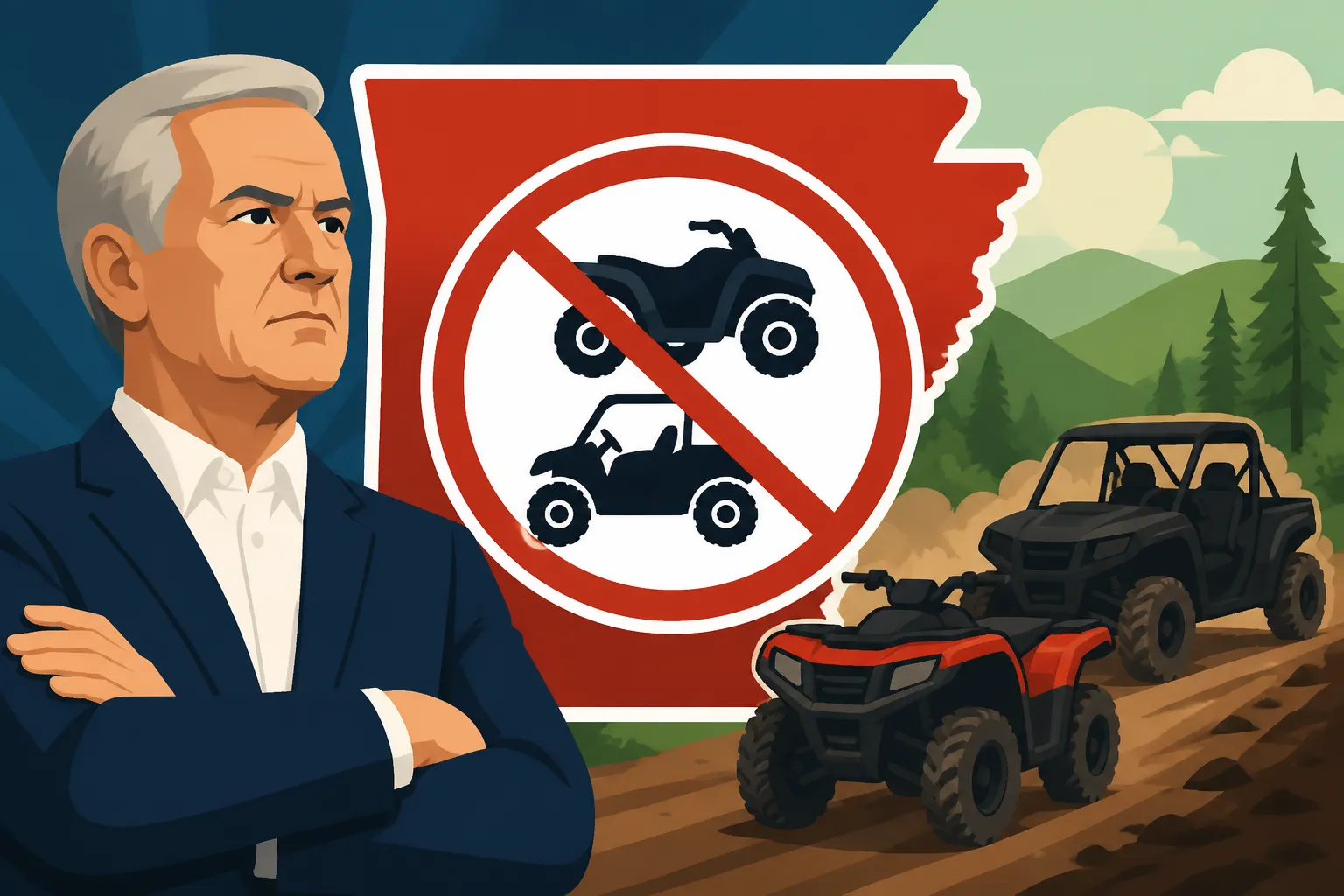
Cotter’s Ordinance Banning ATVs in Arkansas
The dream of hopping on your ATV or UTV and cruising down the main street of a quaint Arkansas town is a powerful one for many riders. It promises convenience, freedom, and a little bit of small-town charm. But if you’re thinking about taking your machine for a spin in Cotter, Arkansas, you're going to hit a roadblock, as this charming community has explicitly chosen to prohibit ATVs and UTVs from its city streets. This guide will walk you through exactly what Cotter's ordinance means for you, why these local rules exist, and what your options are for enjoying your ride responsibly in the Natural State.
Understanding Arkansas's Default Stance on ATVs and UTVs on Roads
Let's start with the big picture: in Arkansas, the default state law makes it unlawful to operate an all-terrain vehicle (ATV) or utility terrain vehicle (UTV) on public streets and highways. This isn't just a suggestion; it's the rule that every rider needs to know. The state sees these machines as primarily off-highway vehicles, designed for trails, fields, and private property, not for sharing lanes with cars and trucks.
The State's Primary Road Prohibition
Imagine pulling out of your driveway, eager for a quick trip to the corner store on your side-by-side. Under Arkansas state law, that quick trip would immediately put you in violation. The statute is pretty clear: unless a specific exception applies, your ATV or UTV belongs off the pavement. This blanket prohibition is designed for safety, recognizing the different handling characteristics, braking distances, and visibility of ATVs and UTVs compared to traditional street-legal vehicles. It's a fundamental aspect of [Arkansas Makes Road Riding Unlawful by Default].
This default ban means that the burden is on the rider to know if an exception exists, rather than assuming they can ride anywhere. It can be a real headache, especially when you see people riding in other states or even other towns in Arkansas, leading to a lot of confusion. Many folks assume that if they can register it, they can ride it, but that's just not the case when it comes to road use in much of Arkansas. You might have all the right [Arkansas ATV Registration Paperwork Checklist] for off-road use, but that doesn't magically make it street legal.
The Six Statutory Road Exceptions
Now, while the general rule is "no riding on public roads," Arkansas law does carve out six very specific exceptions. These aren't loopholes for joyrides, but rather acknowledgements of practical necessities in certain situations. These exceptions cover things like crossing a highway at a ninety-degree angle after coming to a complete stop, or specific uses for farming, hunting, law enforcement, utility work, and state park employees.
For example, if you're a farmer needing to move your UTV loaded with tools from one field to another that's directly across a county road, you can likely do so, provided you meet certain criteria. Same goes for a hunter needing to quickly cross a small stretch of road to access their deer lease. These are very limited circumstances, however. They don't mean you can drive your UTV down the road to the hunting lease, only that you might be able to cross a public road if it's the most direct way to continue your off-road journey. Understanding these narrow exceptions is crucial, because relying on them improperly can still result in a citation. These are the rare moments when you can skirt the [Arkansas Rules for Riding a County Road].
How Local Ordinances Create a Patchwork of Rules
This is where things get interesting, and often, confusing, for riders. While the state generally prohibits ATVs and UTVs on public roads, a significant change occurred in Arkansas law, granting cities and towns the option to create their own ordinances to allow UTVs (but typically not ATVs) on certain municipal streets. This shift from state-level blanket prohibition to local-option permission has created a true patchwork of rules across the state.
Act 922 and the Local Option
The landscape for UTVs on Arkansas roads changed with the passage of Act 922. This legislation didn't suddenly make UTVs street legal statewide; rather, it empowered local municipalities to make that decision for their own roads. Before this, local towns had very little authority to permit UTVs on their streets without conflicting with state law. The passage of Act 922 acknowledged the growing popularity of UTVs for both recreation and utility, and the desire of many communities to allow residents to use them more freely within city limits, often for things like commuting short distances, accessing local businesses, or even just enjoying a leisurely drive. It was a big deal for communities wondering [How Arkansas Cities Got the Choice on UTVs].
This means that if you're planning a trip to ride, you absolutely must check the local city ordinances for every town you intend to ride in or through. What's allowed in one town might be strictly forbidden in the next town over, even if they're only a few miles apart. This is why you'll see places like Bono developing specific [Bono's Street Rules for UTVs in Arkansas], while other towns, like Cotter, go in a completely different direction. It creates a highly variable and sometimes frustrating experience for riders trying to navigate the rules.
Why Cotter Chose to Ban ATVs and UTVs
Cotter, a beautiful town known for its fishing and river recreation, has exercised its option under state law to specifically prohibit ATVs and UTVs on its city streets. This isn't an oversight or a default; it's an intentional decision made by the city council. Cities make these decisions based on a variety of factors, including traffic safety concerns, the width and nature of their streets, pedestrian safety, noise considerations, and even the general character or desired ambiance of the community.
For Cotter, the city likely weighed the potential benefits of allowing UTVs against these concerns and decided that for their specific community, maintaining a ban was the best course of action. This decision reflects the town's priorities and its assessment of how these vehicles would impact daily life within its borders. It's a common outcome when a town decides that the risks or disruptions outweigh the conveniences, and it's certainly not unique to Cotter. Many towns have valid reasons for their stance, whether it's permitting them with strict rules, or outright banning them, which often leads to confusion, as some people believe that [Arkansas Towns Can Open Their Streets to UTVs] automatically means every town.
What Cotter's Ordinance Banning ATVs Really Means for Riders
So, if you're pulling your rig into Cotter, Arkansas, hoping to take your UTV for a spin down Cotter's main street or access a fishing spot via city roads, you need to understand the immediate and very real implications of their ordinance. It means "no," unequivocally.
No Street Access Within City Limits
The most straightforward meaning of Cotter's ordinance is that you cannot operate your ATV or UTV on any public street, alley, or highway within the corporate limits of the City of Cotter. Period. This isn't just about the busiest thoroughfares; it applies to all city-maintained roads. Even if you're just trying to get from your rental cabin to a boat ramp that's a few blocks away via city streets, it's prohibited.
This means you can't use your UTV for quick errands, to travel between different parts of town, or even to access trails if that access requires you to drive on city streets first. For many riders, this can be a huge disappointment, especially if they weren't aware of the specific local rules before arriving. It can feel like a contradiction when you know other towns allow street-legal UTVs, leading to questions like [Arkansas UTV Street Legal Rules by Town].
Implications for Visitors and Residents
Whether you're a local resident or a visitor just passing through, Cotter's ban applies equally to everyone. There are no special exceptions for residents, property owners, or those with temporary lodging. This means if you live in Cotter and own an ATV or UTV, its use on public roads within the city is restricted to the specific state-level exceptions (like direct crossing, if applicable and safely executed). Your primary use for the machine will remain off-road or on private property.
For visitors, this mandates careful trip planning. If your destination involves riding in the Cotter area, you'll need to trailer your machine to designated off-road riding areas or to private property. You cannot rely on driving your UTV to a restaurant, a tackle shop, or a local attraction within Cotter itself. It's important to do your homework and review [Reading Your Town's Ordinance Before You Ride] to avoid any unpleasant surprises or citations.
Table: Comparing UTV Street Legality in Arkansas Cities
| City/Town | UTVs Allowed on Streets? | Key Conditions (if allowed) | Example Impact for Riders |
|---|---|---|---|
| Cotter | No | Ordinance specifically bans them. | Must trailer UTVs to riding areas; no city street riding. |
| Bono | Yes | Licensed driver, insurance, turn signals, mirrors, <55 mph streets. | Can use UTV for local errands and access. |
| Rural County (default state law) | No | Only 6 specific state exceptions (e.g., crossing roads). | Primarily off-road or private property use. |
| Hypothetical Town B | Yes (limited) | <35 mph streets, daytime only, permit required. | Restricted access, need permit for even short trips. |
This table illustrates the wide disparity in rules you might encounter, making it clear that Cotter's outright ban is one end of the spectrum.
What About Equipment? Does It Matter in Cotter?
When towns do allow UTVs on their streets, they often come with a laundry list of equipment requirements: turn signals, brake lights, mirrors, windshields, seatbelts, and sometimes even specific tire types. Riders often invest in aftermarket parts from companies like SuperATV to ensure their machines meet these street-legal standards. But in Cotter, these upgrades won't change the fundamental prohibition.
Street-Legal Equipment Doesn't Override a Ban
It's a common misconception: "If I put all the street-legal accessories on my UTV, then it has to be street legal, right?" Not in Cotter. Even if your side-by-side is decked out with every conceivable street-legal accessory – from a full SuperATV turn signal kit and DOT-approved tires to a windshield and horn – it still cannot be legally operated on Cotter's public streets. The city's ordinance supersedes any individual upgrades you've made to your machine.
The reason is simple: the ordinance is about the classification of the vehicle and the city's chosen policy, not just its equipment. While the equipment would be crucial in a city that does allow street UTVs, it's irrelevant where a ban is in place. It's a hard pill to swallow after you've spent money on upgrades, but the law is clear. Investing in something like a new SuperATV lift kit for trail clearance is still great for off-road adventures, but it won't help you on Cotter's city roads.
The Purpose of Equipment vs. Local Laws
The purpose of equipping a UTV with street-legal accessories is to enhance its safety and visibility when operating in traffic, making it more akin to a conventional vehicle. When towns like Bono, Arkansas, decide to open their streets to UTVs, they often mandate these features as a condition of allowing them. For instance, they might require functional turn signals or side mirrors to ensure drivers can safely navigate intersections and change lanes.
However, in a town like Cotter, which has decided that these vehicles, regardless of their equipment, are not suitable for their city streets, the presence of such equipment does not change the law. The decision is rooted in the city's broader policy goals rather than a deficiency in vehicle equipment. So, while you might be perfectly equipped for a street-legal ride in another Arkansas town, those modifications won't grant you permission to ride on Cotter's roads. It highlights the importance of checking [What Arkansas Deputies Check at a Stop] in that specific location.
What Riders Can Do Instead: Exploring Options Near Cotter
The news about Cotter's ban might feel discouraging, but it's important to remember that Arkansas is a fantastic state for ATV and UTV enthusiasts. A local ordinance banning street use doesn't mean you're out of luck entirely; it just means you need to plan your adventures accordingly. There are plenty of incredible off-road opportunities nearby.
Designated Off-Road Riding Areas
Arkansas boasts a diverse range of designated off-road riding areas, from national forest trails to private parks. These are the places where your ATV or UTV is truly meant to shine. Many of these areas are within a reasonable driving distance of Cotter, allowing you to trailer your machine and enjoy some fantastic riding.
For example, the Ouachita National Forest and Ozark-St. Francis National Forest offer extensive trail systems that cater to various skill levels. Places like the Mill Creek OHV Trail System near Ozark or the Wolf Pen Gap OHV Complex further south are legendary among riders. These trails provide challenging terrain, beautiful scenery, and a safe, legal environment for off-road recreation. You'll need an [Arkansas OHV Permits: Two Forests, Two Prices] for national forest trails, but it’s a small price to pay for miles of adventure. Companies like SuperATV specialize in gear that enhances your off-road experience, from heavy-duty axles to rock sliders, perfect for these rugged trails.
Riding on Private Land with Permission
Another viable option for enjoying your ATV or UTV is to ride on private land with the owner's explicit permission. This could be your own property, a friend's farm, or a leased hunting property. When riding on private land, you generally have more freedom regarding the rules, as long as you adhere to safety guidelines and any specific requests from the landowner.
Always remember that "private land" does not include someone else's property without permission. Trespassing is illegal and can lead to serious consequences. If you're using land for hunting or other purposes, ensure you have written permission, especially if you're not the landowner. This is a common and popular way to enjoy your machine without worrying about municipal road ordinances, and it offers the flexibility to ride without the constraints of public road laws. Just remember, even on private land, it's wise to consider [Arkansas ATV Helmet Requirements] for safety.
Navigating the Legal Landscape of ATV/UTV Road Use in Arkansas
The differing rules across Arkansas can be a real headache. As a rider, your best defense against citations and frustration is good information and careful planning. You've seen how Cotter's ordinance creates a specific boundary, but that's just one piece of a larger, often complex puzzle.
Always Verify Local Ordinances
Before you hitch up your trailer and head out, always, always, always verify the local ordinances for any city or town where you plan to operate your ATV or UTV on public roads. The most reliable way to do this is to visit the city's official website or, even better, call the city clerk's office directly. They can provide you with the most up-to-date and accurate information regarding their specific rules, including any permit requirements, equipment mandates, or outright bans.
Don't rely on hearsay or what you "saw someone else doing." Laws can change, and what applies in one town absolutely does not guarantee the same rules in another. A quick phone call or website check can save you a lot of grief, time, and money in potential fines. This is especially critical because the state law gave [Arkansas How Cities Got the Choice on UTVs] meaning each city could be different.
Consequences of Illegal Road Riding
Operating an ATV or UTV on public roads where it's prohibited, like in Cotter, can lead to various legal consequences. These can range from traffic citations and monetary fines to more serious penalties, especially if an accident occurs. You could be facing court costs, impoundment of your vehicle, and even criminal charges depending on the circumstances and the severity of the violation.
Beyond the legal ramifications, there are also significant safety concerns. ATVs and UTVs are not designed for road speeds and environments. Their suspension, tires, and braking systems are optimized for off-road conditions, making them less predictable and more dangerous in traffic. Ignoring local ordinances puts both yourself and others at risk. Understanding these [Arkansas Penalties for Illegal Road Riding] is crucial for every rider. Always prioritize safety and legality to ensure your passion for riding remains a positive experience.
Disclaimer
This article is for general informational purposes only and does not constitute professional advice. Laws, prices and regulations vary by location and change over time. Consult a qualified professional for guidance on your specific situation.