Lights a Street Permit Will Require
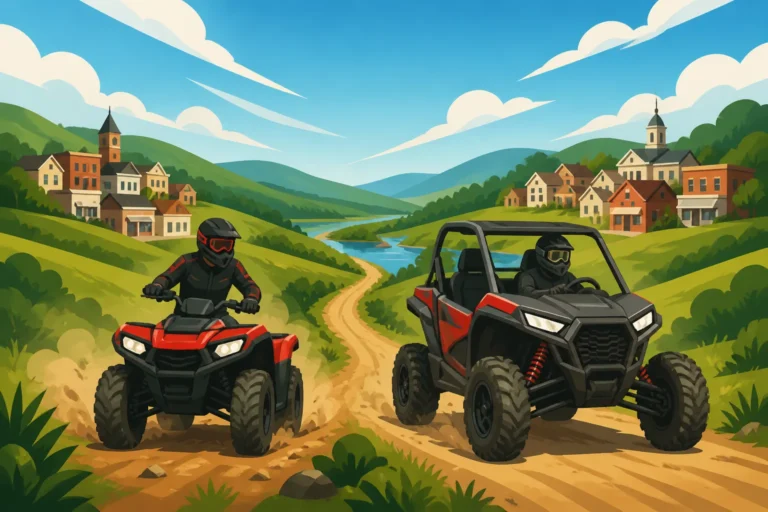
It's incredibly frustrating, isn't it? You've got your UTV, you love hitting the trails, but you also want the convenience of taking it down the street to grab some milk, visit a neighbor, or just get to the next riding spot without trailering. For years, Arkansas's laws felt like a brick wall against that dream, leaving many riders confused and worried about getting a ticket. But things have changed, and now, if your town allows it, understanding the specific lighting requirements for a street-permitted UTV is absolutely critical to avoid fines and ensure everyone's safety. This guide will meticulously break down exactly what lights—and other crucial equipment—your UTV will need to navigate those city streets legally and confidently, helping you prepare for a smooth ride.
The Journey to Street Legality: Understanding Arkansas's Nuances
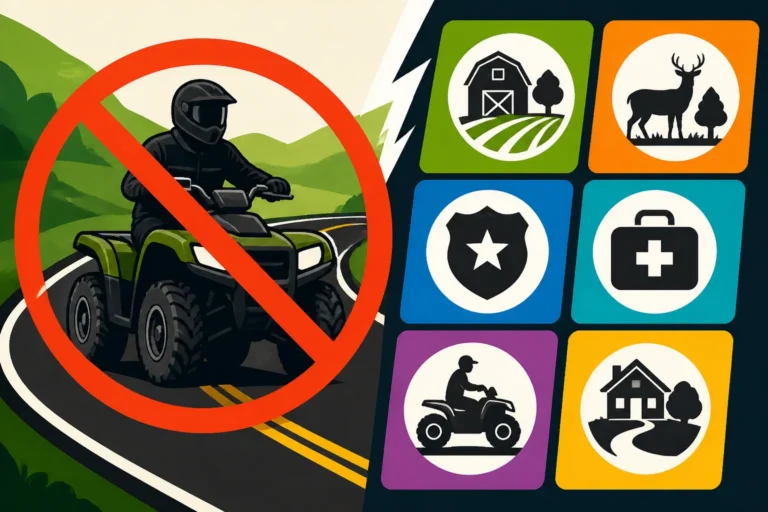
For a long time, the idea of driving your ATV or UTV on a public road in Arkansas seemed like a pipe dream, or at best, a risky gamble. The state's general stance has historically been to keep these off-highway vehicles exactly where they belong: off-highway. This blanket prohibition led to a lot of confusion and even frustration for riders who just wanted a little more flexibility with their machines. You'd see folks nervously eyeing their rearview mirrors, wondering if that quick hop to the gas station was going to land them a hefty fine. The problem was, there wasn't a clear, consistent pathway for street use.
Why Lighting is a City-Level Concern, Not State-Wide
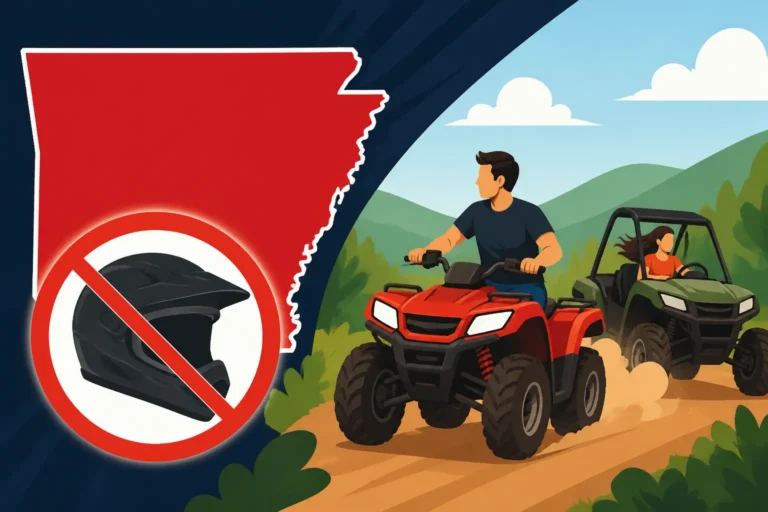
Here's where things get interesting and, frankly, a bit complex. While the state still maintains a general prohibition on ATVs and UTVs on most public roads, the landscape dramatically shifted with the passage of Act 922. This crucial piece of legislation didn't suddenly make every road in Arkansas fair game for your side-by-side. Instead, it empowered local municipalities – your city councils and town governments – to make their own decisions. This means that whether you can legally drive your UTV on a particular street, and what specific equipment you'll need, depends almost entirely on the specific ordinances adopted by the city or town you're in. This is why you might see UTVs zipping around in one town, while just a few miles down the road, it's strictly forbidden. It creates a patchwork of rules, but it also creates opportunities. For a deeper dive into this, check out [Arkansas UTV Street Legal Rules by Town].
What Arkansas Act 922 Opened Up for Towns
Act 922 was a game-changer for many communities in Arkansas. Prior to this act, cities didn't have the explicit authority to create ordinances allowing UTVs on their streets. The state law was the overriding factor. With Act 922, cities were given the green light to craft their own local regulations, provided they adhere to certain general parameters set forth by the state. This means a town like Bono or Mena might have a specific ordinance outlining permitted streets, operating hours, and, crucially, equipment requirements, while a neighboring community might choose not to enact any such ordinance, or to enact one with different stipulations. It's truly a local-option situation, which means your first step is always to understand what your specific town has decided. The good news is that this gave riders the chance to advocate for changes in their own communities. If you're wondering how this whole process works, [How Arkansas Cities Got the Choice on UTVs] explains it well.
The Difference Between an ATV and a UTV on City Streets
It's important to clarify a common point of confusion: while the terms "ATV" and "UTV" are often used interchangeably in casual conversation, the nuances matter significantly when it comes to street legality in Arkansas. Many of the local ordinances enacted under Act 922 are specifically tailored for "UTVs" or "side-by-sides," often defined by features like a steering wheel, side-by-side seating, and a roll cage. Traditional "ATVs" (the straddle-seat, handlebar-steered quads) are frequently excluded from these street-legal provisions. Why? Often, it comes down to perceived safety features and control. UTVs, with their car-like controls and typically more stable footprint, are often seen as more suitable for sharing the road with traditional traffic, even if it's just on low-speed city streets. So, before you start adding turn signals to your quad, make sure your local ordinance explicitly includes ATVs if that's what you plan to drive on the street.
Essential Lighting Components for a Street-Permitted UTV
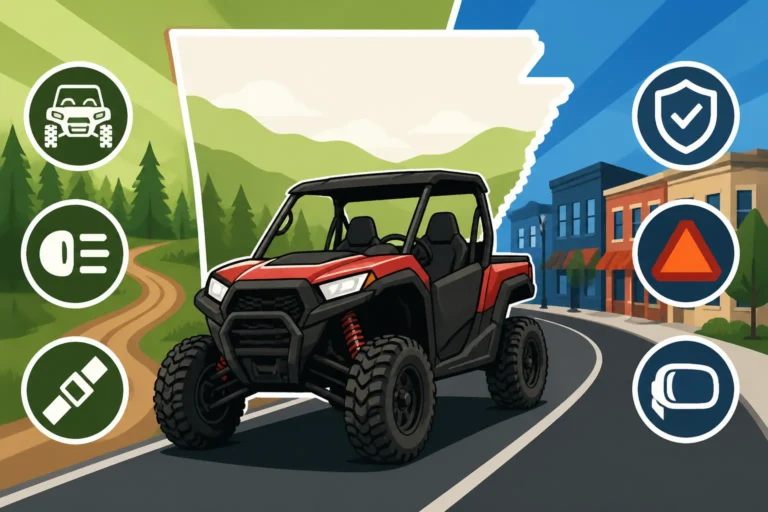
Once your local city or town has passed an ordinance allowing UTVs on certain streets, the focus shifts squarely to making sure your machine is properly equipped. And when it comes to road safety, nothing is more fundamental than proper lighting. Think about it: when you're driving a car, you instinctively use your lights to see, to be seen, and to communicate your intentions to other drivers. The same principles apply, even more so, when you're operating a UTV on public roads, where you might be less visible to larger vehicles. Neglecting any of these components isn't just a risk for a ticket; it's a serious safety hazard for you and everyone else on the road.
Headlights: More Than Just Seeing in the Dark
Your UTV's headlights are, of course, essential for illuminating the path ahead, especially if you're riding after dusk or before dawn. But on city streets, they serve an equally vital purpose: making you visible to oncoming traffic. Most UTVs come standard with headlights, but for street legality, many ordinances will require more specific functionality.
You'll need lights that provide both a high beam and a low beam setting. Just like in a car, high beams are for maximum visibility on unlit roads, while low beams are crucial to avoid blinding other drivers when there's oncoming traffic or when you're following another vehicle. Many stock UTV headlights may offer a high/low function, but it's worth checking their intensity and beam pattern to ensure they meet any local luminosity standards. If your factory lights aren't cutting it, or if you need to upgrade, there are plenty of aftermarket solutions. Companies like SuperATV offer a range of headlight upgrades, from brighter LED replacements that drop right into your existing housing to completely new light bars and pod lights that can be wired in. The goal is clear, effective illumination without creating a hazard for others.
Taillights and Brake Lights: Your Rear-Facing Communication
Your taillights and brake lights are your primary means of communicating your presence and intentions to drivers behind you. These aren't just for looking good; they're about preventing rear-end collisions.
- Taillights: These must be visible from a significant distance (often specified as several hundred feet) to let drivers know you're there, particularly in low light, fog, or at night. They should cast a steady red glow.
- Brake Lights: These are even more critical. When you apply the brakes, these lights must illuminate brighter than the taillights to clearly signal to following vehicles that you are slowing down or stopping. Many UTVs come with combined taillight/brake light units from the factory, but you need to ensure they are bright enough and clearly distinguishable. If your existing setup isn't up to par, aftermarket kits can often integrate brighter LEDs or add dedicated brake lights for enhanced safety. Remember, a driver behind you relies entirely on these lights to react appropriately.
Turn Signals: The Crucial Indicators for Safety
This is one of the most common additions needed for street-legal UTVs, as many off-road machines don't come equipped with factory turn signals. On public roads, indicating your turns and lane changes is non-negotiable for safety. Without them, other drivers have no idea where you're going, leading to dangerous guesswork.
You'll need front and rear turn signals that flash distinctly amber or red (depending on local ordinance and typically amber for front, red or amber for rear) when activated. These must be visible from both the front and rear of the vehicle, respectively, and often from the side as well. Many riders opt for comprehensive aftermarket turn signal kits that include everything needed for installation: wiring, switches, and appropriate lights. Some kits even integrate into your UTV's existing taillights, while others provide separate, dedicated signal lamps. When selecting a kit, ensure it includes a visible indicator on your dashboard so you know your signals are activated. This is a must-have, and cities like Bono or Cotter will specifically check for these. For more detail, refer to [Arkansas Turn Signal Requirements for Street UTVs].
Reflectors and Side Markers: Enhancing Passive Visibility
While active lighting (headlights, taillights, turn signals) is essential, reflectors provide a passive layer of visibility, especially if your active lights were to fail or if you're parked by the roadside at night. Many street-legal ordinances will require red reflectors on the rear and amber reflectors on the front and sides of your UTV. These simple, inexpensive additions dramatically increase your machine's visibility to headlights from other vehicles.
Side markers are another often-overlooked component. These small lights, typically amber, are mounted on the sides of your UTV to make it visible from the side, which is particularly important at intersections or when crossing traffic. While not all ordinances explicitly list side markers as a primary requirement, they are generally a very smart addition for enhanced safety on public roads.
License Plate Illumination: Keeping Your Permit Visible
If your city requires an annual permit or decal, it's highly likely that they'll also require some form of visible identification, often a small "license plate" or decal displayed on the rear of your UTV. And just like with a car, if you're operating at night, that permit or plate needs to be clearly illuminated.
A white light shining on your rear license plate or permit ensures that law enforcement and other drivers can easily read your registration information after dark. Many aftermarket turn signal kits include a small light specifically for this purpose, or you can purchase standalone LED license plate lights. It's a small detail, but a legally required one in many street-legal UTV ordinances. Ensure it's bright enough to clearly illuminate the numbers and letters without being blinding to drivers behind you.
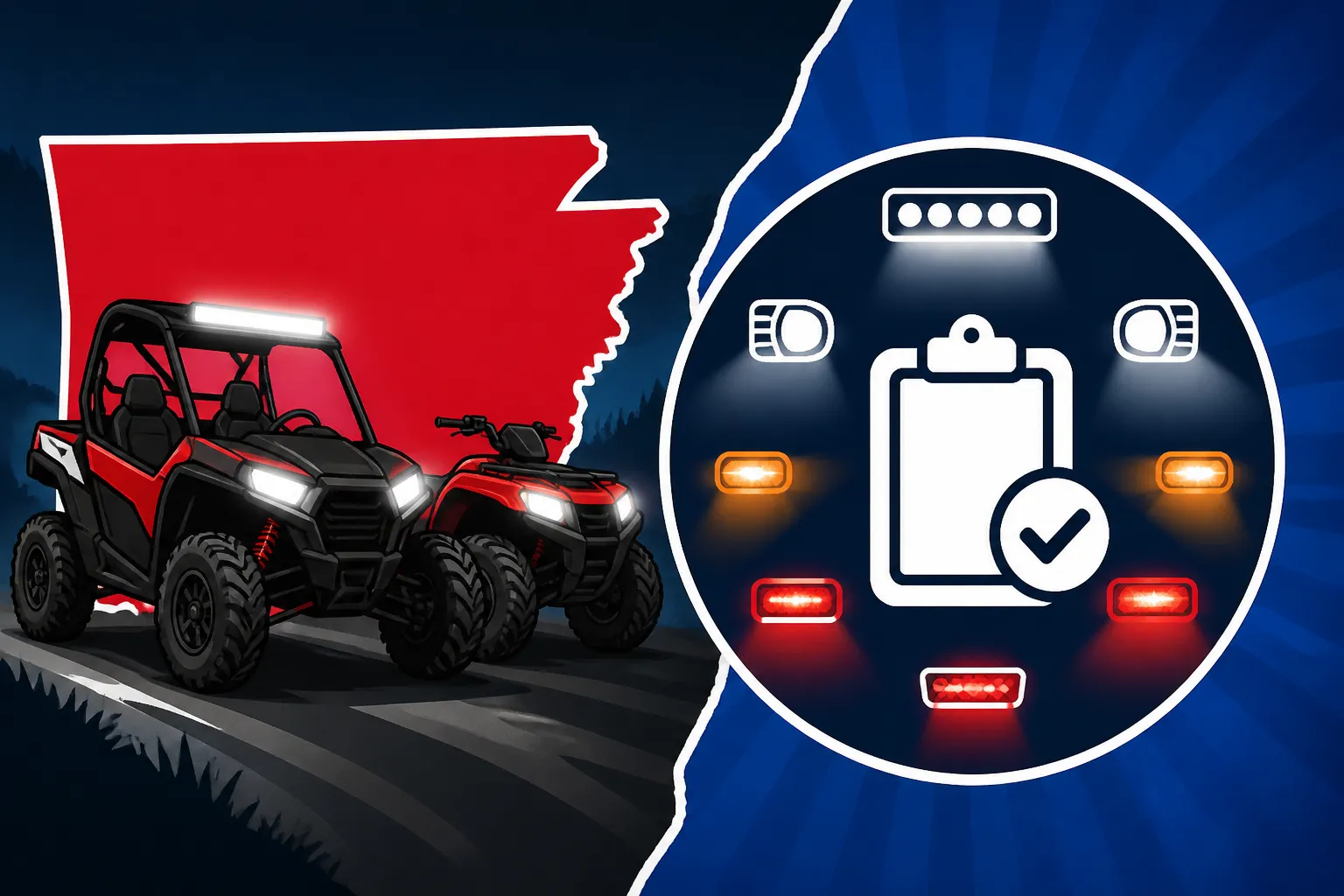
Required Lighting Checklist for Arkansas Street UTVs
| Component | Typical Requirement | Why It Matters |
|---|---|---|
| Headlights | High and Low Beam functionality, visible from a set distance. | See the road, be seen by others, avoid blinding oncoming traffic. |
| Taillights | Red, steady illumination, visible from a set distance. | Indicate presence to rear-approaching vehicles, especially in low light. |
| Brake Lights | Brighter red illumination when brakes are applied. | Crucial signal to drivers behind that you are slowing or stopping. |
| Turn Signals | Amber or red, front and rear, clearly visible from front, rear, and sides. | Communicate turns and lane changes to prevent collisions. |
| Reflectors | Red (rear), Amber (front/sides), strategically placed for passive visibility. | Passive safety, visible even if power fails or vehicle is parked at night. |
| License Plate Light | White illumination for rear permit/decal. | Ensure registration is readable by law enforcement and others after dark. |
| Horn | Audible warning device. | Alert pedestrians or other vehicles to your presence. |
| Mirrors | At least one rear-view mirror (often two side mirrors are preferred). | See traffic behind and to the sides of your UTV. |
Note: Always consult your specific city's ordinance for exact requirements and distances.
Beyond the Basics: Other Required and Recommended Equipment
While lighting is paramount, a street-legal UTV requires more than just a comprehensive light setup. Your city's ordinance will almost certainly include other equipment necessities aimed at bringing your off-road machine closer to the safety standards of a conventional vehicle when it's operating on public roads. Ignoring these can be just as problematic as not having the right lights, leading to fines or revocation of your permit. This is where the distinction between what's absolutely required by law and what's simply a good idea for personal safety often blurs. The best approach is always to meet the minimum legal standard and then go above and beyond for your own peace of mind.
Mirrors and Horns: Auditory and Visual Alerts
On the trails, you might not always need to know what's directly behind you or to blast a horn at a deer. But on a city street, these are non-negotiable safety tools.
- Mirrors: Most ordinances will require at least one rear-view mirror, and many will specify two side mirrors – one on each side of the UTV. This allows you to monitor traffic approaching from behind and to your sides, crucial for safe lane changes and turns. Without adequate mirrors, you're operating with blind spots that can be incredibly dangerous when sharing the road with cars, trucks, and bicycles. Aftermarket options range from simple clamp-on mirrors to more robust, break-away mirrors designed to withstand off-road abuse but still provide clear visibility on the street. Check out [Arkansas Turn Signals and Mirrors on a UTV] for more on this.
- Horn: An audible warning device is almost universally required for street-legal vehicles. This isn't about road rage; it's about safety. A quick, sharp blast of the horn can alert a pedestrian who might not see you, warn a distracted driver, or signal your presence in a tight spot. Most UTVs don't come with a factory horn, so you'll likely need an aftermarket kit. These are generally simple to install, consisting of a horn unit, a wiring harness, and a push-button switch that can be mounted within easy reach on your dash or steering wheel.
Windshields and Wipers: Visibility in All Conditions
While some UTVs might come with half-windshields or no windshield at all, a full windshield is often a requirement for street legality. This serves a few critical functions:
- Protection: A full windshield protects you and your passengers from wind, debris, insects, and road spray – all of which can severely impair your vision and cause discomfort.
- Visibility: Just having a windshield isn't enough; it must be kept clear. This is why many ordinances will also require windshield wipers if the UTV is equipped with a full windshield. Driving in the rain, mud, or even heavy dust without wipers makes it impossible to maintain clear sightlines, creating a significant hazard. Aftermarket windshields for UTVs are readily available, often made from shatter-resistant polycarbonate or laminated glass, and many can be paired with electric wiper kits. When choosing one, ensure it provides clear, undistorted vision and is securely mounted.
Seat Belts and Safety Restraints: Passenger Protection
On the trail, some riders might opt for harnesses, but for street use, seat belts are a standard requirement, typically 3-point seat belts, similar to what you'd find in a car. Most UTVs come equipped with seat belts from the factory, but it's crucial to ensure they are in good working order and are worn by all occupants.
Your local ordinance will likely specify that all occupants must be properly restrained when the UTV is operating on public roads. This isn't just about avoiding a ticket; it's about critical safety. In the event of a collision or even a sudden stop, seat belts are designed to keep you and your passengers securely in your seats, preventing ejection and minimizing injury. Always check the condition of your seat belts regularly, and if your UTV carries more passengers than it has factory restraints, you'll need to look into certified aftermarket solutions to meet the requirements for everyone onboard.
Navigating the Permit Process and Equipment Choices
Okay, so you've got a good handle on what lights and other equipment are generally needed. But the journey isn't over yet. Equipping your UTV is just one piece of the puzzle. You also need to understand the practical steps of getting your permit, selecting the right gear, and knowing what to expect when a local deputy pulls you over to check for compliance. This is where preparation truly pays off, saving you time, money, and potential headaches.
Checking Your Local City's Specific Ordinance
We can't stress this enough: always, always start with your local city's specific ordinance. While we've outlined common requirements, there can be subtle (or not-so-subtle) differences from one town to the next. What's perfectly legal in Bono might be forbidden in Cotter. Some towns might specify minimum headlight lumens, while others might have restrictions on total width or engine size for street-legal machines.
How do you find this information? Start by visiting your city or town hall, or check their official municipal website. Many cities will have their ordinances published online. Look for sections pertaining to "Off-Highway Vehicles," "UTV Permits," or "Street-Legal Side-by-Sides." Don't be afraid to call the city clerk's office and ask for clarification. They are usually the best resource for up-to-date and accurate information. Understanding the exact letter of the law in your area is the foundation for everything else you do. This is why [Reading Your Town's Ordinance Before You Ride] is such a vital step.
Aftermarket Solutions for Street Legal Compliance
Given that most UTVs aren't designed from the factory to be street-legal, the aftermarket industry has stepped up to provide comprehensive solutions. You don't have to piece together every component yourself if you don't want to.
Many reputable companies offer "street legal kits" that bundle together the most commonly required items: turn signals, horns, mirrors, and sometimes even license plate lights. These kits are designed for relatively straightforward installation and are a fantastic way to ensure you're getting compatible components. For example, a company like SuperATV is well-known for offering a wide array of aftermarket UTV accessories, including street-legal kits and individual components like DOT-approved windshields, mirrors, and high-quality LED lighting upgrades. They cater to a variety of UTV makes and models, making it easier to find parts specifically designed for your machine. When shopping, look for kits that explicitly state they meet "DOT requirements" (Department of Transportation) or are "street legal compliant," as this often indicates they're built to common road standards. Whether you're upgrading your stock headlights with brighter SuperATV LED bulbs or installing a complete turn signal kit, the goal is to enhance visibility and comply with local rules.
Inspection and Enforcement: What Deputies Look For
Once you've equipped your UTV and obtained your local permit, you're ready to hit the streets. However, it's wise to know what to expect when it comes to enforcement. Local law enforcement officers will be checking for two main things:
- Valid Permit/Decal: Is your permit current and properly displayed according to the city's rules?
- Required Equipment: Do you have all the necessary lights (headlights, taillights, brake lights, turn signals, license plate light) and other safety gear (mirrors, horn, windshield, seat belts)? Officers will likely do a visual inspection, and they might ask you to demonstrate the functionality of your lights and horn. They're looking for clear, working signals and proper visibility.
It's also important to note that even with a permit, there might be restrictions on where you can ride (e.g., only on streets under 55 mph, no state highways) and when (e.g., no riding after dark in some areas unless specific lighting is met). If you fail to comply with any part of the ordinance, you could face penalties ranging from a warning to a citation and fine. Nobody wants to deal with a ticket, especially when you've gone to the effort of making your machine street-legal. Being thorough in your preparation is your best defense. Familiarize yourself with [Arkansas Ticket Cost for Road Riding] to understand the potential consequences.
Making your UTV street-legal in Arkansas means embracing a bit of homework and a few key upgrades, especially when it comes to lighting. But for many riders, the convenience and added freedom are well worth the effort. With the right lights, mirrors, and a bit of local ordinance knowledge, you can confidently and safely enjoy your machine on city streets.
Disclaimer
This article is for general informational purposes only and does not constitute professional advice. Laws, prices and regulations vary by location and change over time. Consult a qualified professional for guidance on your specific situation.