Arkansas Rules for Riding a Railroad Bed
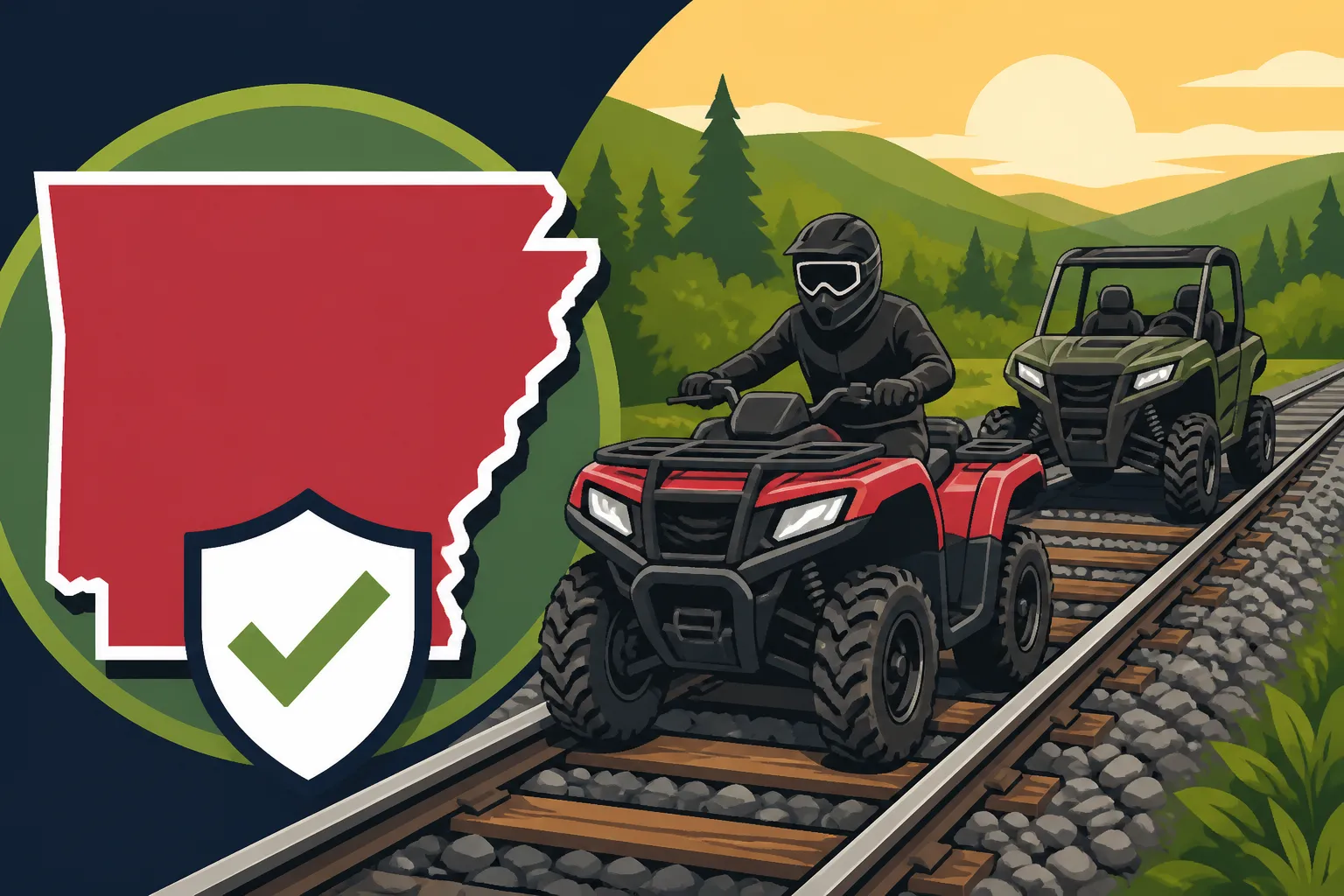
It's easy to look at an old railroad bed cutting through the Arkansas landscape and think, "What a perfect, clear path for my ATV or UTV!" The flat, graveled surface often seems like an inviting shortcut or a ready-made trail, especially when the surrounding woods are thick or the roads are rough. But that smooth-looking path hides a world of legal trouble and extreme danger, and understanding why you absolutely cannot ride your machine there is crucial for every Arkansas rider. This guide will walk you through the very real risks and the strict laws that make railroad beds completely off-limits, and then point you toward the amazing, legal places where you can truly enjoy your ride.
Why Railroad Beds Are Off-Limits (It's Not Just a Suggestion!)
When you see a railroad bed, whether it's an active line with tracks or an abandoned one, your first thought might be, "It looks clear! No one's around!" But that innocent observation couldn't be further from the truth. These areas are not just frowned upon for riding; they are legally protected, highly dangerous zones where operating an ATV or UTV can lead to severe consequences.
Private Property and Trespassing
The most fundamental reason railroad beds are off-limits is simple: they are private property. This isn't public land like a state park or a national forest trail. Railroad companies, or entities that own abandoned lines, maintain strict control over these corridors. Even if there are no fences or "No Trespassing" signs visible every few feet, assume that railroad property is private, just like someone's backyard or their farm field.
Think of it this way: you wouldn't just ride your quad through a farmer's cornfield without explicit permission, right? The same principle applies here, but with significantly higher stakes. Railroad companies have security personnel, and local law enforcement is often keenly aware of railroad trespassing issues due to the inherent dangers. An officer isn't going to care if you "didn't see a sign" – you're on private property, plain and simple. What might seem like an open, unused space is actually a meticulously maintained corridor vital to commerce and public safety. Trying to use it as your personal trail, even for a short distance, makes you a trespasser in the eyes of the law, and that can come with real penalties beyond just a warning. This is a common misunderstanding that leads many riders into trouble, mistaking a clear path for an open invitation.
Active Rail Lines and Extreme Danger
Beyond the trespassing aspect, consider the unparalleled danger of active rail lines. Trains are not like cars; they cannot swerve, and they take an incredibly long distance to stop, often over a mile. Modern trains, especially those with electric or hybrid engines, can be surprisingly quiet until they are upon you, even during the day. At night, with the wind blowing, you might not hear or see an approaching train until it's far too late.
Imagine riding your ATV, enjoying the scenery, and suddenly a train is bearing down on you from behind a bend. There's no shoulder to pull over onto, nowhere to quickly escape the tracks. The force of a train is immense; any collision is catastrophic, not just for the rider but also potentially for the train and its crew or cargo, risking derailment. Even if you manage to avoid a direct collision, the sheer wind force and debris kicked up by a high-speed train can pull you off your machine or cause you to lose control. It's an unforgiving environment, and it’s why railway workers undergo extensive safety training. This isn't a risk you want to take, no matter how tempting that straightaway looks. Even momentary access to cross the tracks can be incredibly dangerous.
Infrastructure Damage and Liability
Riding an ATV or UTV on a railroad bed isn't just about the immediate danger to yourself; it can also cause damage to critical infrastructure. The gravel and ballast that make up the track bed are carefully designed to support heavy loads and maintain track alignment. Your machine's tires can displace this material, potentially compromising the integrity of the bed. Over time, repeated use by off-road vehicles can loosen ballast, erode shoulders, or even damage signal wiring and other sensitive equipment running alongside the tracks.
If you happen to cause any damage, even inadvertently, the liability could be enormous. Railroad companies take damage to their property very seriously, as it directly impacts their operations and safety. You could face charges for property damage in addition to trespassing. The cost to repair even minor damage to railway infrastructure can be astronomical, potentially leading to civil lawsuits that could financially ruin an individual. This includes not just physical damage to tracks or signals, but also potential costs associated with delays, rerouting trains, or having to bring in specialized crews for inspection and repair. It's a risk that simply isn't worth taking, especially when there are so many legitimate places to ride in Arkansas.
The Legal Ramifications of Riding on Railroad Property in Arkansas
Ignorance of the law is never an excuse, and when it comes to riding on railroad property in Arkansas, the consequences are severe. This isn't a minor infraction that gets a slap on the wrist. You're looking at serious legal and financial repercussions that can impact your life long after the thrill of a forbidden ride fades.
Criminal Charges and Fines
In Arkansas, trespassing on railroad property is not merely a polite request to leave; it's a criminal offense. The specific charges can vary, but generally, you're looking at a misdemeanor, which means a criminal record. This isn't just a simple traffic ticket you pay and forget about. A criminal record can affect future employment, housing applications, and even your ability to obtain certain licenses or participate in various activities.
Fines can be substantial, often hundreds or even thousands of dollars, depending on the specific statute violated, whether it's a first offense, and if any property damage occurred. Beyond the initial fine, you'll also be on the hook for court costs, which can add hundreds more. In some cases, especially with repeat offenses or if you're deemed to have recklessly endangered others (like train operators), you could even face jail time. It's a far cry from a leisurely ride in the countryside, transforming quickly into a legal nightmare. Law enforcement officers, often working in conjunction with railroad police, do actively patrol these areas precisely because of the inherent dangers and the high potential for serious incidents.
Civil Liability and Damages
Even if you manage to avoid criminal charges (which is unlikely), you're not out of the woods. Railroad companies are powerful entities with significant legal resources, and they will pursue civil action against trespassers who cause disruption or damage. Imagine you're riding, and your machine gets stuck, causing a train to slow down or even stop. That delay alone can cost the railroad company tens of thousands of dollars in lost revenue, missed schedules, and contractual penalties. They will not hesitate to sue you to recover those costs.
Furthermore, if your presence on the tracks contributes to any accident, even if you weren't directly hit (e.g., a train has to make an emergency stop, causing damage to cargo), you could be held liable for immense damages. These civil judgments can far exceed any criminal fines, potentially leading to wage garnishments, liens on your property, and financial devastation for years to come. This is why it's so important to stick to legal riding areas like [Arkansas ATV Trails: Where to Ride]. The temptation of an easy path isn't worth risking your entire financial future.
Machine Impoundment and Recovery Costs
If you're caught riding your ATV or UTV on railroad property, prepare to say goodbye to your machine for a while. Law enforcement has the authority to impound vehicles used in illegal activities. This means your prized quad or side-by-side will be towed away and stored at an impound lot. Getting it back isn't a simple matter of showing up with your keys.
First, you'll have to deal with the legal process – going to court, paying any fines, and addressing the criminal charges. Only then, once the legal hurdles are cleared, can you begin the process of recovering your vehicle. This will involve hefty towing fees, daily storage fees that quickly add up, and potentially administrative release fees from the impound lot. These costs can easily run into hundreds or even thousands of dollars, often exceeding the value of older machines. Many riders find it's simply not worth it to recover their impounded machine, especially when faced with the additional fines and legal costs. It's a costly lesson to learn about the importance of knowing [Arkansas Trespass Law for Riders].
Safer, Legal Alternatives for Arkansas ATV/UTV Riders
The good news is that Arkansas offers an incredible playground for ATV and UTV enthusiasts! You absolutely do not need to risk life, limb, or your legal standing by riding on railroad beds. There are countless safe, legal, and truly enjoyable options available throughout the state.
Dedicated OHV Trails and Parks
Arkansas boasts some fantastic, legally designated Off-Highway Vehicle (OHV) trails and parks that cater specifically to ATVs and UTVs. These areas are designed with rider safety in mind, feature diverse terrain, and are managed to provide a sustainable riding experience. You'll find everything from challenging rock crawls to scenic forest paths, all without the fear of legal repercussions or the imminent danger of a train.
Places like the Wolf Pen Gap OHV Complex near Mena are legendary, offering miles of well-maintained trails for all skill levels. You can plan an entire weekend around riding there, knowing you're in a safe and regulated environment. [Wolf Pen Gap: Arkansas's Best Known OHV Complex] is a great example of a trail system where you'll see other riders, many using quality aftermarket parts from brands like SuperATV to enhance their machines for legitimate off-road adventures. Another fantastic option is the Mill Creek OHV Trail System near Ozark, or private parks like Hot Springs Off-Road Park, which provide even more amenities. These locations often have clear rules, maps, and even camping facilities, making them perfect destinations for a family trip or a challenging ride with friends. They require permits, of course, but that small fee goes directly back into maintaining the trails, ensuring they remain safe and fun for everyone.
Riding on Private Land with Permission
If you're lucky enough to own land in Arkansas, or if you have friends or family who do, riding on private property with explicit permission is another excellent and legal option. This is perhaps the most common way many Arkansans enjoy their ATVs and UTVs for recreation, hunting, or farm work. The key word here is "permission," and it's best if that permission is in writing, especially if you're not the landowner yourself.
Having written permission protects both you and the landowner. It clarifies where you can ride, what activities are permitted, and for how long. This prevents any misunderstandings that could lead to trespassing accusations. Many rural properties offer ample space for riding, and it's a great way to explore the outdoors without public trail fees or regulations, provided you respect the land and its owner's wishes. Whether it's for checking fences, hauling feed, or just tearing up some dirt, riding on private land with proper consent is a foundational part of the Arkansas off-road experience. This is especially true for tasks like those covered under [Arkansas Farming Operation Road Use], where machines are essential tools on large properties.
Navigating County Roads (Where Permitted)
While railroad beds are a definite no-go, Arkansas does have specific, albeit limited, provisions for ATV and UTV use on certain public roads. It's critical to understand that this is not a blanket allowance to ride anywhere. Generally, most public roads remain off-limits for ATVs by default, but there are specific exceptions, particularly for UTVs in towns that have passed local ordinances.
For example, some municipalities in Arkansas have opted to allow UTVs on certain streets, typically those posted at 55 mph or less, and not on four-lane state highways. These local ordinances often come with their own set of requirements, such as obtaining a special permit, having appropriate lighting, mirrors, and sometimes insurance. [Arkansas UTV Street Legal Rules by Town] can give you a better idea of how this works. Additionally, there are statutory exceptions for activities like farming and hunting operations, or for direct crossings of highways at 90-degree angles after a complete stop. Always remember that riding on any public road requires you to be fully informed about the specific laws and local ordinances in that exact area. Never assume; always verify. This is a complex area of law, and it's vastly different from the absolute prohibition on railroad property.
Remember, responsible riding means respecting the law, the land, and the safety of everyone. Arkansas offers fantastic opportunities for ATV and UTV adventures, but they are found on dedicated trails and legal private lands, not on dangerous and illegal railroad beds. Equip your machine with quality parts from trusted brands like SuperATV, get your permits, and go explore the natural beauty of Arkansas the right way!
Legal Riding vs. Railroad Bed Riding: A Quick Comparison
To put it into perspective, let's look at the stark differences between choosing a legal riding area and attempting to use a railroad bed.
| Feature | Legal OHV Trails / Private Land with Permission | Railroad Bed Riding (Absolutely Illegal) |
|---|---|---|
| Legality | Permitted with proper permits/permission, following park/land rules. | Illegal trespassing, often a criminal offense. |
| Safety | Designed for off-road vehicles, managed for safety, minimal external hazards. | Extremely dangerous due to active trains, no emergency escape routes, unstable surfaces. |
| Consequences | Minor infractions (e.g., littering) might result in a warning or small fine. | Criminal charges, hefty fines, court costs, potential jail time, civil lawsuits, vehicle impoundment. |
| Property Ownership | Public land (National Forests, State Parks) or private land with explicit permission. | Always private property of railroad companies, even if seemingly abandoned or unused. |
| Infrastructure | Trails maintained for off-road use; minimal risk of damaging critical infrastructure. | Risk of damaging track ballast, ties, signals, leading to high repair costs and liability. |
| Liability | Personal responsibility for safe operation, typically covered by insurance if available. | High risk of liability for damage, delays, and potential injuries/fatalities to self or others. |
| Access | Clear access points, designated parking, maps available. | No legal access points; entering is always trespassing. |
| Enjoyment | Worry-free riding, exploration, community, designated facilities. | Constant fear of being caught, extreme danger, guilt, potential for life-altering incidents. |
Disclaimer
This article is for general informational purposes only and does not constitute professional advice. Laws, prices and regulations vary by location and change over time. Consult a qualified professional for guidance on your specific situation.