Arkansas Towns Weighing a UTV Ordinance
If you own a UTV in Arkansas, you've probably felt the frustration of not knowing exactly where you can legally ride it on public roads. The default answer for much of the state is "no," but that landscape is changing, especially as more and more Arkansas towns and cities begin to consider, debate, and sometimes pass their own local ordinances to allow side-by-sides on city streets. This guide will help you understand the journey these towns are on, what it means for you, and how to navigate the evolving rules.
The Arkansas Statewide Ban on UTV Road Riding (and Its Exceptions)
Let's get one thing straight from the start: Arkansas law generally prohibits the operation of ATVs and UTVs on public streets and highways. This isn't a secret, but it's often a source of confusion and even tickets for riders who mistakenly believe all public roads are fair game. This statewide ban is the foundation upon which any local decisions are built, and understanding it is crucial before you even start looking at city-specific rules.
Why Roads Are Closed by Default
Imagine you've just bought a brand-new side-by-side, eager to cruise it around your small town or use it for errands. You might assume that if a road is open to cars, it should be open to your UTV, right? Unfortunately, that's not how Arkansas law has traditionally seen it. The state views ATVs and UTVs primarily as off-highway vehicles, designed for trails, private land, or agricultural use, not for sharing lanes with cars and trucks. This default prohibition is in place to ensure safety, manage traffic flow, and differentiate between vehicles built for highway speeds and those that are not. It's a blanket rule, and it means that unless there's a specific exception, or a newly enacted local ordinance, you cannot legally operate your UTV on public roads. This can be a real headache for folks living just a few miles from a general store, or who simply want to visit a neighbor down the street without trailering their machine.
Six Statutory Exceptions
Even before local towns gained the ability to create their own UTV ordinances, Arkansas law recognized a handful of specific, limited situations where ATVs and UTVs could legally be operated on public roads. These aren't blanket permissions, but rather very narrow carve-outs from the general ban. For example, the law permits operation for certain farming operations, hunting operations, and even for individuals with a physical disability that prevents them from walking or operating a traditional vehicle. Furthermore, utility company crews, law enforcement, and state parks employees often have exceptions for official duties. You might also legally cross a highway at a ninety-degree angle after coming to a complete stop, provided it's safe to do so. These [Arkansas's Six Statutory Road Exceptions] exist statewide and don't require any local city council action, but they are very specific and don't grant general permission to joyride through town. They primarily address practical needs rather than recreational ones.
How Arkansas Cities Gained Local Control Over UTVs
For years, the statewide ban left many small towns feeling powerless. Residents wanted to use their UTVs more freely within city limits, whether for quick trips to the store, community events, or just enjoying their property. But without a mechanism to override the state law, cities were stuck. This all began to change with significant legislative action that put the power in the hands of local communities.
The Legislative Shift: Act 922 and Its Impact
The turning point for many Arkansas communities came with the passage of Act 922. This crucial piece of legislation didn't make UTVs street legal statewide, but it did something arguably more impactful for local governance: it granted individual cities and towns the authority to decide for themselves. Essentially, Act 922 created a "local-option" scenario, empowering city councils to pass their own ordinances allowing the operation of UTVs on certain municipal streets. This was a direct response to the growing popularity of side-by-sides and the desire of many residents to integrate them more seamlessly into their community life. It was a recognition that a one-size-fits-all state law wasn't always the best solution for diverse local needs. For many small towns, this act felt like a breath of fresh air, giving them the tools to tailor rules to their specific community vibe.
The "Local-Option" Reality for Riders
What this "local-option" approach means for you as a UTV owner is a highly fragmented and often confusing legal landscape. It means that riding legally on city streets depends entirely on where you are at any given moment. You could be perfectly legal cruising through the main street of Bono, but drive a few miles down the road into Cotter, and you might be breaking the law. Each city that chooses to embrace Act 922 must pass its own specific ordinance, which will outline the precise conditions under which UTVs can operate. This means there's no single statewide list of "street-legal" towns; you have to do your homework for every community you plan to ride in. Understanding [How Arkansas Cities Got the Choice on UTVs] is the first step, but the real work for riders is keeping up with the individual decisions made by each town council.
What It Takes for an Arkansas Town to Open Its Streets to UTVs
It's not as simple as a city council waving a magic wand and declaring UTVs street legal. There's a formal process, and usually, a significant amount of public debate and careful consideration of safety, traffic, and community impact. When towns are "weighing an ordinance," they're often grappling with these very steps and considerations.
The Ordinance Process: From Council Meeting to Pavement
For an Arkansas town to open its streets to UTVs, the city council must officially pass an ordinance. This typically involves several steps, often beginning with community discussions, citizen petitions, or a council member proposing the idea. Next, the council will usually draft a proposed ordinance, which often includes details about speed limits, eligible streets, required equipment, and permit fees. This draft is then subject to public readings, where residents have the opportunity to voice their opinions, concerns, and support. There might be multiple meetings, amendments, and reconsiderations before a final vote is taken. If the ordinance passes, it becomes local law, dictating the new rules for UTV operation within that city's limits. This process can be lengthy, and towns often look at other communities, like [Bono and the First Arkansas UTV Ordinance], to understand best practices and potential pitfalls.
Key Requirements and Restrictions Cities Must Implement
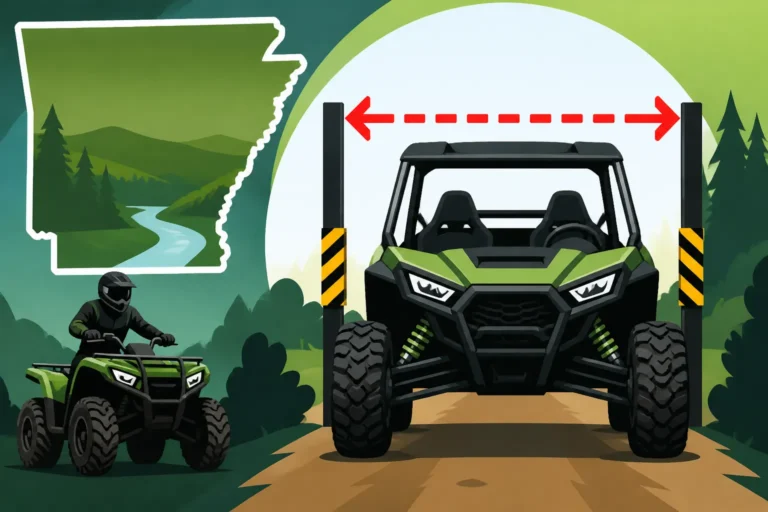
When a city does pass a UTV ordinance, it doesn't just throw open all its roads with no rules. Quite the opposite, most ordinances come with a specific set of requirements and restrictions designed to ensure safety and manage local traffic. Common stipulations include maximum speed limits for UTVs on city streets, typically aligning with lower-speed residential or downtown zones. You'll often find limits on the width of the machine, like an 80-inch cap, to ensure they can safely navigate roads and fit in parking spaces. Some ordinances might restrict UTV use to streets posted under a certain speed, like 55 mph, while explicitly prohibiting them on major state highways that pass through town. Riders often need to equip their UTVs with turn signals, brake lights, headlights, taillights, a horn, and sometimes even a windshield and mirrors to meet "street-legal" standards. Many riders turn to aftermarket providers like SuperATV for their robust selection of street-legal conversion kits, mirrors, and windshields, which are essential for meeting these local requirements.
Understanding City-Specific Permits and Fees
Another common feature of local UTV ordinances is the requirement for a specific city-issued permit. This isn't the same as state registration; it's a separate permit issued by the city itself, often annually. For instance, [Arkansas UTV Street Permits and Annual Fees] might range from a nominal amount to a more substantial yearly charge. These fees typically help cities cover the administrative costs of managing the permit program, providing decals, and sometimes even contributing to road maintenance. To obtain a permit, you usually need to bring proof of ownership, demonstrate that your UTV meets the equipment requirements (sometimes requiring a physical inspection), and show proof of liability insurance. This means before you even hit the road, you'll need to factor in the time and cost associated with obtaining these local permits, which can vary significantly from one town to the next.
Common Elements of an Arkansas UTV Street Ordinance
While each city's ordinance will have its own unique flavor, there are several common threads that run through most local UTV rules. These elements are designed to standardize safety and ensure that side-by-sides integrate smoothly into the existing traffic patterns. Knowing these typical requirements can help you prepare your machine and yourself, regardless of which town you're considering riding in.
Equipment Mandates for Street-Legal UTVs
If you're planning to ride your UTV on city streets where an ordinance allows it, you'll almost certainly need to equip it with specific safety gear that goes beyond what's needed for trail riding. Standard requirements usually include working headlights, taillights, brake lights, and turn signals. A horn is also a common mandate, along with at least one rearview mirror – often two are recommended for better visibility. Some ordinances will specify the need for a windshield, particularly if the UTV wasn't manufactured with one, and some might even require a functional speedometer. These additions ensure that your UTV is visible to other motorists and can communicate its intentions clearly, much like a traditional car. Companies like SuperATV offer a wide array of accessories, from DOT-approved windshields to complete signal kits, making it easier for riders to bring their machines up to the necessary standards for street legality. It’s crucial to check your specific town’s ordinance for the exact list of required modifications, as some might be more stringent than others.
Driver and Insurance Requirements
Operating a UTV on city streets typically comes with specific rules for the driver and mandatory insurance coverage. Most ordinances require that the UTV operator possess a valid driver's license, meaning a provisional or learner's permit often won't suffice. There's also usually a minimum age requirement, commonly 16 years old, aligning with the general age for licensed driving. This ensures that anyone operating a UTV on public roads has undergone driver training and passed a state-mandated driving test, demonstrating a basic understanding of road rules and safety.
Furthermore, proof of liability insurance is almost universally required. Just as you wouldn't drive a car without insurance, cities want assurances that any UTV operating on their streets is covered in case of an accident. This insurance protects not only the UTV owner but also other drivers, pedestrians, and city property. The specific coverage amounts might mirror state minimums for automobiles, but it's always best to verify with the city clerk or the ordinance itself. Providing [Arkansas Insurance for a Street-Permitted UTV] is a non-negotiable step for almost every city.
Speed Limits, Road Closures, and Operating Hours
Local ordinances frequently impose specific restrictions on where and when UTVs can operate within city limits. Speed limits are a big one, often capped at 25 or 35 mph, even if the posted speed limit for cars is higher. This reflects the design limitations of UTVs and the desire to keep them safely integrated into slower traffic flows. You'll also find that many ordinances restrict UTVs to streets with a posted speed limit under a certain threshold, like 55 mph, specifically excluding higher-speed thoroughfares or state highways.
In addition to speed and eligible streets, some ordinances might include restrictions on operating hours, perhaps prohibiting UTVs after dark unless they have specific lighting, or banning them during certain community events to manage congestion. For instance, [Arkansas Towns Weighing a UTV Ordinance] will often look at these factors carefully, trying to balance resident convenience with public safety. These rules are put in place to maintain order and minimize potential conflicts with other vehicles and pedestrians, especially in busy downtown areas or residential neighborhoods.
Navigating the Patchwork of Local UTV Rules
Given that each Arkansas town has the authority to craft its own UTV ordinance, riders are faced with a complex, often confusing, and ever-changing landscape of rules. What's legal in one town might lead to a citation in the next. Navigating this "patchwork" requires diligence and a proactive approach from UTV owners.
Researching Your Destination Before You Ride
The golden rule for UTV riders in Arkansas is simple: never assume. Before you load up your UTV and head to a new town with plans to cruise its streets, you must do your homework. This means actively seeking out and reading the specific UTV ordinance for that municipality. A quick call to the city clerk's office or a search on the city's official website is often the best starting point. You'll want to verify everything: what streets are open, what equipment is required, what permits are needed, what the age restrictions are, and any specific hours of operation. Knowing [Reading Your Town's Ordinance Before You Ride] can save you from an unexpected citation or an embarrassing interaction with local law enforcement. It's not enough to hear through the grapevine that a town is "UTV friendly"; the details matter, and they can vary wildly.
What Happens When Towns Have Different Rules (or None at All)
The challenge of Arkansas's local-option approach becomes particularly evident when you travel between communities. Imagine you're riding your UTV legally in a town like Bono, which has an ordinance, and you decide to take a short trip across the city limits into an unincorporated area or a neighboring town that either has no ordinance or a completely different set of rules. Suddenly, your legal street ride could become an illegal one, even if you don't realize you've crossed a boundary.
This is why understanding [Arkansas UTV Street Legal Rules by Town] is so critical. If you're in a town without an ordinance, the statewide ban on road riding still applies, with only the six statutory exceptions being valid. If you're in a town with a different ordinance, your machine might no longer meet the specific equipment requirements, or you might not have the correct local permit. This complexity underscores the importance of not only checking the rules for your starting point but also for any towns you might pass through. You might even consider equipping your UTV with all the potential street-legal accessories, like robust mirrors and a turn signal kit from SuperATV, to meet the most stringent requirements you might encounter, giving you a better chance of being compliant in multiple locations.
Comparing Common UTV Ordinance Features
To help illustrate the variations you might encounter, here's a table comparing some common elements cities consider when weighing a UTV ordinance. Remember, these are general examples, and your specific city's ordinance will be the final authority.
| Feature | Typical Consideration | Potential Variation (Check Local Ordinance!) |
|---|---|---|
| Eligible Streets | Streets posted 35 mph or less | Some towns may allow up to 55 mph, others may restrict to residential areas. |
| Width Limit | 80 inches maximum | Some may be stricter (e.g., 72 inches), others may have no explicit cap. |
| Driver's License | Valid state driver's license required | Some may require operators to be 18+; others 16+ is sufficient. |
| Insurance | Proof of liability insurance required | Minimum coverage amounts may vary by city. |
| City Permit | Annual permit required, fee applies | Fee amount and validity period (e.g., calendar year vs. 12 months from purchase) varies. |
| Headlights/Taillights | Required, must be operational | May specify DOT-approved, or specific brightness. |
| Brake Lights | Required, must be operational | Standard across all ordinances. |
| Turn Signals | Required (front and rear) | Some may allow hand signals in lieu of mechanical signals (rare for UTVs). |
| Rearview Mirror | At least one required | Often specify two (one driver side, one passenger side) for better visibility. |
| Horn | Required | Standard across all ordinances. |
| Windshield | Often required | May specify DOT-approved glass or shatter-resistant polycarbonate. |
| Seatbelts | Required for all occupants | May specify factory-installed or equivalent. |
| Operating Hours | Day use primarily, sometimes restricted after dark | Some may allow night riding with proper lighting; others prohibit. |
| Age of Passengers | Often restrictions for young children | May specify minimum age, or that passengers must be able to sit with feet flat. |
This table highlights the diverse factors city councils consider. When towns are [Arkansas Towns Weighing a UTV Ordinance], they are often reviewing these very items to draft rules that make sense for their unique community.
Disclaimer
This article is for general informational purposes only and does not constitute professional advice. Laws, prices and regulations vary by location and change over time. Consult a qualified professional for guidance on your specific situation.