Arkansas DUI Law and Off-Road Machines
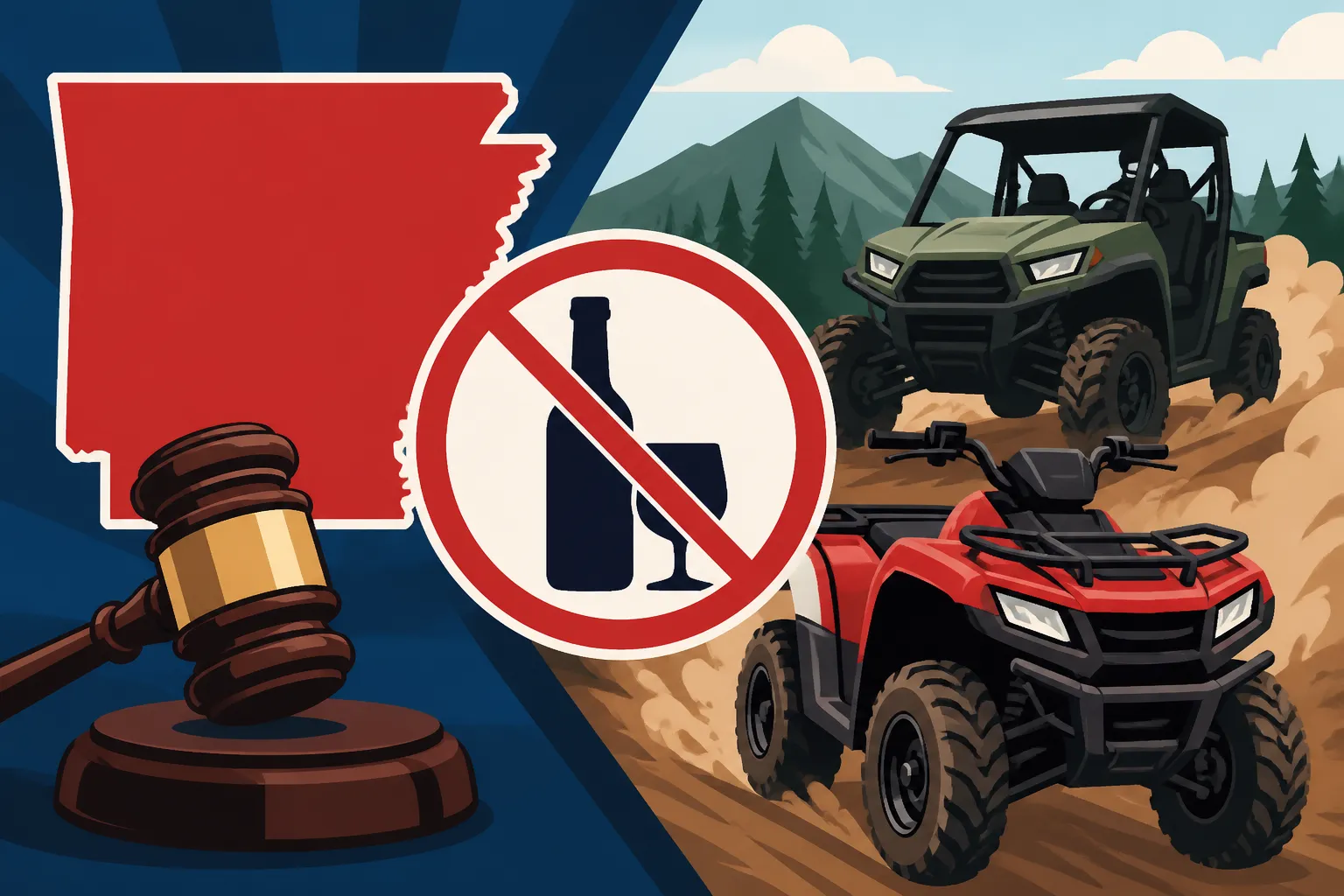
It’s a scenario we often see play out: a great day of riding trails, maybe a little grilling back at camp, and then someone cracks open a few cold ones. The sun sets, the stories get taller, and before you know it, someone hops back on their ATV or UTV for a quick spin around the campsite, or to grab something from a buddy's rig. It feels harmless, right? You're "off-road," not on a public highway. But in Arkansas, that quick, seemingly innocent ride can quickly escalate into a serious legal nightmare if you're caught driving while intoxicated. This guide will help you understand Arkansas's DUI laws as they apply to your beloved off-road machines, the real risks involved, and how to avoid making a mistake that could cost you dearly.
The Legal Landscape: Arkansas's DUI Laws and Your Off-Road Machine
One of the biggest misconceptions out there among ATV and UTV enthusiasts is that driving under the influence (DUI) laws somehow don't apply when you're not on a paved highway. It’s an easy trap to fall into because the very term "off-road machine" suggests freedom from typical road rules. However, Arkansas law is pretty clear, and surprisingly broad, when it comes to operating any motor vehicle while impaired, regardless of where you are.
Why Your ATV or UTV is a 'Vehicle' Under Arkansas DUI Law
When the state of Arkansas talks about driving while intoxicated, its definition of a "vehicle" is far more encompassing than just cars, trucks, and motorcycles. The statutes are written to cover pretty much anything with a motor that moves people or property. This means your side-by-side, your four-wheeler, or even that tricked-out six-wheeled machine you use for hunting and chores? They all absolutely fall under the umbrella of a "motor vehicle" for DUI purposes. There's no special exemption for the fun you have in the woods.
Think about it this way: if it has an engine, a steering mechanism, and wheels (or tracks), and it's designed to transport you, the law generally sees it as a vehicle capable of causing harm if operated negligently or while impaired. The potential for accidents, injuries, or even fatalities exists whether you're on I-40 or a remote logging trail. Because of this inherent risk, the law doesn't differentiate based on the terrain. When you're dealing with serious legal definitions like DUI, the nuances of your machine, whether it's an OEM stock model or something heavily customized with aftermarket parts from a place like SuperATV, don't change its fundamental classification as a vehicle.
Public vs. Private Land: Where the Law Can Reach
Here's another common myth that needs to be busted: "I can't get a DUI on private land." This one is particularly dangerous because it lulls people into a false sense of security. While it's true that law enforcement's primary jurisdiction for enforcing traffic laws often pertains to public roads, highways, and property, Arkansas's DUI statute has a much broader reach.
The key phrase to understand is often "any property open to the public" or even private property where you might be operating it without explicit, specific permission from the landowner. If you're on a designated [Arkansas ATV Trails: Where to Ride] system, even if it's managed by a private entity, or a large private hunting club that allows members and guests, you might be considered to be on property "open to the public" or at least where public access is permitted. Even within the confines of a private campground, if the general public has access, an officer could technically make an arrest.
Moreover, if you are operating on what feels like private property, like your own deer lease or a friend's sprawling acreage, but you then cross a county road, a state highway, or even a public utility easement, you've now entered public domain. Even a momentary crossing of a ditch or a gravel road that’s publicly maintained can put you squarely in the sights of law enforcement if they observe impaired operation. It's often not about where you started drinking, but where you are when you get behind the controls of that machine. Landowners, even on their own property, can call law enforcement if they observe someone driving an ATV or UTV recklessly or dangerously while impaired. Law enforcement responds to calls for service, and if someone reports impaired driving, they will investigate, regardless of property lines.
"Physical Control" and How it Applies to Off-Road Riding
You don't even need to be actively driving, with the wheels spinning, to be charged with a DUI in Arkansas. The legal concept of "physical control" is extremely important here. This means if you are impaired and you are in a position to operate the vehicle, you can be charged.
Imagine this: you've been celebrating with friends on a camping trip. You're feeling a bit tipsy, decide you need a nap, and climb into the driver's seat of your UTV. You might put the keys in the ignition, or even just have them in your pocket, and turn on the radio or the lights. You might even fall asleep right there. An officer, responding to a call or simply patrolling an area like a [Wolf Pen Gap: Arkansas's Best Known OHV Complex] campground, could come across you. If they determine you are intoxicated and have "physical control" of the vehicle, meaning you could start it and drive it, you could be arrested for DUI. You didn't drive anywhere, but you were in a position to do so while impaired. This scenario underscores why vigilance is crucial: it's not just about active driving, but about making the conscious choice to be in command of your machine after consuming intoxicants.
Real-World Scenarios: When an Off-Road DUI Becomes a Risk
Let's get practical. It's easy to think, "That won't happen to me." But the truth is, many people inadvertently put themselves at risk because they underestimate the law's reach or misinterpret what "off-road" truly means in the eyes of an Arkansas deputy or state trooper.
Post-Ride Celebrations on Publicly Accessible Land
The camaraderie of a good trail ride, especially at places like [Mill Creek OHV Trail System in Arkansas] or a similar public access area, often leads to celebratory gatherings. You’ve conquered some challenging terrain, shared some laughs, and now it’s time to relax. Burgers are on the grill, the campfire is roaring, and cold beverages are being passed around. Maybe you're camping at a trailhead that has primitive sites or even some RV hookups.
As the evening progresses, someone might decide they need more firewood from a pile just 50 yards away, or they want to visit a friend’s campsite further down the road. They hop on their side-by-side, which might have a sturdy roof and a light bar from a company like SuperATV, providing a false sense of security that it's safe for a short jaunt. But if that short jaunt takes them onto a gravel access road maintained by the Forest Service, or even just the main loop within a public campground, they are now on public property. If a ranger or deputy sees them driving erratically, or they are involved in a minor fender bender, a DUI investigation is almost inevitable. The "party atmosphere" doesn't excuse impaired driving, even in a seemingly remote setting.
Using Your Machine for Chores or Hunting After a Few Drinks
For many Arkansans, ATVs and UTVs aren't just for recreation; they're workhorses. They pull trailers full of feed, haul deer out of the woods, spray fields, or simply help get around large properties. It's not uncommon for folks to enjoy an adult beverage or two while working on the farm or after a long day of hunting. After all, you're on your own land, right?
But as we discussed, "private land" isn't a magical shield. If your "private land" includes roads or paths that are open to the public at certain times (like during hunting season), or if a portion of your property is easily accessible from a public road, the risk increases. Imagine you’re on a [Arkansas Registration Even for Backyard Riding] property, and you’ve had a couple of beers while cleaning up after a hunting trip. You decide to use your UTV to haul some gear a short distance down a private gravel driveway that leads directly to a public county road. If, for any reason, a law enforcement officer has cause to be on or near your property and observes you, you could be charged. The fact that you were just doing "chores" or "hunting-related tasks" won't negate the fact that you were operating a motor vehicle while impaired. This is especially true if you have to cross a public road or travel alongside one, even briefly, to get from one part of your property to another.
Crossing or Riding on Public Roads While Impaired
This is perhaps the most straightforward scenario where an ATV/UTV DUI becomes a reality. While [Can You Drive an ATV on the Road in Arkansas?] is generally restricted, there are specific, limited exceptions, such as crossing a highway at a ninety-degree angle after coming to a complete stop, or for agricultural purposes. Even if your town has a specific [Arkansas UTV Street Legal Rules by Town] ordinance allowing UTVs on certain municipal roads, those permissions vanish the moment you are impaired.
The critical point here is that even if you're making a legal, permitted crossing, or riding on a street where UTVs are allowed, the rules for impaired driving are exactly the same as they are for a car. You are subject to the same blood alcohol content (BAC) limits and the same standards for being under the influence of drugs. Many riders, after having a drink or two, might attempt a quick, "legal" crossing of a state highway to get from one section of a deer lease to another. If a law enforcement officer observes any signs of impairment, or if you're involved in even a minor accident during that crossing, you can expect to be charged with a DUI. The severity of the penalty won't be lessened because you were "just crossing the road" on your ATV.
The Steep Price: Penalties and Long-Term Consequences of an ATV/UTV DUI
Getting a DUI on your ATV or UTV in Arkansas isn't some minor slap on the wrist. It carries serious, life-altering consequences that are often identical to those you'd face for driving a car while impaired. This is where the reality of the law hits hardest, demonstrating that fun on the trails can turn into a very expensive and regrettable mistake.
Immediate Ramifications: Fines, Jail Time, and License Suspension
When you're charged with an ATV/UTV DUI in Arkansas, the penalties are designed to be a significant deterrent. For a first offense, you're looking at substantial fines, which can quickly add up with court costs and administrative fees. Don't be surprised if these costs soar well into the thousands of dollars. Beyond the financial hit, there's the very real possibility of jail time. Even a first-time misdemeanor DUI conviction in Arkansas can carry a minimum of 24 hours in jail, escalating significantly for repeat offenses.
Perhaps one of the most impactful immediate consequences is the suspension of your driver's license – your regular driver's license for your car or truck. Many people mistakenly believe that because they weren't in their car, their car license is safe. Not so. Arkansas law typically treats an ATV/UTV DUI just like any other motor vehicle DUI when it comes to license suspension. This means you could lose your ability to drive to work, pick up groceries, or perform daily errands for an extended period, which can be devastating. You may also be required to complete an alcohol and drug safety program and could face community service hours.
| Consequence | First Offense (General) | Second Offense (General) | Third Offense (General) |
|---|---|---|---|
| Fines | Significant (e.g., hundreds to thousands of dollars) | Higher fines, often thousands | Substantially higher, thousands |
| Jail Time | Minimum 24 hours, up to 1 year | Minimum 7 days, up to 1 year | Minimum 90 days, up to 1 year |
| License Suspension | Up to 6 months | Up to 2 years | Up to 30 months |
| Community Service | Possible | Possible | Possible |
| Education/Treatment | Mandatory | Mandatory | Mandatory |
| Ignition Interlock | Possible, especially for higher BAC | Often required | Often required |
| Vehicle Impoundment | Possible | Possible | Possible |
Note: These are general figures and specific penalties can vary based on BAC, aggravating factors, and judicial discretion. Consult legal counsel for specific advice.
Beyond the Immediate: Insurance, Employment, and Reputation
The pain of an ATV/UTV DUI doesn't stop once you've paid the fine and served your time. The long-term consequences can ripple through many aspects of your life. Your auto insurance premiums will almost certainly skyrocket, and some insurance companies may even drop you, making it incredibly difficult and expensive to get coverage. This can affect not just your car insurance, but potentially even your recreational vehicle insurance, especially if you have a machine with extensive aftermarket features from a brand like SuperATV that would be costly to replace.
Beyond insurance, a DUI conviction can severely impact your employment. Many jobs, particularly those requiring driving, operating heavy machinery, or maintaining a professional license, can be jeopardized. Even if your current job isn't directly affected, a criminal record can make it challenging to find new employment opportunities in the future. Imagine explaining a DUI conviction to a potential employer when you were "just riding your quad."
Then there's the hit to your personal reputation. A DUI conviction is a matter of public record, and it can carry a social stigma. It can strain relationships, erode trust, and simply be an embarrassing mark on your record that follows you for years. The legal fees associated with hiring an attorney to navigate a DUI charge can also be staggering, adding another layer of financial burden to an already difficult situation. It truly is a mistake that can haunt you for a long time.
Preventing a Lifetime of Regret: Planning Ahead
The good news is that preventing an ATV/UTV DUI is entirely within your control. It requires conscious planning and a commitment to responsible riding. The simplest rule is: if you're going to drink, don't ride. Period. [Arkansas Rules for Riding After Dark] are already stringent, and adding alcohol to the mix compounds the danger and legal risk.
Here are some practical strategies to help you stay safe and legal:
- Designate a Driver: If your group plans to consume alcohol, designate one person to be the sober driver for any ATV or UTV movement. This person commits to staying completely sober and is responsible for operating all machines safely.
- Separate Drinking from Riding: Once the machines are parked for the night, or for the duration of a celebration, make a firm rule that no one gets back on them until everyone is completely sober. Put the keys away, out of reach, perhaps even giving them to the designated sober person.
- Plan for Alternative Transport: If you need to move between campsites or want to go into a nearby town after drinking, arrange for a sober friend to drive a full-sized vehicle, use a taxi, or a ride-sharing service if available in the area.
- Educate Your Group: Share this information with your riding buddies. Many people are genuinely unaware of how broad Arkansas's DUI laws are. A quick conversation before a trip about [Arkansas DUI Law and Off-Road Machines] can prevent a lot of heartache.
- Stay Informed: Keep abreast of [What Arkansas Law Forbids on a Public Road] and local ordinances that might affect ATV/UTV use, especially if you venture into areas where [Arkansas Towns Can Open Their Streets to UTVs]. Ignorance of the law is never an excuse.
Your ATV or UTV is a source of immense fun and utility, but it's also a powerful machine that demands respect and responsible operation. Don't let a moment of poor judgment lead to a lifetime of regret.
Disclaimer
This article is for general informational purposes only and does not constitute professional advice. Laws, prices and regulations vary by location and change over time. Consult a qualified professional for guidance on your specific situation.