Arkansas Rules for a Passenger on a Quad
Oh, the age-old question of whether you can just hop on your quad with a buddy or your kid! It seems straightforward, doesn't it? But then you hear whispers of laws, or you see machines specifically designed for two, and suddenly, the simple joy of sharing a ride gets complicated. This guide is here to clear up all that confusion and lay out exactly what Arkansas law, and good old common sense, says about carrying a passenger on your ATV, so you can ride safely and legally without a nagging worry.
The Basics: Is Carrying a Passenger Even Allowed on Your Quad in Arkansas?
Let's get straight to it because this is where a lot of riders hit a wall of uncertainty. You've got your ATV, you're ready for an adventure, and a friend or family member wants to come along. The immediate instinct might be "the more, the merrier!" But in Arkansas, just like in many places, it's not quite that simple. There are specific rules that dictate whether your quad is even meant to carry an extra person, and ignoring them can lead to serious safety issues or even a citation.
What Arkansas Law Says About Passengers
Arkansas law is pretty clear on this point, and it’s designed with safety in mind. Generally speaking, an all-terrain vehicle (ATV) is intended to be operated by one person only, the driver. The statute defines an ATV as a motor vehicle designed for off-highway use, 50 inches or less in width, with a dry weight of 1,000 pounds or less, designed to travel on four or more low-pressure tires, and having a seat designed to be straddled by the operator. That last part, "a seat designed to be straddled by the operator," is key. It implies a single operator, not a passenger.
However, the law makes an allowance for machines that are "specifically designed by the manufacturer to carry a passenger." This means if your ATV doesn't have a specific design feature from the factory indicating it's safe for two, you're usually out of luck for legal passenger transport. This isn't just about a longer seat; it involves the entire engineering of the machine, from suspension to wheelbase to braking capabilities. You won't find specific fines for simply having a passenger on an ATV not designed for one, but it falls under general unsafe operation, and if an accident occurs, liability can become a major headache. For more on what the law considers an ATV, check out [Arkansas's 50-Inch, 1,000cc ATV Definition].
The Risk and Reality of Carrying Extra Weight
Even if the law weren't a factor, the physical realities of adding a passenger to a single-rider ATV are significant and often dangerous. These machines are balanced for one rider. When you add a second person, especially if they're not experienced in riding and shifting their weight, it throws everything off. I've seen it countless times on the trails – a single-seat quad trying to navigate a tricky incline with two people on it, and the machine just isn't responding as it should. The center of gravity shifts dramatically, making the ATV much harder to control, especially during turns or when going over obstacles.
Braking distance increases, acceleration changes, and the suspension bottoms out more easily. Imagine hitting a bump you'd normally glide over, but with an extra 100+ pounds, the shock could be much more severe, potentially leading to a loss of control. The tires, designed for a certain load, might also be stressed beyond their safe limits. It’s not just about comfort; it's about fundamental physics and engineering. Riding with an unauthorized passenger is a huge gamble, one that can lead to serious injury for both you and your passenger. It's truly not worth the risk for a casual ride.
Manufacturer's Intent: When Your Quad IS Designed for Two
Okay, so we've established that a standard single-rider ATV isn't the place for a passenger. But don't despair! Manufacturers do make machines specifically designed for two-up riding, and these are where you can safely and legally share the trail. Understanding the difference is crucial for any rider who wants to bring a companion along.
Identifying a Two-Up or Multi-Passenger ATV/UTV
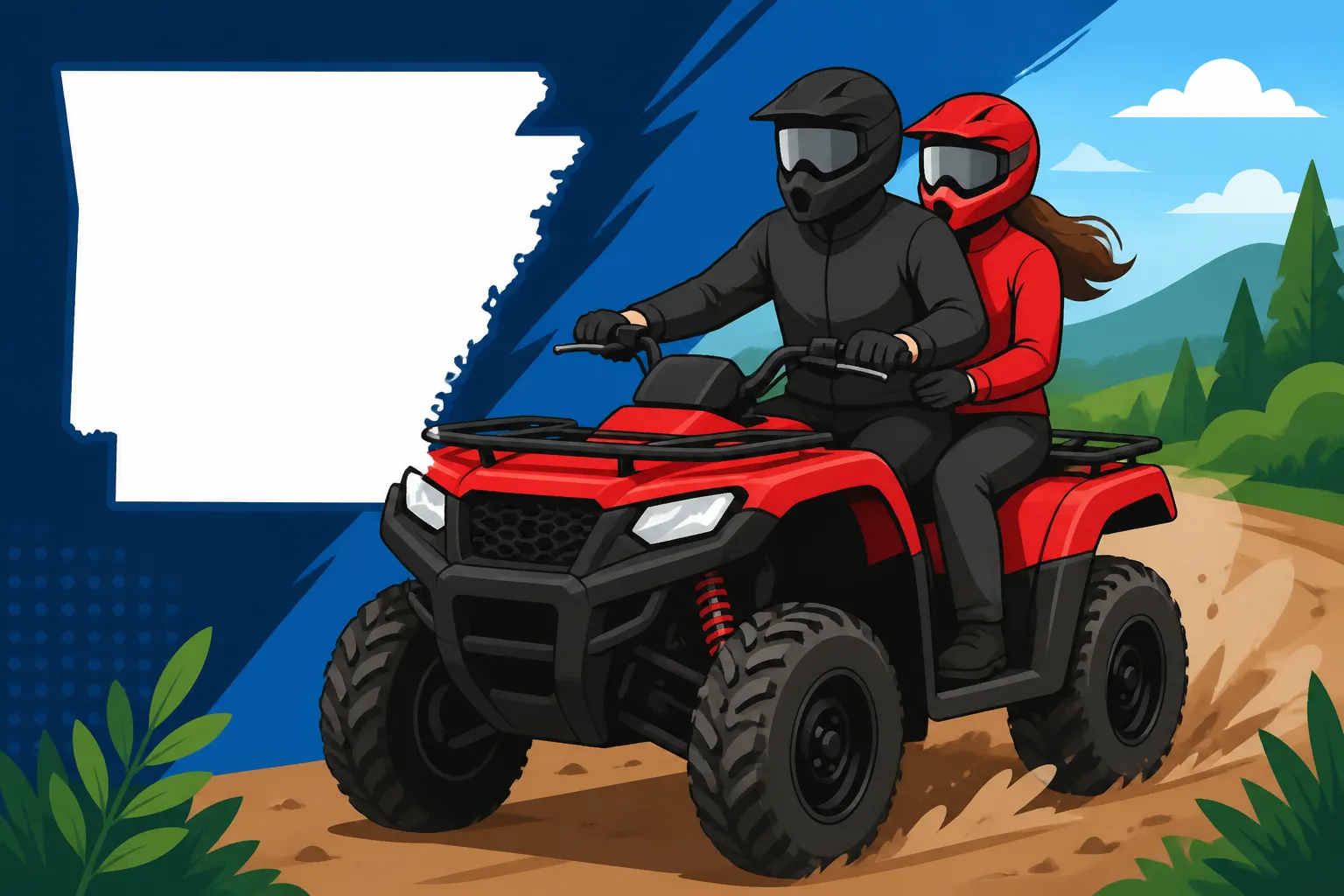
When we talk about an ATV designed for two, we're usually referring to what's often called a "two-up" ATV. These machines are distinct from standard sport or utility quads. They feature an elongated seat, often with a raised backrest for the passenger, dedicated handholds, and separate footrests for the passenger to ensure they have a stable and secure position. Think of models like some of the Can-Am Outlander MAX or Polaris Sportsman Touring lines – they are explicitly marketed and engineered for two riders. These aren't just an aftermarket seat extension; the frame, suspension, and engine are all designed to handle the extra weight and maintain stability.
Then, of course, there are UTVs, or side-by-sides. These machines are inherently multi-passenger vehicles, with bench or bucket seating, seatbelts, and often roll cages. They are designed from the ground up to carry two, four, or even six people comfortably and safely. If you're looking to consistently ride with passengers, a UTV is often the most practical and safest choice. Machines like the [Arkansas Machines Wider Than 50 Inches] often fall into the UTV category, making them a great option for group adventures.
The Importance of Weight Limits and Seating Capacity
Even with a machine designed for multiple passengers, you can't just load it up indiscriminately. Every ATV or UTV has a specified gross vehicle weight rating (GVWR) and a payload capacity, which includes the weight of the driver, passengers, and any cargo. These figures are found in your owner's manual and are incredibly important. Exceeding these limits can compromise the machine's handling, braking, and stability, much like putting a passenger on a single-rider ATV, but perhaps with less dramatic immediate effect. It also puts undue stress on the frame, suspension, and tires, leading to premature wear and potential failure.
Before you head out with a passenger, always double-check these limits. It's not just about safety in the moment; it's about the longevity and reliability of your machine. When considering accessories for two-up riding or heavy cargo, perhaps for a long camping trip, brands like SuperATV offer heavy-duty springs or suspension upgrades that can help a machine better manage increased loads, but even these are designed to work within the manufacturer's intended operational parameters, not to exceed them. Always ensure your setup remains within the machine's stated limits for safe operation.
Special Considerations for Young Passengers in Arkansas
Bringing kids along for a ride can be one of the most rewarding experiences of ATV ownership, creating lasting memories. However, children, especially young ones, introduce additional layers of safety considerations and legal requirements in Arkansas. It's not just about their physical size; it's about their judgment, attention span, and ability to follow instructions in a dynamic environment.
Age and Supervision Rules for Child Riders
Arkansas law has specific rules regarding young riders, and these often apply whether they are operating the ATV or riding as a passenger. While there isn't a hard-and-fast minimum age for being a passenger on a machine designed for two, the overarching principle is safety and adult supervision. Children under 12 years of age must be under the direct supervision of an adult who is at least 18 years old when riding an ATV. This means the adult must be close enough to intervene immediately if needed, whether on the same machine or an accompanying one. For a deeper dive into the rules for young operators, you can consult [Arkansas ATV Age Rules for Young Riders] and [Arkansas Rules for a Child Passenger]. It's about ensuring their safety and your responsibility.
Beyond legal age limits, common sense dictates that a child passenger must be mature enough to hold on securely, keep their feet on the footrests, and follow instructions. They need to understand not to distract the driver, lean suddenly, or try to get off the machine prematurely. A child who is too small or restless will pose a significant safety risk, even on a two-up machine.
Safety Gear and Best Practices for Carrying Kids
Just like adult riders, child passengers need appropriate safety gear – and it's even more critical for them. A properly fitted helmet is non-negotiable. It should meet DOT standards and fit snugly without obstructing vision. For specific requirements on helmets, see [Arkansas ATV Helmet Requirements]. Eye protection, such as goggles, is also essential to shield their eyes from dust, debris, and low-hanging branches. Long pants, long-sleeved shirts, over-the-ankle boots, and gloves provide protection against scrapes, burns, and impacts.
When carrying a child, communicate with them constantly. Explain what to expect, instruct them to hold on tightly, and remind them to keep their feet where they belong. Plan your route to avoid overly rough terrain or high speeds, especially initially. Stopping frequently for breaks can also help keep them engaged and comfortable. Riding with kids is a joy, but it demands an elevated level of vigilance and preparation to ensure a safe and positive experience for everyone involved. For teen riders, some of these rules relax, but safety gear remains paramount; look up [Arkansas Rules for a Teen Rider] for more specific guidelines.
Where You Can Legally Ride with a Passenger in Arkansas
Knowing your machine can safely carry a passenger is one thing; knowing where you can legally ride with them is another. Arkansas has a variety of terrains, from dedicated OHV parks to vast stretches of private land, and the rules about passengers can subtly change depending on where your tires meet the dirt.
Public Lands and Designated Trails
Arkansas boasts some fantastic public riding areas, notably within the Ouachita National Forest, home to popular trail systems like [Wolf Pen Gap: Arkansas's Best Known OHV Complex] and the Mill Creek OHV Trail System. On these designated trails, if your ATV or UTV is designed by the manufacturer to carry a passenger, you are generally permitted to do so. These trails are managed by the U.S. Forest Service, and while they don't have specific passenger restrictions beyond manufacturer design, it's always wise to check with the local ranger district for any particular rules that might apply to a specific trail or time of year. For instance, some trails might have width restrictions that could influence your choice of multi-passenger UTV over a two-up ATV.
It's crucial to remember that even on trails where passengers are allowed, safe riding practices are paramount. The terrain can be unpredictable, and an extra person adds to the challenge. Slow down, be mindful of your passenger's comfort, and ensure they are actively participating in maintaining balance and following your cues. While public roads are generally off-limits for ATVs, there are exceptions; details on this can be found in [Arkansas ATV Road Rules: What 27-21-106 Says], though remember that even with exceptions, passenger rules still default to the machine's design.
Private Property and Landowner Permission
Riding on private property with the owner's permission offers the most flexibility when it comes to carrying passengers. If you're on your own land or land where you have explicit permission to ride, you generally aren't subject to the same public land restrictions regarding passenger transport. Here, the primary concern shifts entirely to safety and your personal liability. While the law might be less restrictive, the laws of physics are not. Overloading a machine or carrying a passenger unsafely on private land can still lead to severe accidents.
This is where common sense and personal responsibility truly come into play. Even on private land, if your ATV isn't designed for a passenger, don't carry one. It's just not worth the risk to yourself, your passenger, or your machine. If you're using a UTV for farm work or hunting on private land, carrying tools, feed, or even a child to help with chores is perfectly acceptable and what the machine is often designed for. For such utility uses, accessories from SuperATV like cargo beds, gun racks, or specialized seating for UTVs can make these tasks safer and more efficient, further demonstrating the intent of multi-passenger machines. Always prioritize safety, and remember that landowner permission means respecting their land and ensuring responsible operation.
| Feature / Category | Single-Rider ATV | Two-Up ATV | Multi-Passenger UTV (Side-by-Side) |
|---|---|---|---|
| Seating Design | Straddle seat for one | Extended seat, backrest for passenger | Bench or bucket seats |
| Footrests | Driver only | Separate for driver & passenger | Shared floorboard for passengers |
| Handholds | Not typically for passenger | Dedicated for passenger | Grab handles, roll cage |
| Recommended Passengers | 0 | 1 | 1 to 5+ (depending on model) |
| Manufacturer's Intent | Solo operation | Driver + 1 passenger | Driver + multiple passengers |
| Stability with Passenger | Highly compromised | Designed for stability with 2 | Inherently stable with multiple |
| Road Use (Local Permit) | Rarely allowed | Rarely allowed | Often allowed with local ordinance |
| Primary Use | Sport, utility, hunting (solo) | Trail riding, utility (with companion) | Utility, sport, family recreation |
Disclaimer
This article is for general informational purposes only and does not constitute professional advice. Laws, prices and regulations vary by location and change over time. Consult a qualified professional for guidance on your specific situation.