Arkansas Rules for a Visiting Tennessee Rider
Venturing to Arkansas with your trusty ATV or side-by-side from Tennessee can feel like navigating a legal maze. You’re used to one set of rules back home, but crossing state lines often means a whole new ballgame, and it can be incredibly frustrating to try and decipher what applies to you as a visitor. This guide is here to untangle the specific laws and requirements you’ll encounter when riding your ATV or UTV in the Natural State, ensuring your trip is filled with adventure, not legal headaches.
Understanding Arkansas's Default Stance on ATV/UTV Road Use
Arkansas has a very specific view on where ATVs and UTVs can operate, particularly when it comes to public roads. It's a common misconception that if your machine is street legal or registered for road use in Tennessee, those privileges automatically transfer. Unfortunately, that's rarely the case. Arkansas starts from a position of "no" when it comes to public roads, then carves out very limited exceptions.
The General Rule: No Public Road Riding
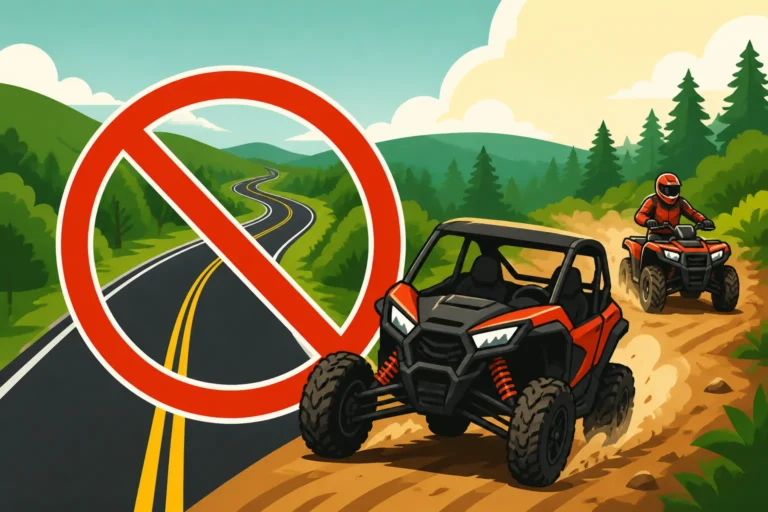
Let's be clear from the outset: by default, Arkansas law prohibits the operation of ATVs and UTVs on public roads, streets, and highways. This isn't just a suggestion; it's a hard-and-fast rule designed to keep these machines off roadways shared with traditional motor vehicles. The state views ATVs and UTVs as off-highway vehicles, and for good reason – they’re typically not designed with the same safety features, lighting, or stability as cars and trucks, making them potentially dangerous in traffic. This blanket ban often surprises riders from states with more liberal road-riding laws, and misunderstanding it can lead to hefty fines or even impoundment of your machine. You might be able to zip down county roads in parts of Tennessee, but making that assumption in Arkansas could quickly sour your riding trip.
Many riders, especially those new to the state's regulations, often express exasperation when they realize their street-legal modifications from their home state might not hold water here. It’s a point of contention for sure, but understanding this fundamental starting point is crucial.
Arkansas's Six Statutory Exceptions
While the general rule is "no public roads," Arkansas law does provide six very specific exceptions where an ATV or UTV may be operated on a public street or highway. It's vital to remember these are narrow allowances, not an open invitation. If your use case doesn't fit neatly into one of these, you're likely breaking the law. These exceptions are:
- Farming Operations: An ATV or UTV can be used on public roads when actively engaged in a farming operation. This means you’re typically moving between fields, transporting tools, or tending to livestock directly related to agricultural work. It's not for a joyride to town after feeding the cows. You can find more details on what counts as [Arkansas Farming Operation Road Use].
- Hunting Operations: Similarly, machines can be used on roads during a hunting operation. This generally applies to accessing hunting lands, retrieving game, or moving between different parts of a hunting lease. Like farming, it's about the activity, not general recreation. Read up on [Arkansas Hunting Operation Road Use] for clarity.
- Serious Walking Disability: Individuals with a serious walking disability can use an ATV or UTV on a public road if it's necessary for transportation due to their condition. Proof of disability is usually required.
- Law Enforcement and EMS: Obviously, law enforcement, emergency medical services, and other governmental agencies can use ATVs and UTVs for official duties.
- Utility Company Crews: Employees of utility companies (electric, gas, water, etc.) are permitted to use these vehicles on public roads while performing their job duties.
- Direct Crossing: This is perhaps the most common exception for recreational riders. An ATV or UTV may cross a street or highway if done at approximately a ninety-degree angle and after coming to a complete stop. We’ll dive deeper into this specific rule shortly.
Each of these exceptions comes with its own nuances and requirements, and merely being near a farming or hunting area doesn't automatically grant you road access. Law enforcement in Arkansas tends to enforce these strictly, so be certain your use falls squarely within one of these exemptions.
The Critical "Crossing" Rule
For many recreational riders exploring Arkansas trails, the direct crossing rule is the most relevant exception to the public road ban. It’s often the only way to get from one section of a trail system to another, or to access an adjacent property. However, it's not a license to drive down the road for a few hundred feet. The statute is quite specific: you must come to a complete stop before entering the roadway, and then proceed to cross at an angle as close to ninety degrees as possible. This means going straight across, not making a turn and driving parallel to traffic for any distance. The intent is to minimize your time on the paved surface and reduce interference with other vehicles.
Think of it this way: if you’re traversing a multi-segment trail like those in the Ouachita National Forest, you might encounter a paved county road separating two trail sections. In this scenario, you'd pull up to the edge, stop, look both ways thoroughly, and then drive straight across to pick up the trail on the other side. You absolutely cannot ride down that paved road to find a different trail entrance further along. This distinction is crucial and often overlooked by visiting riders who might be accustomed to more lenient crossing or short-distance road travel rules in their home state. Understanding [Crossing a Highway on an ATV in Arkansas] is key to avoiding issues.
Riding on County Roads and Local Ordinances for UTVs
When planning your Arkansas adventure, it’s natural to wonder about those scenic gravel roads and less-trafficked county lanes. While they might feel "off-road," the state often still considers them public roads for the purpose of ATV/UTV regulations. However, there’s a relatively recent change that has introduced some flexibility for UTVs specifically in certain municipalities.
County Roads: Still Largely Closed
Many riders assume that because a road is unpaved, rural, or less-trafficked, it automatically falls outside the definition of a "public road" that prohibits ATV/UTV use. This is a dangerous assumption in Arkansas. Unless one of the six statutory exceptions (like farming or hunting operations) applies, or it’s a designated trail within a national forest or private park, a county road is generally treated the same as a paved state highway when it comes to ATV and UTV operation. This means the default ban applies, and only the direct crossing exception is typically available for recreational riders.
This can be particularly frustrating if you're exploring the more remote parts of the Ozarks or Ouachitas, where county roads seem like an ideal way to link trails or access campgrounds. While you might occasionally see locals using ATVs or UTVs on these roads, they may be operating under one of the specific exemptions, or simply risking a citation. As a visitor, it's always best to err on the side of caution and assume county roads are off-limits unless explicitly stated otherwise by local ordinance (for UTVs) or if you are actively participating in a legal, exempted activity. For specific guidance, you can consult [Arkansas ATV Rules for Riding a County Road].
City Ordinances for UTVs: A Recent Development
Here’s where it gets a bit more nuanced, especially for side-by-sides (UTVs). Arkansas Act 922, which became effective August 5, 2025, granted local municipalities (cities and incorporated towns) the authority to create their own ordinances allowing UTVs on certain public streets within their jurisdiction. This was a significant shift, recognizing the growing popularity of UTVs and the desire for communities to manage their use. However, it's absolutely critical to understand that this power is granted to cities, not counties, and it’s entirely optional for each city. This means:
- It's not statewide: Just because UTVs are allowed on city streets in, say, Bono, doesn't mean they are in Cotter, or even the next town over. Each city must pass its own specific ordinance.
- It's UTVs only: This legislation primarily addresses UTVs, not traditional ATVs. Most ordinances will define "UTV" to match the state's criteria, often including width and engine size limits. You can find more about this in [Arkansas Towns Can Open Their Streets to UTVs].
- Specific limitations: Even when a city allows UTVs, there are typically restrictions. These commonly include speed limits (often under 35 mph or 55 mph), prohibitions on four-lane streets or state highways passing through town, and specific hours of operation.
Before you plan to ride your UTV on city streets, you must check with the specific city clerk or police department in that municipality to understand their local rules. Don’t assume anything. Some towns have embraced this, while others have chosen not to, or have very restrictive ordinances.
What Cities May Require for Street-Legal UTVs
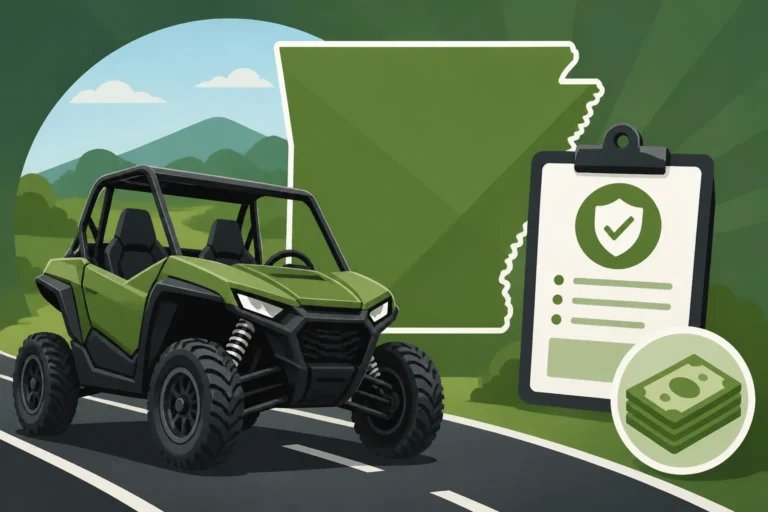
If you find a city that does permit UTVs on its streets, be prepared for a list of requirements designed to enhance safety and integrate these vehicles into urban traffic. These are often similar to what you might need for a golf cart in a planned community, but generally more robust for UTVs. Common requirements include:
- Local Permit and Fees: Many cities require an annual permit specific to their jurisdiction, often for a fee, which must be displayed on your UTV. This helps local law enforcement identify legally operating machines.
- Insurance: Proof of liability insurance is almost always a requirement for any vehicle operating on public roads, even locally.
- Driver's License: The operator typically needs a valid driver's license, often with a minimum age requirement (e.g., 16 years old). You can read about [Arkansas Driver's License at 16 for Street UTVs].
- Safety Equipment: This is where your Tennessee UTV might need upgrades. Cities usually require equipment commonly found on street-legal vehicles, such as:
- Headlights, taillights, and brake lights
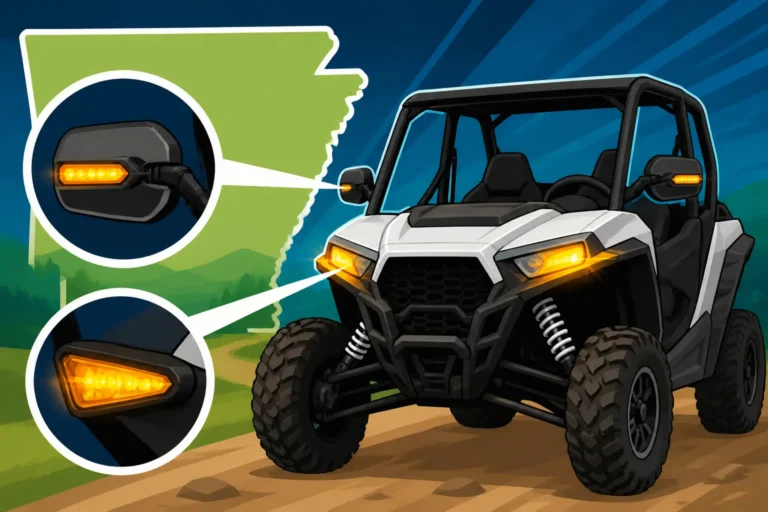
- Turn signals (front and rear)
- A horn
- Rearview mirrors (often one center or two side mirrors)
- Seatbelts for all occupants
- A windshield
- Non-highway tires, as defined by Arkansas statute.
Many riders turn to reputable aftermarket suppliers like SuperATV to ensure their machines meet these street-legal standards. Investing in quality lighting kits, mirrors, and signal systems can make all the difference in complying with local ordinances and ensuring your safety. Always double-check the specific ordinance for the town you're visiting to make sure your machine has all the necessary modifications.
Registration, Decals, and Other Requirements for Visitors
When you're visiting from out of state, the question of registration always comes up. Do you need an Arkansas decal for your Tennessee-registered machine? And what about permits for trails? It’s a multi-faceted question, but generally, Arkansas is accommodating to out-of-state registrations for off-road recreational use.
Arkansas ATV Registration for Out-of-State Riders
Good news here for Tennessee riders: If your ATV or UTV is legally registered in Tennessee and you are using it strictly for off-highway recreational purposes in Arkansas (e.g., on designated trails, private land, or under a specific exemption like farming), you generally do not need to register it in Arkansas. Arkansas's registration requirement for ATVs is a one-time registration primarily for Arkansas residents who operate their machines within the state. As long as your Tennessee registration is current and valid, you're usually good to go for off-road adventures.
However, this changes if you plan to utilize a city's street-legal UTV ordinance. While the machine itself might not need Arkansas state registration, the city ordinance will almost certainly require its own local permit and proof of insurance. It's crucial to understand the distinction: state registration for off-road use versus a local permit for specific on-road use in a municipality. Always carry your valid Tennessee registration and proof of ownership with you while riding, just in case a park ranger or law enforcement officer inquires. For more on the specifics, check out [Arkansas Registration and Nonresident Riders].
Trail Permits for National Forests
Even if your Tennessee registration is recognized, if you plan to ride in either the Ouachita National Forest or the Ozark-St. Francis National Forest, you will need a specific OHV (Off-Highway Vehicle) permit for that forest. These are federal permits, not state, and they are mandatory for all riders, regardless of their state of residence or state registration status.
- Ouachita National Forest: This permit covers areas like the popular Wolf Pen Gap trail system. You can purchase day or annual passes. The fees for these permits have been on an escalating schedule. You can find information about [Arkansas Ouachita Permit Prices Through 2028].
- Ozark-St. Francis National Forest: This includes trail systems like Mill Creek. It also requires its own separate permit, which is generally distinct from the Ouachita permit. [Arkansas Ozark-St. Francis Permit Prices] will give you an idea of costs.
These permits can often be purchased online through Recreation.gov, at local vendor locations near the trailheads, or sometimes at self-service fee stations (though it's always best to buy in advance if possible to avoid issues). You'll need to display the decal or carry proof of purchase with you while riding. A ranger will definitely check for these. Your Tennessee registration is not a substitute for these federal trail permits.
Proof of Ownership and Identification
No matter where you're riding, it's always wise to carry proof of ownership, your valid driver's license, and insurance information. While Arkansas might not require you to register your Tennessee machine, law enforcement or forest rangers can still ask for identification and proof that you legitimately own or have permission to operate the vehicle.
- Tennessee Registration: Keep your current Tennessee ATV/UTV registration certificate with you.
- Proof of Insurance: If your machine is insured, carry proof. This is especially important if you plan to ride where city ordinances require it for street use.
- Driver's License: You will need a valid driver's license (from Tennessee or any other state) to operate an ATV or UTV on any public land in Arkansas, and especially if you're trying to meet city ordinance requirements for street use.
- Bill of Sale or Title: While you don't need to present your original title every time, having a copy or a bill of sale can be helpful in unusual situations.
Taking a clear photograph of your VIN (Vehicle Identification Number) and keeping it on your phone is also a good practice. If there's any question about the machine's legitimacy, this information can be quickly verified.
Key Differences a Tennessee Rider Should Note
Even though Tennessee and Arkansas share a border, there are several key differences in ATV/UTV laws that visiting riders from Tennessee should be particularly aware of. Assuming reciprocity or similar regulations can lead to unpleasant surprises.
Helmet Laws and Age Restrictions
One significant difference many riders notice is Arkansas's stance on helmets. Unlike some states that have mandatory helmet laws for ATV riders, Arkansas does not have a statewide mandatory helmet law for ATV or UTV operators or passengers of any age. This means that legally, you are not required to wear a helmet when riding an ATV or UTV in Arkansas.
However, just because it's not legally mandated doesn't mean it's not a good idea. Common sense and safety consciousness dictate that wearing a helmet is always recommended, especially when off-roading. Many private parks or organized events might also have their own rules requiring helmets, regardless of state law. Furthermore, some cities that allow UTVs on streets might incorporate a helmet requirement into their local ordinance, so it's always worth checking. While the state doesn't require it, a quality helmet, perhaps found through accessory providers like SuperATV, is always a smart piece of safety gear.
Regarding age restrictions, Arkansas generally requires riders under the age of 12 to be under the direct supervision of an adult who is at least 18 years old. Riders 12 and older can generally operate ATVs independently on private land or designated trails, but age minimums for street-legal UTV operation in cities (usually 16 with a driver's license) still apply. [Arkansas ATV Age Rules for Young Riders] can provide more in-depth information.
Spark Arrestors and Sound Limits
If you're planning to ride in the national forests (Ouachita or Ozark-St. Francis), your machine must be equipped with a U.S. Forest Service-approved spark arrestor. This is a critical safety requirement designed to prevent wildfires, especially in dry conditions. Without one, you could face a citation and be prohibited from riding. Many stock ATVs and UTVs come with spark arrestors, but if you have an aftermarket exhaust, you need to ensure it's compliant.
While Arkansas doesn't have a statewide decibel limit specifically for ATVs/UTVs that's universally enforced, national forests and some private parks may have noise restrictions to maintain the peace and prevent disturbance. Overly loud machines, especially those without proper baffling, could attract unwanted attention from rangers or property owners. Always be mindful of your machine's noise level, particularly when riding near residential areas or sensitive natural environments.
Trespassing and Landowner Permission
Arkansas has very strict trespassing laws, and land ownership can be fragmented, especially in the more rural and mountainous regions. It is absolutely paramount that you only ride on land where you have explicit permission or on designated public trails. Never assume that unposted land is fair game.
- "Purple Paint Law": Arkansas has a "purple paint" law, which means that purple paint marks on trees or posts indicate private property and "no trespassing," even if there are no explicit "No Trespassing" signs. This is a common method landowners use to mark boundaries without having to maintain numerous signs.
- Written Permission: If you're riding on private land that isn't your own, it's always best to have written permission from the landowner. A simple note with their contact information, the dates you're allowed to ride, and their signature can save a lot of trouble if questioned.
- Respecting Property: Be mindful of gates, fences, and crops. Always close gates behind you, stay on marked paths, and avoid disturbing livestock or farming operations.
Getting caught trespassing can lead to serious legal consequences, including fines and potential impoundment of your machine. Always be aware of your surroundings and know whose land you're on. [Arkansas Trespass Law for Riders] can give you additional context.
Arkansas vs. Tennessee ATV/UTV Regulations
To give you a clearer picture, here's a quick comparison of some key regulations a Tennessee rider might encounter in Arkansas:
| Feature | Tennessee (General, check local) | Arkansas (General, check local) |
|---|---|---|
| Public Road Use | Varies widely by county/municipality; some permit on roads. | Generally prohibited, with 6 narrow statutory exceptions. |
| UTV Street Legal (Cities) | Varies by municipality; many cities allow UTVs on local roads. | Local cities can pass ordinances to allow UTVs on certain streets (Act 922), not statewide. |
| State Registration for Visitors | Often required for extended stays or road use, check specific laws. | Not required for out-of-state machines used for off-road recreation, if already registered in home state. |
| National Forest Permits | Required for designated OHV trails in National Forests (e.g., Cherokee). | Required for designated OHV trails in Ouachita and Ozark-St. Francis National Forests. |
| Helmet Law (ATV/UTV) | Mandatory for riders under 18; some exemptions. | No statewide mandatory helmet law for ATVs/UTVs. Highly recommended. |
| Spark Arrestor | Required in National Forests/public lands. | Required in National Forests/public lands. |
| Trespassing | Strict laws, permission needed. | Strict laws ("purple paint" law), explicit permission always needed. |
This table highlights that while both states encourage responsible riding, the specific rules, particularly around road access and registration, can differ significantly. Always do your homework before you travel, and don't hesitate to contact local authorities or forest service offices if you have specific questions about where you plan to ride. Enjoy your ride in the beautiful Arkansas landscape, prepared and informed!
Disclaimer
This article is for general informational purposes only and does not constitute professional advice. Laws, prices and regulations vary by location and change over time. Consult a qualified professional for guidance on your specific situation.