Displaying a City UTV Permit Sticker on Your Windshield
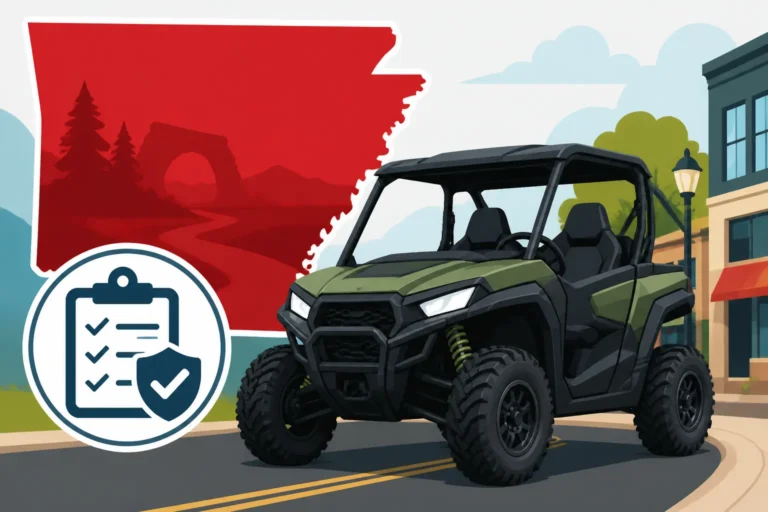
A city UTV permit sticker can seem like a tiny detail until you’re standing beside your machine, wondering whether it belongs inside or outside the windshield—and whether placing it in the wrong spot could cause trouble. This guide explains how to check your town’s display rules, choose a sensible location, protect visibility, and avoid confusing a local permit with other Arkansas riding paperwork.
Confirm what your city permit requires
Check the local ordinance and permit instructions
Arkansas does not have one universal windshield-sticker placement rule for every city-issued UTV permit. A town may specify where a permit decal must be displayed, while another may provide instructions on its application, permit card, or at the time of issuance. Before peeling off the backing, check the ordinance and the written instructions that came with the permit.
That step matters because the sticker is evidence of permission under a local street-use program, not a general pass to ride on every road in Arkansas. Town rules may limit which streets are open, which machines qualify, and what equipment or insurance the driver must have. For an overview of how much local rules can differ, see [Arkansas UTV Street Legal Rules by Town].
If the instructions are unclear, contact the city clerk or the office that issued the permit. Ask them to identify the exact display location and whether the decal goes inside or outside the glass. It’s much easier to make that call before sticking it down than to scrape off a decal that has been placed incorrectly.
Separate the city sticker from other permits
A city UTV permit sticker is not necessarily the same thing as an Arkansas OHV registration decal, a forest riding permit, or a trail pass. Each can serve a different purpose, and one does not automatically replace another. If you ride both on local streets and on designated off-road routes, check what documents and decals apply to each setting.
For example, a city may require its own permit for eligible UTVs using certain streets, while a riding area may have a separate access or permit requirement. A permit issued by one town also should not be treated as permission to ride through a neighboring town. The practical rule is simple: match each sticker or permit to the authority that issued it and the use it covers.
The ordinance is the place to confirm whether your route is covered, rather than relying on a neighbor’s setup or an old social-media post. [Reading Your Town's Ordinance Before You Ride] can help you think through what to look for, including street limits and permit conditions.
Place the sticker where it can be seen without obstructing your view
Follow the stated location before choosing a convenient spot
If the city provides a precise location—such as a specified part of the windshield—follow that direction. Don’t substitute a more convenient spot on the body panel, roll cage, or rear window unless the issuing office says that placement is acceptable. A sticker that is easy to see from one angle may not meet the city’s display instructions.
When the instructions say only that the permit must be displayed on the windshield, look for any additional guidance about the inside or outside surface. Some decals are made for a particular side of the glass, and a sticker intended for exterior use may not adhere properly from inside. If the permit paperwork does not make the distinction, ask before applying it.
Keep the permit legible and visible. Avoid a spot covered by a wiper, tint band, windshield trim, a dashboard accessory, or equipment mounted near the glass. Don’t place it where mud, dust, or a folded windshield panel is likely to hide it. The point is not to make the sticker decorative; it is to display it in the manner the city requires.
Protect the driver’s sightline
A permit sticker should not interfere with the driver’s view. Even if an instruction identifies a general windshield area, choose the permitted position that leaves the clearest practical sightline. Avoid placing the decal directly in front of the driver or where it overlaps another required label.
This is especially worth checking in a side-by-side with accessories mounted near the windshield. Owners sometimes add mirrors, phone holders, GPS units, dash accessories, or aftermarket glass after the permit is issued. Before installing anything, consider whether it could cover the sticker or make the view through the windshield harder.
If you’ve fitted an aftermarket windshield from a maker such as SuperATV, don’t assume that the accessory changes the city’s display requirement. Check the permit instructions against the windshield you actually use, and ask the city if the specified position is not available or is blocked by the design. The local office, rather than the accessory seller, determines what its permit rules accept.
| Situation | Practical next step |
|---|---|
| Instructions name a precise windshield location | Use that location and follow any inside-or-outside direction |
| Instructions say only “display on windshield” | Ask the issuing office which surface and area it accepts |
| The UTV has no windshield | Ask the city how the permit must be displayed before riding |
| Accessories could cover the sticker | Reposition the accessory or request an approved alternative |
| The sticker is peeling, damaged, or unreadable | Contact the city for replacement instructions rather than altering it |
Apply and maintain the decal carefully
Prepare the glass before applying it
Once you know the required location, clean the relevant area and let it dry before applying the sticker. Dust, oily residue, and moisture can prevent a decal from adhering well. Follow any instructions printed on the permit itself, especially if it identifies which side should face outward.
Take a moment to line it up before removing the backing. A small misalignment may not seem important, but repositioning a sticker can stretch it, weaken the adhesive, or leave it difficult to read. If the decal is meant to be permanent or becomes damaged when removed, a rushed placement can turn into an avoidable trip back to the city office.
If the UTV has a removable or folding windshield, check how the sticker will sit when the windshield is in its normal street-riding position. Don’t place it on a detachable panel that you routinely remove unless the city confirms that is acceptable. If you later replace the windshield—perhaps with a different style or an aftermarket option from SuperATV—ask whether the existing decal can be transferred or whether the city needs to issue a replacement.
Keep the sticker readable and don’t modify it
Do not cut, trim, cover, redraw, or laminate a city decal unless the issuing office specifically permits it. Altering a sticker can make its identifying information hard to read and may raise questions about whether it is valid. If it is peeling at an edge, don’t add tape over its text or identification number without checking what the city allows.
Keep a record of the permit paperwork and, if useful, take a clear photo of the sticker after installation. A photo is not a substitute for displaying the decal if the ordinance requires one, but it can help you remember the permit number or explain what was issued if the sticker gets damaged.
If the decal fades, tears, or comes off during cleaning, contact the issuing office. Ask whether you need to bring the UTV, show proof of the permit, or complete a replacement request. Avoid making a homemade copy or moving a sticker from another machine. Even if the permit is still valid, a poorly displayed or altered decal can create confusion during a stop.
Check the rest of the local street-permit rules
Verify which roads and equipment rules apply
Displaying the sticker correctly is only one part of complying with a local UTV ordinance. A permit may be limited to certain streets, and a town’s rules may impose equipment, driver, insurance, or operating conditions. Before taking a route, check whether the roads you plan to use are included and whether any posted restrictions apply.
Some local programs limit eligible streets by speed designation or exclude particular road types. Don’t assume a route is allowed just because it passes through town or connects two permitted streets. For related requirements, see [Arkansas Streets Under 55 mph for UTVs] and [What a Town Must Pass to Allow UTVs]. The wording of your own city’s ordinance is what matters for your permit.
Equipment requirements can also affect whether a UTV qualifies. If your town asks for particular safety equipment, review the requirement before heading out; a sticker does not waive it. [Arkansas Turn Signal Requirements for Street UTVs] explains why it is worth checking equipment rules separately from sticker placement.
Keep track of renewal and insurance obligations
A city-issued permit may have a term or renewal process that is separate from any state registration. Keep the permit paperwork where you can find it and note any renewal information the city provides. Don’t rely on the sticker’s appearance alone to determine whether the permit remains valid.
Insurance is another separate question. The city may require proof of insurance for its street-use permit, or your circumstances may call for coverage beyond what the local ordinance asks for. Check the specific rule and your policy rather than assuming that a permit sticker proves insurance coverage. For more context, see [Arkansas Insurance for a Street-Permitted UTV].
If you move, sell the machine, change its windshield, or replace a damaged decal, ask the city whether the permit or sticker needs to be updated. Local offices may have different procedures, so an answer from a nearby town may not apply to yours. [Arkansas UTV Street Permits and Annual Fees] and [Asking a City Clerk What Applies] are useful next reads when you’re sorting out the permit details.
A little preparation saves the frustrating last-minute guesswork: read the instructions, confirm any unclear placement details with the issuing office, and make sure the finished sticker remains visible without blocking your view. Then review the town’s road, equipment, and renewal rules as well. The decal is one small part of a larger local permit requirement.
Disclaimer
This article is for general informational purposes only and does not constitute professional advice. Laws, prices and regulations vary by location and change over time. Consult a qualified professional for guidance on your specific situation.