Sharing an Arkansas Gravel Road With Log Trucks
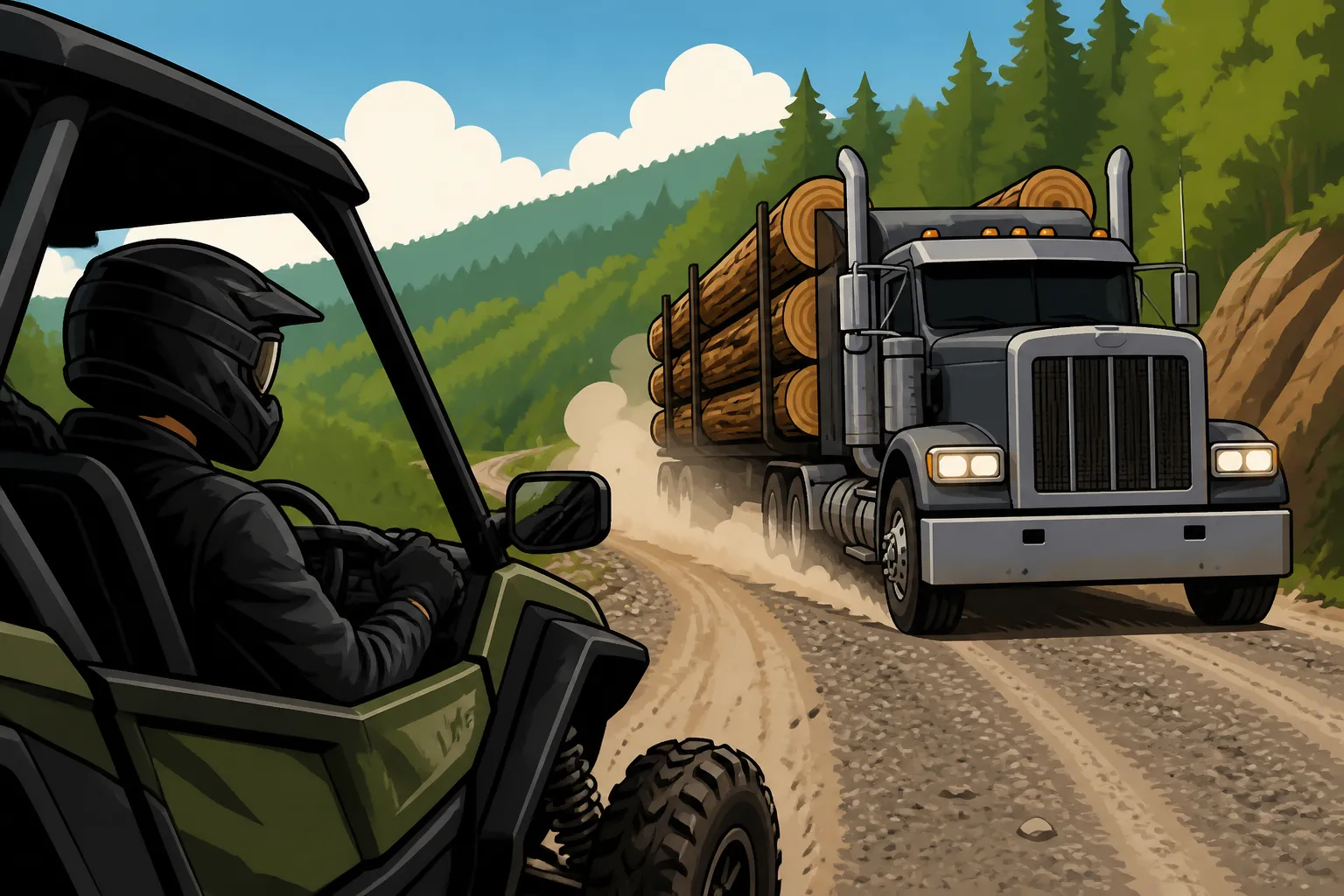
There's a unique kind of challenge, and sometimes a real knot of anxiety, that tightens in your gut when you're out enjoying a beautiful Arkansas gravel road on your ATV or UTV, only to suddenly realize there's a massive log truck barreling your way. These aren't your typical Sunday drivers; they're heavy, fast, and often on a schedule, which can make sharing the road feel incredibly intimidating. This guide is here to walk you through exactly how to safely and confidently navigate those encounters, ensuring both you and the truck drivers get where you're going without incident.
Understanding the Unique Challenges of Sharing the Road with Log Trucks
Riding your off-road machine on a winding gravel road in Arkansas offers incredible freedom and access to some breathtaking scenery. But when that freedom overlaps with active logging routes, you're entering a different environment altogether. Log trucks are an essential part of the timber industry here, and they bring with them a set of dynamics that every ATV and UTV rider needs to respect. It's not just about sharing space; it's about understanding the physics and practicalities that govern these behemoths.
The Sheer Size and Weight Disparity
Let's be brutally honest: your ATV or UTV, no matter how robust, is tiny compared to a fully loaded log truck. We're talking about tons of timber, potentially pushing 80,000 pounds or more, thundering down a road designed for less intense traffic. This isn't just a number; it translates into immense momentum. A log truck simply cannot stop, swerve, or maneuver with the agility of your machine. If a truck driver has to make an emergency maneuver because of you, the consequences could be catastrophic for everyone involved, especially for the folks in smaller vehicles.
This size difference also impacts perception. From the cab of a log truck, your machine might appear even smaller and less significant, or it might be obscured by dust or road conditions more easily. It's a sobering thought, but in any encounter, you, as the operator of the smaller, more agile machine, bear a greater responsibility to adapt to the truck's limitations, not the other way around. It's about proactive safety, not just waiting for something to happen.
Visibility Issues and Blind Spots
Gravel roads are notorious for dust, especially in dry conditions. A log truck kicking up a massive dust cloud can create a temporary whiteout, making it nearly impossible for you to see what's ahead, and crucially, for the truck driver to see you. This isn't just a minor inconvenience; it's a significant safety hazard. You might think you're visible, but a wall of dust can completely swallow a small ATV or UTV in an instant.
Beyond dust, log trucks have enormous blind spots, particularly along their sides and directly behind them. Imagine trying to see a small dot in your peripheral vision while focusing on a winding, uneven road with a heavy load. It's incredibly difficult. Truck drivers rely heavily on their mirrors, but even those have limits. Always assume you are in a blind spot unless you can clearly see the driver's face in their mirror, or they make a visible gesture acknowledging your presence. This is why active communication, even if non-verbal, is so critical on these roads.
Log Truck Speeds and Driving Habits
Many logging operations, especially those on private or less-traveled county roads, operate on tight schedules. This often means truck drivers are moving at considerable speeds, even on unpaved surfaces, to maximize their loads and deliveries. They know these roads intimately, often driving them multiple times a day, which can sometimes lead to a sense of routine that might not account for recreational riders. They're focused on their cargo and their destination.
This isn't to say they are reckless, but their default operating speed and approach to corners are tailored to their vehicle and mission, not necessarily to a leisurely trail ride. They take wide turns, especially on curves, because of the length of their trailers and the risk of swinging logs. This means they might encroach on what you perceive as your side of the road. Always anticipate that a log truck will use more of the road than you expect, particularly when navigating tricky sections.
Essential Safety Practices for ATV/UTV Riders
Navigating gravel roads where log trucks operate demands a heightened sense of awareness and specific safety practices. It's about being prepared, being visible, and knowing exactly how to react when you encounter one of these giants. Your actions can make all the difference in preventing a dangerous situation.
Slow Down and Pull Over Promptly
The absolute golden rule when you see or hear a log truck approaching, whether from the front or behind, is to slow down immediately and find a safe spot to pull completely off the road. Do not try to "hold your lane" or assume the truck will adjust significantly for you. These trucks need space, and giving them ample room is your primary responsibility. Look for a wide shoulder, a pull-off, or even a driveway entrance where you can get your entire machine clear of the travel lane.
Pulling over isn't just about clearance; it's about minimizing dust and debris. When a heavy truck passes at speed, it can kick up rocks and create a powerful wind blast. By being stationary and as far off the road as possible, you reduce your exposure to these elements. Signal your intention to pull over early, and if you can, give the truck driver a visible wave to acknowledge them. This simple act of courtesy and clear communication goes a long way.
Enhance Your Visibility
Being seen is paramount on dusty, winding gravel roads. Your ATV or UTV might have headlights, but they might not be enough to cut through dust or grab a truck driver's attention from a distance. Investing in brighter, more prominent lighting can be a lifesaver. Consider adding high-mounted LED light bars or auxiliary spotlights. Brands like SuperATV offer a fantastic range of lighting solutions that can dramatically increase your daytime and nighttime visibility. These aren't just for trail riding after dark; they're essential safety gear for any road sharing.
Beyond active lighting, reflective tape can make a huge difference. Affix bright reflective tape to the front, rear, and sides of your machine, and even to your helmet. [Reflective Tape Worth Adding] is a simple, inexpensive way to make your presence known, especially in low light or dusty conditions. Brightly colored riding gear also contributes to your overall visibility. The goal is to make yourself as impossible to miss as possible, from every angle.
Communication and Awareness
Even without talking, you can communicate a lot on the road. As mentioned, a wave to a truck driver can acknowledge you've seen them and that you're pulling over. If you're riding in a group, have a system for alerting each other to oncoming traffic. Hand signals are effective, but two-way radios or helmet communicators can be even better, especially on long, dusty stretches.
Always ride defensively. Assume there's a truck around every blind corner or over every hill. Listen for engine noise, which can often be heard long before you see the vehicle. Look for dust clouds in the distance, especially on clear, calm days. If you're on a crest or a blind curve, slow down significantly and be prepared to stop or pull over instantly. [Arkansas Rules for Riding a Gravel Road] emphasizes caution, and log trucks are the perfect illustration of why.
Equipping Your Machine for Gravel Road Safety
While good riding habits are crucial, preparing your ATV or UTV with the right equipment can significantly enhance your safety when encountering log trucks on Arkansas's gravel roads. It's not just about comfort or performance on the trails; it's about making your machine as safe and visible as possible for shared road use.
Upgraded Lighting and Signaling
As mentioned earlier, stock lighting often isn't sufficient for the unique challenges of sharing roads with heavy vehicles. Consider a powerful LED light bar mounted high on your roll cage or front bumper. These not only illuminate your path but also make your machine's profile much more prominent to oncoming traffic. SuperATV, for example, has a variety of LED light bars and pod lights that are incredibly durable and bright, designed to withstand tough off-road conditions while providing superior illumination.
Beyond headlights, consider adding amber or red auxiliary lights to the rear for increased visibility, especially if you're pulling over and need to be seen from behind in dusty conditions. If your UTV doesn't have turn signals, it might be a worthwhile addition, even if not legally required for your specific riding scenario, as they provide clear communication of your intentions to other drivers. [Arkansas Turn Signal Requirements for Street UTVs] offers insights into what street-legal UTVs require, many of which are practical upgrades for any road use.
Mirrors and Rearward Visibility
Good mirrors are often overlooked but are absolutely vital for gravel road safety. Stock mirrors can sometimes be small or vibrate excessively, making them difficult to use effectively. Upgrade to larger, more stable mirrors that offer a wider field of view. This allows you to monitor traffic approaching from behind, giving you more time to react and pull over safely. Knowing what's coming up behind you is just as important as knowing what's ahead, especially on these often-trafficked roads.
Some riders even opt for a rear-view camera system, especially on UTVs with enclosed cabs, as an extra layer of awareness. While it might seem like overkill for an off-road machine, the peace of mind knowing you have excellent rearward visibility when a multi-ton log truck is approaching can be invaluable.
Protecting Your Machine and Yourself
While equipping your machine for safety, don't forget about protecting the machine itself and yourself from the debris that log trucks can kick up. A full windshield on a UTV can prevent small rocks from hitting you directly. For ATVs, good goggles and a full-face helmet are non-negotiable.
Consider adding a winch to your machine if you don't already have one. If you have to pull far off the road into a ditch or soft shoulder to avoid a truck, a winch can be your best friend for self-recovery. Brands like SuperATV offer robust winch options that are easy to install and can get you out of a sticky situation. This preparedness allows you to be more decisive about getting completely out of the way, knowing you have a recovery option.
Here’s a quick overview of essential gear and practices:
| Category | Do's | Don'ts |
|---|---|---|
| Visibility | Use bright LED lights (front/rear). | Assume your stock lights are sufficient. |
| Wear high-visibility clothing. | Ride in dark or camouflaged gear on dusty roads. | |
| Add reflective tape to machine and helmet. | Rely on truck drivers to spot you in all conditions. | |
| Road Position | Slow down and pull completely off the road. | Stay in the travel lane or on the shoulder edge. |
| Find a wide, stable spot to wait. | Pull over into soft or unstable ground without thought. | |
| Awareness | Listen for engine noise and watch for dust clouds. | Ride with headphones or distractions that limit hearing. |
| Anticipate traffic around blind corners/hills. | Speed through blind spots or over crests. | |
| Communication | Signal intentions clearly (hand signals, turn signals). | Make sudden, unpredictable movements. |
| Wave to acknowledge truck drivers. | Assume the truck driver has seen you without confirmation. | |
| Machine Prep | Ensure good mirrors and bright, working lights. | Operate with cracked mirrors or dim, broken lights. |
| Consider a winch for self-recovery. | Ignore the potential for needing to pull far off-road. |
Navigating Specific Scenarios on Gravel Roads
Even with the right equipment and a strong understanding of general safety, certain situations on gravel roads present their own unique challenges when you're sharing them with log trucks. Being mentally prepared for these scenarios can significantly reduce your risk.
Blind Curves and Hill Crests
These are perhaps the most dangerous spots on any gravel road, especially when log trucks are involved. You simply cannot see what's on the other side, and neither can the truck driver. The rule here is extreme caution. As you approach a blind curve or the crest of a hill, slow down dramatically – almost to a crawl. Stay as far to the right side of the road as safely possible, even if it means brushing against roadside vegetation.
Be prepared to stop instantly. Listen intently for engine noise. If you hear a truck, pull off the road before entering the blind area, if possible, or immediately find the safest spot to stop as soon as you see or hear them. Never try to "beat" a truck around a blind corner or over a crest; their momentum and wide turning radius mean they'll likely be taking up a good portion of the road. Your best bet is always to yield completely.
Passing Log Trucks (Never from Behind)
This might seem obvious, but it's worth stating clearly: never attempt to pass a log truck from behind on a gravel road. The dust they kick up will blind you, and they can make sudden maneuvers or slow down unexpectedly. Their sheer length also makes passing extremely difficult and dangerous. If you find yourself behind a log truck, maintain a safe following distance that allows you to see the road ahead, ideally outside their main dust cloud, and wait patiently for them to pull off or for the road conditions to become entirely clear.
If a truck is behind you, your job is to find the safest possible spot to pull over and let them pass. Do not try to speed up or lead them to a better spot. Simply get off the road as quickly and safely as you can. This is where those good mirrors come into play, giving you plenty of warning of their approach.
Riding in Groups and Convoy Protocols
When riding with friends or in a larger group, coordination is key. Designate a lead rider and a tail rider, both equipped with good communication devices. The lead rider should be responsible for spotting oncoming traffic and signaling the group to pull over. The tail rider ensures everyone in the group has successfully pulled off the road.
If you're riding in a convoy, spread out enough to minimize dust for the rider behind you, but not so much that you lose communication or group cohesion. When pulling over for a log truck, do so in an orderly fashion, one machine after another, making sure each rider has a safe spot before the next pulls off. Sometimes, a long group might need to spread out over a greater distance to find enough safe pull-off spots, so plan for that. And remember, [Arkansas Rules for a Passenger on a Quad] are important, especially when navigating these challenging roads with extra weight.
Ultimately, sharing Arkansas's gravel roads with log trucks comes down to respect, vigilance, and proactive safety measures. By understanding their unique operational challenges, equipping your machine properly, and practicing defensive riding, you can enjoy your adventures without unnecessary risk.
Disclaimer
This article is for general informational purposes only and does not constitute professional advice. Laws, prices and regulations vary by location and change over time. Consult a qualified professional for guidance on your specific situation.