Night Visibility on an Ozark Back Road
There's nothing quite like the freedom of exploring Arkansas's vast and beautiful Ozark landscape on your ATV or UTV. But when the sun dips below the horizon, those picturesque back roads transform into a labyrinth of shadows, making navigation a real challenge. You're not alone if you've ever felt that heart-sinking moment when your stock headlights just don't cut it, leaving you squinting into the gloom, worried about what might be lurking in the dark. This comprehensive guide is here to shed some light on the subject, offering practical advice and essential upgrades to dramatically improve your night visibility, making your Ozark adventures safer and more enjoyable after dusk.
Understanding the Unique Dangers of Night Riding in the Ozarks
Riding off-road at night in the Ozarks isn't just "riding in the dark." It presents a completely different set of challenges compared to daytime excursions, or even night riding in more urbanized areas. The natural beauty that draws us to these hills is exactly what makes them so unforgiving after sundown. Ignoring these unique factors can quickly turn a fun outing into a dangerous situation.
The Absolute Darkness Factor
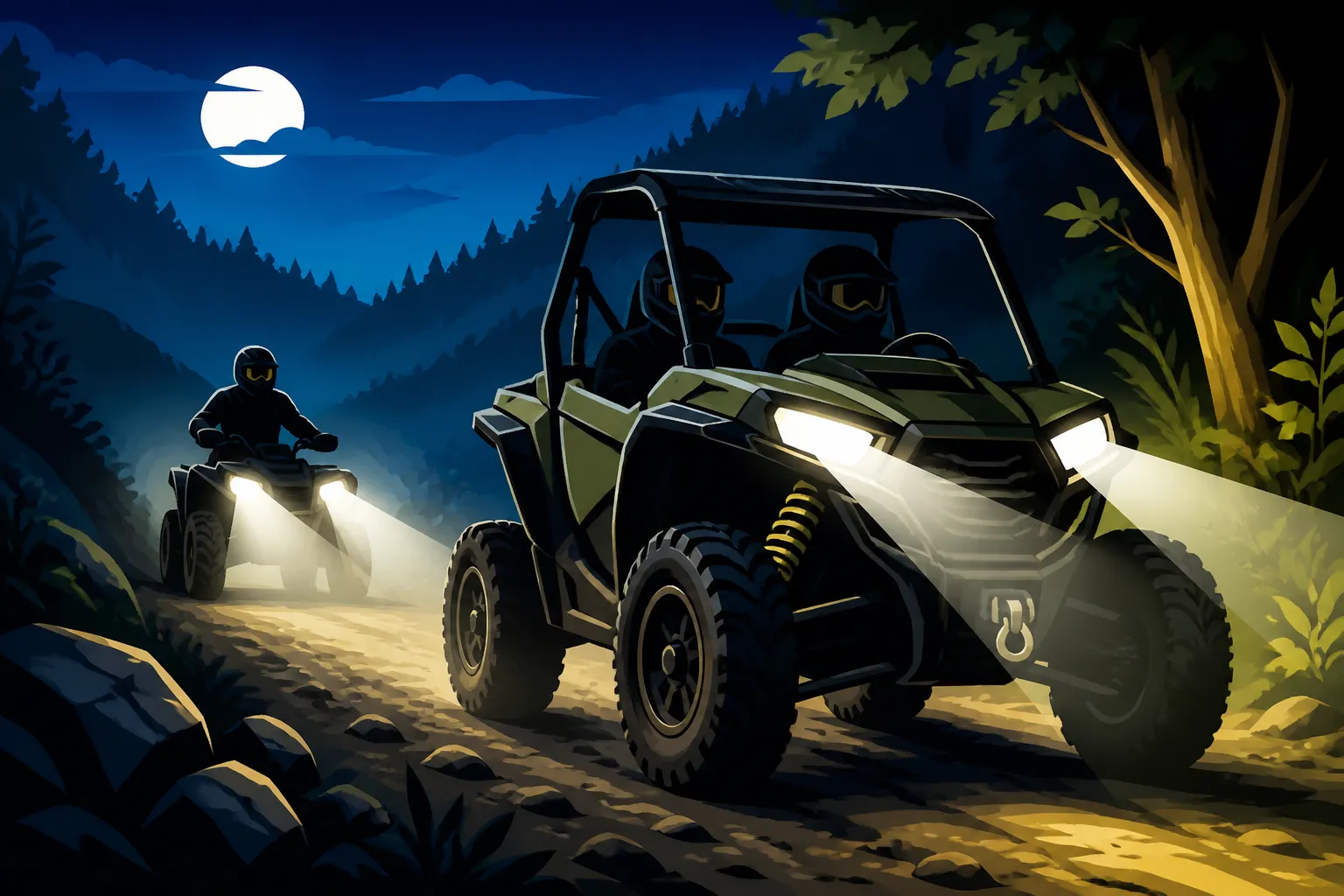
When you're out on an Ozark back road, far from towns and highways, you're truly experiencing what "dark" means. There's no light pollution bouncing off the clouds, no distant streetlights, and often, the dense canopy of trees overhead blocks out even moonlight or starlight. Your machine's headlights are often the only source of illumination for miles around. This profound lack of ambient light means that every shadow is deeper, every distant object is harder to discern, and your eyes have to work overtime just to make sense of your immediate surroundings. It’s not just a little darker; it’s an all-encompassing black that can disorient even experienced riders if they're not prepared. You're essentially creating your own daylight, and the quality and intensity of that light are paramount to your safety and enjoyment.
Unpredictable Terrain and Hidden Obstacles
The Ozarks are famous for their rugged, diverse terrain – and that means plenty of surprises, even in broad daylight. At night, these surprises become genuine hazards. A rock that was easily spotted during the day can become an invisible obstacle that you hit with a jarring thud, potentially damaging your machine or throwing you off balance. Washouts, deep ruts, or sudden drops in elevation blend seamlessly into the shadows. Low-hanging tree branches, barely noticeable in the daytime, can become nasty head-level traps on an unlit trail. The winding nature of many of these back roads means your headlights often only illuminate a small patch directly in front of you, leaving blind spots on sharp turns or just over the crest of a hill. It's not uncommon to encounter fallen trees after a storm, or fresh ruts from recent rain, and seeing these at the last second can be the difference between a smooth ride and a costly repair.
Wildlife on the Move
One of the most thrilling aspects of riding in the Ozarks is the chance to see local wildlife. However, at night, these encounters shift from delightful to potentially disastrous. Deer, especially, become incredibly active as dusk settles, often crossing roads and trails with little warning. Coyotes, raccoons, opossums, and even wild hogs are more likely to be on the move after dark, foraging for food. Your limited visibility means you have far less reaction time if an animal suddenly darts into your path. Hitting a large deer or even a smaller animal at speed can cause serious injury to riders and significant damage to your ATV or UTV. Livestock, such as cattle or horses, can sometimes stray onto unfenced county roads in remote areas, posing another unforeseen hazard that requires strong, far-reaching illumination to spot early enough to avoid.
Essential Lighting Upgrades for Your ATV or UTV
If you're serious about riding Ozark back roads after dark, your stock lighting is almost certainly not enough. Think of your machine's lighting system as your personal daylight generator; the more powerful and thoughtfully designed it is, the safer and more confident you'll feel. Upgrading your lights isn't just about brightness; it's about the quality, spread, and durability of the illumination you're putting out.
High-Output LED Light Bars: Your Best Defense
When it comes to cutting through the Ozark night, nothing quite compares to a high-output LED light bar. These aren't just "brighter lights"; they're engineered to throw massive amounts of lumens across a wide area, far beyond what traditional headlights can achieve. You'll find options with various beam patterns: "spot" beams concentrate light far down the trail, revealing distant obstacles; "flood" beams spread light broadly, illuminating the shoulders and ditches; and "combo" bars offer a mix of both for comprehensive coverage.
Look for reputable brands that focus on durable, waterproof designs, knowing your machine will be exposed to dust, mud, and water. Companies like SuperATV offer fantastic options, from smaller 6-inch bars that can supplement your headlights to massive 50-inch bars that turn night into day. Mounting options are plentiful, too, whether you prefer a roof-mounted bar on your UTV for maximum height and spread, or a bumper-mounted one on your ATV for closer trail illumination. These light bars are often the single most impactful upgrade you can make for night riding, dramatically increasing your reaction time to unforeseen hazards.
Beyond Stock Headlights and Tail Lights
Even with a powerful light bar, your machine's primary headlights and tail lights play a crucial role, especially if you're ever on a section of road where a light bar might be too intense for oncoming (though rare) traffic. Many stock ATV/UTV headlights are adequate for basic visibility but lack the intensity and beam quality needed for aggressive night riding. Upgrading your halogen bulbs to brighter LED replacements can make a noticeable difference in your immediate field of vision. These are often plug-and-play replacements, offering a cleaner, whiter light that improves contrast.
Don't forget your tail lights! While they don't help you see, they are absolutely critical for other riders to see you, particularly if you're part of a group. Ensuring your tail lights are bright and fully functional is a basic but often overlooked safety measure. Brighter LED tail light assemblies are available for many models and can significantly increase your machine's visibility from the rear, especially when dust is thick or when [Arkansas Rules for Riding After Dark] might put you on a shared path.
Supplemental Lighting: Rock Lights, Accent Lights, and More
While light bars and improved headlights handle the forward vision, supplemental lighting can greatly enhance your overall situational awareness. Rock lights, for instance, are small, powerful LED pods mounted underneath your machine. They illuminate the immediate terrain directly around and beneath your ATV or UTV, which is incredibly useful when navigating tricky rock gardens, tight turns, or slow-speed maneuvers. They can help you spot hidden roots, rocks, or deep ruts that your main lights might miss.
Accent lights, often colored, can also serve a practical purpose by outlining your machine's dimensions, making it easier for others to gauge your size and position, especially when parked or navigating in a tight group. These aren't just for show; they add another layer of visibility. For tasks like setting up camp, making a quick repair, or even loading/unloading your machine in the dark, a few well-placed work lights can be invaluable. Think about adding a small, powerful floodlight to the rear of your machine, activated separately, for reversing or illuminating a workspace.
Be Seen: Reflective Elements and Whip Lights
Even with an excellent lighting system, ensuring other riders and potential vehicles can see you is paramount. This is where passive and active visibility aids come into play. [Reflective Tape Worth Adding] to your helmet, jacket, and key areas of your machine can make a huge difference. This tape reflects light directly back to its source, meaning if another vehicle's headlights hit you, you'll light up like a Christmas tree. It's a low-cost, high-impact safety upgrade that works constantly without drawing power.
Whip lights, often tall, flexible poles with LED lights running their length, are fantastic for group riding, especially in dusty conditions or varied terrain. Mounted high on your machine, they extend above the vehicle, making you visible over dust clouds or rises in the terrain that might obscure a lower light bar. This is particularly useful in the Ozarks where elevation changes are common. Some whip lights also offer different colors or flashing patterns, allowing groups to identify each other easily. While [Arkansas Has No ATV Helmet Law], incorporating reflective elements into your helmet is just smart.
| Light Type | Primary Use Case | Key Benefits | Considerations |
|---|---|---|---|
| LED Light Bars | Long-distance trail illumination, wide area flood | High lumen output, durable, low power draw, versatile | Can be expensive, may require extra wiring, check local regulations for road use |
| Pod Lights / Cubes | Spot lighting, ditch lights, reverse lights | Compact, focused beam, easy to mount, good for specific angles | Less overall coverage than a bar, still need proper aiming |
| Upgraded Headlights | Primary forward illumination, street legality (if applicable) | Direct replacement for stock, better visibility | May still not be enough for extremely dark trails |
| Rock Lights | Under-vehicle illumination, low-speed crawling | See immediate terrain, prevent hang-ups, cool aesthetics | Primarily for slow speeds, not for forward driving |
| Whip Lights | High-mounted visibility, group identification | Easily seen from a distance, good for dusty conditions | Can be damaged by low branches, may require specific mounts |
| Reflective Tape/Decals | Passive visibility for rider and machine | Inexpensive, always on, no power needed | Relies on external light source, not active illumination |
Smart Riding Practices and Personal Gear for Night Visibility
Beyond simply adding more light to your machine, your personal riding habits and gear choices play a huge role in staying safe and maximizing visibility after dark. A powerful lighting setup is only as effective as the rider behind the wheel. Developing smart practices and making intentional gear choices can mitigate many of the risks associated with Ozark night riding.
The Buddy System and Group Riding Protocols
Riding alone at night, especially on unfamiliar Ozark back roads, is an unnecessary risk. If something goes wrong—a breakdown, an injury, or getting stuck—you could be in a very dangerous situation far from help. Always ride with at least one other person, and preferably in a small group. Establish clear communication methods, whether it's hand signals, pre-arranged stops, or two-way radios. Maintain safe distances between machines to avoid dust clouds from the rider in front and to give everyone enough time to react to obstacles. Knowing that you have someone watching your back, and vice-versa, significantly reduces anxiety and enhances overall safety. Before you head out, have a plan for what to do in an emergency and make sure everyone knows it.
Optimizing Your Vision: Eye Protection and Helmet Choices
Your eyes are your primary tool for navigating at night, and protecting and optimizing them is crucial. Clear or lightly tinted goggles are essential to protect against dust, bugs, and low-hanging branches while providing unobstructed vision. Consider anti-fog treatments or goggles with good ventilation, as fogged lenses can completely negate the benefit of good lighting. While [Arkansas Has No ATV Helmet Law], wearing a helmet is highly recommended for all riders, and choosing one with reflective elements or a light-colored finish will passively increase your visibility to others. Some helmets even have integrated LED lights, adding another layer of "being seen." Ensure your helmet visor (if you use one) is clean and scratch-free, as imperfections can distort light and create glare, further hindering your night vision.
Pre-Ride Checks and Maintenance
Before every night ride, a thorough pre-ride check of your machine's electrical system and lighting components is non-negotiable. This isn't just a quick glance; it means testing every single light—headlights, tail lights, brake lights, light bars, rock lights, and whip lights—to ensure they are all fully functional. Check your battery's charge to ensure it can handle the increased electrical load of auxiliary lighting. Clean all light lenses of mud, dust, or bug splatters, as even a thin film can drastically reduce light output. Also, inspect your wiring for any loose connections or frayed areas that could fail mid-ride. A small issue overlooked in the daylight can become a major problem when you're miles deep on a dark trail.
Understanding Local Rules and Trail Etiquette
Even if you're not on a designated public highway, it's vital to be aware of [Arkansas Rules for Riding a County Road] and general etiquette, especially when riding at night. While many Ozark back roads are gravel county roads or private land access roads, you might still encounter other vehicles, hunters, or landowners. Always operate your machine responsibly, dimming your auxiliary lights if you see anyone approaching to avoid blinding them. Respect private property signs and be mindful of noise levels, especially late at night, to avoid [Arkansas Noise Complaints About Quads]. Some areas might have specific curfews or rules for night riding, so it's always best to check with local authorities or landowners beforehand. Being a responsible rider contributes to positive relationships with local communities and ensures trails remain open for everyone.
Navigating Common Nighttime Hazards on Ozark Back Roads
Even with the best lighting and preparation, Ozark back roads at night present specific challenges that require mindful navigation. Knowing how to anticipate and react to these common hazards will significantly increase your safety and confidence when the sun goes down. It's about combining your upgraded visibility with smart driving techniques.
Dealing with Dust Clouds
One of the most pervasive and frustrating hazards on Ozark back roads, especially in dry conditions, is dust. During the day, it's a nuisance; at night, it can create near white-out conditions, rendering even the most powerful light bar ineffective. When riding in a group, dust from the lead machine can completely obscure the trail for those behind. The best strategy is prevention and spacing. Slow down significantly to reduce the amount of dust you kick up. Increase the distance between machines in your group, allowing the dust from the rider ahead to settle before you enter it. Sometimes, pulling over and waiting a minute or two for a particularly thick dust cloud to dissipate is the safest option. Your bright lights will only reflect off the dust particles, creating a blinding wall of light, so reducing speed and maintaining distance is key.
Water Crossings and Mud Holes
Water crossings and mud holes are common features of Ozark trails, but they take on an entirely different character at night. Depth, entry, and exit points that are clear in daylight become deceptive in the beam of a headlight. Water can play tricks with light, making it difficult to judge the true depth or the presence of submerged obstacles like rocks or fallen branches. If you can, scout water crossings on foot during the day, or at least during twilight, before attempting them in full darkness. When approaching a crossing at night, proceed slowly. Use your auxiliary lights to get the best possible view of the water's surface and what lies beyond. If you're riding with a group, have one person spot for the others, using a powerful flashlight to illuminate the bottom. Always remember that the conditions of a water crossing can change rapidly, so even if you've crossed it before, exercise caution. Having a winch on your machine, like many models from SuperATV include or offer as an accessory, can be a literal lifesaver if you misjudge a water crossing and get stuck.
Blind Corners and Crests
The winding, hilly nature of Ozark back roads means you'll encounter plenty of blind corners and crests where you simply cannot see what's on the other side. This is dangerous during the day, but at night, the danger is amplified because any approaching vehicle or hazard is completely hidden until it's right in front of you. Approach all blind corners and crests with extreme caution, slowing your speed significantly. Stay to your side of the "road" as much as possible, even on unpaved trails. Listen for approaching engines or horns, and be prepared to stop or react instantly. Your light bar might throw a beam far ahead, but it won't curve around a sharp bend or peek over a hill, so your driving judgment must compensate for the limits of even the best lighting. Consider a quick tap on your horn before entering a truly blind spot, especially if you're on a county road where you might encounter an occasional vehicle.
Emergencies in the Dark
No matter how well you prepare, emergencies can happen. A breakdown, a flat tire, or an unexpected accident is always more challenging to deal with in the dark. Having the right gear and a clear plan can make all the difference. Carry a reliable headlamp or a powerful flashlight (separate from your machine's lights) with extra batteries. A small toolkit, tire repair kit, and first aid kit are essential. If your machine breaks down, make yourself as visible as possible by keeping your remaining lights on and deploying any reflective triangles or markers you might carry. [Arkansas Accident Reporting for an ATV Crash] outlines the steps to take if you're involved in an incident. If you get lost, stay calm, and rely on a GPS device or a paper map if you have one. Often, the best course of action is to stay put, conserve battery life, and wait for daylight or assistance, especially if you've communicated your route and expected return time to someone not on the ride. Being prepared for emergencies is just as important as preventing them, especially when you're far from civilization after dark.
Disclaimer
This article is for general informational purposes only and does not constitute professional advice. Laws, prices and regulations vary by location and change over time. Consult a qualified professional for guidance on your specific situation.