Volunteer Days at Wolf Pen Gap
A trail can look perfectly rideable until a storm leaves a downed tree across the route, washes soil into a rocky dip, or turns a drainage into a muddy rut. At Wolf Pen Gap near Mena, Arkansas, volunteer work can help keep trails safer and healthier. Here’s how to find appropriate opportunities, prepare, and make sure your effort supports the people responsible for the area.
What volunteer work at Wolf Pen Gap can involve
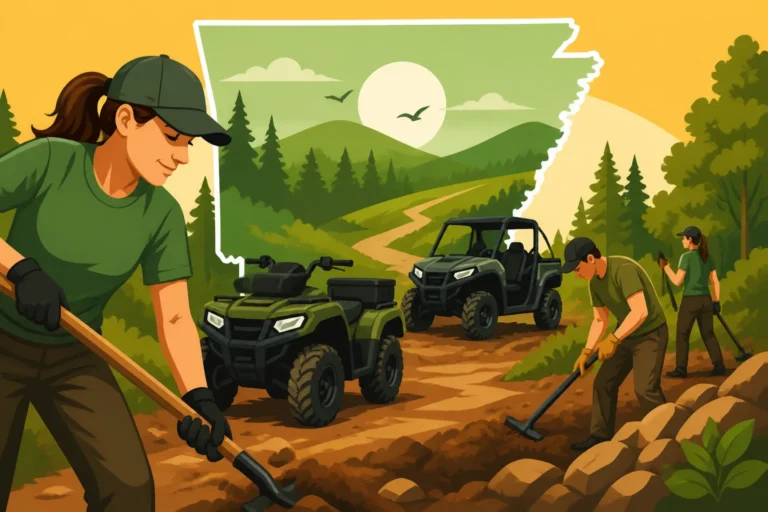
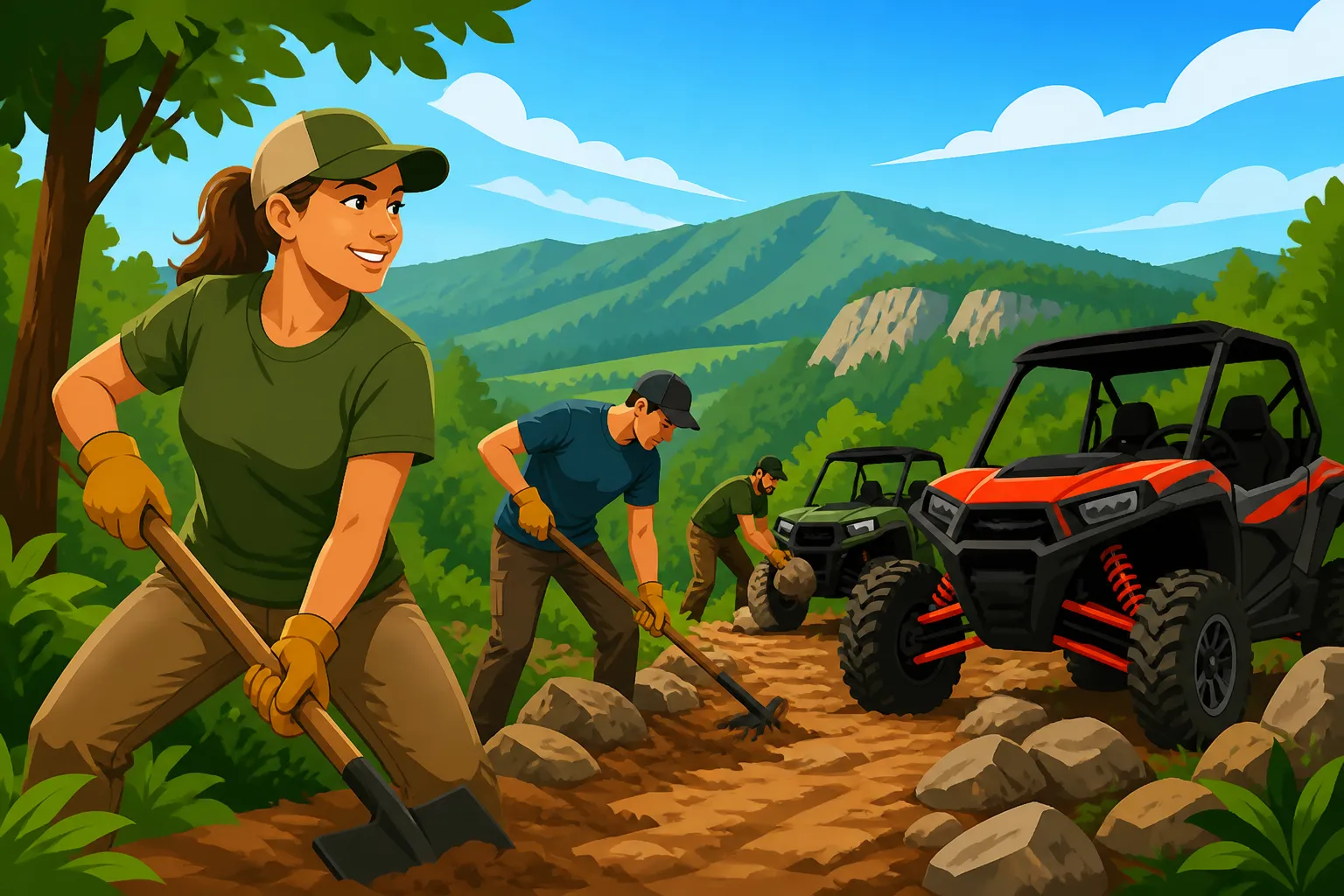
Wolf Pen Gap is a popular off-highway vehicle riding area in the Ouachita National Forest, southeast of Mena in Polk County. Its rocky terrain, wooded slopes, and changing weather make trail care an ongoing job. Volunteer work may involve clearing small debris, reporting trail problems, helping with an organized workday, or supporting a local group that coordinates with land managers.
The important distinction is that a good intention is not the same as authorization. A trail may cross sensitive ground or be subject to a closure, and even a small change to drainage or vegetation can create a bigger problem. Start by asking the responsible land manager or an established volunteer group how to help before bringing tools or making repairs.
Common trail-care tasks
A volunteer workday may focus on simple, supervised tasks such as picking up litter, clearing branches from an approved section, or helping maintain trailhead areas. Other work can be more technical: managing water flow, stabilizing erosion, or repairing trail features. Those jobs should be planned and directed by people who understand the site and its maintenance standards.
Conditions vary across the trail system. On one visit, the need may be a few branches across a route; after heavy rain, the concern may be erosion or a damaged drainage feature. It’s best not to assume that a visible problem is suitable for a do-it-yourself fix. A well-meant effort to divert water, move rocks, or widen a muddy path could damage the trail or surrounding forest.
If you’re new to trail volunteering, ask what the task involves and whether instruction will be provided. A first-time volunteer can still be useful: hauling approved supplies, collecting litter, or helping at a staging area can make a workday run more smoothly without requiring specialized skills.
Why organized work matters
Trail maintenance is about more than making a route easier to ride. Properly managed drainage helps reduce erosion, while keeping riders on designated routes can limit damage to nearby vegetation and soil. When an informal bypass develops around a muddy or rocky spot, it can gradually widen the disturbed area. A land manager or experienced crew can decide whether the route needs maintenance, a temporary closure, or another response.
Organized efforts also help prevent conflicting work. One person may see a blocked spot and want to clear it, while a manager may have closed that segment for repairs or resource protection. Before volunteering, check for posted signs and current guidance. If a section is closed, don’t enter it to inspect or work on it unless you have explicit direction.
For a broader look at trail conditions, seasonal access, and riding-area basics, see Arkansas Trail Conditions Before You Tow and Arkansas ATV Trails: Where to Ride. Those topics can help with trip planning, but they don’t replace directions from the people coordinating a specific workday.
How to find a Wolf Pen Gap volunteer opportunity
Volunteer days may be arranged through local riding organizations, community groups, or land managers. Schedules and procedures can change, so look for a clearly identified organizer and confirm the details before traveling. A social media post or a message from a riding acquaintance can be a useful lead, but verify that the work is approved and that the gathering location and task are still accurate.
Contact the right people first
Start with the relevant forest office or the organizer named in a volunteer announcement. Ask whether the work is authorized, who will lead the crew, where volunteers should meet, and what work is planned. If you are directed to a local club or another group, ask whether it is coordinating with the land manager for that particular task.
The What the Mena-Oden Ranger District Office Handles for Riders guide may help you understand the local office’s role. When you contact an office or group, be specific: say you’re interested in volunteering at Wolf Pen Gap, share the dates you might be available, and ask what opportunities are open to people without trail-maintenance experience.
If you find information through an app such as onX Offroad, treat it as a planning aid rather than permission to enter a closed area or perform work. Map details can help you understand where you are, but work authorization and closure information should come from the appropriate organizer or land manager.
Questions to ask before you commit
A short conversation before the workday can save you from showing up without the right gear—or at the wrong place. Ask whether volunteers need to register in advance, whether minors can participate, and whether there are limits on group size. Find out if tools and protective equipment are supplied or if volunteers should bring specific items.
Also clarify the expected physical effort. A task involving a short walk near a trailhead is different from several hours on uneven, rocky ground. If you have mobility limitations, health concerns, or need a particular accommodation, ask privately before the event so the organizer can tell you what is practical and safe.
| Question to ask | Why it matters |
|---|---|
| Who is leading the workday? | You’ll know whom to follow and where to check in. |
| Is the work approved for this date and location? | It helps avoid entering a closed area or doing unauthorized maintenance. |
| What tasks are planned? | You can judge whether the work fits your experience and abilities. |
| What clothing, tools, or safety gear should I bring? | Requirements differ between litter pickup and trail work. |
| Is advance registration needed? | Organizers may need to plan crew size, supplies, or access. |
| What happens if weather changes? | Rain, wind, or unsafe trail conditions may affect the plan. |
When organizers share a meeting point, save it before leaving home. Cell reception can be unreliable in remote or wooded areas, so don’t count on navigating to a location from a live connection. onX Offroad can be useful for keeping a map available offline, but use the organizer’s instructions for the actual meeting point and any access restrictions.
How to prepare for a volunteer day
A volunteer day is not the same as a casual ride. You may be walking over uneven ground, carrying supplies, working around tools, or spending several hours outdoors. Even a modest task can become tiring in heat or after rain. Prepare for the work described by the organizer, and avoid bringing equipment that has not been requested.
Clothing, water, and basic supplies
Wear sturdy closed-toe footwear with a sole suited to rough, slippery ground. Long pants and a long-sleeved shirt can help protect against brush, insects, and scrapes. Bring water and any personal medication you may need. In warm weather, sun protection and insect protection can make a long day far more comfortable; in cool or wet conditions, have a layer that can handle changing weather.
Gloves may be useful, but the appropriate type depends on the task. Ask before bringing tools, especially powered equipment, saws, or anything that could create a hazard for other volunteers. Do not assume that your own tool is appropriate simply because it seems suited to the job. The organizer may need to limit equipment to what the crew has been trained and authorized to use.
If the workday involves a ride to a staging area, confirm whether you need an ATV or UTV, whether it must be registered, and what permits or other requirements apply. The planning guide Arkansas OHV Permits: Two Forests, Two Prices explains why access requirements can differ by area. Check the details that apply to your specific trip rather than assuming that volunteering changes normal access rules.
Work safely and stay with the crew
Listen to the work briefing before heading out. Organizers may explain boundaries, hazards, communication procedures, and what volunteers should do if they find a problem outside the assigned area. Stay with your group, follow instructions, and speak up if a task feels unsafe or beyond your ability.
Use tools only as directed and give other volunteers enough space to work safely. If you encounter a downed tree, unstable slope, damaged structure, or other potentially dangerous condition, report it rather than trying to handle it independently. The crew leader can decide whether the issue requires trained staff, different equipment, or a separate work plan.
Keep the work focused on the assigned section. Don’t create a new route around an obstruction, move trail markers, or make a shortcut to reach a work site. If you’re also planning to ride, keep the two activities separate in your planning: volunteer instructions do not automatically authorize riding on closed or undesignated routes.
After the workday and before your next ride
Once the day is over, follow the organizer’s instructions for cleanup, tool return, and checking out. If you noticed a concern that was not part of the assigned task, report its location and describe what you saw. A clear, practical report is more helpful than attempting an unapproved repair or posting a vague warning that other riders might misunderstand.
Report trail problems clearly
When reporting an issue, include the nearest trail marker, junction, or recognizable landmark if you know it. Explain whether the problem blocks travel, appears after rain, or affects a particular part of the trail. A photo can help, but don’t put yourself or another person at risk to take one. If the location is uncertain, say so rather than guessing.
You can also help by reminding other riders to stay on designated routes and respect signs. If a trail is muddy, a tempting detour may seem like the easiest option, but widening the trail can worsen the damage. The guidance in Arkansas Trail Etiquette Locals Expect and Arkansas Trail Closures After a Storm offers useful context for making responsible choices when conditions are less than ideal.
Mapping tools, including onX Offroad, can help you note a location for a later report, especially where cell service is limited. Still, confirm how the organizer wants reports submitted and whether a marked location is acceptable. A map pin is useful information; it is not a substitute for an official closure notice or a work assignment.
Keep volunteering sustainable
You don’t need to join every workday to make a meaningful contribution. A single shift, a few hours of help, or sharing an organizer’s verified notice can support local trail care. If you enjoyed the experience, ask how the group communicates future opportunities and what skills would be useful to learn.
Be realistic about what you can take on. Trail work can be physically demanding, and an honest conversation about your comfort level helps organizers assign tasks appropriately. You may be more useful on check-in, cleanup, or supply support than on a steep, technical section—and that is still valuable.
Before heading to Wolf Pen Gap for either a workday or a ride, check the information provided by the organizer and review the area’s access guidance. How to Check Wolf Pen Gap Trail Status is a helpful related read for trip planning, while Volunteer Days at Wolf Pen Gap remains a reminder that the best trail-care work is coordinated, permitted, and matched to the conditions on the ground.
Disclaimer
This article is for general informational purposes only and does not constitute professional advice. Laws, prices and regulations vary by location and change over time. Consult a qualified professional for guidance on your specific situation.