Arkansas Rock and What It Does to Tires
Arkansas trails can be beautiful one minute and hard on tires the next: exposed rock, sharp edges, loose stone, and long stretches of rough ground can leave you wondering whether a small cut is harmless or the start of a ride-ending flat. This guide explains what rocky terrain does to ATV and UTV tires, how to choose and inspect them, and what to carry before heading out.
Why Arkansas rock is tough on ATV and UTV tires
Sharp edges can cut tread and sidewalls
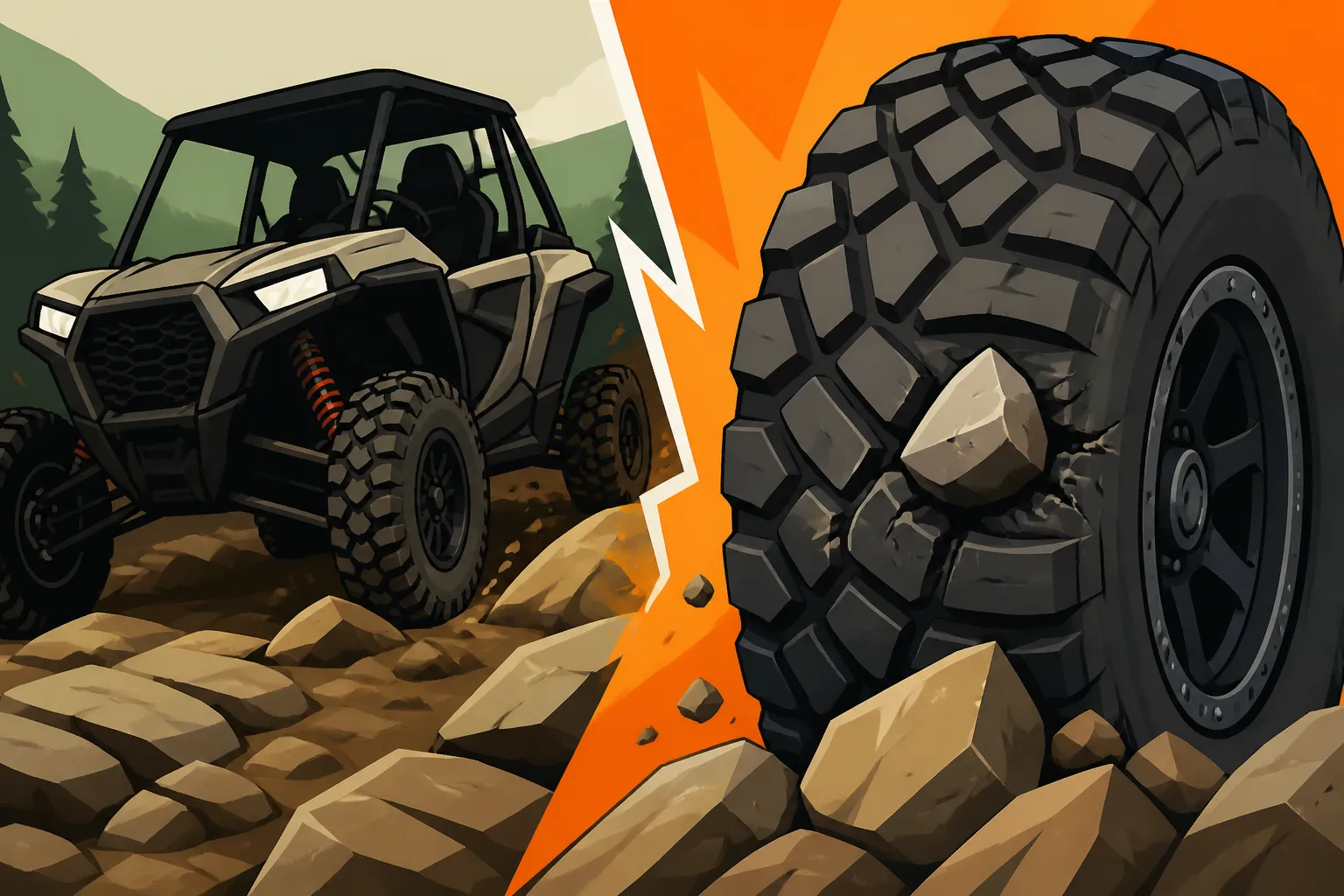
Rock doesn’t have to be large to damage a tire. A sharp edge can slice into the tread, while a pointed rock pressed against the sidewall can cause a cut in a more vulnerable part of the tire. The tread is designed to meet the ground; the sidewall flexes as the tire rolls and is generally less protected.
The risk often comes from how the machine meets the rock. A tire that rolls slowly over a broad, rounded surface may be fine, while one that spins against a sharp edge can tear rubber or expose the tire’s internal cords. A cut may also be difficult to notice at first, especially if the tire is dirty or the damage is on the inside-facing sidewall.
Rock damage can show up in a few ways:
- A shallow nick or scrape in the tread
- A puncture from a pointed stone
- A sidewall cut or bulge
- A slow leak that becomes more obvious after the ride
- A damaged bead where the tire meets the wheel
That last possibility matters when a wheel strikes a rock hard enough to pinch or shift the tire. Even if the tread looks intact, a damaged bead can let air escape. After riding rough ground, check the entire tire rather than only the part that faces outward.
Terrain and riding style both matter
Arkansas riding areas don’t all present the same kind of challenge. Trail surfaces can vary from packed dirt to loose rock, and conditions can change after rain, heavy use, or trail maintenance. In the Ouachita and Ozark regions, riders may encounter exposed stone, rocky climbs, and uneven sections where tire placement makes a real difference.
Before choosing a route, look at the trail type, vehicle-width limits, and current access information. Guides such as Arkansas ATV Trails: Where to Ride can help you think through the kind of terrain you want to ride, while Arkansas Trail Conditions Before You Tow is a useful reminder to check conditions before committing to a trip. onX Offroad can also help riders review mapped routes and plan a ride around the terrain they expect to encounter.
How you ride affects tire wear, too. Spinning the tires on rock can grind away tread and generate heat. Charging into a ledge can pinch a tire against the wheel, and a sharp turn on an uneven surface can put extra strain on the sidewall. Slow, deliberate tire placement is often kinder to your tires than adding throttle and hoping the machine climbs through.
Choosing tires for rocky trails
Match the tire to the machine and terrain
There isn’t one tire that is best for every Arkansas ride. A tire that works well on a rocky trail may feel different on soft soil, mud, or pavement. Start with the machine manufacturer’s recommendations for tire size, load, and pressure, then consider how and where you ride most often.
For rocky ground, look for a tire designed to handle rough surfaces, with a tread pattern and construction that suit your vehicle and riding style. Stronger construction can offer added resistance to some kinds of damage, but it doesn’t make a tire puncture-proof. Sidewall design, load, wheel fit, and proper inflation all matter.
| Tire consideration | Why it matters on rocky terrain | What to check |
|---|---|---|
| Correct size and fit | A mismatched tire can affect handling and clearance | The machine manual and tire markings |
| Sidewall construction | Sidewalls are exposed to cuts and impacts | Tire specifications and intended use |
| Tread design | Tread affects grip and how the tire interacts with uneven surfaces | Whether the tire suits rock, mixed terrain, or another primary surface |
| Load rating | Overloading can increase stress and heat | The machine’s load guidance and tire rating |
| Repairability | Some damage may be repairable; some is unsafe to use | The tire maker’s repair guidance and a qualified tire professional |
A tire with aggressive tread is not automatically the right choice. Consider the mix of terrain you’ll actually ride, how much gear or passenger weight you carry, and whether you use the machine mainly on trails or for chores. A setup that feels confident on rock may be noisy or less comfortable elsewhere.
Set pressure thoughtfully
Tire pressure affects traction, comfort, heat, and the chance of damaging a tire or wheel. Too little pressure can make the tire flex excessively and increase the risk of a pinch or bead problem. Too much pressure can reduce the contact area and make the ride harsher, especially over uneven rock.
Use the machine and tire manufacturers’ guidance as your starting point. Don’t copy another rider’s pressure without knowing whether their tire size, tire construction, vehicle weight, and load match yours. A two-seat ATV and a loaded side-by-side can place very different demands on their tires.
Check pressure when the tires are cool, using a gauge suitable for the pressures involved. If you make an adjustment for a particular trail, record what you changed and how the machine handled. Avoid making a large adjustment based on guesswork, and don’t ride with a tire that is visibly low, damaged, or coming off the bead.
Preventing rock damage during a ride
Pick a line and avoid unnecessary wheelspin
On uneven ground, look ahead instead of focusing only on the rock directly under the front tires. Choose a line that avoids sharp points when possible, and move slowly enough to react to changes in the surface. On a steep or jagged section, a steady approach is usually easier on the tires than repeated bursts of throttle.
If a tire starts spinning, ease off rather than holding the throttle down. Spinning can wear tread quickly and may push the tire against a sharp edge. When a route looks beyond your comfort level, stopping to assess the line—or turning around—is a reasonable choice. Protecting the machine and the people riding it matters more than completing a particular obstacle.
It can also help to plan a route that matches your experience and vehicle. Wolf Pen Gap is a familiar riding destination for many visitors, and Wolf Pen Gap: Arkansas's Best Known OHV Complex offers a starting point for learning about that area. For another trail system to consider, see Mill Creek OHV Trail System in Arkansas. Use onX Offroad to review route options and keep your plans grounded in the trail access and terrain information available for your trip.
Inspect tires before and after riding
A quick check before loading the trailer can prevent an unpleasant surprise at the trailhead. Look for cuts, embedded stones, bulges, worn tread, and anything caught between the tire and wheel. Check the tire pressure, and make sure the wheel fasteners are in good condition according to your machine’s maintenance guidance.
After the ride, let the tires cool and inspect them again. Mud and dust can hide damage, so clean the tire enough to see the tread and sidewalls clearly. Pay attention to a tire that has lost pressure, feels unusually soft, or has a new vibration or change in handling.
A simple routine is easier to stick with when it is part of loading and unloading:
- Check tire pressure before leaving home.
- Inspect the tread and sidewalls for existing damage.
- Carry a gauge and basic repair supplies that suit your tires.
- Stop if you notice a handling change, repeated pressure loss, or visible damage.
- Recheck tires after the ride and before the next trip.
Rocky trails can be especially demanding when they’re wet or freshly disturbed. If rain is in the forecast, check the route and conditions before you head out. Arkansas Riding in Spring Rain explains why wet-weather riding calls for extra care, and onX Offroad may help you review route details as part of your trip planning.
What to carry and when to stop riding
Pack for a puncture without assuming every tire is repairable
A small trail-side repair kit can help with certain punctures, but it cannot make every damaged tire safe to ride. The right supplies depend on your tire type and the repairs recommended by the manufacturer. Riders commonly consider carrying a pressure gauge, a suitable inflator, a plug kit for compatible tires, and tools needed to access the tire.
Know how your repair equipment works before you need it. A kit that has never been opened may not help much when you’re stopped on a rocky trail with a leaking tire. Practice using the equipment at home, and check that the inflator and tools fit your vehicle’s setup.
A severe sidewall cut, exposed cords, a bulge, or a tire that won’t hold pressure calls for caution. A temporary fix may not be appropriate for that damage. Don’t keep riding simply because the tire can be inflated once; pressure loss and handling changes can create a safety problem, particularly on uneven ground.
Know when to turn around
Stop and assess the situation if a tire is losing air, the machine suddenly pulls to one side, or you hear a repeated thump that wasn’t there before. Continuing can worsen the damage or make the vehicle harder to control. If you’re riding with a group, tell the others what you’ve noticed and decide together whether the machine can be moved safely to a better location.
Your route plan should include more than the trail itself. Think about how far you are from the trailhead, whether you have cell service, and what you’ll do if the machine becomes disabled. A map saved for offline use or a paper backup can be helpful in areas with limited reception. onX Offroad can be part of that planning, but don’t rely on a phone alone; bring a backup navigation option and tell someone where you intend to ride.
Rocky terrain is part of the appeal of many Arkansas rides, but it rewards preparation. The right tires, sensible pressure, careful line choices, and regular inspections won’t prevent every puncture. They can, however, make it easier to spot trouble early and avoid turning a manageable repair into a stranded-machine problem.
Disclaimer
This article is for general informational purposes only and does not constitute professional advice. Laws, prices and regulations vary by location and change over time. Consult a qualified professional for guidance on your specific situation.